![Uiseong Soudang[Korea Quality] / 의성소우당[한국관광 품질인증]](http://tong.visitkorea.or.kr/cms/resource/13/2804313_image2_1.jpg)
Uiseong Soudang[Korea Quality] / 의성소우당[한국관광 품질인증]
2024-10-30
55 , Sanunmaeul-gil, Uiseong-gun, Gyeongsangbuk-do
Located in Sanun Village, Geumseong-myeon, Uiseong-gun, Gyeongsangbuk-do, Soudang is a traditional hanok and a National Folklore Cultural Heritage situated between Geumseongsan Mountain on its backside and the Changideul Plain stretched on its front side. Soudang consists of anchae (main building), sarangchae (detached building), daemunchae (gate building), and byeolchae (annex) as well as gardens, especially with ponds and small forests, which are renowned for their beauty. There are six guest rooms located in the Sarangbang (study), Anchae, and Byeoldang (annex), and some are equipped with modern bathrooms. At a glance, Byeoldang offers a beautiful garden that is reminiscent of a landscape painting.
Wadamjung (와담정)
2024-08-01
18 , Cheonwon 1-gil, Gyeongju-si, Gyeongsangbuk-do
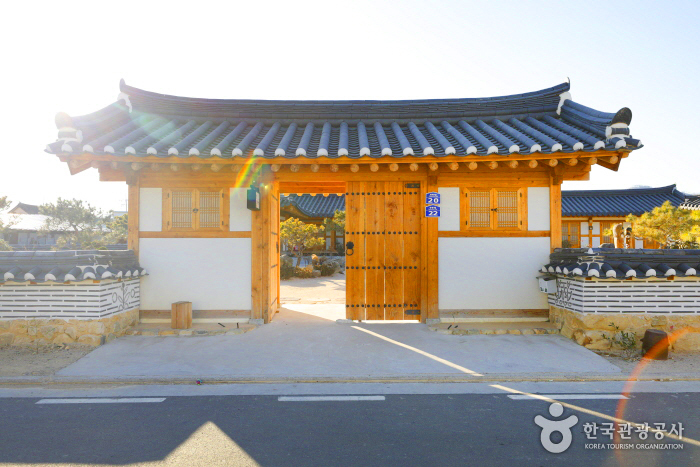
Wadamjeong in Cheonwon Village, Gyeongju, Gyeongsangbuk-do, is a hanok pension combining traditional style and atmosphere with modern convenience. All rooms have air-conditioning/heating and a bathroom with toilet. The stand-alone guestroom has its own kitchen, while other rooms have basic cooking facilities in a shared kitchen. In the spacious yard - decorated with traditional landscape scenes - visitors can try out traditional games such as Jegi (shuttlecoks) and Tuho (arrow-throwing). Historic sites such as Cheomseongdae and the Gyeongju Museum are all nearby.
Asamgong
2021-04-09
5-5, Sawol 1-gil, Namsan-myeon, Gyeongsan-si, Gyeongsangbuk-do
+82-10-2541-1284, +82-10-4787-3314
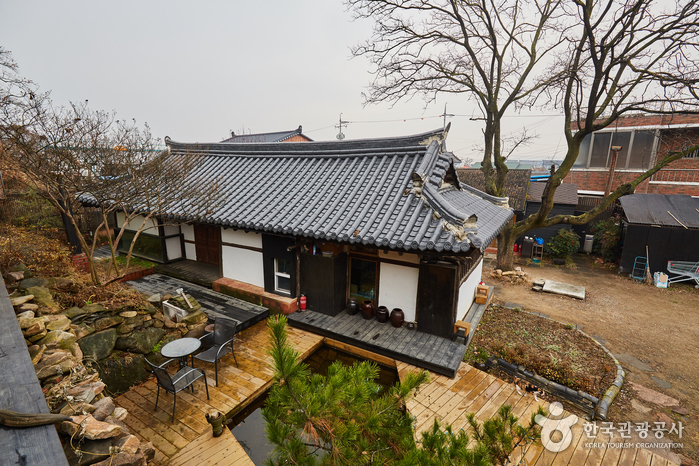
Located in Sawol-ri, Namsan-myeon, a place known for its beautiful sandy beach, the guesthouse ‘Beautiful Life’ was built by architect Kim Gyeong-ho, and is composed of 100-year-old-hanok buildings and a courtyard with a large sophora. Designed to provide guests with a “beautiful life”, it provides both accommodation services and diverse cultural programs including exhibitions, performances, and movie screenings.
Beautiful Life was conceived as a cultural tourism space set amid quiet countryside where guests can relax by enjoying exhibitions and performances, reading a book, listening to music, or getting lost in thought amid the serene atmosphere of the house. The owner transformed the abandoned house into a beautiful hanok stay after falling under the charm of the quiet location and the old house with its beautiful old tree and well.
The guestrooms include Jewoldang, Yeorakdang, Uiyeoldang, and Heosimjeong. The first of these is a 100-year-old hanok structure with a tiled roof, which can be rented in its entirety. Its name, Jewoldang, roughly means “a place to pick up the moon” because the moon is visible above the sephora in the courtyard from the daecheong (wooden floor) on bright moonlit nights. Its ‘ㅡ’-shaped structure and ceiling rafters are original features of the old hanok, while the kitchen and bathroom were entirely renovated, as was the attic on the second floor, lending a special atmosphere to the house.
As for the Yeorakdang, which means ‘a house to enjoy together,’ it was converted from a storeroom for apples into a building that can accommodate groups of guests and also screen movies. The Uiyeoldang, meaning ‘a house to discuss and study together,’ was built by transforming the haengrangchae (servants’ quarters) and the stable into a reading space and a seminar room, respectively. Finally, the Heosimjeong, meaning ‘a pavilion where one can empty one’s mind’, is the ideal place for relaxing in small groups. Each of these four buildings is built in a modern style with wooden materials, glass windows, and staircases. There is also an outdoor stage equipped with a sound system for special performances.
SOSEOLJAE (소설재(첨성대점))
2024-08-01
46 , Poseok-ro 1050beon-gil, Gyeongju-si, Gyeongsangbuk-do
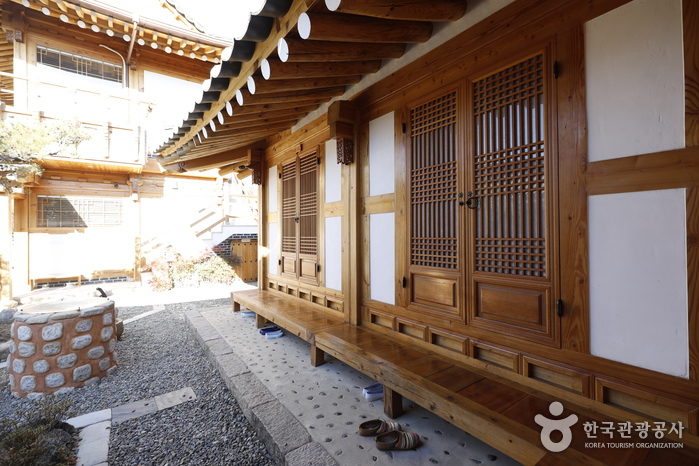
Located on a side street in Cheomseongdae in Gyeongju, Gyeongsangbuk-do, Soseoljae is a hanok stay combining traditional charm with modern facilities.The larger stand-alone guestroom has its own tea room, while 11 other rooms accomodate 2 or 3 people. All rooms are equipped with a toilet/bathroom and air conditioning/heating, and there is a small cafe at the hanok entrance. Soseoljae is close to Gyeongju Station and Gyeongju Express Bus Terminal and tourist attractions such as Cheomseongdae, Daereungwon, and Hwangnyongsaji are also nearby.
![Sogang House [Korea Quality] / 소강고택 [한국관광 품질인증]](http://tong.visitkorea.or.kr/cms/resource/80/2803880_image2_1.jpeg)
Sogang House [Korea Quality] / 소강고택 [한국관광 품질인증]
2024-10-30
22, Baraemi-gil, Bonghwa-eup, Bonghwa-gun, Gyeongsangbuk-do
Located in Baraemi Village, Bonghwa, Gyeongsangbuk-do, Sogang House is a hanok that is over 100 years old. Baraemi Village, the Uiseong Kim clan village, has lots of old houses remaining, but Sogang House has an outstanding history and ambiance. The house was built around 1910 by Namho Kim Roi-sik, a renowned wealthy patriot in Gyeongsang-do, for his second son, Sogang Kim Chang-gi when he was married. Kim Roi-sik is a figure who donated the money secured on his whole possession when the Provisional Government of Korea in Shanghai was raising contributions, and received the Order of Merit for National Foundation. Sogang House is a D-shaped hanok with the adjoining sarangchae and anchae. Even the door frame of the house is built with the chunyang pine, showing the elaboration put in its building. As it is not easily twisted or rotten, chunyang pine is the best pine for architecture that was used for building the palace, the temple, and houses of aristocrats in the Joseon period. There are six guest rooms, including Sarangbang and Eosabang. Sarangbang contains two rooms and veranda, Seonbibang is the room that sunshine comes in the earliest in the morning, and Doryeongbang is the only ondol (floor-heated) room that is built with red clay. Every room has an air-conditioner and the lovely garden with a flower tree is seen through the open window.
Backam Springs Hotel (백암스프링스호텔)
2024-08-01
90 , Oncheon-ro, Uljin-gun, Gyeongsangbuk-do
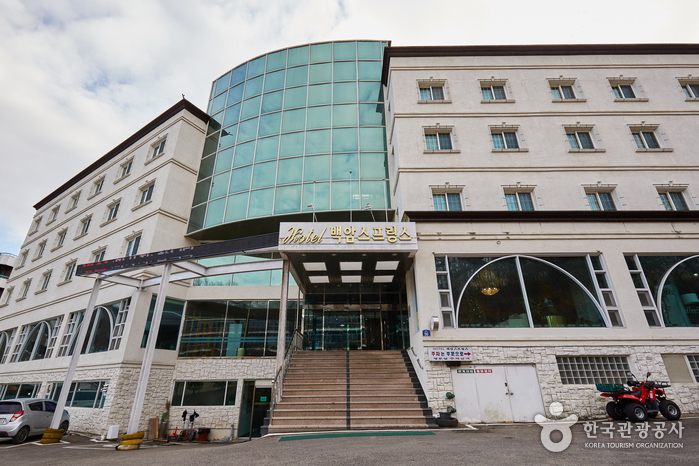
Located in the Baegam Hot Springs Tourist Zone, Baegam Springs Hotel in Uljin-gun, Gyeongsangbuk-do, opened in 1930 as the Baegam Inn, but has since been expanded and developed. The nearby spring emits alkaline water at a temperature of 50℃, which has health benefits for bathers. Other local attractions such as Wolsongjeong Pavilion, Manghyangjeong Pavilion, and Seongryu Cave are all 30 minutes away. Behind the hotel rises Baekamsan Mountain, with an excellent hiking course, and nearby is Shinson Valley with its ancient forest - making this a favourite base for walkers and hikers.
Manhoegotaek (만회고택)
2024-12-19
51 , Baraemi 1-gil, Bonghwa-gun, Gyeongsangbuk-do
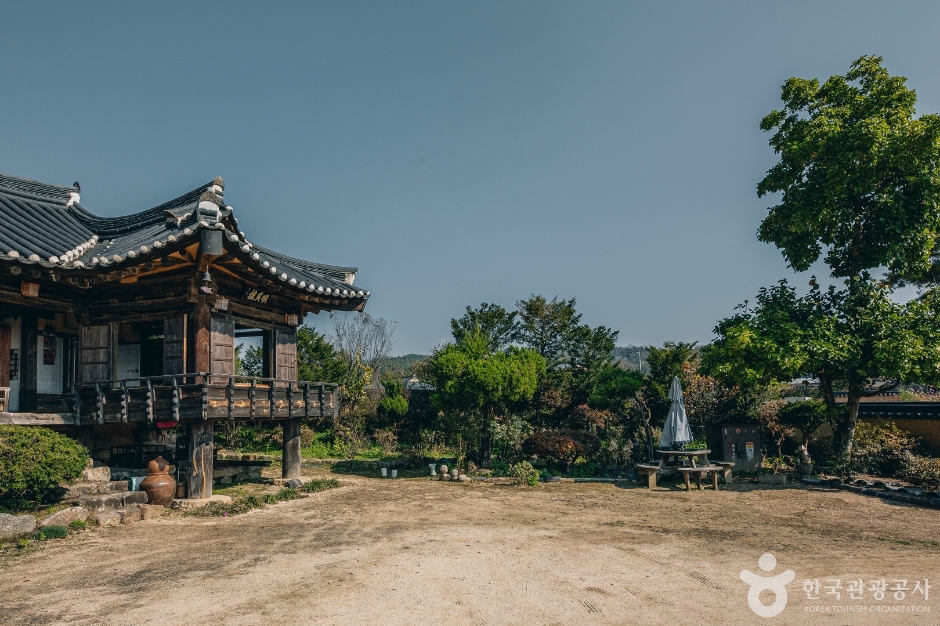
The prestigious Manhoe Old House in Baraemi Village, Bonghwa, Gyeongsangbuk-do, is a nationally designated folk cultural asset, because of its 300 year history and its association with both Korean literature and the March 1st independence movement. It is said that a thousand poems were written in Myeongwolru, the Old House’s pavilion; and the 1919 Independence Petition was also written here. There are 7 guestrooms, one with an attic with exposed roofbeams, and most but not all rooms have individual toilets. Guests can take part in traditional activites such as folk games.
RakKoJae Andong(Hahoe) (락고재 안동(하회))
2024-10-17
51 , Hahoegangbyeon-gil, Andong-si, Gyeongsangbuk-do
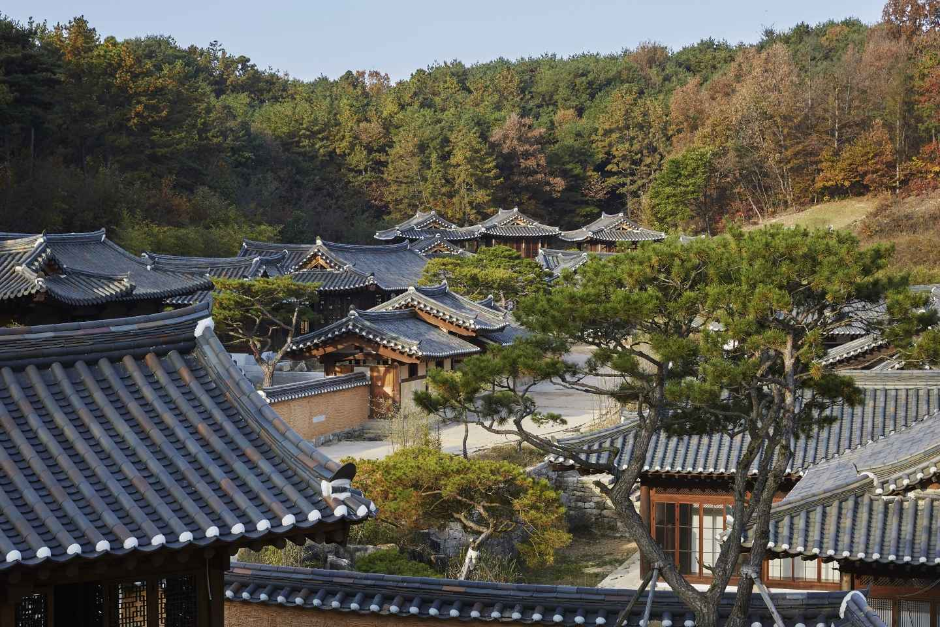
Rakkojae is a guest house by the ferry over the Nakdong River in Hahoe Village, Andong, Geyongsangbuk-do. It consists of four buildings, each with one or two guest rooms. All rooms have a private bathroom, and one incorporates a sauna. Starlit and moonlit evenings in Hahoe refresh both mind and body, and by crossing the river by ferry boat and climbing Buyongdae Cliff, visitors can enjoy panoramas of the historic village and beautiful Nakdong valley. Another ‘must see’ is the nearby Mansongjeong Pine Forest - one of Korea’s Natural Monuments.
Happydream (행복드림한옥)
2024-08-05
181-21 , Bongseoan-gil, Wanju-gun, Jeonbuk-do
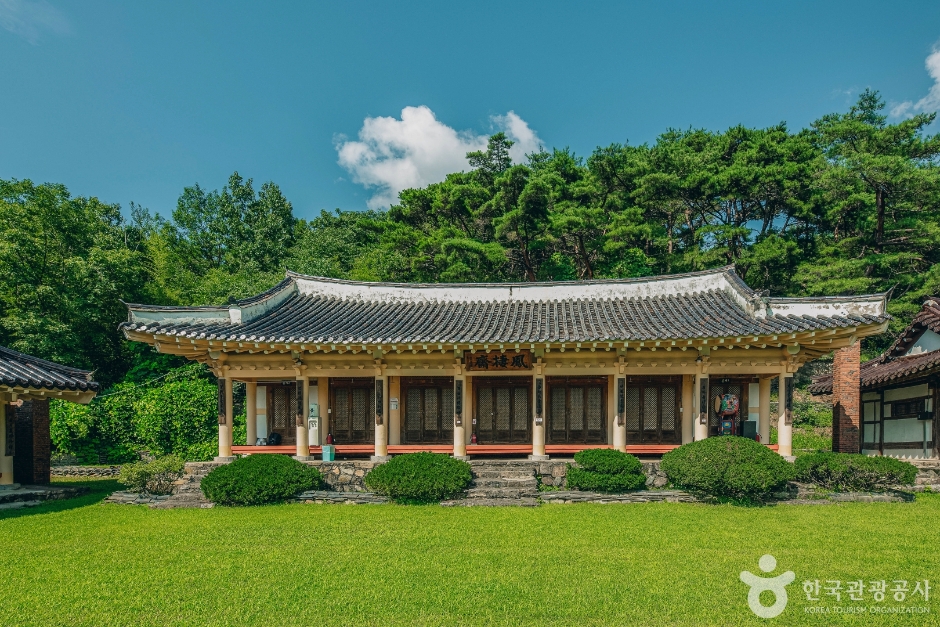
Dueok Happydream Village is located in Bongseo-gol, Wanju-gun, Jeollabuk-do - a location said to be one of the most propitious in Korea, owing to the surrounding mountains’ resemblance to the Bonghwang mythical bird. The guesthouse’s tile-roofed buildings are set in a wide grassy yard against a background of green mountains. As well as accomodation the village operates various nature and traditional culture experience programs, some of which take place at the guesthouse. The rooms are small but clean and comfy, and with the doors open offer scenic views.

The Gwiae Traditional House (귀애고택)
2024-12-20
37-17 , Gwiho 1-gil, Yeongcheon-si, Gyeongsangbuk-do
Gwiae Old House, located in Yeongcheon, Gyeongsangbuk-do, is a hanok built by Joseon scholar [Mukheon Jo Myong-jik / Jo Geuk-seung] in the time of King Yeongjo. Visitors entering the yard through the gatehouse will see a sarangchae, an anchae and a thatched house with a treadmill. Next to the gatehouse is a storage jar stand, and harmoniously arranged behind the sarangchae are a square pond, a small hexagonal pavilion, and Gwiaejeong, a larger pavilion. Biannual jazz, rock and classical concerts are held in the old house, and visitors can try out hanbok wearing, Korean archery, and liquor making.
 English
 한국어
한국어 日本語
日本語 中文(简体)
 Deutsch
 Français
 Español
 Русский


