
Jeju Sanbangsan Carbonate Hot Springs (제주 산방산탄산온천)
6.3Km 2024-03-11
192, Sagyebuk-ro 41beon-gil, Andeok-myeon, Seogwipo-si, Jeju-do
Jeju Sanbangsan Carbonate Hot Springs is a carbonate hot spring that contains the main carbonic acid components (free carbonic acid, bicarbonate, sodium, etc.). It is said that this enhances blood circulation, lowering blood pressure and reducing the burden on the heart. It is also beneficial for skin care and fatigue recovery, making it a perfect place to relax after a long day of exploring Jeju. There is an indoor bath designed with glass inside as well as an outdoor open-air bath, so visitors can bathe while enjoying the view of Sanbangsan Mountain and the deep blue sea.
Jeju Glass Museum (제주유리박물관)
7.4Km 2022-11-30
1403, Jungsanganseo-ro, Seogwipo-si, Jeju-do
Jeju Glass Museum (originally the Gimpo Glass Museum and SongHee Glass House), has been making a significant contribution to the advancement of Korean glass art over the past several years through constant research and innovation. The museum opened on March 1, 2008, and has state-of-the-art facilities including a glass art exhibition hall, studio with a kiln, glass-blowing room, and glass processing room. With an expansive area totaling 3,500 pyeong and a broad grass field for displaying artwork, it is a perfect place to study and learn. The museum also offers some programs for visitors to learn and gain a greater appreciation for glass art.
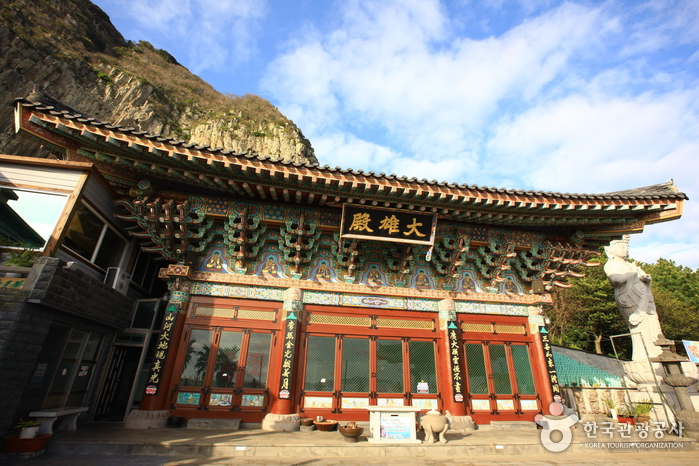
Sanbanggulsa Grotto - Jeju (산방굴사(제주))
7.8Km 2022-11-14
218-12 , Sanbang-ro, Seogwipo-si, Jeju-do
It is said that the peak of Hallasan Mountain where Baekrokho Lake now exists was taken off and thrown away, which then became Sanbangsan Mountain. The myth describes how unlike other mountains on Jejudo Island, this mountain does not have a crater. The 5m-high rock cave at the cliff on the southwest side of the mountain was originally called Sanbanggul Cave, but it is called a temple now because it possesses a Buddhist statue.
This is where monk Hye-Il (964~1053) had lived during the Goryeo dynasty (918~1392)
Inside the cave, you can see Marado Island and the Dragon Head Coast. You can also see small ponds being made by the water drops that fall from the ceiling all through the year. The plant zone on a cliff of Sanbangsan Mountain is also designated as a natural monument. It is the only place on Jejudo Island where island boxwoods grow. On the Dragon Head Coast is the Hamel Memorial Monument.
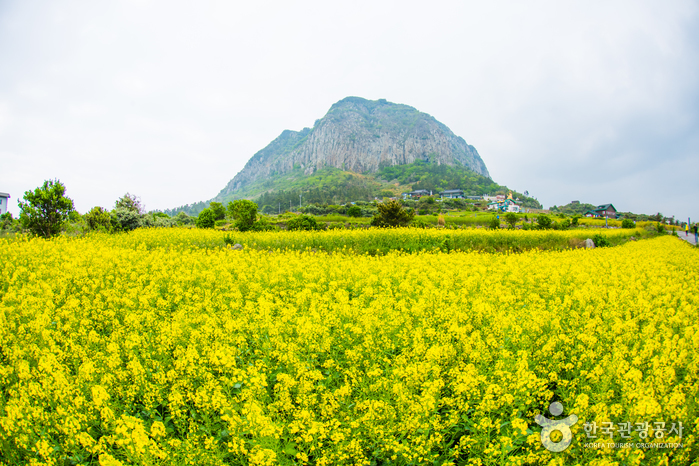
Sanbangsan Mountain (Jeju) (산방산(제주))
7.9Km 2024-03-12
Andeok-myeon, Seogwipo-si, Jeju-do
Sanbangsan Mountain, meaning "mountain with a cave," is home to Sanbanggulsa Temple, a small temple located at the foot of the mountain where a Buddha statue is enshrined. According to Jeju mythology, it is said that the grandmother deity, Seolmundae Halmang, tossed aside a rock from Hallasan's summit, forming this mountain. Standing at 395 meters above sea level on the southwestern coast of Jeju Island, Sanbangsan Mountain boasts vibrant fields of mustard flowers in spring, creating a picturesque view against the backdrop of the mountain.
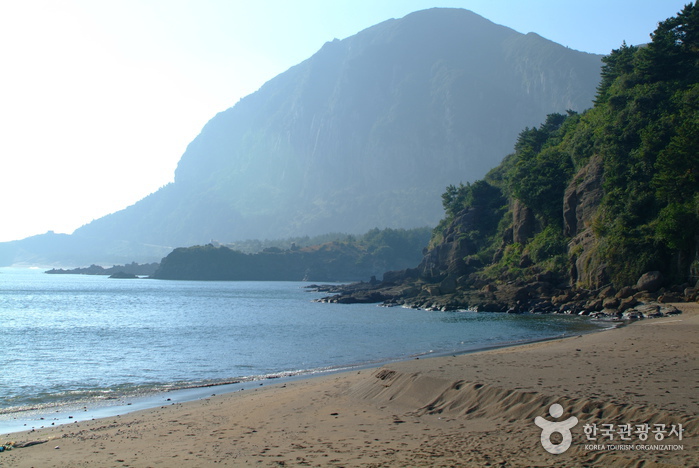
Hwasun Golden Sand Beach (화순 금모래 해변)
8.0Km 2022-10-14
Hwasunhaean-ro, Seogwipo-si, Jeju-do
Hwasun Golden Sand Beach is surrounded by beautiful nature. It is close to Sanbangsan Mountain and the Yongmeori Coastline, and the islands of Hyeongjedo, Marado, and Gapado are off the coast to the southwest. On one side of the beach is a fresh water spring where people can enjoy a freshwater bath.
The beach is located in Hwasun-ri in Andeok-myeon, which is easily accessible and has accommodations, shops, and restaurants.
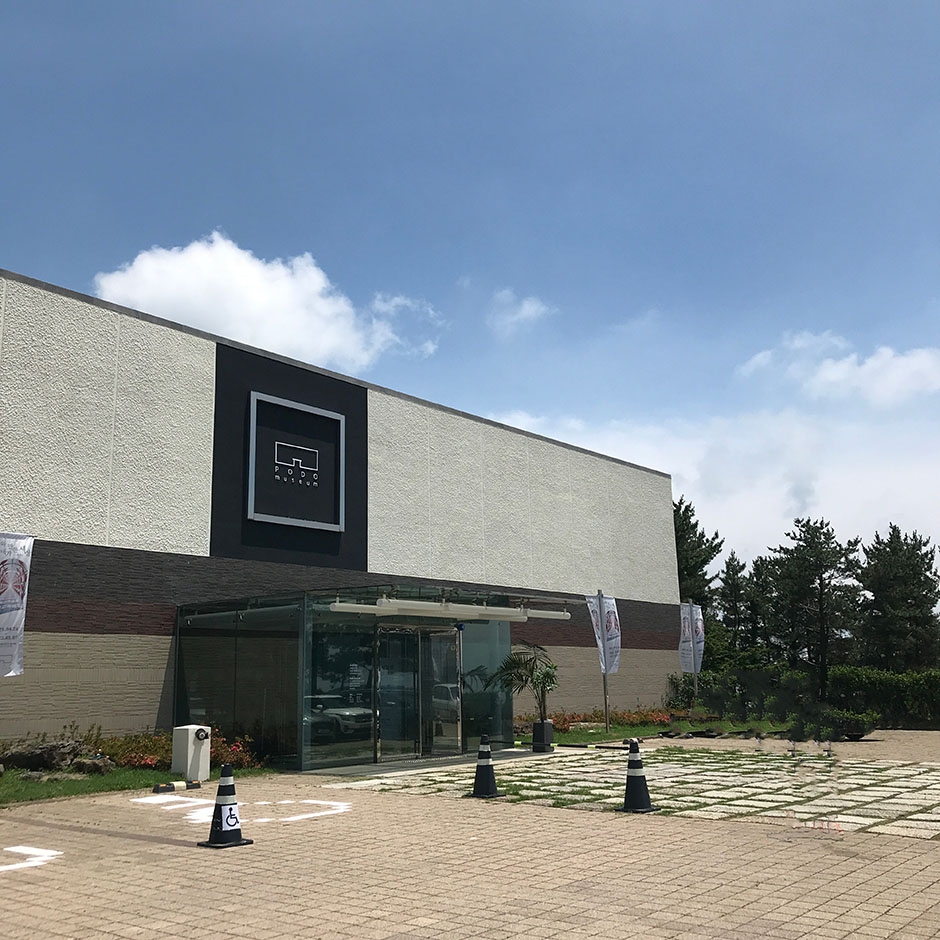
Podo Museum (포도뮤지엄)
8.3Km 2024-01-31
788 Sallngnam-ro, Andeok-myeon, Seogwipo-si, Jeju-do
Opened in April 2021, Podo Museum aims to be a space that promotes the symbiosis of the Earth's ecological environment and humankind and listens to the voices of the socially underprivileged. It operates mainly around exhibitions without any separate experience programs. Exhibitions are held following the museum's goals and themes. As the content changes depending on the period, checking the website before visiting is recommended. The museum also has a café and souvenir shop on its first floor, making it great to look around on rainy days when outdoor sightseeing is not a preferred option. There are Camellia Hill, Bangju Church, and Bonte Museum nearby, so visitors are recommended to look around.
Da Vinci Museum (다빈치 뮤지엄)
8.3Km 2025-01-10
788 Sallongnam-ro, Andeok-myeon, Seogwipo-si, Jeju-do
Da Vinci Museum, located in Seogwipo-si on Jeju Island is the only museum that has the Da Vinci License in Korea. The museum offers visitors a chance to experience a wide variety of activities and hands-on programs. When you think of Leonardo Da Vinci, a few things that come to mind are the Mona Lisa and The Last Supper. However, one of the greatest masterpieces in his life is the Codex, a collection of his writings. Over 7,000 pages of the Codex, A.K.A. a notebook of secrets, survives today, and the museum displays over 200 works created and inspired based on the writings in the Codex. The museum houses information about the life and times of Leonardo Davinci, a superb scientist, anatomist, and inventor.
Sanbangsan Canola Field (산방산유채꽃밭)
8.4Km 2024-03-07
San18 Sagye-ri, Andeok-myeon, Seogwipo-si, Jeju-do
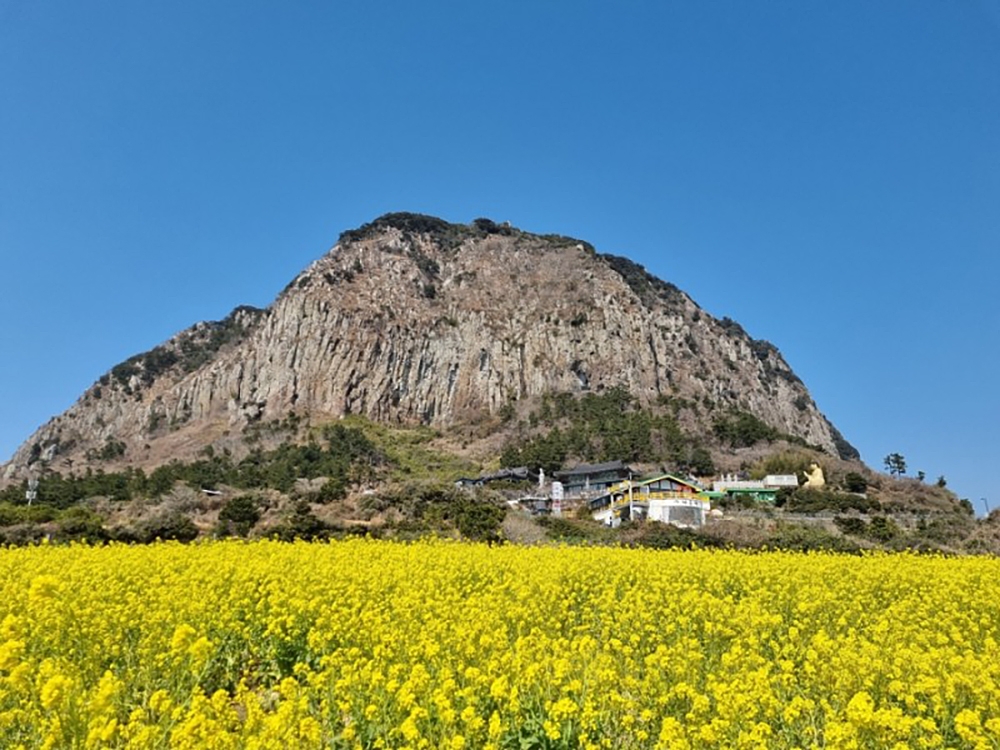
The Sanbangsan Canola Field is located next to the public parking lot in front of Sanbangsan Land, making it very easy to find. The vast fields create a beautiful landscape of yellow blossoms before the backdrop of Sanbangsan Mountain. The flowers are usually at peak bloom in March. In addition to Sanbangsan Mountain, other nearby attractions include Yongmeorihaean Coast, and Sagyehaean Coast.
Jinmi Myeongga (진미명가)
8.7Km 2025-05-20
167 Sagyenam-ro, Andeok-myeon, Seogwipo-si, Jeju-do
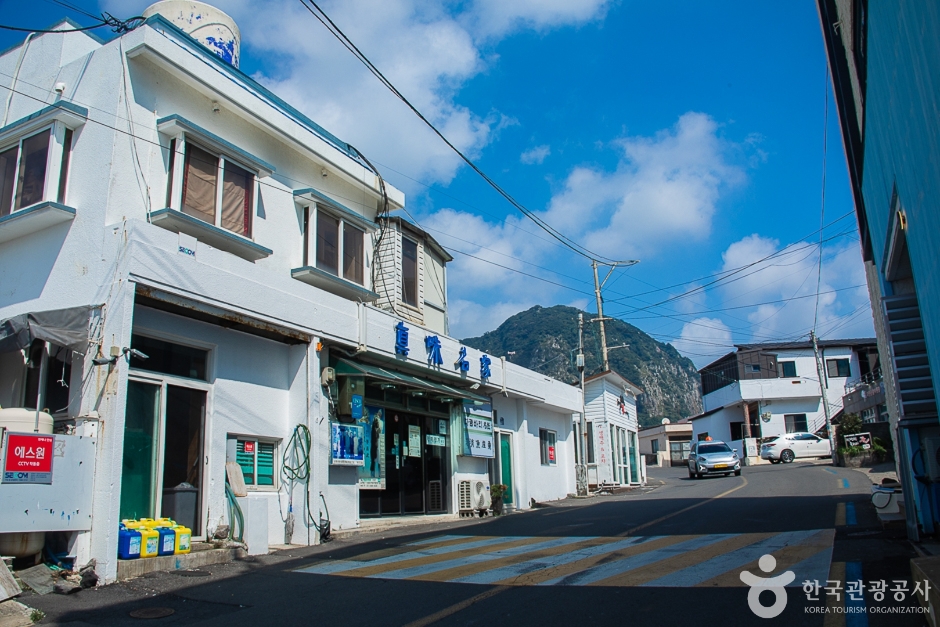
Jinmi Myeongga, under the ownership of Chef Kang Chang-gun, a saw-edged perch maestro, offers an extensive menu of over 30 dishes derived from a single saw-edged perch. Established in 1983, it has become a favored dining spot for Korean presidents and global leaders. Guests ordering Jeju's natural saw-edged perch are treated to hoe (raw fish), ppyeo jiriguk (bone fish soup), and an assortment of side dishes, where the hoe is noted for its chewiness and the fish soup for its rich flavor. It's advisable to make a reservation before visiting.
Sagyehaebyeon Beach (사계해변)
8.7Km 2024-02-22
2147-35 Sagye-ri, Andeok-myeon, Seogwipo-si, Jeju-do
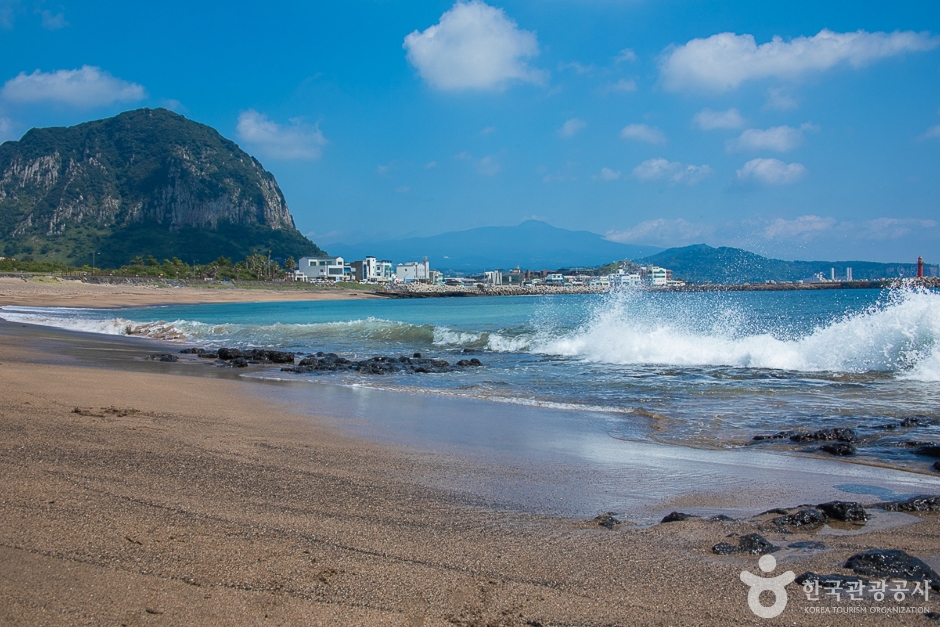
Sagyehaebyeon Beach is located at the foot of Sanbangsan Mountain. Created by wind, waves, and the geological features of the sedimentary layers in Hwasun-ri, the large and small marine potholes look like craters on the moon. Due to the geographical characteristics, the scenery is more beautiful if seen at low tide.
 English
 한국어
한국어 日本語
日本語 中文(简体)
 Deutsch
 Français
 Español
 Русский


