
Olive Young - Jeju Ildo-2dong Branch [Tax Refund Shop] (올리브영 제주일도이동점)
12.2Km 2024-06-27
81, Goma-ro, Jeju-si, Jeju-do
-
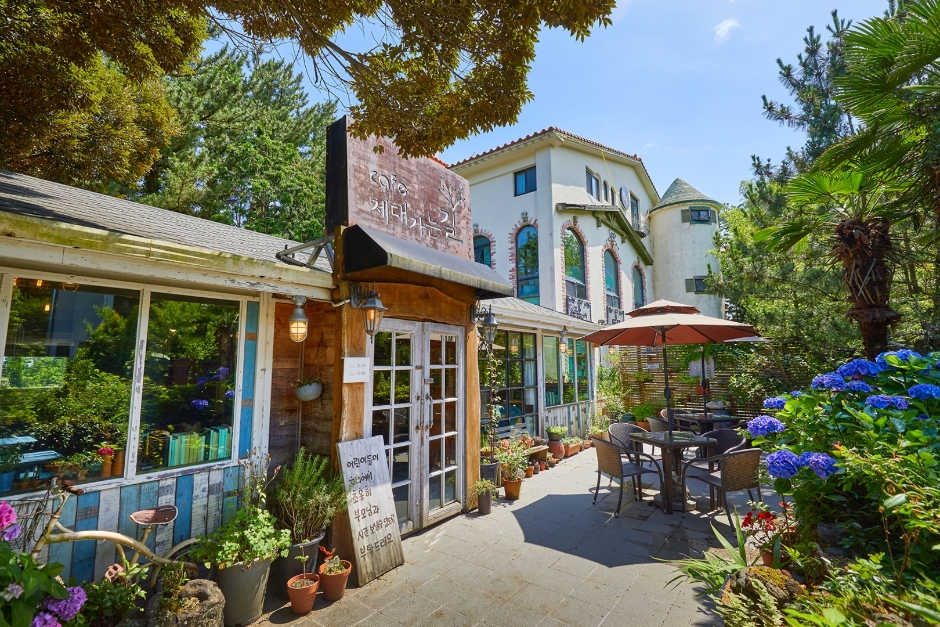
Jedae Ganeungil (제대가는길)
12.4Km 2024-12-10
Jedae Ganeungil is a café located near the main gate of Jeju National University. The café’s name can be translated to “way to Jeju National University,” which suits the café’s location by the entrance gate of Jeju National University. The cafe is in the middle of a forested area, so visitors can enjoy refreshing atmosphere. The café is decorated with a Jeju-style stone wall and stepping stones that lead to the entry way. The outdoor and indoor spaces are cozy and relaxing, making it a great place to hang out. Coffee options range from cold brew to pour over, and the cafe's homemade fruit teas are also excellent. Pour over coffee is served in a pretty cup.
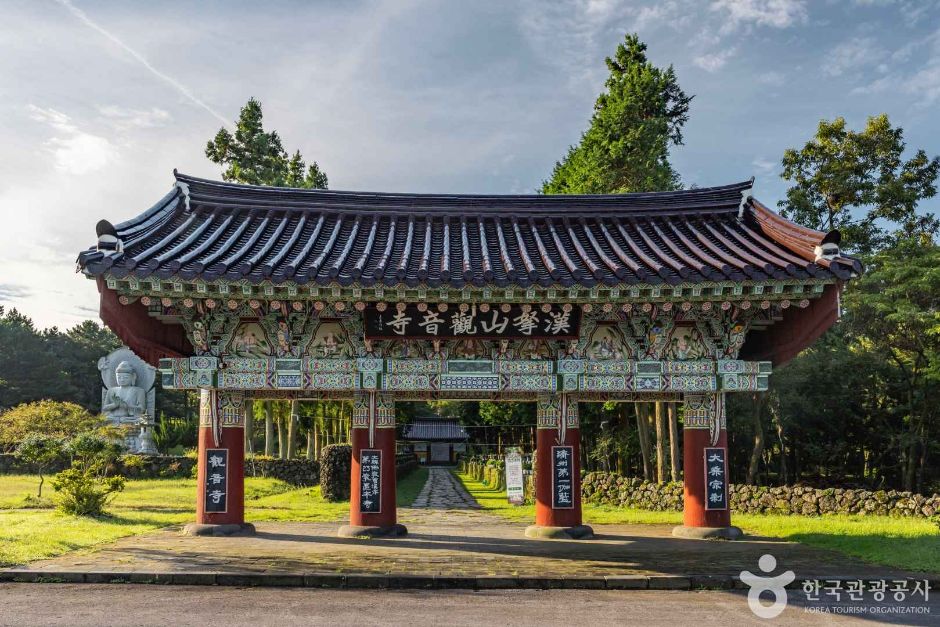
Gwaneumsa Temple (Jeju) (관음사(제주))
12.9Km 2025-10-23
660 Sallokbuk-ro, Jeju-si, Jeju-do
Gwaneumsa Temple is a historic Buddhist temple located about 650m up on the slopes of Hallasan Mountain. The road leading to the temple is exceptionally scenic, framed by cedar trees and adorned vibrant with chrysanthemum flowers, creating a striking yellow path. The temple grounds host siginificant structures such as the Cheonwangmun Gate, Daeungjeon Hall, and the Gwaneumgul Cave. For visitor convenience, the complex includes a café and a restaurant specializing in Buddhist temple cuisine. Additionally, the temple offers a templestay program, providing guests with a unique opportunity to engage in rest and meditation, embracing the tranquil solitude of the temple environment.
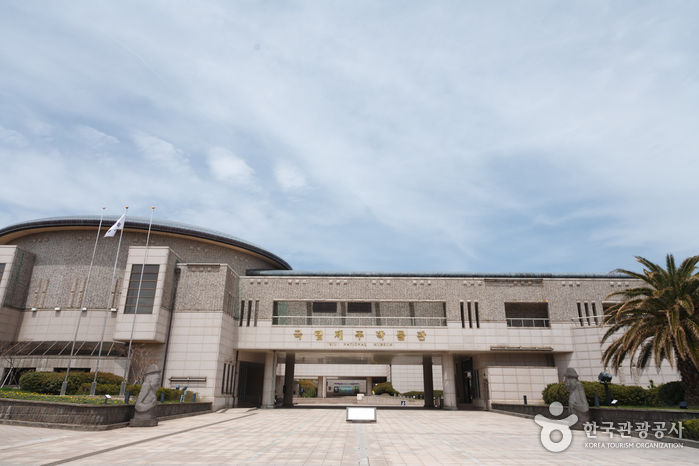
Jeju National Museum (국립제주박물관)
13.2Km 2021-08-06
17, Iljudong-ro, Jeju-si, Jeju-do
+82-64-720-8000
Opened on June 15, 2001, Jeju National Museum is a history museum that displays, preserves and studies Jeju Island’s historical and cultural assets. Jeju National Museum houses various remains excavated from ruins, including meaningful relics from the prehistoric age through to the Joseon dynasty. It boasts unique traditional culture and holds special exhibitions each year.
Sarabong Peak (사라봉)
13.2Km 2021-05-24
61, Sarabongdong-gil, Jeju-si, Jeju-do
+82-64-728-3602
Situated to the east of Jejuhang Port, Sarabong Peak is the main oreum (volcanic cone) that separates the city from the sea. The peak offers views of the ocean to the north and magnificent Hallasan Mountain to the south. It is recommended to reach the top in the late afternoon to catch the reddish glow of the sunset glittering off the ocean.
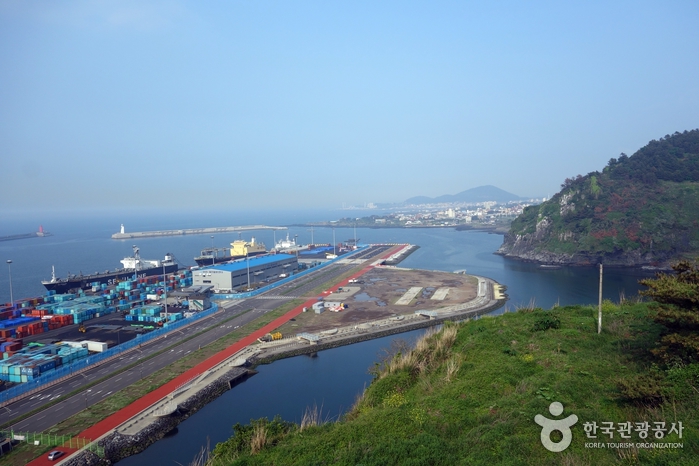
Sanji Lighthouse (산지 등대)
13.4Km 2021-03-18
108-1, Sarabongdong-gil, Jeju-si, Jeju-do
+82-64-740-6000
The name Sanji derives from the area being recorded as Sanjichon Village, literally translated as the mountainous village, in Tamna Sullyeokdo, a book of paintings showing life in Jeju. This record was created in 1702 by painter Kim Nam-gil, under the command of the Jeju Province governor, Lee Hyeong-sang.
Sanjicheon Stream originates from Hallasan Mountain and empties itself into the sea. Sitting halfway up Sarabong Peak, one of the signature parks on Jeju-do island, Sanji Lighthouse overlooks the port of Jeju.
Hallim Traditional 5-Day Market (4th and 9th) (한림민속 5일시장 (4, 9일))
13.5Km 2024-12-27
Hallim Traditional 5-Day Market is the largest market in the western part of Jeju (Hallim and Aewol) and is responsible for providing food, clothing, and shelter for Jeju locals. There is a store that sells bingtteok (buckwheat crepes with radish filling), Jeju's traditional food and dessert. There are many restaurants with Jeju vibes, including shops selling omegi tteok (millet rice cake). Hallim Traditional 5-Day Market is an ideal place to enjoy the local atmosphere and food. The market opens on dates ending with 4 and 9.
Byeoldobong Peak (Beri Oreum) (별도봉(베리오름))
13.8Km 2025-08-18
Seonban-ro, Jeju-si, Jeju-do
+82-64-740-6000
Situated in the east of Hwabuk 1-dong and along the coast, Byeoldobong is a parasitic mountain made of siliciclastic sedimentary rocks and lava. Its northern slope is dominated by steep cliffs where a large rock called Jasalbawi Rock (Suicide Rock) is located. At the bottom of the cliffs are Goraegul Cave (Whale Cave) and an oddly-shaped rock that looks like a mother carrying her child on her back.
Despite being only 136m high, Byeoldobong is home to Jangsu Trail, a walking path that stretches over 1.8km around coastal cliffs, overlooking the ocean. Considered the most pleasant trail on Jeju Island, it offers a spectacular view of numerous peaks, Jeju Port and its nearby villages, and the emerald-blue sea. Naturally, it is a popular tourist destination for family visitors and couples.
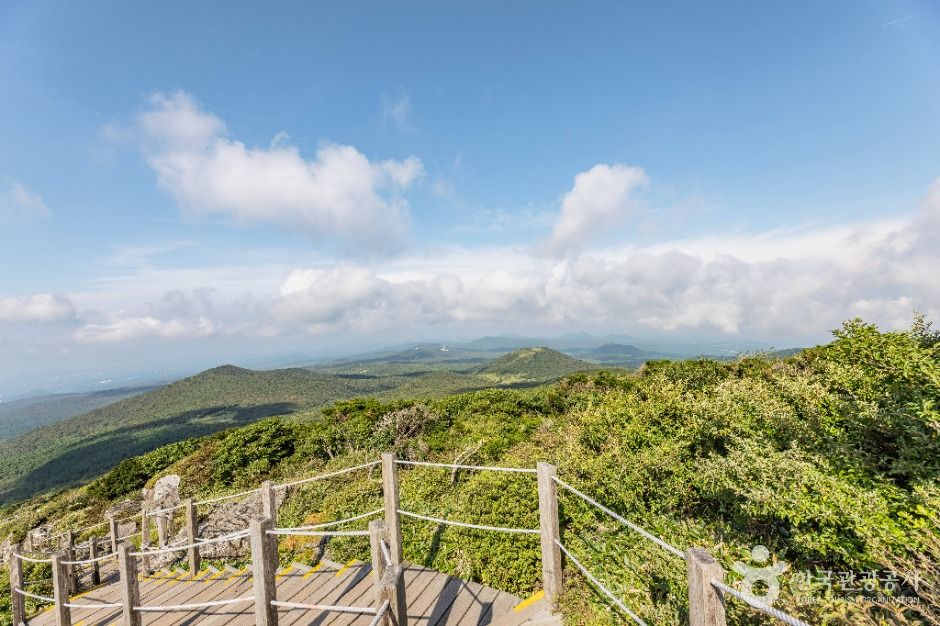
Yeongsil Trail (Hallasan National Park) (한라산 영실)
14.0Km 2025-10-31
246 Yeongsil-ro, Seogwipo-si, Jeju-do
+82-64-713-9950
Yeongsil Trail is renowned as the shortest yet the best trail for its beautiful scenery among those of Hallasan Mountain. It is 5.8 kilometers and takes approximately 2 hour and 30 minutes to get to the destination. Starting from Yeongsil Rest Area, an uphill path emerges along steep mountain ridges to reach the Nambyeok Watershed. With its steep and flat parts, the hike is easy enough for children. It's a wonderful way to appreciate the lush forest and beautiful scenery.
St. Isidore Farm (성이시돌목장)
14.3Km 2023-02-16
53, Sallongnam-ro, Jeju-si, Jeju-do
+82-64-740-6000
St. Isidore Farm was born when an Irish priest named McGlinchey (Korean name: Im Pi-je) was appointed in Jeju's Hallim region in 1954 and opened a livestock bank to help the impoverished locals. In 1961, it officially opened a central practice farm to not only educate on the livestock industry but also carry out hog farming, sheep breeding, beef cattle raising and dairy businesses. Today, the farm primarily raises cows and racehorses and produces high-quality organic milk and horses for racing to utilize the profits in various welfare projects. The farmland also presents an exotic scenery as the vast grasslands blend in with modern structures such as Ctesiphon, which symbolizes the history of the farm. The farm also has a cafe that uses milk produced at the farm in addition to a trail and park with religious themes.
 English
 한국어
한국어 日本語
日本語 中文(简体)
 Deutsch
 Français
 Español
 Русский


