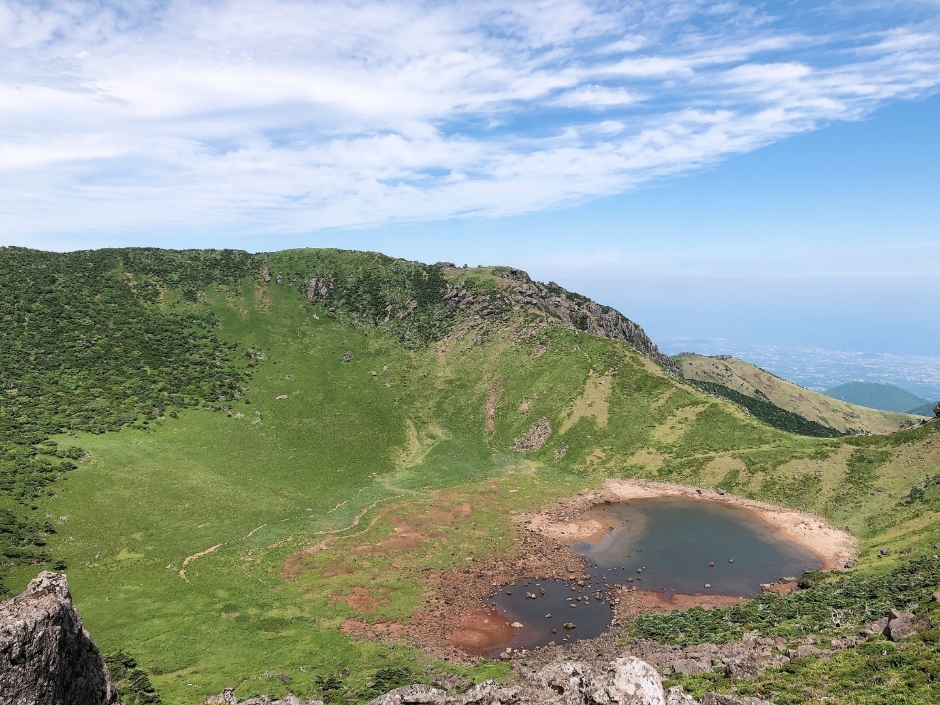
Baengnokdam Lake (한라산 백록담)
16.2Km 2025-10-31
Topyeong-dong, Seogwipo-si, Jejudo
+82-64-713-9950
Baengnokdam is a crater lake that sits on top of Hallasan Mountain at the center of Jeju Island. It spans 3 kilometers in circumference and 500 meters in diameter, and is surrounded by approximately 360 parasitic cones. At the peak, visitors can feel like floating on clouds.

Samyang Beach (삼양해수욕장)
16.7Km 2022-07-28
Samyang 2-dong, Jeju-si, Jeju-do
+82-64-740-6000
Samyang Beach is cozy and has clear waters because it is not well-known among tourists. In particular, it stands out because of its sparkling black sand. As the black sand's therapeutic effect is well known, visitors can often be seen lying down on the beach and burying themselves in the black sand.
Podo Hotel (포도호텔)
16.9Km 2024-06-05
863 Sallongnam-ro, Andeok-myeon, Seogwipo-si, Jeju-do
+82-64-792-5200
Podo Hotel is designed with the motif of Jeju's oreum (parasitic cone) and thatched-roof houses. The hotel aims to create a healing environment, where guests can unwind while looking out at Jeju's pristine nature. Each guest room features natural hot spring water.
Olive Young - Jeju Hyeopjae Branch [Tax Refund Shop] (올리브영 제주협재점)
17.3Km 2024-06-27
336, Hallim-ro, Hallim-eup, Jeju-si, Jeju-do
-
CU - Jeju Hyeopjae Jecheon Branch [Tax Refund Shop] (cu제주협재제천점)
17.4Km 2024-06-27
329-8, Hallim-ro, Hallim-eup, Jeju-si, Jeju-do
-
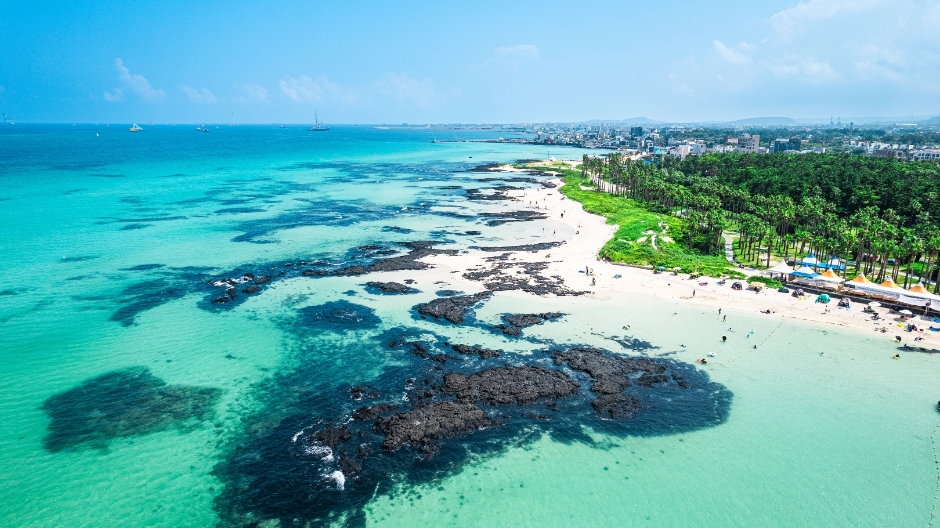
Hyeopjae Beach (협재해수욕장)
17.4Km 2025-10-23
329-10 Hallim-ro, Hallim-eup, Jeju-si, Jeju-do
Hyeopjae Beach, encircled by lush pine forests, seamlessly extends into Geumneung Beach. The beach features smooth white sand, shallow waters, and a gentle slope ideal for swimming. Camping is available at Songlim, along with various amenities. The view of the emerald-colored sea and the distant Biyangdo Island offers magnificent scenery, with the sunsets being particularly breathtaking.
Hallim Park (한림공원)
17.5Km 2024-11-27
300 Hallim-ro, Jeju-si, Jeju-do
+82-64-796-0001
Hallim Park is one of the most popular tourist spots on Jeju Island, located approximately 33 kilometers west of Jeju-si and Hallasan Mountain along the beach in Hallim-eup. It faces the pleasant scenery of Biyangdo Island, Hyeopjae Beach, and Geumneung Beach. The park was established in early 1971 on barren land with the importation of tons of earth and the planting of assorted subtropical plants.
Hallim Park, reaching almost 100 thousand square meters, has a variety of gardens that can be enjoyed in any season. Visitors can enjoy Palm Tree Road, Jeju Stone and Bonsai Garden, Water Garden, Subtropical Botanic Garden, and much more. The most famous tourist sites in Hallim Park are Hyeopjaegul and Ssangyonggul Caves, known to be the only two-dimensional caves in the world. In addition, a folk village, children's amusement park, and outdoor resort facilities make it enjoyable for both children and adults.
Ssangyonggul Cave (Hallim Park) (쌍용굴 (한림공원))
17.5Km 2022-09-13
300, Hallim-ro, Jeju-si, Jeju-do
+82-64-796-0001
Ssangyonggul Cave, a designated Natural Monument, is one of the representative lava tubes of Jeju Island along with Hwanggeumgul, Socheongul, and Manjanggul caves. The cave measures approximately 400 meters in length, 6 meters in x_width, and 3 meters in x_height. It is thought to have been created by lava that erupted from Hallasan Mountain some 25 million years ago.
One of the unique features of this particular cave is that it has features of both a lava tube and a limestone cave. The entire area surrounding the cave is a huge stratum of seashells and sand, while the interior is a mystical mix of stalactites and stalagmites. Lime covers the cave walls in a series of natural swirls and streaks, bringing to mind the strokes of an abstract painting. Since the cave stays at a constant 17-18℃ throughout the year, it’s a welcome escape from the heat in the summer and a great place to warm up in the winter.
The cave gets its name from its two branches, which are said to look like the paths of two dragons (‘Ssangyong’ meaning ‘two dragons’ in Korean). It is thought that Ssangyonggul Cave and Hyeopjaegul Cave were once one cave since the second entrance of Ssangyonggul Cave is so close to the end of Hyeopjaegul Cave.
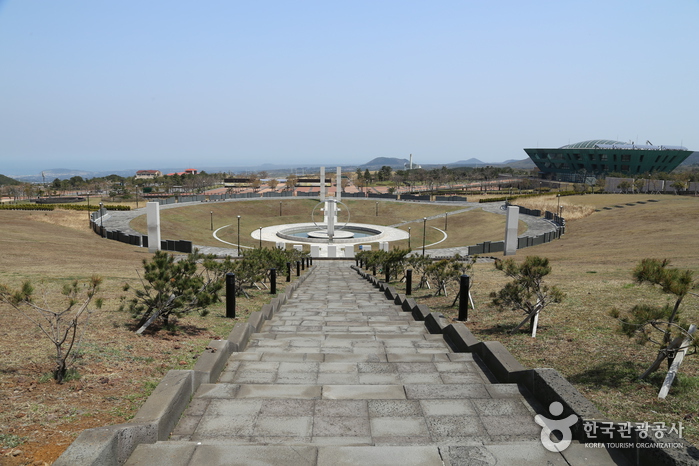
Jeju 4.3 Peace Park (제주4·3평화공원)
17.7Km 2021-06-18
430, Myeongnim-ro, Jeju-si, Jeju-do
+82-64-723-4344
Mankind tends to only remember the heroes of civilization. Jeju 4.3 Peace Park was created to remember those who fell protecting their homeland during the Jeju uprising which broke out on April 3, 1948. The park is the symbol of reconciliation and peace, and seeks to open a new chapter of life.
The development project of Jeju 4.3 Peace Park was a result of the reparations for the victims of the Jeju uprising. The 4.3 Special law was promulgated in the year 2000, and the following steps proceeded: property acquisition for the park, master plan of the park establishment, design competitions for the park, construction, exhibits and installations. It finally opened to the public on March 28, 2008.
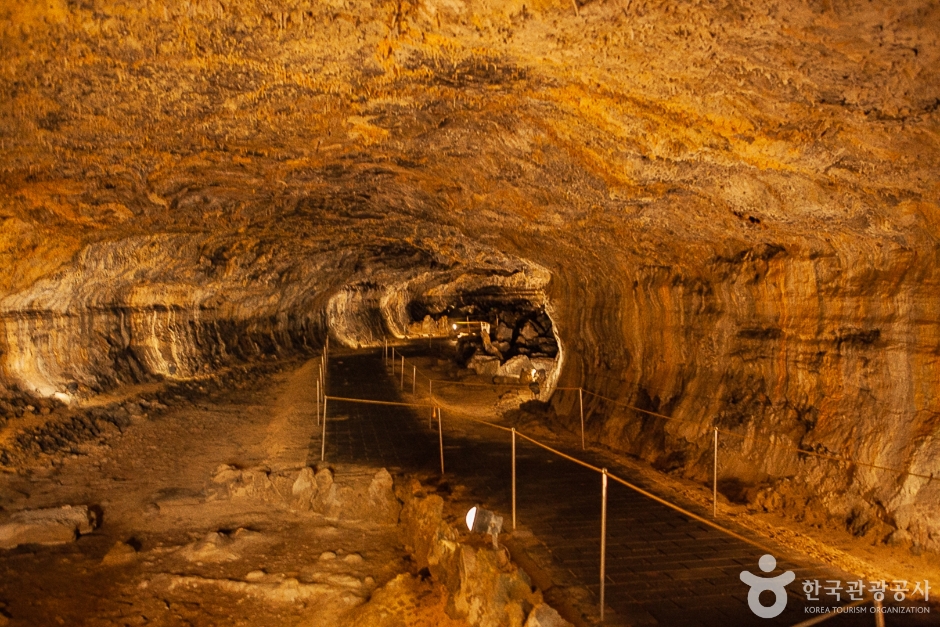
Hyeopjaegul Lava Tube (Hallim Park) (협재굴(한림공원))
17.7Km 2025-03-13
300 Hallim-ro, Jeju-si, Jeju-do
+82-64-796-0001
Hyeopjaegul Lava Tube is one example of the lava tube systems of Jeju Island, along with Hwanggeumgul, Socheongul, Ssangyonggul and Manjanggul Lava Tubes. The cave is approximately 200 meters in length, 10 meters in x_width and 5 meters in x_height. It is thought to have been created by the lava that erupted from Hallasan Mountain some 25 million years ago. This cave uniquely contains features of both lava and limestone caves. The entire area surrounding the cave is a huge stratum of seashells and sand, while the interior of the cave has a mystical ambience due to its various formations such as stalactites and stalagmites, hanging from the ceiling and sprouting up from the bottom of the cave. The cave also features pillars formed when stalactites and stalagmites join together. The cave walls are covered in lime, which at times looks like beautiful cave paintings. The temperature inside the cave stays at 17~18℃ throughout the year, making the cave a welcome escape from the summer heat and a great place to keep warm during winter.
Hyeopjaegul Lava Tube has been designated Natural Monument No. 236 and ranks among the world’s major mysterious caves, such as the stone salt cave of Peru and the underwater limestone caves of Yugoslavia. As Hyeopjaegul Lava Tube is close to Ssangyonggul Lava Tube, the two can be visited on the same day.
 English
 한국어
한국어 日本語
日本語 中文(简体)
 Deutsch
 Français
 Español
 Русский


