
Byeonsan Oncheon Sanjang (변산온천산장)
12.6Km 2025-10-23
83-6 Mukjeong-gil Byeonsan-myeon, Buan-gun, Jeollabuk-do
+82-63-584-4874
Byeonsanbando, surrounded by the sea on three sides, is home to a lot of food using shellfish. Among them, it is the original house that first developed clam porridge, which is considered the most distinctive menu. If you add glasswort salt and sesame seeds to the unique savory taste of clams that harmonize with any other ingredients, it becomes a savory porridge that fills our stomachs. Sweet and sour seasoned Raw Clam Salad and Clam Vegetable Pancake are also prepared.

Saemangeum Promotion Hall (새만금홍보관)
13.4Km 2025-11-05
6 Saemangeum-ro, Byeonsan-myeon, Buan-gun, Jeonbuk-do
Enjoy the panoramic view of Saemangeum
This is a PR center to commemorate the Saemangeum Project, which took 19 years to complete. It is a place that encompasses the past, present, and vision of Saemangeum. The inside is much larger and larger than it looks from the outside, and there are so many things to see. When you go up to the observatory on the 3rd floor, the magnificent panoramic view of Saemangeum spreads out in front of you, and you can observe distances beyond your reach with a telescope. Outside the Promotion Hall, there is a monument where BTS' music video is played. There is an endless stream of visitors sitting here and taking commemorative photos.

Saemangeum (새만금)
13.4Km 2025-10-23
6 Saemangeum-ro, Byeonsan-myeon, Buan-gun, Jeonbuk-do
+82-63-584-6822
Saemangeum is an area created by the reclamation project to build a sea wall connecting Gunsan and Buan. After 20 years of construction, the Saemangeum Seawall was completed in 2010. Stunning sunsets can be seen from the dike, and various facilities such as campgrounds and the Saemangeum Project Office are well prepared for visitors experience. It is also known as a filming location for BTS's music videos.
Duamchodang Hermitage (두암초당)
14.0Km 2024-10-08
88 Yeongmojeong-gil, Asan-myeon, Gochang-gun, Jeonbuk-do
Duamchodang Hermitage is a small hanok building located right next to the cliff face of Byeongbawi Rock. The location and age of this building give off a unique atmosphere, being quite old and in a hard-to-reach place. While there is a hiking trail to the hermitage, there is no parking near the trailhead, making it a bit difficult to reach.
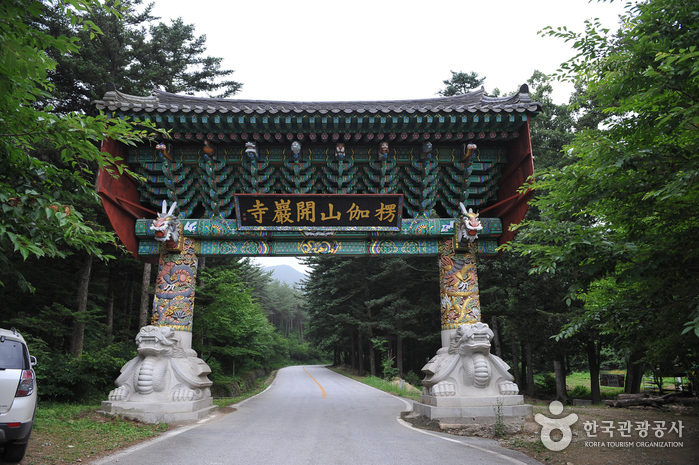
Gaeamsa Temple (개암사)
15.4Km 2024-04-07
248, Gaeam-ro, Buan-gun, Jeonbuk-do
+82-63-581-0080
Gaeamsa Temple is a small, quiet temple built in 634 during the Baekje dynasty. The origin of the name "Gaeam" goes back to 282 BC, when King Mun from the Byeonhan confederacy took refuge here during the revolt of the Jinhan and Mahan confederacies. Under King Mun's command, temples for the new fortress were built on east and west sides of the valley; the western temple was called Gaeam. In 676, the temple was expanded and in 1276, thirty more buildings were raised, expanding it to a grand temple.
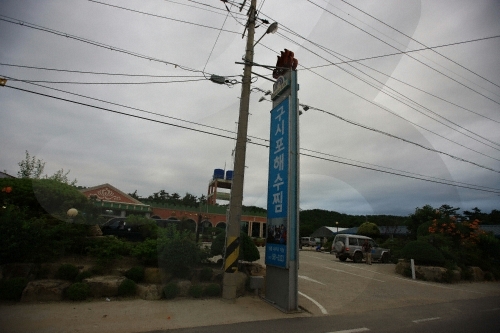
Gusipo Haesu World (Gusipo Seawater World) (구시포 해수찜월드)
16.5Km 2024-04-07
540, Jinamgusipo-ro, Gochang-gun, Jeonbuk-do
+82-63-561-3324
The Gusipo Haesu World provides a diverse selection of jjimjilbang facilities.
There is a “Haesuyakjjim (Medicinal Seawater Bath)” full-body bath, where special healthy ingredients are added to heated seawater. This is believed to effectively treat neuralgia, arthritis, and obesity.
This process extracts unnecessary substances from the skin, creating a more beautiful radiance. There are also other enjoyable facilities such as the indoor sand bathing room and a green tea spa.
Ungok Ramsar Wetland (고창 운곡람사르습지)
18.1Km 2024-04-07
362 , Ungokseowon-gil, Gochang-gun, Jeonbuk-do
+82-63-560-2720
Ungok Ramsar Wetland, registered as Ramsar Wetland in 2011, is home to endanged species and various rare animals and flowers. The wetland also has four different courses that will take visitors all around the wetlands. Course 1 takes approximately 50 min and is 3.6 km-long. Course 2 takes approximately 2 hour 30 minutes and is 9.5 km-long. Course 3, the longest out of the 4 courses takes approximately 3 hours 30 minutes and is 10.2 km-long. Last, Course 4 takes approximately 2 hours 50 minutes and is 10.1 km-long.
Buan Guam-ri Dolmens (부안 구암리 지석묘군)
19.1Km 2024-04-07
Seoksang-ri, Buan-gun, Jeonbuk-do
+82-63-580-4711
Buan Guam-ri Dolmens, designated as Historical Site No. 103, is comprised of southern-style dolmens. Dolmen refers to a particular structure of a tomb created during the Bronze Age. Dolmen is largely classified into two groups – Southern-type that has small footstones supporting large top stone; and Northern-type which is shaped like a desk. In Guam-ri, there were originally 13 dolmens, but only 10 remain. Most of the dolmens have 8 small footstones propping up one large top stone, compared to the dolmens in other regions which normally have 4 footstones.
 English
 한국어
한국어 日本語
日本語 中文(简体)
 Deutsch
 Français
 Español
 Русский


