
Jeju Equestrian Park (제주승마공원)
17.3Km 2024-05-08
152-1 Nokgome-gil, Aewol-eup, Jeju-si, Jeju-do
Jeju Equestrian Park, nestled in the mid-mountain meadows of Yusuam-ri, Aewol-eup, offers visitors the chance to immerse themselves in the island’s natural beauty on horseback. With the longest trekking course stretching 100 kilometers, the park presents a variety of routes tailored to individual preferences, including horse riding shows, a couples’ riding academy, a children's riding camp, and corporate horseback riding workshops for the perfect equestrian leisure experience. Safety is a top priority, ensured by the best instructors for a comfortable and secure riding experience, making it an accessible adventure for even novice riders.
Seogwipo Gasiri Village (Noksan-ro Canola Flower Road) (서귀포 가시리마을 (녹산로 유채꽃도로))
17.7Km 2024-01-09
20 Gasi-ro 565beon-gil, Pyoseon-myeon, Seogwipo-si, Jeju-do
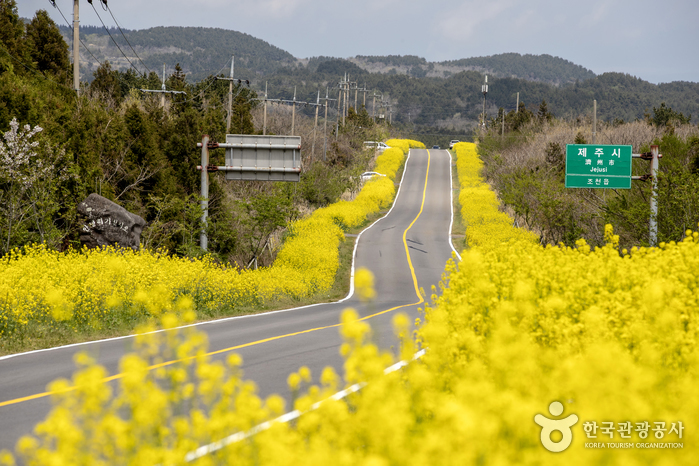
Seogwipo Gasiri Village is where canola flowers and cherry blossoms bloom simultaneously over a 10-kiliometer section from its access road every April, boasting a picturesque driving route. The combination of yellow canola flowers and light pink cherry blossoms is very special. Selected as one of the “100 Beautiful Roads in Korea,” Gasiri Noksan-ro Road is a road that passes through Noksanjang and Gammajang, which were the best horse farms of the Joseon period, and is currently one of the best canola flower roads in Jeju. As such, it is called the "First Sight of the Ten Sights of Gasiri Village." In addition, visitors can enjoy beautiful natural scenery unique to Jeju, such as Ttarabioreum and Keunsaseumioreum Parastic Cones.
Citrus Museum (감귤박물관)
17.9Km 2024-03-26
441 Hyodonsunhwan-ro, Seogwipo-si, Jeju-do
Citrus Museum is a themed museum dedicated to tangerines, a specialty of Jeju Island. It showcases the history of tangerines, their varieties, cultivation methods, and tangerine cultivation worldwide. Visitors can also purchase tangerine-related products at the Citrus Experience Center and Museum Shop. From November to February of the following year, visitors can experience tangerine harvesting. The café on the second floor offers various beverages made from tangerines.
Southernmost Theme Park (최남단체험감귤농장)
17.9Km 2024-02-20
168 Namwinamseong-ro, Namwon-eup, Seogwipo-si, Jeju-do
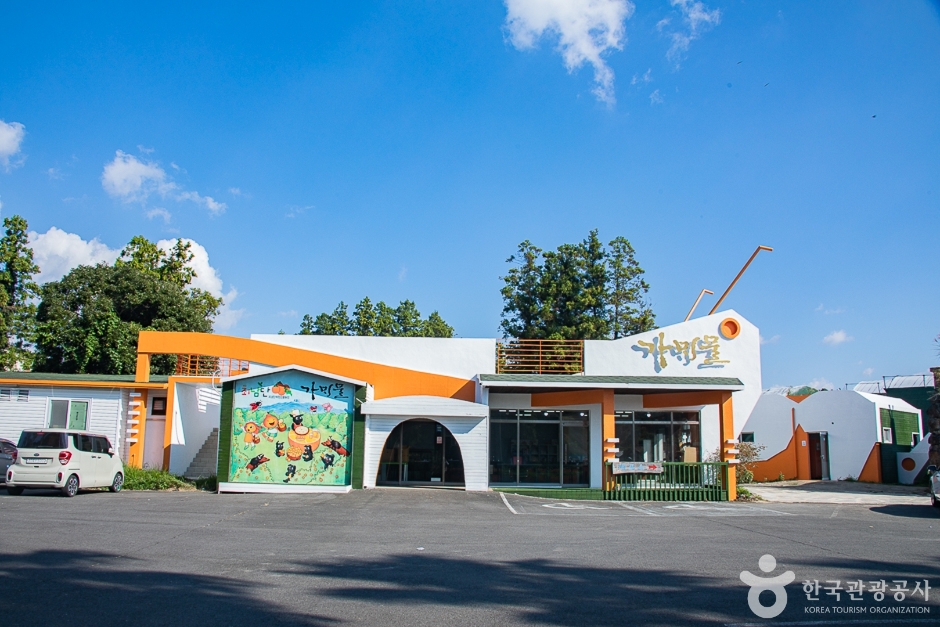
Southernmost Theme Park is a rural ecological farm that offers various year-round experiences. In addition to citrus harvesting, it features insect observation activities, including butterflies, rhinoceros beetles, and stag beetles, animal feeding for sika deer, black pigs, and ostriches, and craft classes like citrus-based food preparation and soap making.
Jeju Dongbaek Village (제주 동백마을)
18.0Km 2025-11-21
22-1 Hansin-ro 531beon-gil, Namwon-eup, Seogwipo-si, Jeju-do
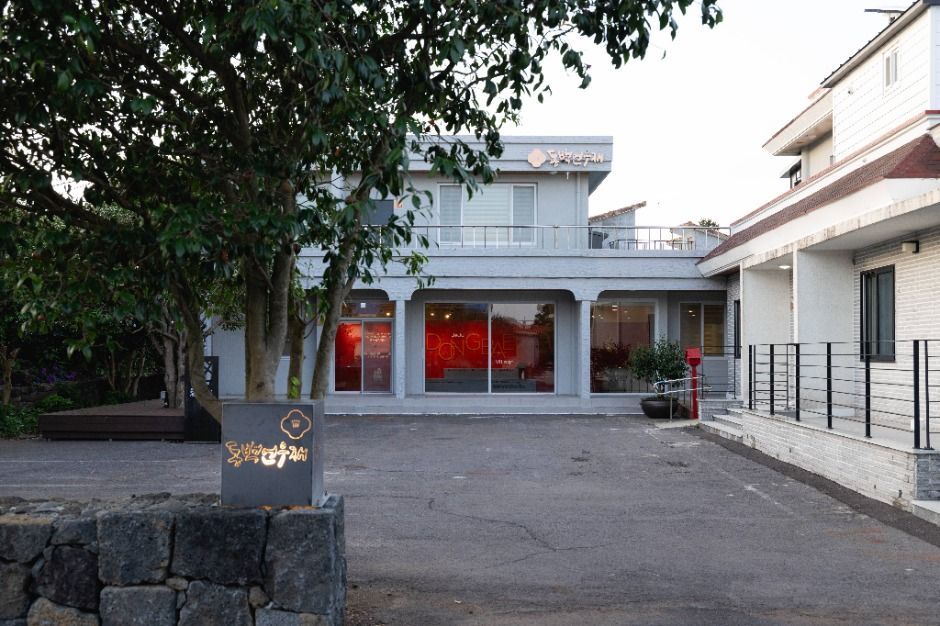
Located in Seogwipo, Jeju Camellia Village has a 300-year history with its native camellia trees, and is involved in various projects. Visitors can explore the 300-400-year-old camellia trees scattered throughout the village, purchase authentic camellia oil from the community-operated mill, and participate in various experience programs such as camellia soap-making and cooking classes using camellia oil. From October to March, visitors can also purchase tangerines, locally produced by the village residents. The local community is dedicated to preserving the camellia forest for future generations, offering visitors a chance to experience the village’s beauty.
House of Refuge (하우스오브레퓨즈)
18.0Km 2024-07-24
735 Haso-ro, Aewol-eup, Jeju-si, Jeju-do
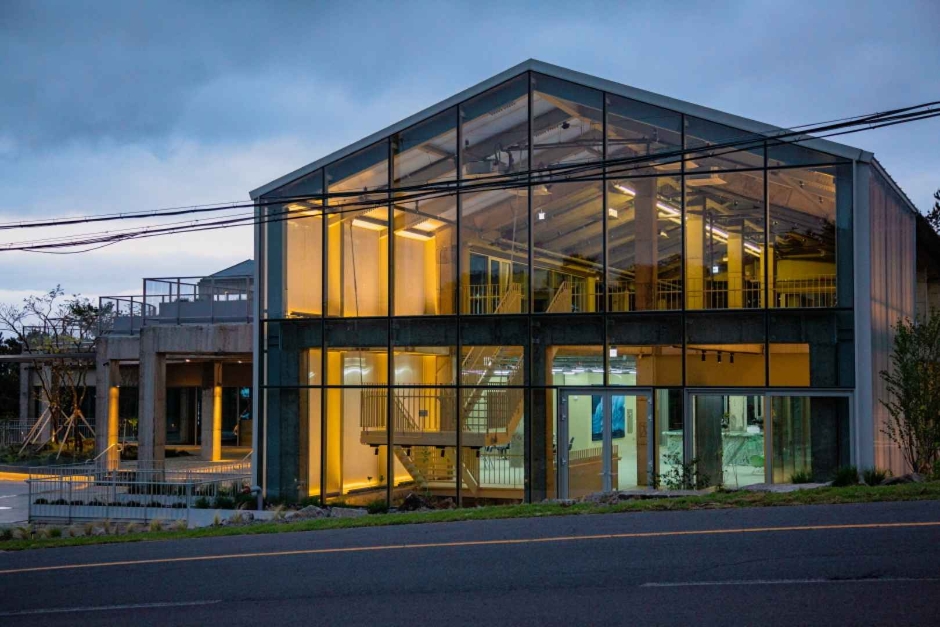
House of Refuge is a large culture complex featuring a cafe and artwork together. The menu includes unique items using local products, such as Jeju banana pudding, and Jeju Nouveau non-alcoholic beer. The space is the perfect setting for exhibitions, parties, performances, and other events.
Jeju Teseum (제주테지움)
18.3Km 2025-03-17
2159, Pyeonghwa-ro, Jeju-si, Jeju-do
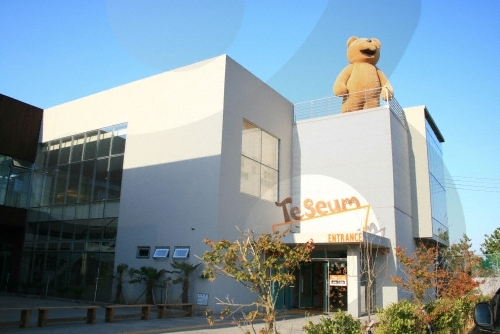
Teseum Safari is a new concept museum, the first of its kind in the world, exhibiting stitched dolls shaped like wildlife animals, marine animals, flowers, birds and more. The wild animal zone on the first floor has a photo zone for visitors to take photos with lions, tigers, and elephants along with teddy bears. On the second floor, varied animal dolls like dolphins, sharks and marine animals such as octopus, turtle, flamingo, crane, and a flock of ducks are available. On the second floor of Building B, a 4m-tall teddy bear is available for children to play with by running around freely at the playground, as well as watching all the teddy bears appearing in a teddy drama “New Heart.” Teseum Art Gallery shows movie parody teddy bear, Greek mythology parody teddy bear, and world costume teddy bears. A gift shop sells various teddy bear goods and lovely teddy bears. A restaurant in the basement sells handmade pizza with personalized toppings is available. In particular, wish trees located throughout Building A on the first and second floors can be a special event for tourists.
![Manjanggul Lava Tube [National Geopark] (만장굴 (제주도 국가지질공원))](http://tong.visitkorea.or.kr/cms/resource/55/3354155_image2_1.jpg)
Manjanggul Lava Tube [National Geopark] (만장굴 (제주도 국가지질공원))
18.7Km 2025-03-31
182 Manjanggul-gil, Jeju-si, Jeju-do
Manjanggul Lava Tube, located in Gimnyeong-ri, Jeju, is part of the Geomunoreum Lava Tube system. The lava tube stretches roughly 7,400 meters, with a maximum x_height of 25 meters and x_width of 18 meters. These measurements make it one of the largest lava tubes in the world. Manjanggul holds great value for science and conservation studies, having well-maintained formations despite being formed over one hundred thousand years ago.
The majority of the cave is closed off, with only 1 kilometer being open to tourists. Within this open section, visitors can see a variety of lava tube and cave topographical features, including stalagtites, stalagmites, and stone pillars. Among these, the 7.6-meter-tall stone pillar at the end of the open section is recorded as the largest in the world.
Jeju Camellia Arboretum (제주동백수목원)
18.7Km 2025-03-31
288 Taewi-ro, Seogwipo-si, Jeju-do
Jeju Camellia Arboretum is home to Korea's largest colony of Camellia sasanqua, a minature camellia species. The arboretum is part of Wimi Camellia Habitat, a beautiful forest protected as a natural monument of Jeju.
Seongeup Folk Village (성읍민속마을)
18.7Km 2024-03-11
3294, Seongeup-ri, Pyoseon-myeon, Seogwipo-si, Jeju-do
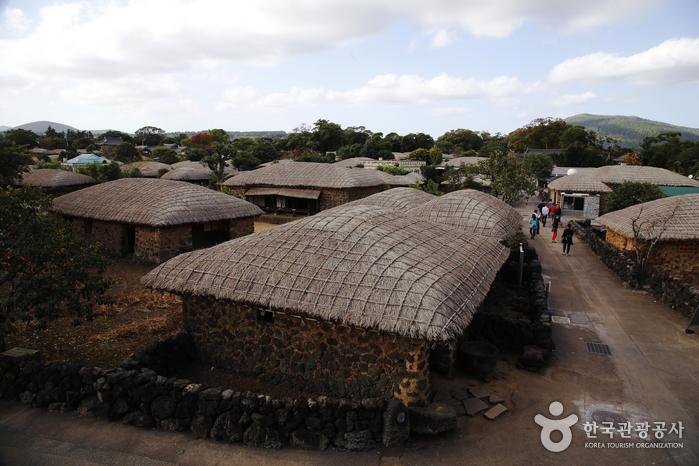
Seongeup Folk Village has been designated and protected as a folk village, preserving the characteristics of Jeju's old private houses. Various tangible cultural heritage and intangible cultural heritage such as folk songs and games, local foods and craftmanship, and Jeju dialect are being passed down. The village offers traditional culture and traditional house experiences, and holds cultural events every October and November.
 English
 한국어
한국어 日本語
日本語 中文(简体)
 Deutsch
 Français
 Español
 Русский


