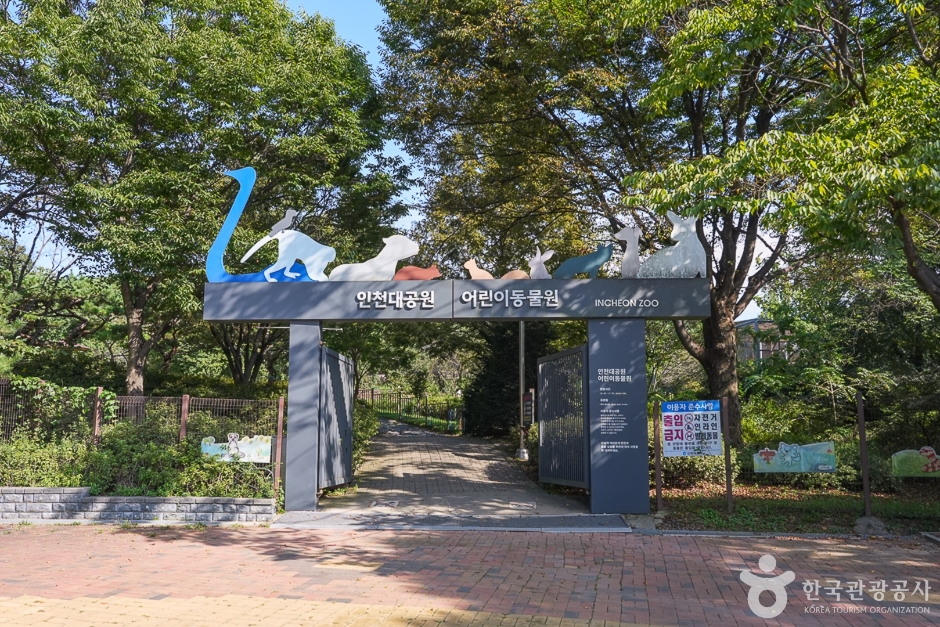
Incheon Grand Park Children's Zoo (인천대공원 어린이동물원)
17.5Km 2024-04-11
236 Munemi-ro, Namdong-gu, Incheon
The Children's Zoo of Incheon Grand Park is located near the south gate, and is home to over 230 animals in 27 species. The zoo mostly features gentle animals like rabbits, guinea pigs, Japanese macaques, marmosets, fennec foxes, wallaroos, meerkats, macaws, ostriches, and other non-dangerous animals. The zoo also houses protected Korean animals such as eagles and the Eurasian eagle-owl. To prevent accidents and animal stress, the zoo does not operate any animal feeding programs.

Incheon Grand Park (인천대공원)
17.5Km 2025-01-10
236 Munemi-ro, Namdong-gu, Incheon
Incheon Grand Park is an urban nature park located in Jangsu-dong, Namdong-gu, Incheon. The park is surrounded by Gwanmosan Mountain and Sangasan Mountain. Spanning across 727 acres of land, Incheon Grand Park is the only large-scale natural green park in Incheon. The park provides a pleasant atmosphere for citizens to escape from the city life and enjoy the natural surroundings. Over 4 million people visit the park every year to take in the clean air and relax in nature.
Ain Hospital (의료법인 아인의료재단 아인병원)
17.5Km 2025-10-23
372 Gyeongin-ro, Michuhol-gu, Incheon
Consistently ranking first in delivery performance across Incheon, our hospital has achieved exceptional success rates in IUI and IVF procedures, far surpassing the national average. As the only obstetrics and gynecology hospital in Incheon designated by the Ministry of Health and Welfare, we have earned recognition for our outstanding quality of medical services, patient care, and safety through rigorous medical institution accreditation.
Our comprehensive services include an Infertility Treatment Center, a Women's Health Center for pregnancy and childbirth, and a Health Checkup Center, where patients receive systematic evaluations using state-of-the-art equipment and expert care from specialists in each field.
We also house a Laparoscopic Surgery Center and a HIFU Center, offering rapid and minimally invasive treatments for gynecological conditions, alongside a Spinal Joint Center equipped with cutting-edge technology for precise diagnostics and advanced procedures, including complex surgeries like artificial joint replacements and vertebral endoscopy.
Furthermore, our Robotic Surgery Center is equipped with the latest in robotic surgical systems, including the da Vinci and Mako robots, ensuring precision and excellence in surgical care.
With 350 to 400 deliveries each month and over 350,000 outpatient visits annually, our hospital stands as a specialized institution that rivals university hospitals in technological expertise and high standards of care.
Mandabok (만다복)
17.5Km 2024-12-19
인천광역시 중구 차이나타운로 36 만다복
This restaurant offers baengnyeon jjajang (meaning “hundred-year jjajang”), a traditional style of hayan jjajang, or old-fashioned black bean sauce noodles. The dish features noodles topped with a soy sauce-based sauce along with pork, seafood, and vegetables.
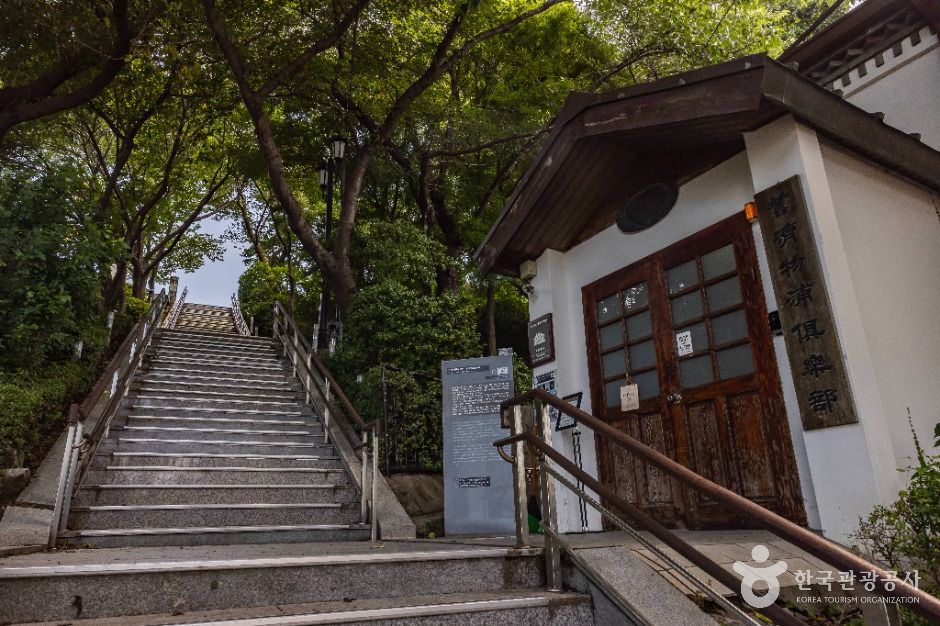
Jemulpo Club (제물포구락부)
17.5Km 2025-10-23
25 Jayugongwonnam-ro, Jung-gu, Incheon
Jemulpo Club, also called Jeumulpo Gurakbu, was established in 1901 to be used as the venue for foreigners such as American, English, German, French, Russian and a small minority of Chinese and Japanese all living in Incheon to build up friendships before opening the port. The two-story brick building was comprised of a library room, pool table, tennis court and others facilities.
The site was used as Incheon Museum from 1953 to 1990 and Incheon Cultural Center from 1990 to 2006. In 2007, the name was changed to Jemulpo Gurabu, imphasizing the Japanese pronunciation of "club." It now offers a site for experiencing modern culture interactions.
Paju Jangneung Royal Tomb [UNESCO World Heritage] (파주 장릉(인조, 인열왕후) [유네스코 세계문화유산])
17.5Km 2021-07-19
90, Jangneung-ro, Paju-si, Gyeonggi-do
Located in Paju, Jangneung is the tomb of King Injo (1595-1649, reign 1623-1649), the 16th ruler of the Joseon dynasty, and Queen Inyeol.
King Injo took the throne in 1623 after having overthrown the previous king, Gwanghaegun, in a military revolt. During his reign, King Injo faced challenges from two foreign invasions in 1627 and 1637. He died in 1649 in Changdeokgung Palace.
The Story Course of the Historical and Cultural Street of the Open Trade Port - 1 hr course ([인천 개항 누리길] 1시간 코스)
17.6Km 2023-01-12
269, Jemullyang-ro, Jung-gu, Incheon
The Story Course of the Historical and Cultural Street of the Open Trade Port is a course that showcases the history and culture of the pork opening over 100 years ago. Started in 2006, the walking course takes participants through historical buildings and attractions including Jayu Park, The first Bank, 5.8 Bank, Chinatown and more. There are three different courses varying by time with one hour course taking participants from Incheon Station to Chinatown and Samgukji Mural Street, Jayu Park, Jemulpo Club, Incheon Modern Architecture Museum, and finishing at Korean-Chinese Cultural Center.
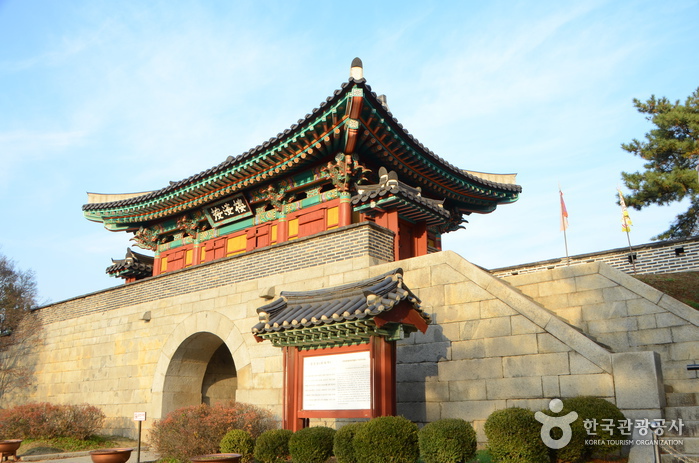
Gwangseongbo Fortress (광성보)
17.6Km 2022-07-25
27, Haeandong-ro 466beon-gil, Ganghwa-gun, Incheon
Gwangseongbo Fortress’s outer wall from the Goryeo era was mended in 1618. The fortress was built in 1656 and the outpost was constructed in 1679. It was completely remodeled into
a masonry castle with gates in 1745. During Sinmiyangyo (the American invasion in 1871), Gwangseongbo was the fiercest battle ground in Ganghwa. On April 24, 1871, a
fleet with 1,230 American naval forces led by Rear Admiral John Rodgers landed on Ganghwado Island to demand the
opening of Korea's ports and commerce. The armed forces attacked Chojijin Fortress
and Deokjinjin Camp, then marched to Gwangseongbo Fortress, where they engaged in close combat with the warriors of Joseon. Although General Eo Jae-yeon and the other warriors were poorly equipped with far inferior weapons, they bravely fought to the
death against the invading forces.
The battlefield ruins of the fortress and the gate towers such as Anhaeru, Gwangseongdon, Sondolmokdon, and Yongdudon were repaired
in 1977. The twin tombs of General Eo Jae-Yeon and his brother Eo Jae-seon, along with the anonymous tombs of warriors who died on the battlefield were
also honorably arranged at the same time. Furthermore, a stone monument commemorating the restoration of Ganghwa Battlefield was erected on Yongdudondae Post.
In 1988, an extensive rest area was created toward the shore for visitors’ convenience. Gwangseongbo Fortress is presently designated as Historical Relic No. 227. A religious service known as Gwangseongje is held annually to commemorate the patriotic spirits of General Eo Jae-yeon and other unnamed warriors. This service takes place at 11 a.m. on every April 24th of the lunar calendar.
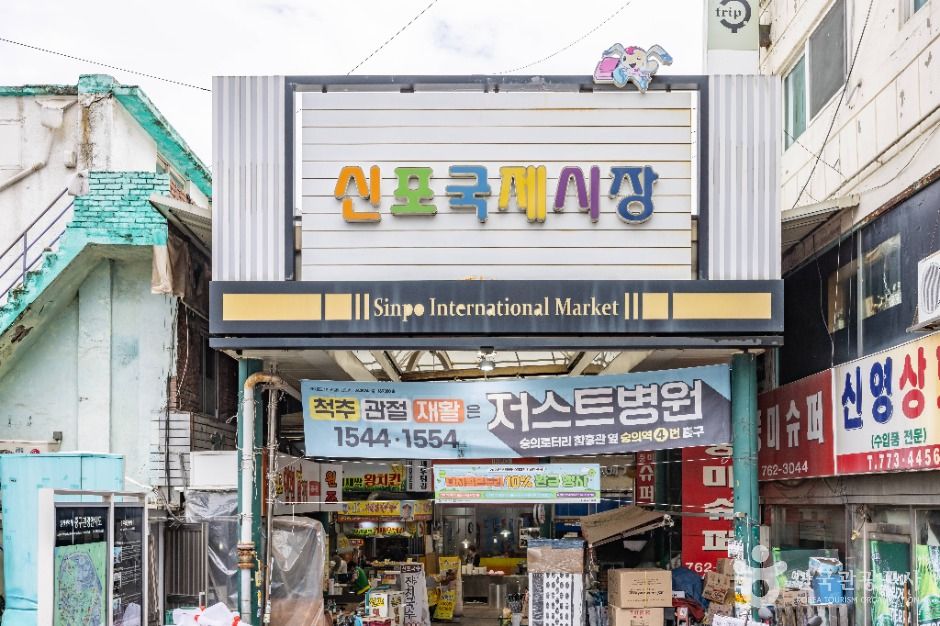
Sinpo International Market (신포국제시장)
17.6Km 2025-10-23
11-5 Uhyeon-ro 49beon-gil, Jung-gu, Incheon
Located in Sinpo-dong, Incheon, Sinpo Market dates back to the late 19th century when vendors began selling fresh vegetables to the Japanese, Chinese, and Westerners who settled in the area. Sinpo Market was officially registered as a market in 1970 and now boasts over 140 stores.
An increasing number of tourists and international merchants have visited Incheon by ferries and cruise ships, turning the local market into an international shopping area over the past few decades. The information desk and office at the market even provide a variety of services (translation services, trade and shopping information, etc.) for tourists and merchants from home and abroad.
The most famous item of the market is dakgangjeong, a Korean dish of crispy fried chicken coated in a sweet and spicy sauce. Other popular dishes include yuni jjajang, egg tart, freshwater fish jeon, mandu, and jjolmyeon (chewy noodles).
Wolmi Sea Train (월미바다열차)
17.6Km 2024-04-21
269 Jemullyang-ro, Jung-gu, Incheon
Wolmi Sea Train is Korea's longest urban tourist monorail, stretching over 6.1 kilometers. The train travels at an average speed of 9 kilometers per hour, taking 42 minutes to complete one loop around Wolmido. The tracks are located between 7 and 18 meters off the ground, offering a view over all Wolmido has to offer. The views out over the sea are especially beautiful at sunset.
 English
 한국어
한국어 日本語
日本語 中文(简体)
 Deutsch
 Français
 Español
 Русский


