Midohyang (미도향)
8.0Km 2024-11-29
8-4 Daesan-ro 223beon-gil, Ilsanseo-gu, Goyang-si, Gyeonggi-do
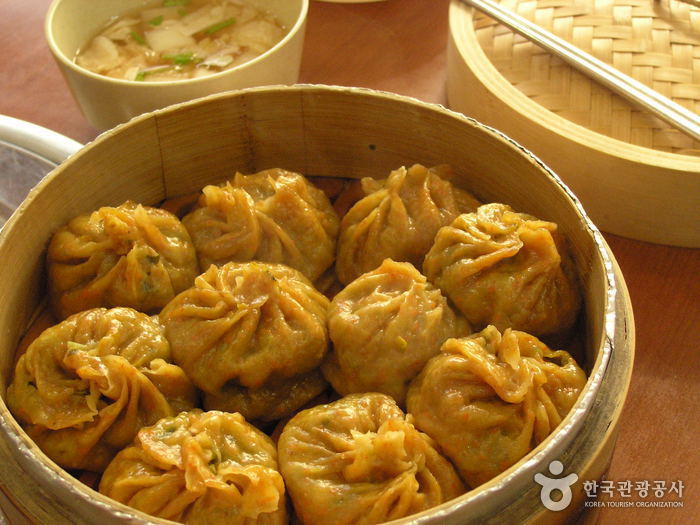
Midohyang is a specialty restaurant renowned for its mandu dishes, with mandu jeongol (mandu hot pot) being the flagship menu. The mandu jeongol can be ordered based on the number of people and includes gogi mandu (meat mandu) and kimchi mandu. It is a delight to complement with additional orders of bokkeumbap (fried rice) or noodles after enjoying the jeongol. The mandu jeongol can also be packed for takeout, comprising wangmandu (jumbo mandu), vegetables, broth, noodles, rice cake, and seasoned sauce.

Nokcheongja Museum (녹청자박물관)
8.2Km 2021-10-23
54, Doyoji-ro, Seo-gu, Incheon
Since opening in 2002, the Nokcheongja Museum has been preserving and exhibiting academic materials about the Green Celadon Kiln Site, a Historic Site designated in 1970. It is the only museum dedicated to celadons in Incheon. The museum is divided into the History Exhibition Hall where visitors can observe the celadon making process and the Special Exhibition Hall that displays modern-day celadons. In addition to the two indoor exhibition halls, the museum also has an outdoor exhibition site with a collection of approximately 200 donated potteries, ranging from traditional to recently trending designs.
Catholic Kwandong University International ST.Mary's Hospital (가톨릭관동대학교 국제성모병원)
8.4Km 2025-10-23
25 Simgok-ro 100beon-gil, Seo-gu, Incheon
Opened in February 2014, Catholic Kwandong University International St. Mary’s Hospital is a university hospital closest to Incheon International Airport, the gateway to Korea.
The hospital has established a patient-centered care system convenient for both domestic and international patients, supported by an excellent medical team and cutting-edge medical equipment. Above all, inspired by the Catholic Church’s noble spirit of “Respect for Human Life,” all staff members care for patients as if they were our own family with the spirit of sacrifice.
This commitment has led the hospital to achieve the highest grade in evaluations for the four major cancers and to rank first among general hospitals nationwide in two patient experience assessments conducted since 2018.
To uphold the sanctity of life and fulfill its social responsibilities, International St. Mary’s Hospital operates the largest hospice and palliative care unit among university hospitals in Korea, with 29 beds dedicated to preserving the dignity and quality of life of patients. The hospital is also committed to ongoing social contributions, including providing medical support for the underprivileged, participating in domestic and international medical volunteer activities, conducting campaigns for pregnant women, and supporting medical care for students with severe multiple disabilities in collaboration with the local community.
Memorial to the Loyal Dead (호국충혼위령비)
8.4Km 2025-01-13
56-33, Gaehwadong-ro 13-gil, Gangseo-gu, Seoul
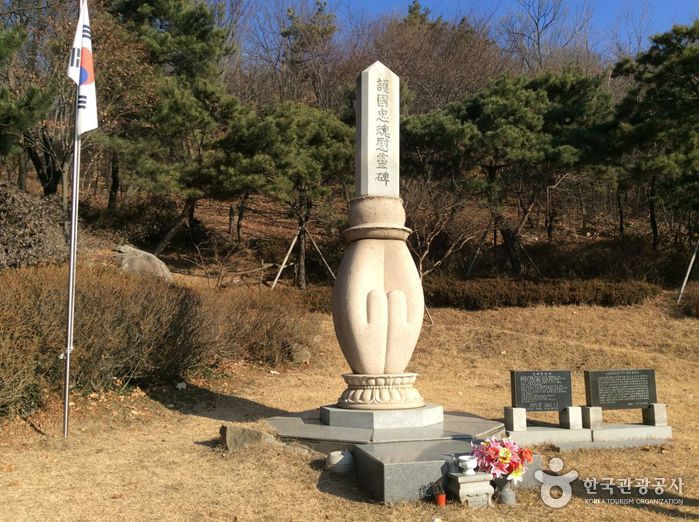
When the fate of the nation was hanging by a thread as the North Korean Army launched an invasion of the South on June 25, 1950, about 1,100 officers and men from
the South Korean First Division's 11th, 12th, and 15th regiment retreated to Gimpo and built the last line of defense on Gaehwasan Mountain from June 26 to 30 to fight against a large army
of North Korean soldiers disguised as South Korean men.
Unfortunately, their communication with the headquarters was
cut off and their supply of ammunition and food ran out. As a result, the entire South Korean force was killed by the much larger North Korean army
in a valley around Gaehwasan Mountain. In order to commemorate those who died for the country, the government established the
Memorial to the Loyal Dead on Gaehwasan Mountain in 1994. A memorial service is
also held here annualy on June 28th.
x_height: 4.7 meters high
Built by the First Division of the ROK Army, Mitasa Temple
National Institute of Biological Resources (국립생물자원관)
8.4Km 2023-04-13
42, Hwangyeong-ro, Seo-gu, Incheon
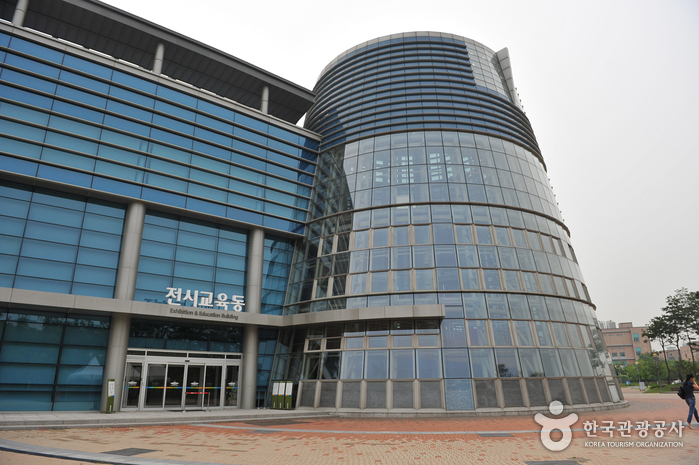
Opened in October 2007, the National Institute of Biological Resources is the largest collection preservation facility in Northeast Asia. The institute collects, preserves, manages, and conducts research on biological resources with the aim of growing into a focal biological resource hub of Northeast Asia. The institute is comprised of a spine-shaped collections and research center and a leaf-shaped exhibition and education center. The exhibition hall has 3,905 specimens of 1,287 native species on display. Korea's diverse ecosystems are recreated as highly detailed dioramas at the exhibition hall. A small restaurant is located inside the research center, and the extensive grass field in front of the institute provides an ideal picnic spot.
Mitasuya Ryokan Hotel Incheon Seo-gu Office Branch (미타스야 료칸 호텔 인천서구청역점)
8.5Km 2025-04-09
20 Seogot-ro 301beon-gil, Seo-gu, Incheon
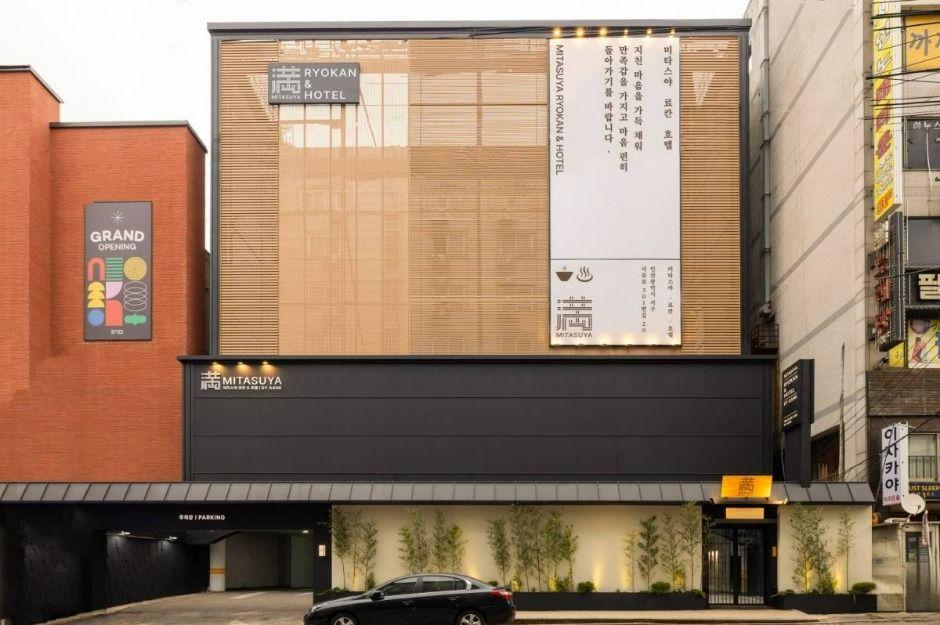
Mitasuya Ryokan Hotel Incheon Seo-gu Office Branch seeks to offer guests the ultimate comfort in an urban city. The hotel offers a tea ceremony room, a comic book room, a standard styler room, a 2 PC room, two different types of wellness massage chair rooms, a standard twin room, a pet-friendly roo, and a jacuzzi spa room.
Incheon Asiad Main Stadium (인천아시아드주경기장)
8.8Km 2025-06-09
806 Bongsu-daero, Seo-gu, Incheon
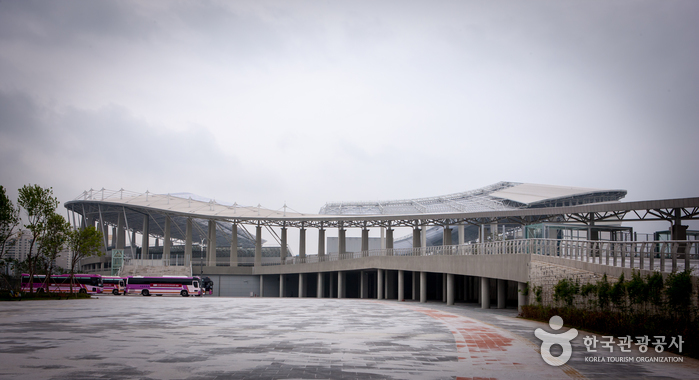
Incheon Asiad Main Stadium is the main stadium used for the 2014 Asian Games in Incheon. Construction began in June 2011 and the stadium opened on June 1, 2014. Built on a 631,975 ㎡ lot, the five-story stadium has a total floor area of 113,620 ㎡ and 61,818 spectator seats (capacity to be reduced by 32,514 seats after the 2014 Asian Games).
The stadium has an oval running track enclosing a regulation-size soccer field. Outside, there's a tennis court, a subsidiary stadium, and the 1,415.13 ㎡ Yeonhui Cricket Ground.
Incheon Sejong Hospital (인천세종병원)
9.1Km 2025-10-23
20 Geyangmunhwa-ro, Geyang-gu, Incheon
Incheon Sejong Hospital is the most visited hospital by foreign patients with heart disease.
Known as one of the best hospitals for heart diseases including minimally invasive heart surgery and artificial heart surgery, about 6,000 foreigners come to us for treatment each year.
Currently, patients are from various countries, such as Russia, Kazakhstan, other CIS countries, Mongolia, the United States, Guam, and China.
About 2,000 employees are working together to become one of the world's top 100 hospitals by 2030.
Sejong Hospital in the world, a hospital trusted and satisfied by global customers.
Heartner (하트너)
9.1Km 2025-11-28
2nd Floor, 5-9 Ojosan-ro 21beon-gil, Gyeyang-gu, Incheon
Heartner Medical Center is an international healthcare service center specializing in organizing treatment at leading clinics in South Korea for patients from all over the world.
We provide comprehensive support at every stage of the medical journey — from selecting the appropriate clinic and coordinating treatment to offering personalized assistance and professional interpretation services.
With extensive experience in coordinating treatment across a wide range of medical fields, Heartner Medical Group ensures that every patient receives high-quality medical care tailored to their individual needs.
In addition to general and specialized medical programs, we also assist international clients seeking plastic surgery in South Korea, providing full guidance and ensuring comfort throughout the entire process.
Gangseo Marsh Ecological Park (강서습지생태공원)
9.3Km 2021-06-22
279-23, Yangcheon-ro 27-gil, Gangseo-gu, Seoul
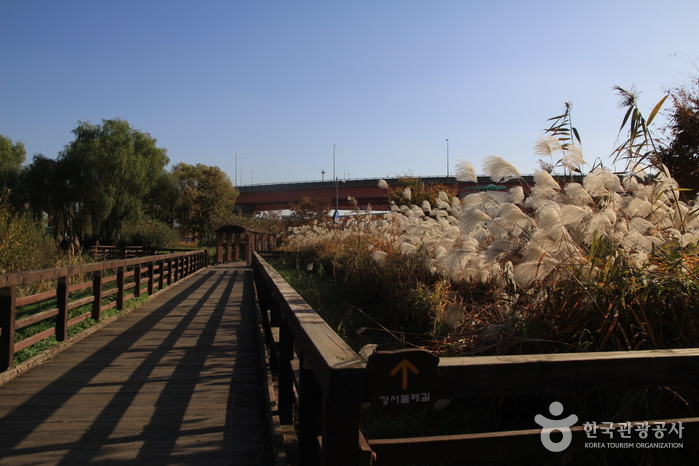
The Gangseo Marsh Ecological Park is an eco-park located on the Hangang River between the southern side of Banghwadaegyo Bridge and southern side of Haengjudaegyo Bridge. Established in July 2007, the park is partly comprised of low wetlands, freshwater lakes, and various aquatic plants. Eco-trails wind around the park through reed areas, around willow trees, and past the migratory bird observation. At the park, visitors can watch and learn about a variety of migratory birds during summer and winter or join one of the park’s organized eco-education programs.
 English
 한국어
한국어 日本語
日本語 中文(简体)
 Deutsch
 Français
 Español
 Русский


