
Yeouido Park (여의도공원)
13.1Km 2024-04-08
68, Yeouigongwon-ro, Yeongdeungpo-gu, Seoul
Yeouido Park is a large recreational area located on Yeouido Island in the central part of Seoul. It was once originally covered with black asphalt, and people frequented the place for bicycling and roller-skating. The construction began in 1997 and opened officially in February 1999. It is now the place where many people in the city come to rest and enjoy strolling around, playing sports, and cultural events.
Incheon Hwapyeong-dong Sesutdaeya Naengmyeon Steet (인천 화평동 세숫대야 냉면 거리)
13.2Km 2026-06-30
Hwapyeong-ro, Jemulpo-gu, Incheon
The first naengmyeon restaurant to open in Hwapyeong-dong did so in the early to mid-70s. It wasn't until the early 2000's that the area saw an influx of over 20 naengmyeon restaurants. These days, visitors can choose from 13 restaurants. In the beginning, the servings here were all the standard found anywhere else in Korea. However, many of the factory workers in the area would come here, and ask for additional servings during their lunch break. Eventually, the restaurants began to serve larger sizes, naturally leading to the use of a large bowl to one similar to what people would use when washing their faces. Another specialty of the naengmyeon here is the addition of yeolmu kimchi (young summer radish kimchi). Many restaurants also offer free, unlimited refills on noodles.
Wolgot Harbor (월곶포구)
13.2Km 2025-05-08
Wolgot-dong, Siheung-si, Gyeonggi-do
"Got" in the name of Wolgot means peninsula and the area was considered an important strategic point during the Joseon dynasty. In 1991 a land reclaimation project succeeded in creating a new recreation site. Now there are many seafood restaurants, various auxiliary facilities, and an amusement park that rest on reclaimed land. Because the inlet is located on the west coast where the difference in the water level between high and low tide is great, fishing boats avoid the area during the shifting tides. But, whenever the boats return, visitors can enjoy fresh sushi and other seafood. The Marine World facilities have authentic European-style restaurants, an outdoor seawater pool that can be used free of charge, and a barbecue facility along with other amenities.
Neulsolgil Park (늘솔길공원)
13.2Km 2024-11-08
771 Aenggogae-ro, Namdong-gu, Incheon
Neulsolgil Park, nestled in Nonhyeon-dong, Incheon, is a park designed with nature in mind. The creation of the park focused on preserving the existing forest as much as possible, resulting in a diverse array of forest trails that lead visitors through cypress, metasequoia, ginkgo, and katsura forests. Additionally, the park offers a variety of amenities and playgrounds. Features include a sheep farm, a rose garden, and a forest playground, making it a versatile destination that caters to visitors of all ages.
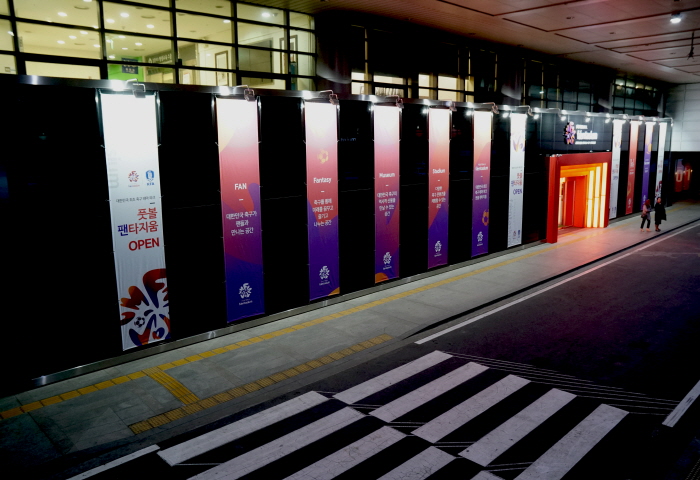
Football Faentasium (풋볼 팬타지움)
13.3Km 2022-09-13
240, World Cup-ro, Mapo-gu, Seoul
Football Faentasium is the first soccer-themed experience museum in Korea, founded by the Korea Football Association. The museum uses the lastest in IT for exciting displays, experiences, educational lessons, and more for a facility more like a theme park than a museum. The name comes from a mix of the words fan, fantasy, museum, and stadium.
Gimpo Jangneung Royal Tomb [UNESCO World Heritage] (김포 장릉(인헌왕후) [유네스코 세계문화유산])
13.3Km 2022-12-16
79, Jangneung-ro, Gimpo-si, Gyeonggi-do
Jangneung Royal Tomb is located in Gimpo, Gyeonggi-do. This is the tomb for the parents of King Injo, the posthumously designated King Wonjong (1580-1619) and of his wife Queen Inheon (1578-1626). The tombs are small but well maintained.
WENERD Corp. (주식회사 위너드)
13.4Km 2025-10-23
#201, Saul Building, 21 Seongmisan-ro 1-gil, Mapo-gu, Seoul
Wenerd provides a total care solution through “Wenerd Care”, combining premium wellness tourism with health check-ups to comprehensively manage clients’ health and beauty.
Youth Clinic (유스의원)
13.4Km 2025-10-23
(4th Floor, Islex), 108 Uisadang-daero, Yeongdeungpo-gu, Seoul
Youth Clinic is a single-room dermatology practice that sees only 20 patients per day. We offer dermatology care, obesity care, and petit plastic surgery. We operate at two locations in Cheongdam and Yeouido. Our staff consist of family medicine and dermatology specialists providing high-quality medical services, and our flagship procedures include 5G Lifting, which is a non-surgical anti-wrinkle and lifting procedure, Youth Double Skinny lipolysis, which treats partial obesity without surgery, Youth Fill collagen filler, which increases skin elasticity and volume at the same time, and Atos laser treatment, which improves pores and skin elasticity. Our signature procedures have won the 2014 and 2016 Medical Korea Awards, No. 1 in 2015 and 2016 Consumer Satisfaction Index, and the 2014 Beauty Industry Award. We have trademarks registered for all procedures.

Sangam-dong MBC New Headquarters Media Center (상암동MBC신사옥미디어센터)
13.5Km 2025-11-05
255 Seongam-ro, Mapo-gu, Seoul
YH Korea Inc. (와이에이치코리아 주식회사)
13.5Km 2026-06-30
#2211, Cheongna Cube Signature 1st Officetel, 10 Cheongna hannae-ro 100beon-gil, Seohae-gu, Incheon
KanHair supports Japanese clients in receiving hair transplantation procedures in Korea with peace of mind.
Through our entities in both Japan and Korea, we handle the entire process—from consultation reservations, treatment planning, and document guidance before departure, to full assistance during the client’s stay in Korea, including hospital accompaniment, professional interpretation, and airport/hotel transfers. We also provide aftercare and follow-up consultations, ensuring support from start to finish.
 English
 한국어
한국어 日本語
日本語 中文(简体)
 Deutsch
 Français
 Español
 Русский


