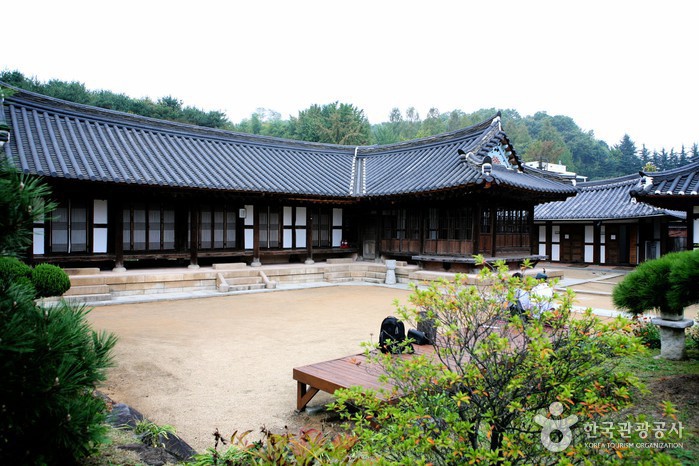
Lee Jang-woo's House (이장우 가옥)
17.7Km 2025-10-23
21 Yangchon-gil, Nam-gu, Gwangju
Designated the first Gwangju Folk Material on March 20, 1989, Lee Jang-woo's House is an upper-class, tile-roofed house with a gate, storeroom, servants’ quarters, detached building, and main building. The building is estimated to have been constructed in 1899 and is overall a sturdy example of Korean architecture, well-preserved in its original state. The L-shaped main hall of the historic building is rather large and consists of (left to right) a wooden verandah, a small room, a hall, the main room, a kitchen, and another small room. The room doors are double doors with a sliding door on the inside and a hinged door on the outside. The hall also has partitions that can be hung up as necessary.
◎ Travel information to meet Hallyu’s charm - movie "Meet the In-Laws"
This hanok served as Hyeon-joon’s (played by Song Sae-byeok) family home in Jeolla-do in the movie "Meet the In-Laws." With its well-preserved architecture and traditional Korean garden, it captures the elegance and charm of early modern Korea.

Han Hee-won Art Museum (한희원미술관)
17.7Km 2023-01-25
27-6, Yangchon-gil, Nam-gu, Gwangju
Han Hee-won Art Museum is a small hanok art museum in the back alley of Yangnim-dong.
Painter Han Hee-won grew up in Yangnim-dong, where he was influenced as a painter. In July 2015, he purchased a small hanok between the House of Yi Jang-u and the House of Choe Seunghyo and transformed it into an art museum to preserve and show the spirit of love, comfort, and art in his hometown, Yangnim-dong. An art museum with a low threshold approaching citizens with a humble mind, Han Hee-won Art Museum is open to anyone. Feel free to visit, appreciate the paintings, and be comforted through art.
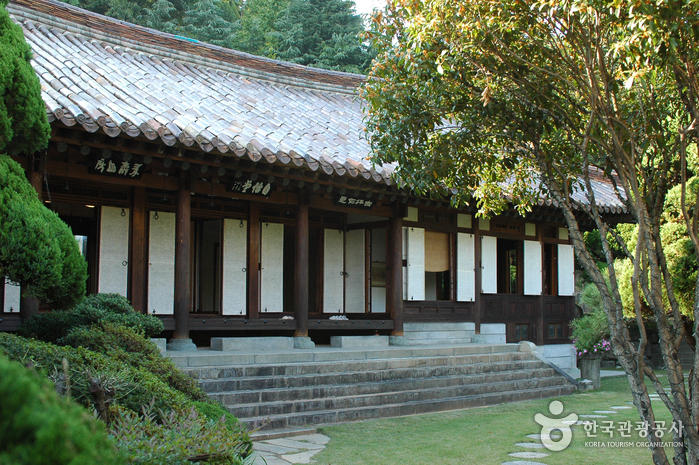
House of Choi Seung-hyo (최승효가옥)
17.7Km 2023-03-08
29-4, Yangchon-gil, Nam-gu, Gwangju
The House of Choi Seung-hyo is a traditional residential building located on the southeastern slopes of Yangnimsan Mountain. The rectangular building is open to the east, has 8 kan (the space between two pillars) in the front and 4 kan to the sides, and is graced by a traditional hipped and gabled roof. Since the building was constructed in the 1920s, it offers a valuable glimpse into the architectural style of Korean houses at the end of the Japanese colonial period. Choi Sang-hyeon was an activist who offered his attic as a place of refuge for other activists.
Yangnim-dong Penguin Village Craft Street (양림동 펭귄마을공예거리)
17.7Km 2025-10-24
92-8 Baekseo-ro, Nam-gu, Gwangju
Yangnim-dong Penguin Village Craft Street is a narrow alleyway located behind the Yangnim-dong Community Center. The village, named because of the way the elderly residents appear to waddle like penguins, has become an exhibition space of life in the 70s and 80s. Villagers cleaned up empty houses that had been burnt down and left unattended in the past, brought discarded items, and began displaying them on the village walls. "Let's be thankful for living at that time" was engraved on the village wall. It also has historical culture, such as the House of Choe Seunghyo, the House of Missionary Uilsa, and Owen Memorial Hall. The Penguin Jumak in the middle of the village was the residents' gathering place, selling small but necessary items. Various workshops, such as leather workshops, textile workshops, and carpentry workshops, are located on Craft Street, so you can purchase pretty crafts or experience upcycling crafts with a retro vibe in which the historical and the modern coexist.
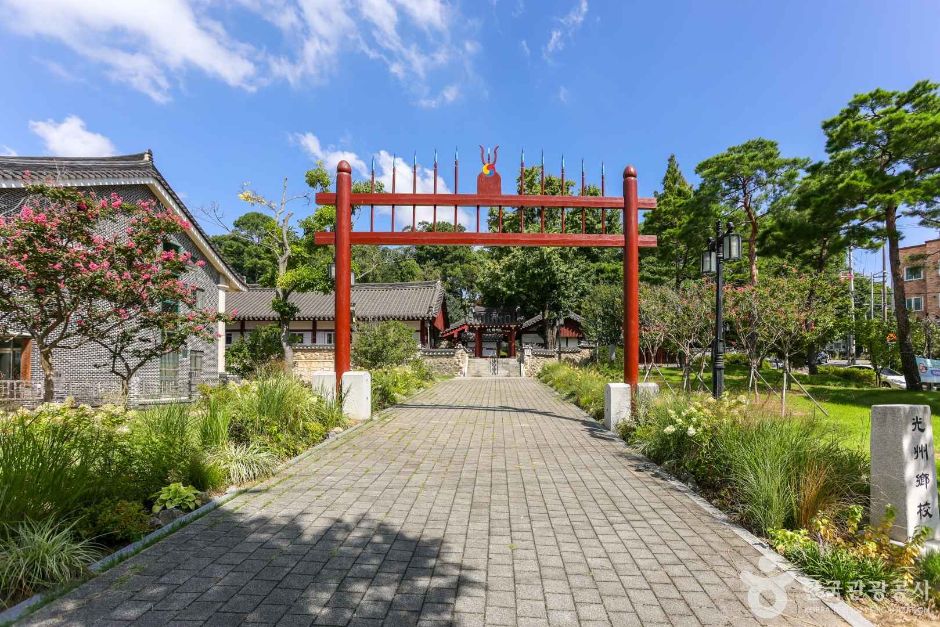
Gwangjuhyanggyo Confucian School (광주향교)
17.8Km 2025-02-04
5 Jungang-ro 107beon-gil, Nam-gu, Gwangju-si
Hyanggyo was a national educational institution during the Joseon dynasty, where the tablets of distinguished Confucian scholars were enshrined, and rituals were held in their honor. In spring and fall, it hosts Seokjeon, a ritual honoring Confucius, along with Seodang (traditional Confucian school) experiences and traditional weddings, offering opportunities to immerse in Confucian culture. In summer, crape myrtle flowers bloom, and in fall, the old ginkgo tree turns golden yellow, beautifully contrasting with the traditional Joseon-style hanok architecture.
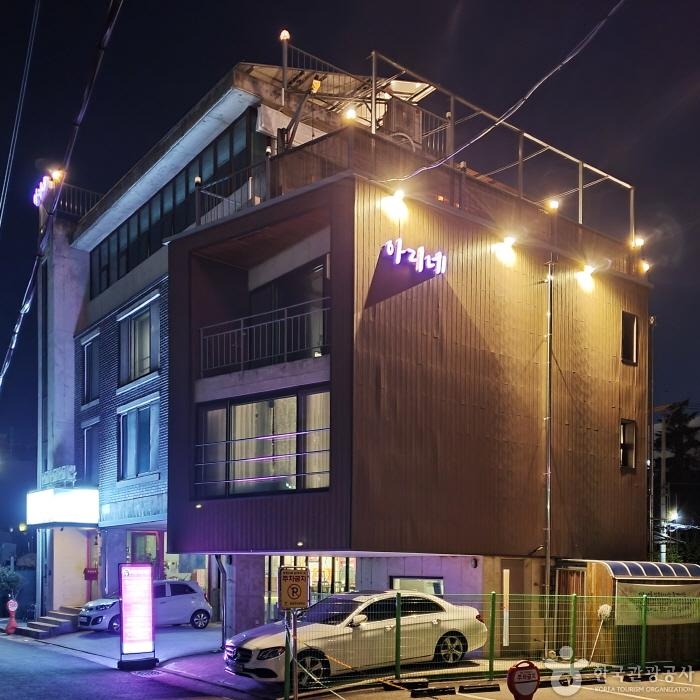
Arie-ne guesthouse (아리네 게스트하우스)
17.9Km 2024-12-13
6 , Cheonbyeonjwa-ro 428beon-gil, Nam-gu, Gwangju
Ariene Guesthouse is an integrated cultural platform located in Yangrim-dong, Nam-gu, Gwangju. The accomodation is located in the downtown area of Gwangju, making it both easily accessible and affordable. On the first basement floor, there is Yanglim Culture Hall, a lounge cafe on the first floor, and a rooftop party room on the fourth floor. The guesthouse has nine rooms on the second and third floors, including double rooms, twin rooms, ondol rooms, and separate dormitory rooms for men and women. Each room is equipped with a bathroom for guests' convenience, and breakfast is provided at no charge. A fee is charged for laundry services. There are modern cultural and historic sites nearby.
Gwangju Park (광주공원)
17.9Km 2025-08-06
15 Jungang-ro 107beon-gil, Nam-gu, Gwangju
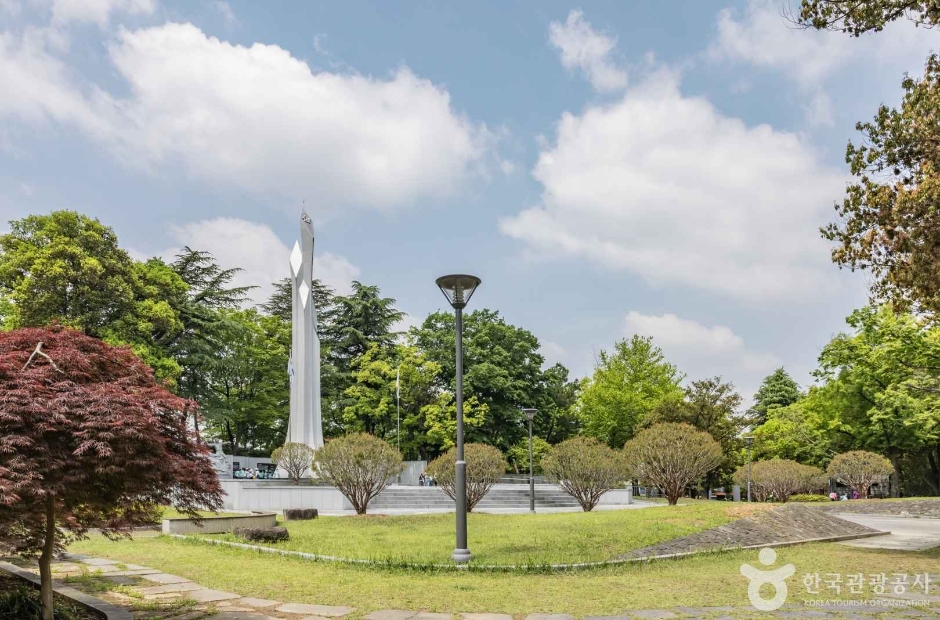
Gwangju Park, an urban Park in Gwangju, is a popular recreational spot among residents. Home to a memorial tower honoring the victims of the April 19 Revolution, Gwangju Municipal Museum, and a citizens’ hall, the park is a space where traditions and modernity coexist. Filled with trees and flower plants, it boasts beautiful scenery, especially in April, when cherry blossoms adorn the park. Nearby attractions include Gwangju Sajik Park, Asia Culture Center, and Gwangju Yangdong Market, with a stream flowing in front of the park.
Yangnim History & Culture Village (양림역사문화마을)
18.0Km 2023-11-28
7 Seoseopyeong-gil, Nam-gu, Gwangju
Yangnim History & Culture Village is located in the area where Western items and ideas first entered Gwangju over 100 years ago. As such, the neighborhood has a unique collection of Western architecture mixed with traditional hanok houses. There are also many houses of Christian missionaries, who facilitated the advancement of medicine and education in Gwangju. Some areas, such as Penguin Village, have been decorated with murals and outdoor exhibitions to promote art and tourism, helping the elderly locals to make a living.
Dream People Enter (드림피플엔터)
18.1Km 2024-12-17
16 Cheonbyeonjwa-ro 338beon-gil, Nam-gu, Gwangju
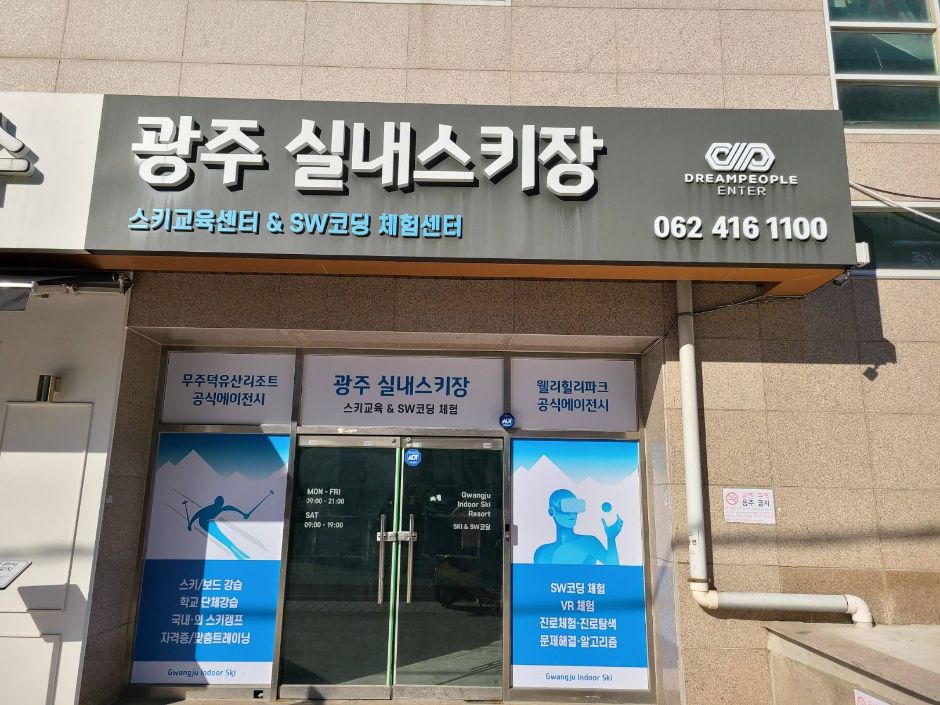
Dream People Enter is an indoor ski class facility that visitors can enjoy throughout the year with beginner and intermediate slopes and auto slope for advanced learners. The class also go on field trips to Muju Deogyusan Resort and Welli Hilli Park for ski camps and lessons. There are ski and snowboard classes for both individuals and groups. It also has facility to repair ski gears, a storage, and a ski shop.
Creation & Love Women's Hospital (CLWH) (시엘병원)
18.1Km 2025-12-10
957 Mujin-daero, Seo-gu, Gwangju
Based on over 25 years of clinical experience, Ciel Fertility Hospital provides comprehensive medical services including infertility diagnosis, artificial insemination, IVF (in vitro fertilization), and laparoscopy and hysteroscopic surgery. It is a global infertility hospital that operates an international medical center and provides interpretation and concierge services to patients overseas, including in Mongolia, Russia, and the United States, and guarantees safe and reliable medical services and an environment where patients can focus on treatment.
 English
 한국어
한국어 日本語
日本語 中文(简体)
 Deutsch
 Français
 Español
 Русский


