
Samgaksan Mountain (삼각산)
16.6Km 2024-03-20
Samyang-ro 173-gil, Gangbuk-gu, Seoul
Samgaksan Mountain is a mountain situated on the northern outskirts of Seoul, resembling a folding screen. Its name, meaning triangular mountain, is derived from the presence of three high peaks: Baegundae Peak, Insubong Peak, and Mangyeongdae Overlook. The highest peak, Baegundae Peak, offers a panoramic view of Seoul from its summit, featuring a spacious rock surface where many visitors can sit. Positioned behind Gyeongbokgung Palace, the palace of the Joseon dynasty, Samgaksan Mountain is visible from the rear of the Cheong Wa Dae.
Dongnimmun Gate (독립문)
16.6Km 2022-12-15
251, Tongil-ro, Seodaemun-gu, Seoul
Dongnimmun stands at the location originally known as Yeongeun, where envoys were once treated. When a Chinese envoy visited, the King would go out through this door to greet. In 1898, to announce the independence from Japan, Dongnimun was constructed with the fund collected by the citizens. The traces of the past still remain on Dongnimmun with two pillars in front of Dongnimmun being the remains of Yeongeunmun.
The Arc de Triomphe in France can be recalled in comparison to Dongnimmun. Dongnimmun was built using granite with a passageway x_height of 14.28 meters. On the top it is written ‘Dongnimmun’ in Korean with the national flag drawn on each side. On the inner-left side there are stone stairs leading to the attic. The national flower Mugunghwa are planted around Dongnimmun. Now it is surrounded by roads and it is eye-catching to view when passing by.
Seodaemun Prison History Museum (서대문형무소역사관)
16.6Km 2024-12-02
251 Tongil-ro, Seodaemun-gu, Seoul
Seodaemun Prison was built under the Japanese administration to imprison independence movement activists. It first opened on October 21, 1908 under the name Gyeongseong Prison. Eventually, so many activists were imprisoned that the building had to be expanded. At that time, the name changed to Seodaemun Prison on September 3, 1912. Eighty years later, the prison was turned into Seodaemun Independence Park on August 15, 1992 to commemorate the Korean patriots who were tortured in prison, giving their lives for freedom. Of the many buildings, only seven were preserved for their historical significance, among which three prison buildings and the execution site were designated as a Historic Site. In 1998, the park underwent another transformation into today's Seodaemun Prison History Hall to educate the public on the importance of Korea's independence and the sacrifices of those who fought to achieve it.
Suseongdonggyegok Valley (수성동계곡)
16.7Km 2023-08-17
185-3, Ogin-dong, Jongno-gu, Seoul 서울특별시 종로구 옥인동
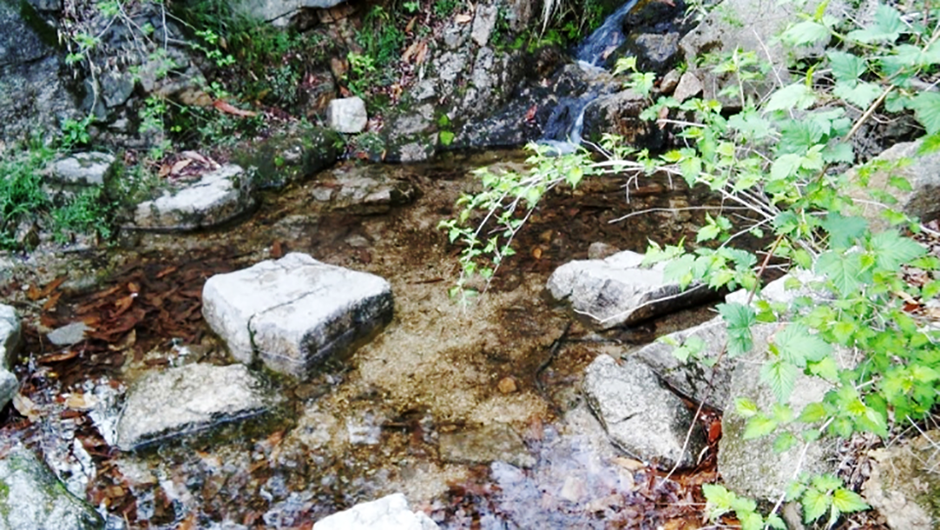
Suseong-dong Valley's stream runs down from Inwangsan Mountain and joins Cheonggyecheon Stream, and it is said that the name of the village was called Suseong-dong during the Joseon dynasty due to the loud and clear sound of the flowing water. It appears in the painting "Jangdong Palgyeongcheop," which is Jangdong Eight Scenic Views, that depicts the eight scenic views of Bugaksan Mountain and Inwangsan Mountain as well as in other historical books of the Joseon dynasty as a place of scenic beauty. The valley was so famous for its beauty, that Prince Anpyeong of the Joseon dynasty built his house "Bihaedang" to fully enjoy the view, and the valley and its stone bridge were designated as a cultural property of Seoul in 2010.
Yeonsero (Yonsei University Street) (연세로)
16.7Km 2022-10-25
Area of Yeonse-ro, Sedaemun-gu, Seoul
+82-2-120
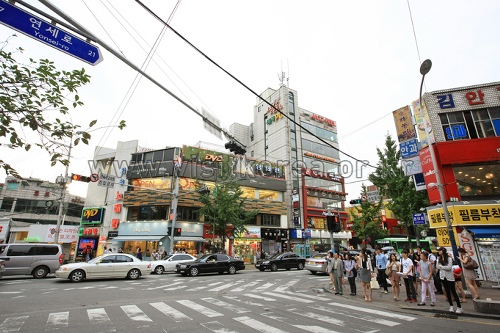
This road takes you from Sinchon Subway Station right to Yonsei University. Like branching tree roots, the numerous side streets diverge off the main road. In 1999 Yonsei College Street was designated as “The Road One Wants to Walk.” Since then, this famous street has been improved upon even more, placed on tourist maps and promoted by businesses. A visitor to this area can eat at a plethora of restaurants, coffee shops and stores. In the afternoon hours, you can also enjoy the taste of small food stands that line the sidewalks.
Sinchon Dain Dental Hospital (신촌다인치과병원)
16.7Km 2025-10-23
(10th-11th Floors, Grand Plaza), 94 Sinchon-ro, Mapo-gu, Seoul
Our main dental hospital, spanning approximately 1,740 square meters, is conveniently located near Sinchon Station, just a 40-minute drive from both Gimpo International Airport and Incheon International Airport, making it easily accessible for international patients. We are staffed by around 60 specialized medical professionals and equipped with the latest technology, including an in-house laboratory for fast and precise dental work. Our team includes nine expert directors in orthodontics, prosthodontics, conservative dentistry, oral surgery, and periodontology, ensuring comprehensive and systematic care in each specialty. We offer a wide range of advanced procedures for our international patients, including implants, complex extractions, orthodontics, periodontal treatment, and prosthetic care, as well as high-quality neurological and aesthetic treatments.
Heyri Art Valley (헤이리 예술마을)
16.8Km 2025-06-30
70-21 Heyrimaeul-gil, Paju-si, Gyeonggi-do
Heyri Art Valley is a neighborhood of inspiration, creative workshops, exhibitions, festivals, and education of all things creative arts. This neighborhood expanded into an art complex when artists from diverse fields of expertise began to gather during the development process of Paju Book City. The village’s name originates from Paju’s local song “Heyri Sound,” sung by farmers while working at the fields. The whole neighborhood is like a masterpiece due to the artworks displayed along the streets in harmony with nature’s beauty. The buildings were carefully designed as to prevent the manmade structures getting in the way from admiring the surrounding nature. For example, the neighborhood’s streets were designed to follow the curves set by nature without using any asphalt.
Museum HEI (뮤지엄헤이)
16.8Km 2024-10-04
885-43 Pyeonghwa-ro, Tanhyeon-myeon, Paju-si, Gyeonggi-do
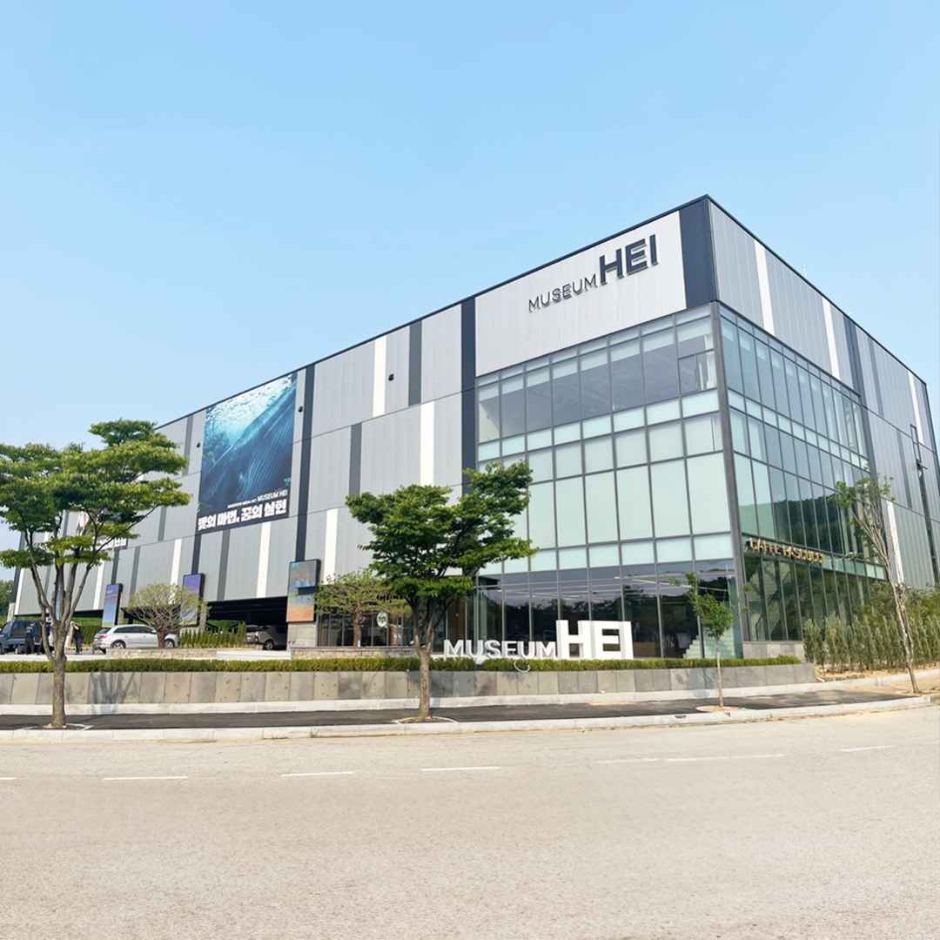
Museum HEI is a large media art gallery located in Paju, named after the common greeting in Finland, the world's happiest country. The gallery features 20 different themed contents, all under the overarching concept of "beautiful moments in life."
Time & Blade Museum (타임앤블레이드 박물관)
16.8Km 2021-11-30
41, Heyrimaeul-gil, Paju-si, Gyeonggi-do
+82-31-949-5675
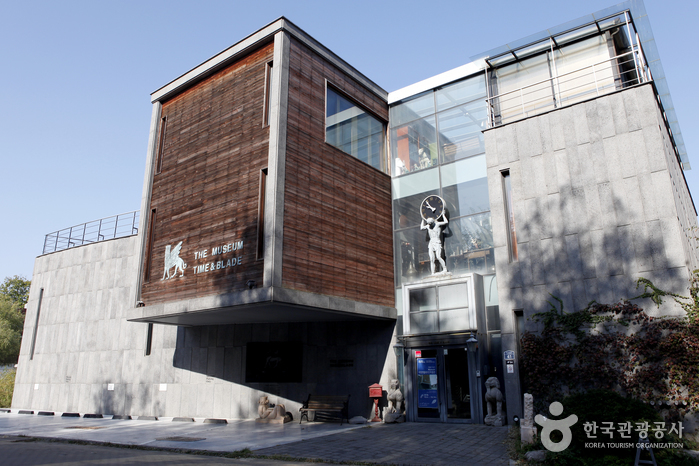
The Time & Blade Museum features two floors filled with items that have shaped the development of humankind. There are many clocks and watches on display, with the largest hall dedicated to skeleton clocks. The museum also displays the parts that make up a clock and the tools used to create them.
 English
 한국어
한국어 日本語
日本語 中文(简体)
 Deutsch
 Français
 Español
 Русский


