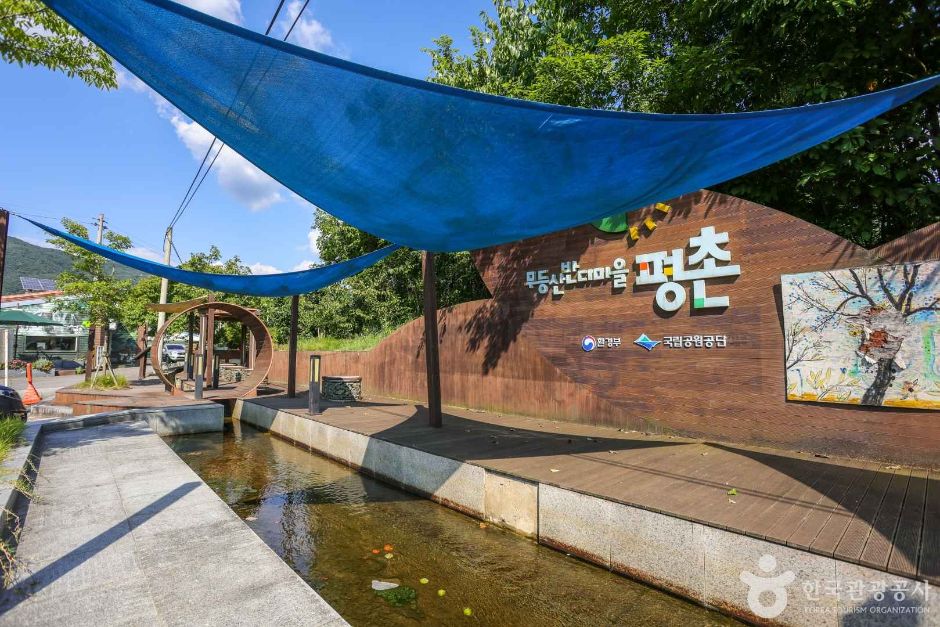
Gwangju Pyeongchon Village (광주 평촌마을)
15.6Km 2025-08-12
15 Pyeongchon-gil, Buk-gu, Gwangju
+82-62-266-2287
Gwangju Pyeongchon Village, located north of Mudeungsan Mountain, is a cozy farming village made up of four villages Dongrim, Daman, Woosung, and Dangmoe. The village still has an excellence natural preservation, growing environmental-friendly rice in the fields and Punamcheon stream that runs through the middle of the village is home to fireflies and otters. The village also keeps the tradition of making pottery as the village was the place that made grayish-blue-powdered celadon during the Joseon dynasty. The village street corner offers visitors to Mudeungsan Mountain a place to rest with Mudol-gil shelter and Bandi lodging.

Soswaewon Garden (담양 소쇄원)
16.0Km 2023-01-04
17, Soswaewon-gil, Damyang-gun, Jeollanam-do
+82-61-381-0115
Soswaewon Garden is a private garden from the Joseon period where Korea's traditional beauty is preserved. It was built by Yang San-Bo (1503-1557) after he gave up his success when his mentor Jo Gwang-Jo (1482-1519) was killed during political strife. Soswaewon Garden presents itself as a clean and transparent garden where the righteous enjoy the life of anbinnakdo (being comfortable amid poverty and taking pleasure in an honest lifestyle) surrounded by a bamboo grove.
Including peach trees, various kinds of trees and grass are planted on both sides of the stream while clear water flows down the foot of the garden walls. The log bridge above the valley adds to the charm of the scenery. The harmony between nature and the artificial waterfall is a sight to behold. Soswaewon Garden is 150 meters away from the main road. Passing through the thick bamboo forest, you will find the small valley and Soswaewon Garden on your left.
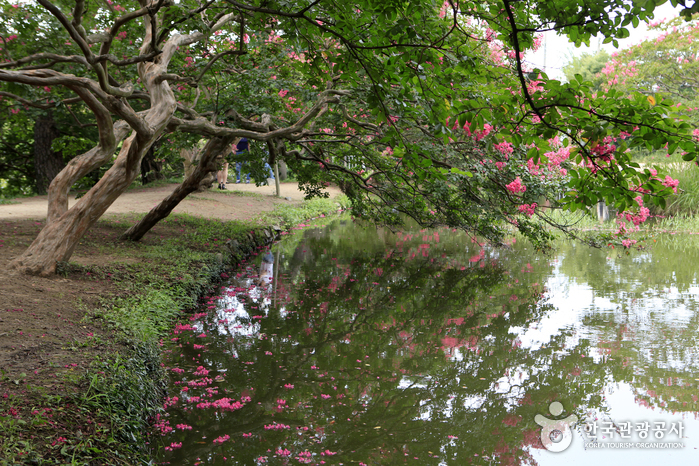
Myeongokheon Garden (담양 명옥헌 원림)
16.2Km 2025-10-23
103 Husan-gil, Goseo-myeon, Damyang-gun, Jeollanam-do
+82-61-380-3752
Located in the eco-village of Husan-ri, Myeongokheon Garden was the garden of Oh Hui-do (1583-1623) of the Joseon dynasty and served as a simple, countryside sanctuary where the scholar read and wrote many books. Main features of the garden are the Myeongokheon Pavilion, where the scholar held lectures, and the square-shaped pond in front of the pavilion that is surrounded with graceful flowering trees. The flowering trees around the pond include red pines and crape myrtles. On the right side of Myeongokheon Garden you’ll see a 300 year-old ginkgo tree, which is where King Injo (1623-1649) of the Joseon dynasty tied his horse when he went to visit Oh Hui-do.
National Center for Forest Education, Naju (국립나주숲체원)
16.3Km 2024-02-19
116 Geumseongsan-gil, Naju-si, Jeollanam-do
National Center for Forest Education, Naju is a national recreational facility located on Geumseongsan Mountain. It operates customized forest education and cultural programs based on the wild tea plantation of Geumseongsan Mountain and the culture of Naju. Utilizing the facilities of the forest center and the surrounding nature, it offers various experiential programs such as forest walking, stretching, meditation, and natural dyeing experiences of Naju's traditional culture.
Gyubongam Hermitage (Hwasun) (규봉암(화순))
16.3Km 2024-02-20
40-28 Dowon-gil, Iseo-myeon, Hwasun-gun, Jeollanam-do
Gyubongam Hermitage is a small hermitage located on Mudeungsan Mountain. It is believed to have been established during the Silla dynasty (B.C. 57-A.D. 935) and underwent renovations in 1959 to attain its current appearance. Renowned for its picturesque scenery, Gyubongam Hermitage is said to be a must-visit spot for those climbing Mudeungsan Mountain. It is particularly famous for its vibrant autumn foliage, and the area around the hermitage is abundant with rocky cliffs.
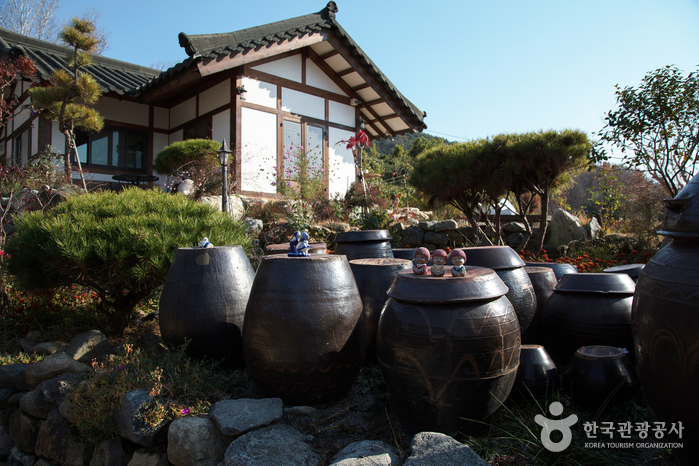
Sane Flower ((주)산에는 꽃이피네)
16.6Km 2024-08-05
20-1 , Dongnyeok-gil, Naju-si, Jeollanam-do
+82-10-4612-4232
Mountain Flowers Bloom in Dorae Hanok Village, Naju-si, Jeollanam-do, is a 100 year-old house built in the traditional way using local timber and no nails. Guestrooms are well insulated and equipped with bathroom and kitchen. Interiors are lined with Korean paper and are old-time and cozy. There’s a wooden veranda from which visitors can see the fine old maple tree in the yard. Among other local attractions, Naju’s Redwood Road is nearby, offering guests a peaceful walk in the woods; some weekends, the owner offers neighbourhood guided tours.
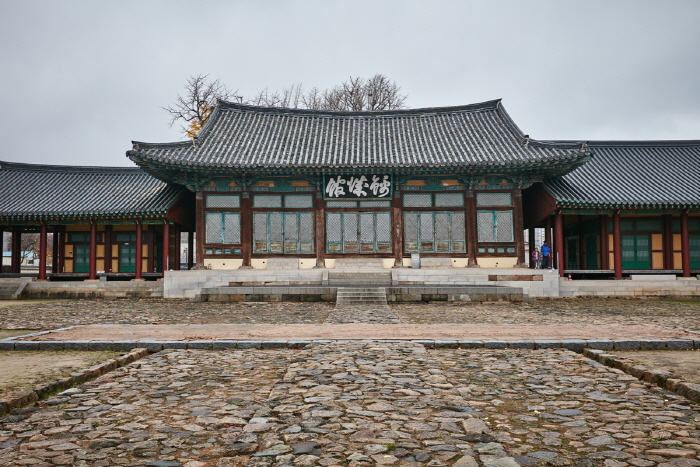
Naju Geumseonggwan Hall (나주 금성관)
16.7Km 2021-08-17
8, Geumseonggwan-gil, Naju-si, Jeollanam-do
+82-61-339-8613
Naju Geumseonggwan Hall was a state-run guesthouse for government officials during the Joseon period. It was the venue for ceremonial praise rituals for the king, taking place on the first and 15th of each month, as well as banquets held in honor of visiting dignitaries. The building was constructed sometime between 1475 and 1479. The building was remodeled during the Japanese occupation, but was restored to its original design in 1977.
Doraemi House (도래미)
16.7Km 2024-08-05
18-26 , Dongnyeok-gil, Naju-si, Jeollanam-do
+82-61-336-3646, +82-10-6604-6621
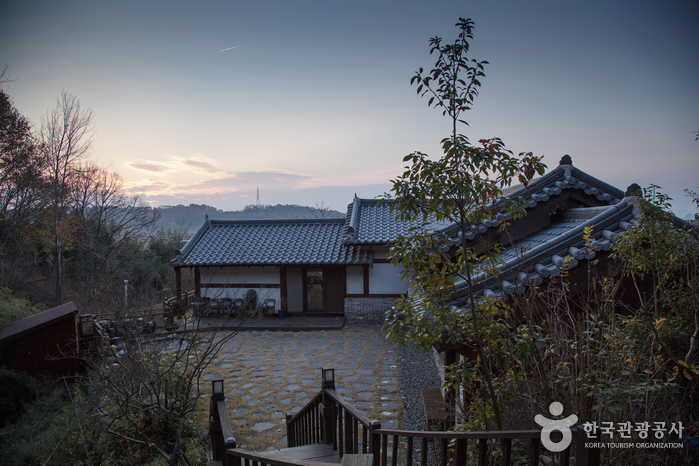
Doraemi House in Dorae Village, Naju, Jeollanam-do, is a hanok stay with a bonchae (‘main house’), a sarangchae (men’s house) and a byeolchae (‘reception room’). The bonchae has two bedrooms with a hidden attic space. The sarangchae has a living room with bedrooms on either side; while the byeolchae, atop a low hilll, has a single cozy room. A walk along a forest road takes you to a pavilion by a pond. Next to the bonchae is a quiet and tranquil reading room.
Naju Moksanaea (나주목사내아)
16.8Km 2021-09-30
13-10, Geumseonggwan-gil, Naju-si, Jeollanam-do
+82-61-332-6565
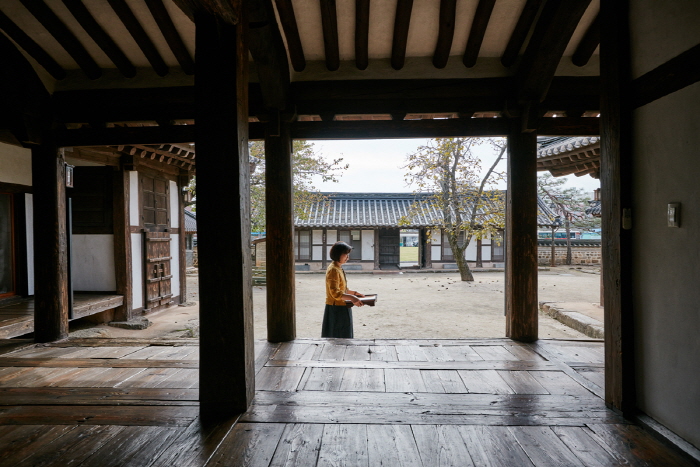
Naju Moksanaea was the private residence of Naju's moksa, the title of highest official in the region. This traditional hanok house was built in 1825 and follows the traditional hanok design of a wealthy aristocrat. It is recognized as Jeollanam-do Cultural Hertiage Material.
3917Majung (3917마중)
17.0Km 2024-12-23
42-16 , Hyanggyo-gil, Naju-si, Jeollanam-do
+82-61-331-3917
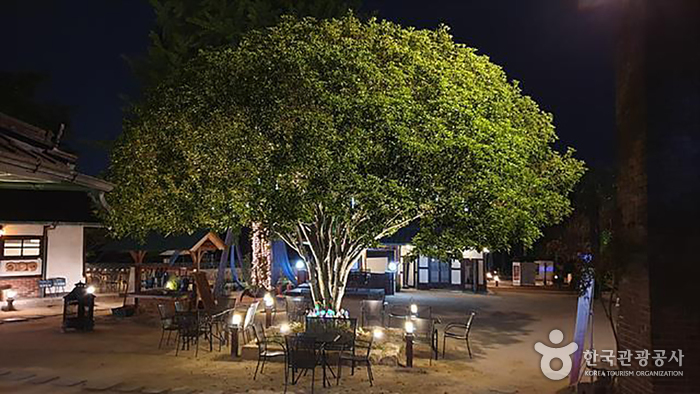
3917 Majung is a Japanese- and Western-style hanok commonly seen in the late Korean Empire period, in Naju, Jeollanam-do, which combines a cafe, cultural space and hanok stay. The 3.2 acre site contains four buildings, with a mixture of ondol rooms, tatami rooms, daecheong floors and numaru lofts. Some buildings have bathrooms installed, some share outdoor bathrooms. All four buildings are let as private houses.
 English
 한국어
한국어 日本語
日本語 中文(简体)
 Deutsch
 Français
 Español
 Русский


