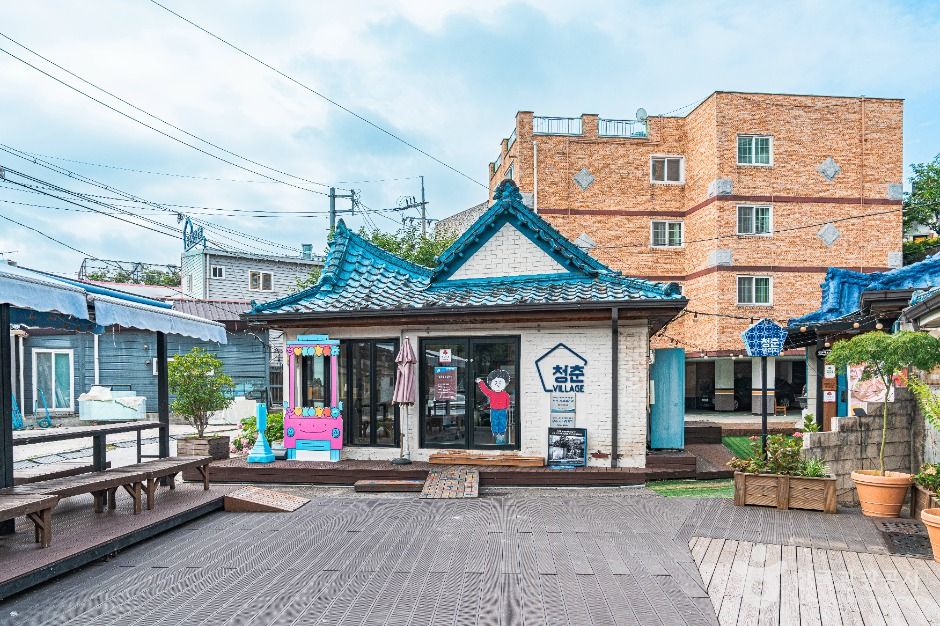
Cheongchun Balsan Village (청춘발산마을)
4.9Km 2025-10-24
12-16 Cheonbyeonjwa-ro, Seo-gu, Gwangju
Balsan Village is a representative neighborhood of Gwangju and is a prime example of how something amazing can come out of hardship. First settled by Korean war refugees, the small houses jam-packed on a hillside attracted young people looking for work in the 1970s and '80s, mainly females working in the garment factories nearby. Recently, the addition of colorful murals and public spaces has given the village a breath of new life.
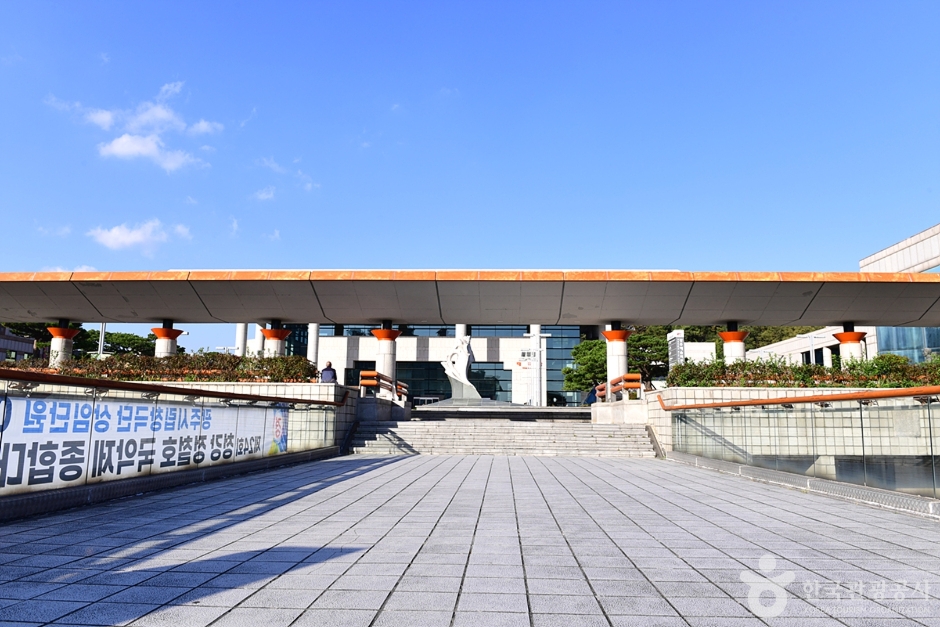
Gwangju Arts Center (광주예술의전당)
5.1Km 2024-11-18
60 Bungmun-daero, Buk-gu, Gwangju
Opened in 1991, the Gwangju Arts Center is the cornerstone of culture and arts in Gwangju. It offers high-quality performances and exhibitions across various genres, including Korean traditional music, opera, classical music, and ballet. The center boasts a range of artistic facilities, such as a main theater, a secondary theater, a traditional music hall, a sculpture garden, and an amphitheater. The main theater has a seating capacity for up to 1,500 people.

Gwangju KIA Champions Field (광주-기아 챔피언스 필드)
5.2Km 2025-08-06
10 Seorim-ro, Buk-gu, Gwangju
Gwangju KIA Champions Field is the first open-air stadium in the country and houses INC COFFEE, making it a must-visit attraction for baseball fans. The café offers spacious seating and various bakery items– with the baseball-shaped bread being the most popular. There is also a photo zone, allowing visitors to capture the memories of their trip. With a seating capacity of 20,500, tickets for the seats can be purchased online or on-site.
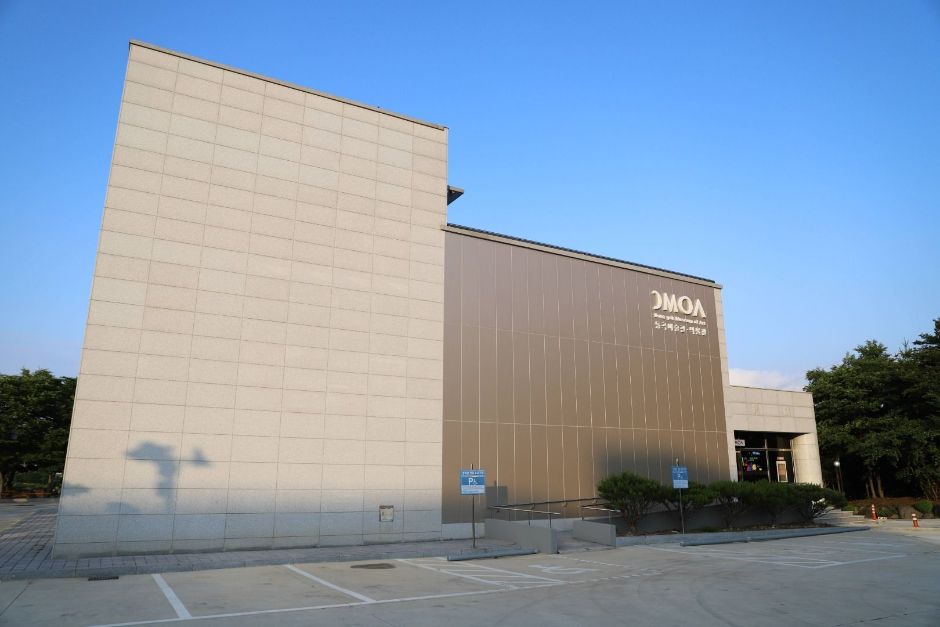
Donggok Museum of Art (동곡미술관)
5.4Km 2024-12-17
37 Eodeung-daero 529beon-gil, Gwangsan-gu, Gwangju
Donggok Museum of Art, opened in December 2020, a two-story building has exhibition halls, educational rooms, a sculpture park and more. There are rest areas to relax after enjoying arts, as well as spaces for visitors to find their creativity.
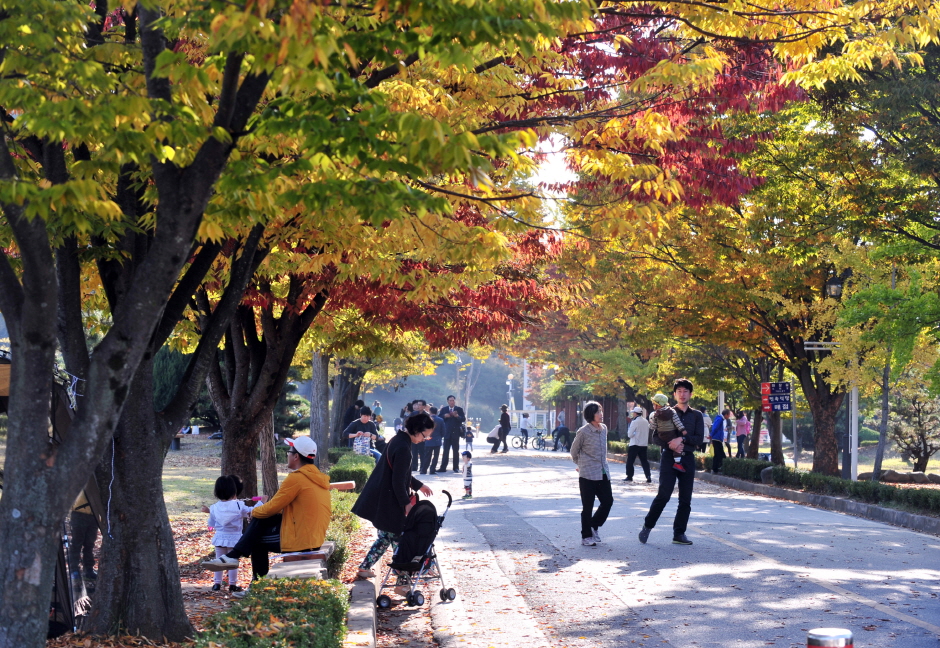
Jungoe Park (중외공원)
5.6Km 2021-10-25
52, Haseo-ro, Buk-gu, Gwangju
Jungoe Park is one of the nation's most famous leisure spaces. There is a children's grand park, the Olympic Garden, and the Olympic Monument. The children's grand park is especially popular on weekends and holidays.
There is also a folk museum, an education center, and the Biennale Exhibition Hall in the Biennale & Museum section of the park.
The park is most popular during fall for its beautiful foliage. In addition, the Rainbow Bridge is a symbol of the Biennale and was installed during the 1st Gwangju Biennale.
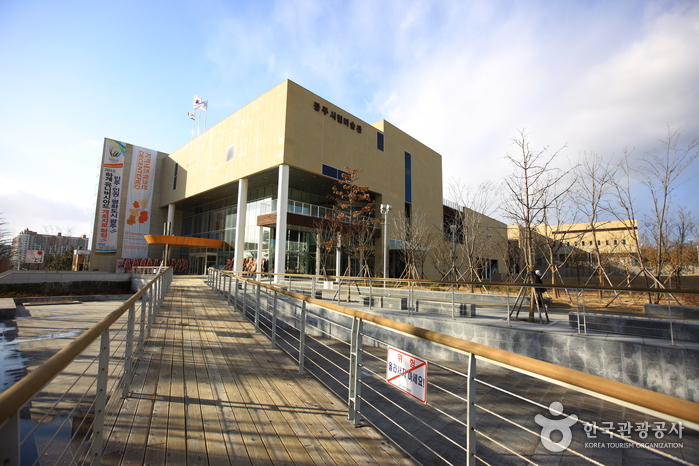
Gwangju Museum of Art (광주시립미술관)
5.8Km 2022-09-02
52, Haseo-ro, Buk-gu, Gwangju
The Gwangju Museum of Art was founded on August 1, 1992, to promote local artists. In 1996, it served as the venue for the Gwangju Biennale. The museum holds over 560 works, including those from Heo Baekryeon, Oh Jiho, Yang Su-ah, and Im Jik-sun, all local artists. In addition to the permanent exhibitions, the museum also has special planned exhibitions and other cultural programs.
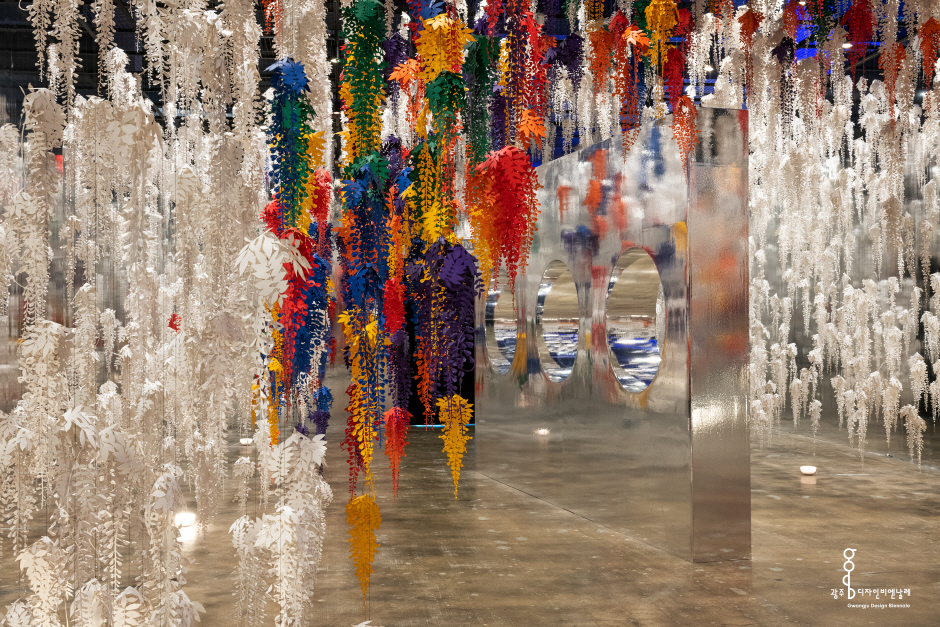
Gwangju Design Biennale (광주디자인비엔날레)
6.0Km 2025-07-11
111 Biennale-ro, Buk-gu, Gwangju
+82-62-531-7783
The Gwangju Design Biennale is the world’s first design biennale and currently Asia’s only design biennale. With exhibitions centered on the concept of design, the biennale combines the industrial aspect of design with cultural elements.
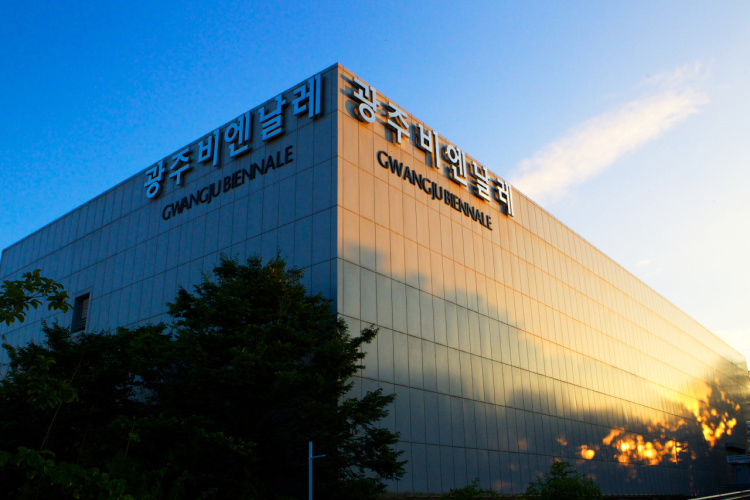
Gwangju Biennale Exhibition Hall (광주비엔날레전시관)
6.1Km 2023-11-28
111 Biennale-ro, Buk-gu, Gwangju
Since its establishment in 1994, the Gwangju Biennale Exhibition Hall has significantly contributed to Korea's art culture and the world through numerous exhibitions. It strives to give joy and motivation to many people and serves as a channel for Korean artists' forays into the world. Notably, the Biennale exhibition is not a one-time event, and various attempts are being made to make it a sustainable platform as it increases the regional value of Gwangju, the home of the Biennale.
In the era of COVID-19, online services are also provided to citizens who have difficulty visiting the site in person to experience the exhibition.
Street of Duck Stew (오리요리의 거리)
6.2Km 2025-08-06
125 Gyeongyang-ro, Buk-gu, Gwangju
The Street of Duck Stew in Gwangju is lined with restaurants specializing in duck dishes. Its origins trace back to the 1970s, when a duck farmer began selling duck stew, adding their own twist by incorporating water parsley and perilla seeds to the recipe they had learned. The affordable price and clean, rich taste of stew made it popular among visitors, eventually leading to the formation of the current street. The popular dishes include ori tang (duck stew), ori roseu (grilled duck), and ori jumulleok (spicy stir-fried marinated duck).
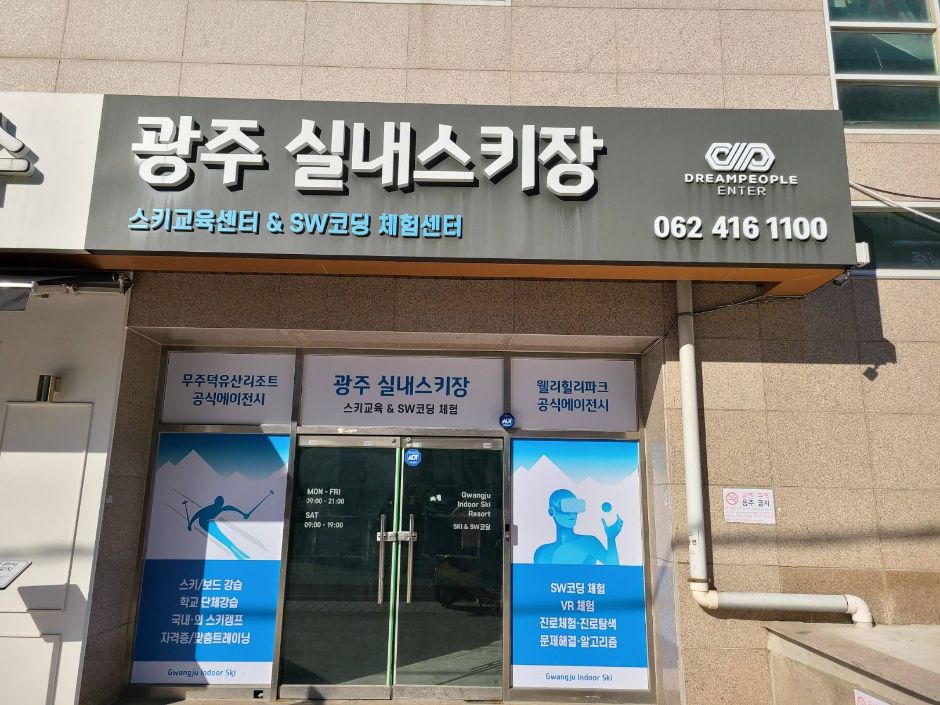
Dream People Enter (드림피플엔터)
6.3Km 2024-12-17
16 Cheonbyeonjwa-ro 338beon-gil, Nam-gu, Gwangju
Dream People Enter is an indoor ski class facility that visitors can enjoy throughout the year with beginner and intermediate slopes and auto slope for advanced learners. The class also go on field trips to Muju Deogyusan Resort and Welli Hilli Park for ski camps and lessons. There are ski and snowboard classes for both individuals and groups. It also has facility to repair ski gears, a storage, and a ski shop.
 English
 한국어
한국어 日本語
日本語 中文(简体)
 Deutsch
 Français
 Español
 Русский


