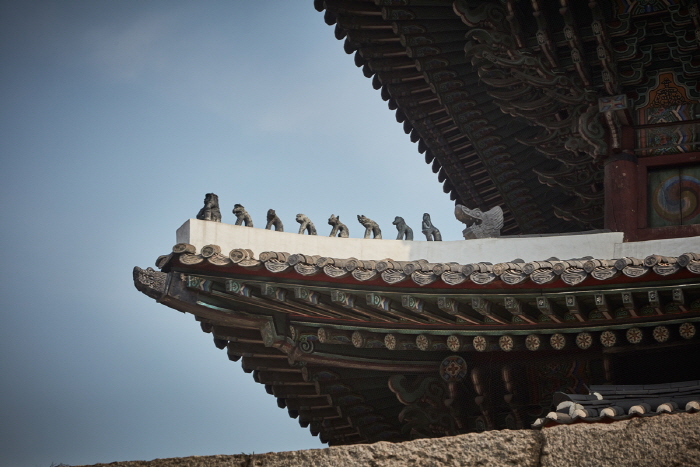
Heunginjimun Gate - Dongdaemun Gate (흥인지문)
16.9Km 2025-10-23
288, Jong-ro, Jongno-gu, Seoul
+82-2-2148-1842
Heunginjimun Gate was built to protect Hanseongbu, which historically housed essential government facilities. Heunginjimun Gate was the gate on the east side of the outer wall of Seoul Fortress among eight gates. It is referred to as Dongdaemun Gate as well. The gate was constructed during King Taejo’s 5th year in 1396, remodeled during the reign of King Danjong in 1453, and was newly built in 1869 during the sixth year of King Gojong’s reign in 1869.
The gate features a hipped roof with five front and two side compartments on a two-storied building. The thin and weak bracket system supports the eaves and is excessively decorated, reflecting the construction features of the late Joseon period. Also, outside of the fortress is the half-circle-shaped Ongseong, a small wall, to protect the gate.
One of the unique factors of Heunginjimun Gate is that it is the only gate among Seoul’s eight to have Ongseong, further exhibiting the style of construction used during the late Joseon period.
![Lush Korea - Daehangno Branch [Tax Refund Shop] (㈜러쉬코리아 대학로점)](http://tong.visitkorea.or.kr/cms/resource/83/2878183_image2_1.jpg)
Lush Korea - Daehangno Branch [Tax Refund Shop] (㈜러쉬코리아 대학로점)
16.9Km 2024-04-22
27, Daemyeong-gil, Jongno-gu, Seoul
-
![Olive Young - Yeoksam Station Branch [Tax Refund Shop] (올리브영 역삼역)](http://tong.visitkorea.or.kr/cms/resource/82/2879982_image2_1.jpg)
Olive Young - Yeoksam Station Branch [Tax Refund Shop] (올리브영 역삼역)
16.9Km 2024-04-17
138, Teheran-ro, Gangnam-gu, Seoul
-
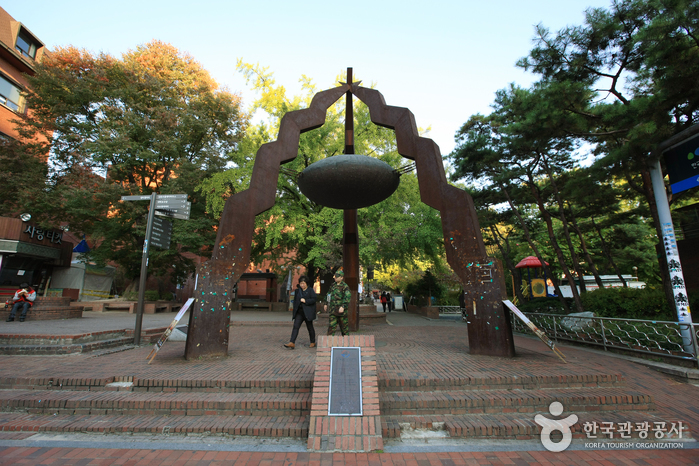
Marronnier Park (마로니에공원)
16.9Km 2021-07-14
104, Daehak-ro, Jongno-gu, Seoul
+82-2-2148-4158
Marronnier Park was given its name due to the marronnier trees, or horse chestnut trees, growing within the area. The location where Seoul National University's College of Liberal Arts & Science and School of Law once stood, it is now a park dedicated to culture and arts open to the public. In addition to a variety of outdoor performances that take place throughout the area, exhibitions and cultural centers create a romantic atmosphere unique to the park.
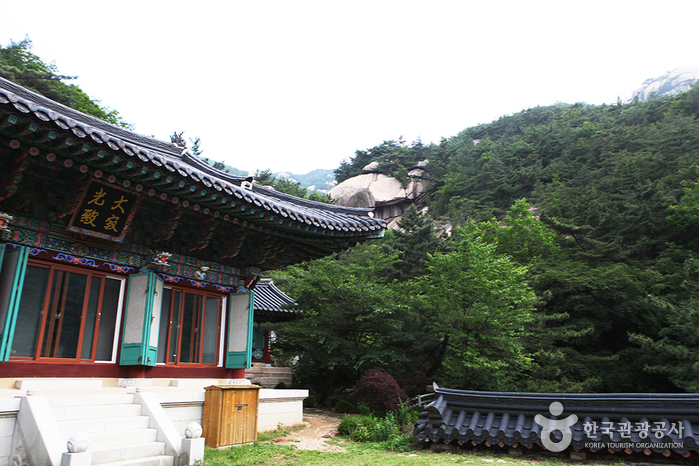
Seoul Geumseonsa Temple (금선사(서울))
16.9Km 2021-08-17
137, Bibong-gil, Jongno-gu, Seoul
+82-2-395-9911
Geumseonsa Temple is located within Bukhansan National Park, just behind Cheong Wa Da (The Blue House) and Gyeongbokgung Palace. The entrance to the temple is just off the hiking path to Bibong Peak.
After passing Banyajeon Hall, where Buddhist services are held, visitors will see a pine tree over 200 years old, and beyond that, a staircase with 108 steps leading up to Daejeokgwangjeon Hall in the temple's main area. To the right is Samseonggak House and Hongyegyo Bridge over the clear waters flowing down from the mountain.
Additional temple buildings include Mitajeon Hall and Yeonhwadang Hall, built in 2004 by Monk Beopan; and Jeokmukdang Hall, built using traditional construction techniques.

Bukjeong Village (북정마을)
16.9Km 2024-02-15
132-3 Seongbuk-ro 23-gil, Seongbuk-gu, Seoul
Bukjeong Village, situated along the slopes of Seongbuk-dong, offers a glimpse into Korea's old alleyways. The village expanded as refugees from the Korean War (1950–1953) and people from various regions settled, building houses under the collapsed walls of Hanyang doseong (Seoul City Wall). Presently, the village is home to young artists, and the broad street in front of the village bus stop hosts various community events.
![Shogun - Nonhyeon Branch [Tax Refund Shop] (쇼군 논현)](http://tong.visitkorea.or.kr/cms/resource/94/2875394_image2_1.jpg)
Shogun - Nonhyeon Branch [Tax Refund Shop] (쇼군 논현)
16.9Km 2024-04-22
1F, 234-8, Nonhyeon-dong, Gangnam-gi, Seoul
-
![I Love Gangnam Clinic [Tax Refund Shop] (아이러브강남의원)](http://tong.visitkorea.or.kr/cms/resource/91/3313291_image2_1.jpg)
I Love Gangnam Clinic [Tax Refund Shop] (아이러브강남의원)
16.9Km 2024-06-26
606, Nonhyeon-ro, Gangnam-gu, Seoul
-
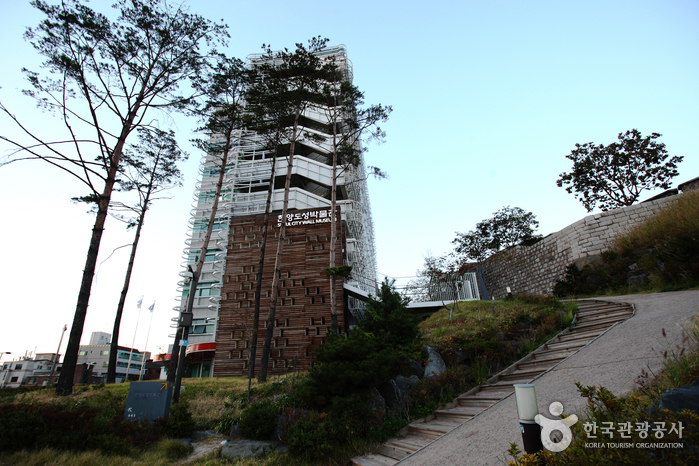
Seoul City Wall Museum (한양도성박물관)
16.9Km 2023-12-22
283, Yulgok-ro, Jongno-gu, Seoul
+82-2-724-0243
Hanyangdoseong, the Seoul City Wall, built in 1396, was the city fortress wall that protected the capital city Seoul for over 600 years. The fortress wall was built along the terrains and although it became partially damaged during the modernization process, its original form remains well to this day, making it a cultural heritage that coexists with the modern city. The Seoul City Wall Museum, located in Heungjinjimun Park, is a museum containing the history and culture of city wall from the Joseon dynasty to the present. It is a cultural space with a permanent exhibition hall, special exhibition hall, city wall information center, and study room.
Jinkwang Sports [Tax Refund Shop] (진광스포츠)
16.9Km 2024-06-27
298, Cheonggyecheon-ro, Jung-gu, Seoul
-
 English
 한국어
한국어 日本語
日本語 中文(简体)
 Deutsch
 Français
 Español
 Русский


