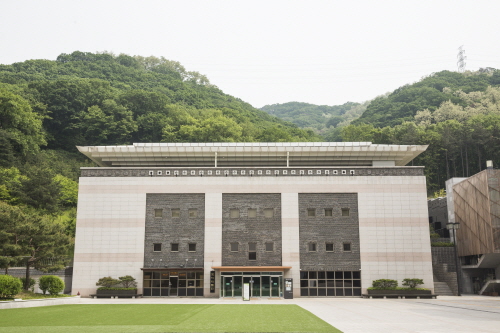
National Gugak Museum (국립국악박물관)
12.6Km 2021-08-13
2364, Nambusunhwan-ro, Seocho-gu, Seoul
The National Gugak Museum opened on February 23, 1995 as the first gugak museum in Korea, featuring approximately 6,000 pieces of gugak-related materials and relics which have both historical and cultural value. It is comprised of seven themed permanent exhibition halls that present 250 pieces of audio and video clips regarding gugak. In the 3D room, visitors can enjoy 3D animation at all times. The museum also hosts special exhibitions in unique and interesting themes.

National Gugak Center (국립국악원)
12.6Km 2025-01-17
2364 Nambusunhwan-ro, Seocho-gu, Seoul
The National Gugak Center is the governing body established to preserve and promote traditional Korean performing arts. The center can accommodate every type of traditional performing arts, such as palace music, court music, and all other genres including major productions of changgeuk (Korean musical drama). Originally opened in Busan in 1951, the center moved to its current location in Seoul in 1987. The center also opened branch locations in Namwon, Jindo, and Busan in 1992, 2004, and 2008 respectively.
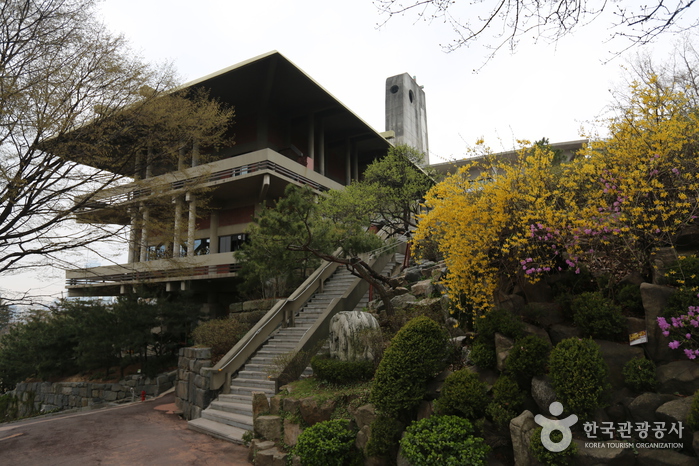
Korean Martyrs' Museum (한국천주교순교자박물관)
12.6Km 2023-01-03
6, Tojeong-ro, Mapo-gu, Seoul
Korean Martyrs’ Museum was opened in October of 1967 as Jeoldusan Martyrs' Shrine, in memory of the Catholic martyrs who lost their lives during the Byeongin Persecution of 1866. The name of the museum changed to the current Korean Martyrs' Museum in August 2008. The museum displays artifacts and materials in exhibitions related to the Catholic Bishops' Conference of Korea.
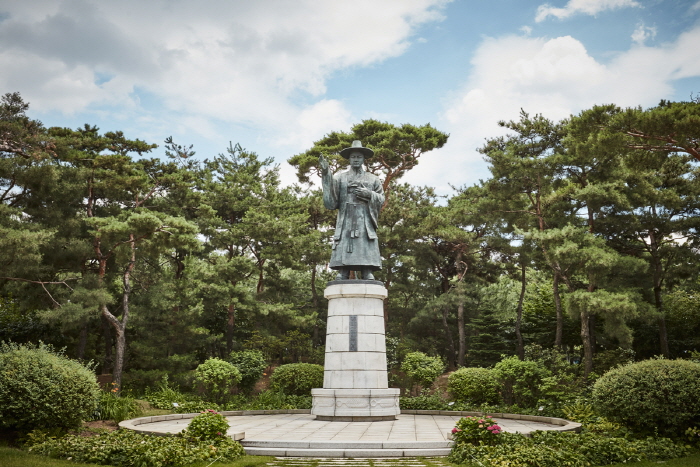
Jeoldusan Martyrs' Shrine (절두산순교성지)
12.6Km 2024-03-12
6 Tojeong-ro, Mapo-gu, Seoul
Jeoldusan Martyrs' Shrine is the site where many Catholic believers were executed in 1866 due to persecution. In commemoration of the 100th anniversary of the martyrdom, the Korean Catholic Church opened the Memorial Hall in October 1967, exhibiting materials, relics, and souvenirs related to the Korean Catholic Church and operating a museum. Pope Johannes Paulus II visited the site in 1984, and Mother Teresa visited in 1985.
Songa Myeonok (손가면옥)
12.7Km 2024-10-15
313 Sinheung-ro, Wonmi-gu, Bucheon-si, Gyeonggi-do
Established in 1994, Songa Myeonok is a renowned naengmyeon (cold buckwheat noodles) restaurant in Bucheon. Its signature dishes include bibim naengmyeon (spicy buckwheat noodles) and hoe naengmyeon (cold buckwheat noodles with raw fish). These dishes are celebrated for their chewy noodles and a refreshing blend of sweet and sour seasonings. Boasting a spacious parking lot and a comfortable interior, the restaurant is a popular choice for family outings and group gatherings.
Seorae Village (서래마을)
12.7Km 2022-12-16
Banpo-dong, Seocho-gu, Seoul
Seorae Village is located in between Banpo 4-dong and Bangbaebon-dong in Seocho-gu, Seoul. Seorae Village took its form as a French neighborhood when French residents moved to the area after Ecole Francaise de Seoul, a school for French residents in Korea, was established here in 1985. According to 2008 census, about half of the total 1,000 French citizens residing in Korea were registered to be living in Seorae Village. The area naturally took shape as a global neighborhood as many international residents settled at Seorae Village much thanks to the strong presence of French residents. In addition to its convenient location near the central district area as well as Gangnam area and Hangang River Park, Seorae Village serves as a pleasant environment space for all.
Many shops and restaurants in Seorae Village are small in size and rather charming, resembling those in Europe. A bakery that makes traditional French baguettes using ingredients directly imported from France can be found here. In recent years, Seorae Village has undergone several changes, gaining much attention as one of the most modern and fanciest regions found in Seoul.
Wowvos ((주)와우보스)
12.8Km 2025-10-23
(4th Floor, Buil Building), 135 Sohyang-ro, Bucheon-si, Gyeonggi-do
The name WOWVOS combines the exclamation WOW and the acronym VOS, which stands for V (vital), O (optimal), and S (support). We aim to become a global medical tour hub by providing optimal patient support, critical for their healthy and long lives. WOWVOS has cemented its standing as a leading force in global healthcare innovation. We are fully committed to providing overseas patients in Russia, CIS, and numerous other countries with innovative, patient-centered solutions to ensure they receive quality healthcare. We spare no effort in integrating all of our services to continue to provide the best possible care and services, and meet the individual needs of our patients. We strive to be a trusted partner in patients’ medical journey.
Seoul Arts Center (예술의전당)
12.8Km 2025-01-17
2406 Nambusunhwan-ro, Seocho-gu, Seoul
The Seoul Arts Center is the representative art complex of Korea. It is comprised of the Opera House, Concert Hall, Art Gallery, Calligraphy Museum, Art Material Hall, and an outdoor stage. You can enjoy various performances and exhibitions all in one site.
The Opera House and Concert Hall consist of a total of five performance halls offering an average of 800 performances ever year, whereas the Art Gallery and Calligraphy Museum has seven exhibition halls providing various exhibitions throughout the year. The outdoor stage also provides various genres of performances all year round.
Sorae Port (소래포구)
12.9Km 2023-02-08
2-6, Pogu-ro, Namdong-gu, Incheon
Sorae Port is located in Namdong-gu, Incheon, and is one of the most accessible places to feel the sea in the metropolitan area. It has a painful past and is also a tourist destination created by that bitter past. In the late 1930s, it began developing with the construction of a railroad to exploit high-quality salt, a raw material for gunpowder, from the area. After liberation, displaced people gathered to catch shrimp with one or two non-powered ships, made salted shrimp, and took Suin Line trains to Incheon, Suwon, Bupyeong, Seoul, etc., from dawn to sell them, and make a living. The fish market is famous for shrimp, salted seafood, and blue crab. Fresh seafood, generous merchants, and the sound of seagulls drawing patterns in the blue sky following the fishing boats leave a deep aftertaste. In particular, when prawns and blue crabs are in season, the freshness and taste are excellent enough to hold a festival.
By the port is a newly renovated fish market spans from the first basement floor to the second floor above the ground, and there are about 340 shops, including 300 hoe (sliced raw fish) restaurants and salted seafood shops. In particular, the second floor is a restaurant where visitors can taste hoe purchased at the fish market, and there are also convenient facilities such as a nursery cafe. In addition, the recently built Shrimp Tower Observatory is 21 meters high and good for a small number of people to enjoy the scenery comfortably.
Jeong’s Family (정스패밀리)
12.9Km 2025-03-15
16 , Hyochangwon-ro 8-gil, Yongsan-gu, Seoul
Jeong's Family is a foreigner-only guesthouse in Hanseong Han River Apartments in Yongsan-gu, Seoul. The apartment building is in a quiet residential area and has a fine view over the Han River and the riverside Hangang Park - which is a great place for walking or cycling. The two rooms are furnished with laptop PCs. Guests will recieve a welcome drink when they check-in, and a simple breakfast and dinner are provided upon prior reservation. The guesthouse is close to the airport bus stop, and convenient for public transport to tourist hotspots such as Gangnam, Hongdae, and Myeong-dong. There’s a key deposit system in operation.
 English
 한국어
한국어 日本語
日本語 中文(简体)
 Deutsch
 Français
 Español
 Русский


