
Mangwon Market (망원시장)
7.8Km 2025-07-11
27 Poeun-ro 6-gil, Mapo-gu, Seoul
Mangwon Market is one of the representative traditional markets of Seoul. Its proximity to both Mangnidan Street and Hangang Park makes it a great place to do some shopping in preparation for a riverside picnic. The market isn’t very large, but it is packed with delicious treats. One can find classics like the deep-fried and braised chicken, braised pigs' feet, crispy deep-fried green chili pepper, and other snack fare there, along with stores offering food and lifestyle items for some browsing.
National Memorial of Korean Provisional Government (국립대한민국임시정부기념관)
7.8Km 2023-01-16
279-24, Tongil-ro, Seodaemun-gu, Seoul
The National Memorial of Korean Provisional Government was established to shine a light on the proud history of the Korean Provisional Government's independence and the spirit of a democratic republic and to pass it on to future generations. The four-story memorial building with three underground floors houses three permanent exhibits, one special exhibit, Larchiveum, Symbol Plaza, storage, multi-purpose hall, and rooftop garden over a total area of 3,656 square meters, a total floor area of 9,703 square meters and a total exhibition space of 2,240 square meters. The permanent exhibits consist of a series of historic events from the March 1st Movement, which served as a turning point for the formation of the Provisional Government, to the foundation of the Korean Government that succeeded the mantle of the provisional government, while the special exhibit on the 1st floor currently hosts a special opening exhibition under the title of 『The Return of the Provisional Government of the Republic of Korea』. Moreover, a symbolic wall installation under the theme of "Waves of History" is displayed in the outdoor plaza on the 1st floor of the memorial expressing the Provisional Government’s desire for independence and the dynamics of the past, present, and future of Korea.
Seodaemun Independence Park (서대문독립공원)
7.8Km 2022-12-15
251, Tongil-ro, Seodaemun-gu, Seoul
+82-2-3140-8305
Seodaemun Independence Park was built on the former Seoul Detention Camp. It was used to imprison thousands of Korean independence activists until the liberation from the Japanese occupation on August 15, 1945, as well as the political prisoners during the political turmoil in the 1960s. When the prison was moved to Uiwang-si, Gyeonggi-do in November 1987, the area was restored and turned into a memorial park in August 15, 1992 to honor the sacrifices of the martyrs. The park preserves seven prison buildings, an execution ground, underground women’s prison, and the March 1st Movement Monument that has been moved from Tapgol Park in Jongno.
One of the most significant monuments of the Seodaemun Independence Park is Dongnimmun Gate (Independence Gate), which has been designated a Historic Site. Nearby is Dongnipgwan (Independence Hall), originally called Mohwagwan, which was used to greet Chinese envoys during the Joseon dynasty. Today, the hall enshrines 2,327 tablets inscribed with the names of Koreans who died for the cause of national independence. Standing right next to Dongnimmun Gate are the remnants of Yeongeunmun Gate, another Historic Site. Other sights inside the park include the Patriotic Martyr Monument, Declaration of Independence Monument, and Statue of Dr. Seo Jae-pil, who was an independence activist and publisher of Korea’s first independent newspaper. The main highlight of the park is the Seodaemun Prison History Hall, a former prison building that was renovated into a history museum.
Mangnidan Street (망리단길)
7.9Km 2025-05-20
Poeun-ro, Mapo-gu, Seoul
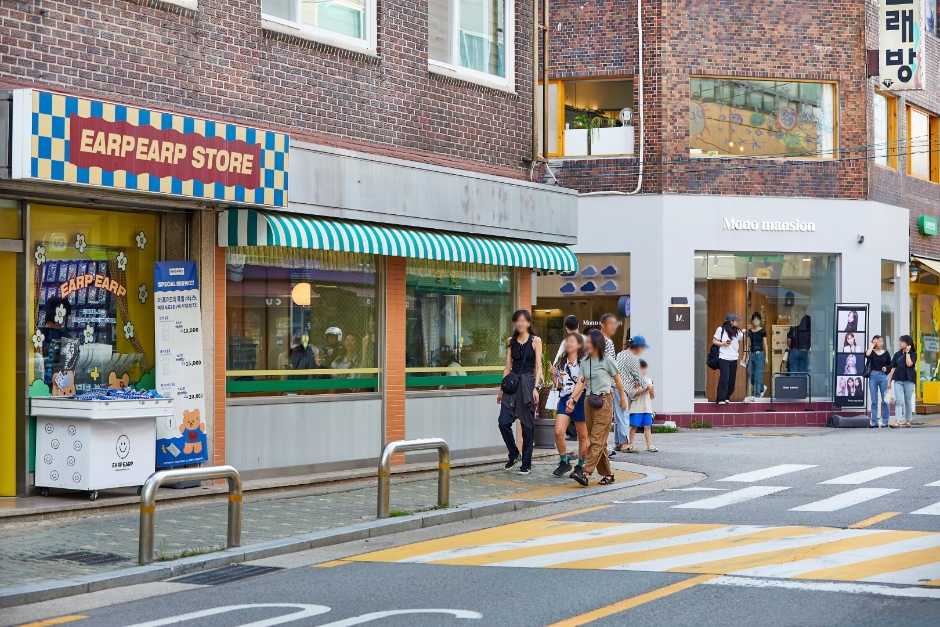
Mangnidan Street is located near Poeun-ro, which can be reached in about 6 to 8 minutes of leisurely walk toward Mangwon Hangang Park from Exit 2 of Mangwon Station on Subway Line 6. Its name comes from the combination of Mangwon-dong and the Gyeongnidan Street in Itaewon, meaning the “Gyeongnidan Street of Mangwon-dong.” There are a variety of restaurants, cafes, dessert shops, and other small shops, each with their own charm, making it a great place to take the kids shopping or just get some rest. This place is quite close to Mangwon Market, so visitors can stop by the market if time allows. Another way to fit this area into the itinerary is as a pit stop for desserts or some shopping before heading to Mangwon Hangang Park.
Sunset Leisure 435 (썬셋레저 435)
7.9Km 2023-07-04
서울특별시 마포구 망원동 205-5
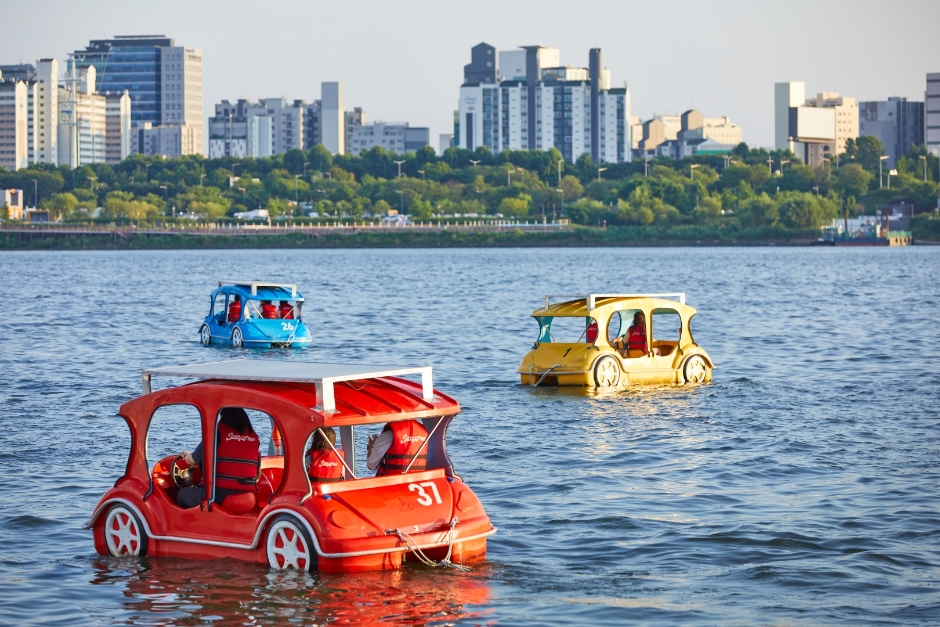
Mangwon Hangang Park is famous for its amenities, and what better than the iconic duck boat to get the most out of Hangang River? Hangang River is a wide river ranging up to 1 - 2km in x_width, so go for a joyride with duck boats on the river. One can also opt for electric boats for a more comfortable experience, depending on one’s preferences and the group size. Duck boats are particularly popular on the weekends and holidays, so it is recommended to place reservations before heading there.
Gangseo Marsh Ecological Park (강서습지생태공원)
7.9Km 2021-06-22
279-23, Yangcheon-ro 27-gil, Gangseo-gu, Seoul
+82-2-3780-0621
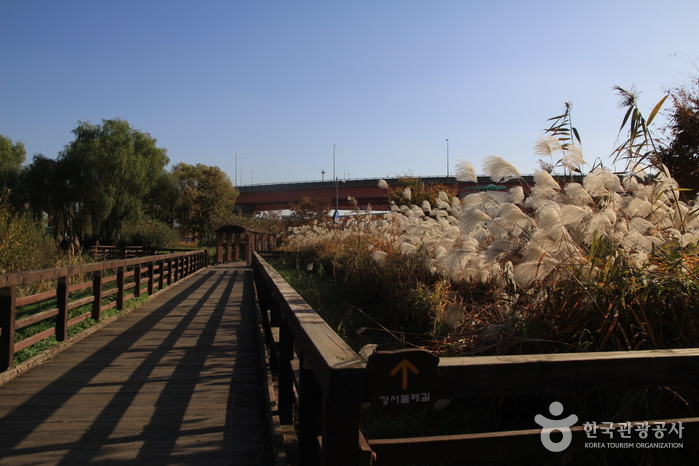
The Gangseo Marsh Ecological Park is an eco-park located on the Hangang River between the southern side of Banghwadaegyo Bridge and southern side of Haengjudaegyo Bridge. Established in July 2007, the park is partly comprised of low wetlands, freshwater lakes, and various aquatic plants. Eco-trails wind around the park through reed areas, around willow trees, and past the migratory bird observation. At the park, visitors can watch and learn about a variety of migratory birds during summer and winter or join one of the park’s organized eco-education programs.
Suseongdonggyegok Valley (수성동계곡)
8.0Km 2023-08-17
185-3, Ogin-dong, Jongno-gu, Seoul 서울특별시 종로구 옥인동
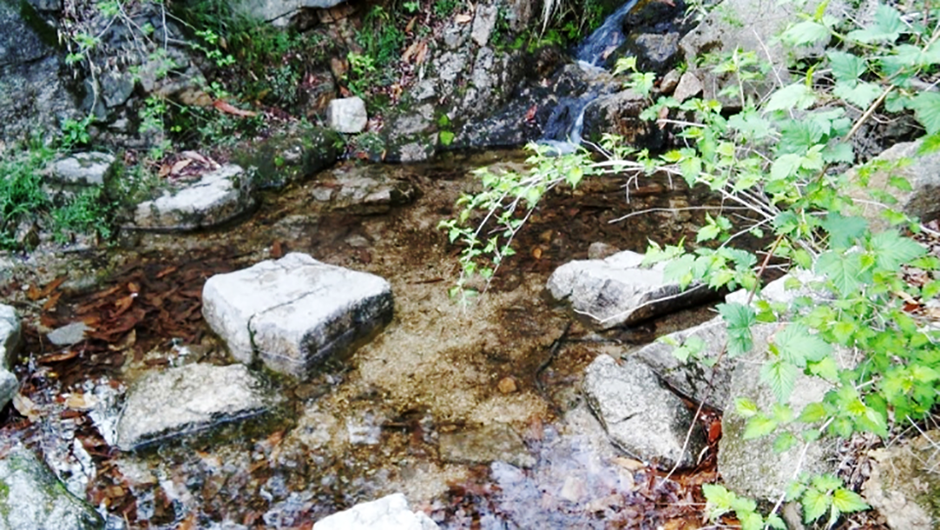
Suseong-dong Valley's stream runs down from Inwangsan Mountain and joins Cheonggyecheon Stream, and it is said that the name of the village was called Suseong-dong during the Joseon dynasty due to the loud and clear sound of the flowing water. It appears in the painting "Jangdong Palgyeongcheop," which is Jangdong Eight Scenic Views, that depicts the eight scenic views of Bugaksan Mountain and Inwangsan Mountain as well as in other historical books of the Joseon dynasty as a place of scenic beauty. The valley was so famous for its beauty, that Prince Anpyeong of the Joseon dynasty built his house "Bihaedang" to fully enjoy the view, and the valley and its stone bridge were designated as a cultural property of Seoul in 2010.
Seoul Botanic Park (서울식물원)
8.0Km 2025-06-18
161 Magokdong-ro, Gangseo-gu, Seoul
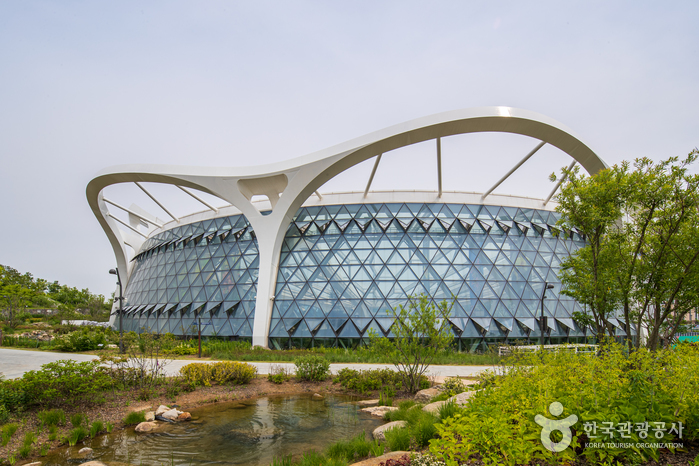
The Seoul Botanical Garden was created in Magok, the last remaining development site in Seoul, to introduce native plants and horticulture of 12 different cities from around the world and raise ecological awareness in the city. Seoul Botanic Park integrates a botanical garden and a public park, and the area is the size of 70 soccer fields. It serves as a bridgehead and lifelong education institution with the aim of spreading urban garden culture while staying true to its original role as a plant research conservation institution through expanding endangered wild plant habitats, researching the proliferation of species, and developing varieties. The botanical garden is divided into four spaces: Open Forest, Themed Garden, Lake Garden, and Wetland Garden. The main highlight is the Themed Garden that comprises the Botanic Center, Mogok Cultural Hall, and an outdoor themed garden.
Dongnimmun Gate (독립문)
8.0Km 2022-12-15
251, Tongil-ro, Seodaemun-gu, Seoul
Dongnimmun stands at the location originally known as Yeongeun, where envoys were once treated. When a Chinese envoy visited, the King would go out through this door to greet. In 1898, to announce the independence from Japan, Dongnimun was constructed with the fund collected by the citizens. The traces of the past still remain on Dongnimmun with two pillars in front of Dongnimmun being the remains of Yeongeunmun.
The Arc de Triomphe in France can be recalled in comparison to Dongnimmun. Dongnimmun was built using granite with a passageway x_height of 14.28 meters. On the top it is written ‘Dongnimmun’ in Korean with the national flag drawn on each side. On the inner-left side there are stone stairs leading to the attic. The national flower Mugunghwa are planted around Dongnimmun. Now it is surrounded by roads and it is eye-catching to view when passing by.
Seodaemun Prison History Museum (서대문형무소역사관)
8.0Km 2024-12-02
251 Tongil-ro, Seodaemun-gu, Seoul
Seodaemun Prison was built under the Japanese administration to imprison independence movement activists. It first opened on October 21, 1908 under the name Gyeongseong Prison. Eventually, so many activists were imprisoned that the building had to be expanded. At that time, the name changed to Seodaemun Prison on September 3, 1912. Eighty years later, the prison was turned into Seodaemun Independence Park on August 15, 1992 to commemorate the Korean patriots who were tortured in prison, giving their lives for freedom. Of the many buildings, only seven were preserved for their historical significance, among which three prison buildings and the execution site were designated as a Historic Site. In 1998, the park underwent another transformation into today's Seodaemun Prison History Hall to educate the public on the importance of Korea's independence and the sacrifices of those who fought to achieve it.
 English
 한국어
한국어 日本語
日本語 中文(简体)
 Deutsch
 Français
 Español
 Русский


