
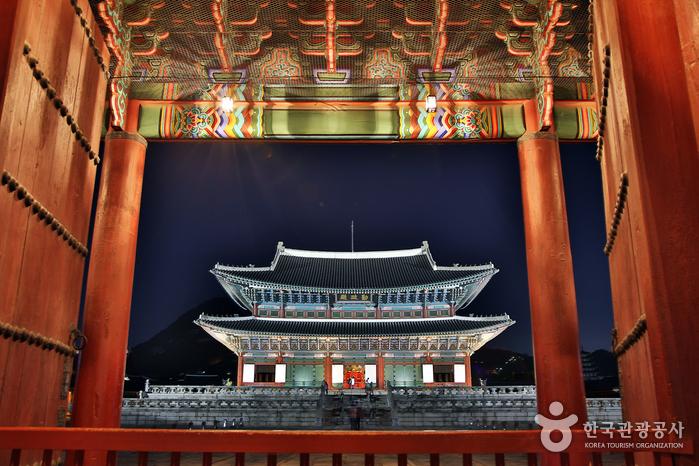
Jongno Cheonggye Special Tourist Zone (종로 청계 관광특구)
9.0Km 2021-12-30
99, Yulgok-ro, Jongno-gu, Seoul
+82-2-2148-1861
Jongno Cheonggye Special Tourist Zone stretches from Seorin-dong to Changsin-dong between Cheonggyecheon Stream and Jong-ro. It includes Youth Street, Gwangjang Market, Sewoon Electronics Department Store, lighting stores, pharmacy & medical device stores, badge stores, Stamp Street, Stationery · Toy Market, Aquarium Street, Shoes Market, and other markets totalling to approximately 14,000 shops. Nearby attractions include modern high-story buildings as well as Gyeongbokgung, Changdeokgung, Changgyeonggung, Deoksugung, and Unhyeongung Palaces, Jongmyo Shrine, and Insa-dong, merging traditions, modernism, culture, and markets alike.
Thought to be at the heart of Seoul, Cheonggyecheon Stream is located in the dense cultural area of Seoul where various press networks, organizations, bookstores and other major corporations are situated. Walking along Cheonggyecheon Stream is a famous activity for tourists. Also, the area is the venue for the Seoul Lantern Festival every winter. Keeping its traditional scene including narrow alleys, old-fashioned hanok buildings and various stores still fully intact, the tourist zone has enough fun places for sightseeing as well as tasty restaurants in every corner for a more enjoyable visit.
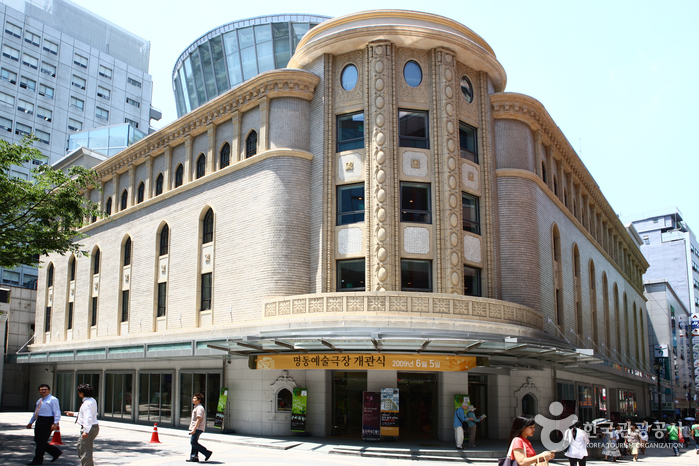
Myeongdong Theater (명동예술극장)
9.0Km 2021-06-09
35, Myeongdong-gil, Jung-gu, Seoul
+82-1644-2003
Myeongdong Theater is an exclusive theatrical performance center, located in what was originally the National Theater of Korea. From 1934 to 1973, the National Theater of Korea pioneered Korean arts and culture, serving as a movie theater, performance hall and art theater. Though it closed its doors in 1975, it was reopened on June 5, 2009 after 3 years of renovation under the name of Myeongdong Theater. The exterior of the theater was left untouched, while the interior was completely updated for a modern design. The theater has a mid-sized performance hall with state-of-the-art stage equipment and a seating capacity of 588 seats. The close proximity of the seats and the stage offers great views as well as allows the audience to share the passion of the performers on stage. The theater presents a range of performances such as theatrical plays, experimental plays, non-verbal performances, and musicals. In addition, the place is a popular venue for diverse events like acting contests, theater festivals and performance festivals.
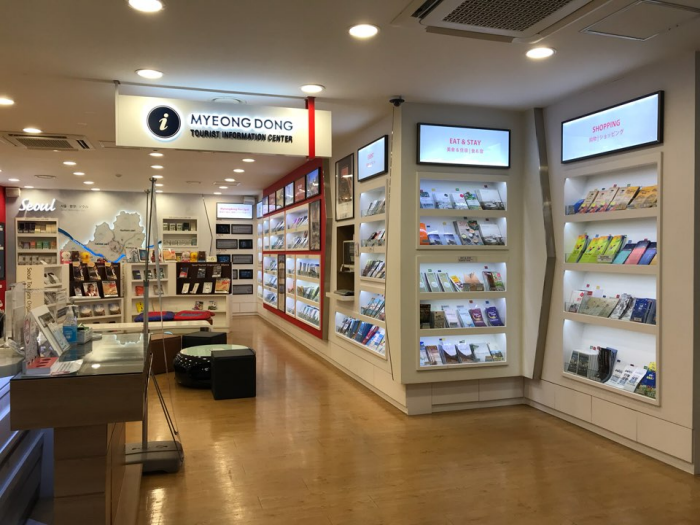
Myeong-dong Tourist Information Center (명동관광정보센터)
9.0Km 2023-01-03
66, Eulji-ro, Jung-gu, Seoul
+82-2-778-0333
Myeong-dong Tourist Information Center provides information on traveling, shopping, attractions, and more in Seoul. Service is provided in Korean, English, Japanese, and Chinese. The center also offers experience programs like using Hangeul stamps.
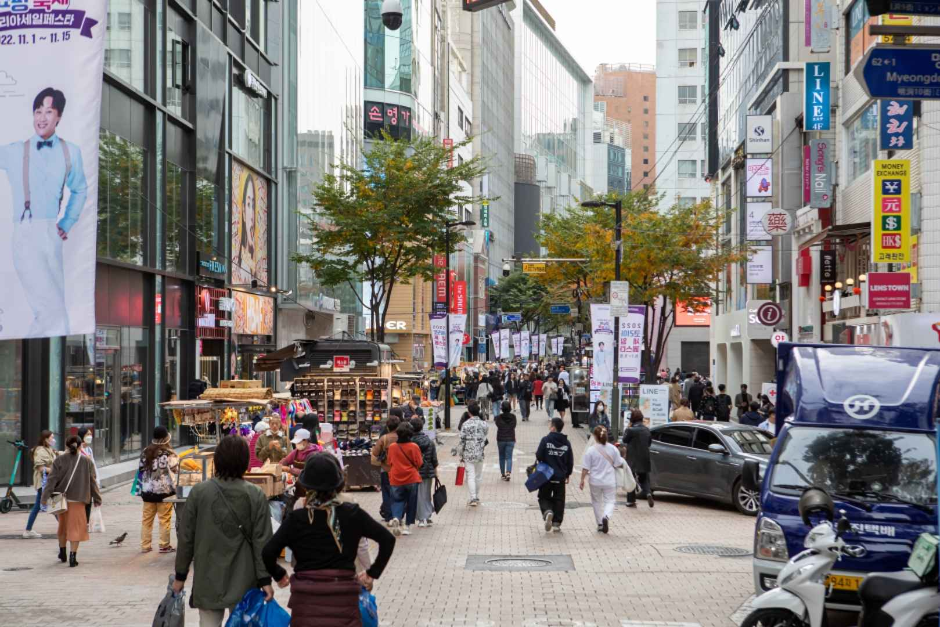
Myeong-dong (명동)
9.0Km 2024-05-17
66, Eulji-ro, Jung-gu, Seoul
+82-2-778-0333
Myeong-dong is one of the primary shopping districts in Seoul. The two main streets meet in the center of the block with one beginning from Myeong-dong Subway Station (Seoul Subway Line No. 4) and the other from Lotte Department Store at Euljiro. Many brand name shops and department stores line the streets and alleys. Common products for sale include clothes, shoes, and accessories. Unlike Namdaemun or Dongdaemun, many designer brands are sold in Myeong-dong. In addition, several major department stores have branches here, including Lotte Department Store, Shinsegae Department Store, Myeong-dong Migliore, Noon Square and M Plaza. The department stores carry many premium labels and other fashionable goods at reasonable prices.
Myeong-dong also has family restaurants, fast food, plus Korean, Western and Japanese dining options. Many restaurants in Myeong-dong specialize in dongaseu (pork cutlet) and kalguksu (noodle soup). Other businesses in the area include hair salons, banks and theaters.
NKDB North Korean Human Rights Exhibition Hall (북한인권전시실)
9.0Km 2025-11-13
393 Samil-daero, Jongno-gu, Seoul
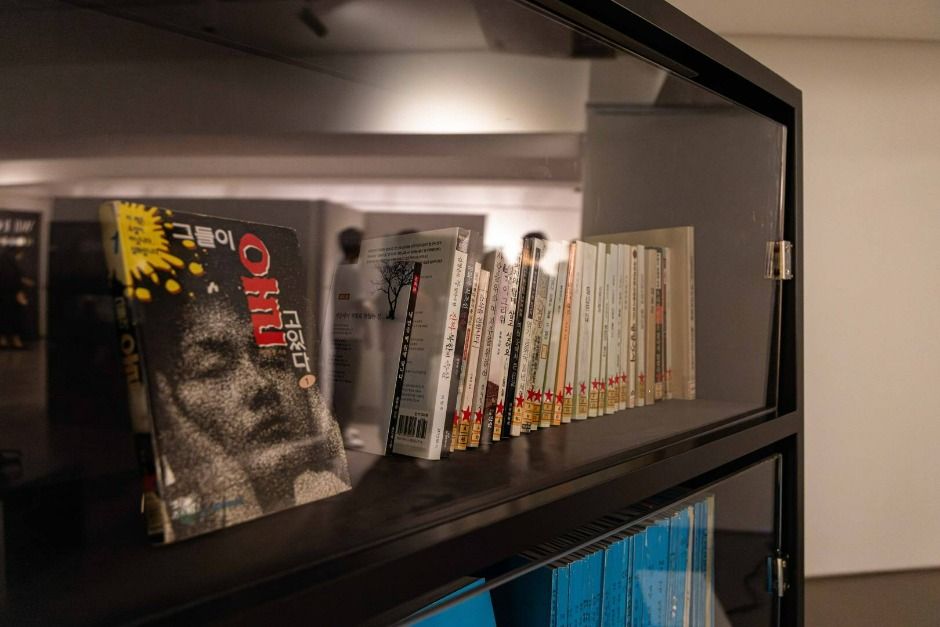
The NKDB North Korean Human Rights Exhibition Hall is a permanent exhibition space dedicated to North Korean human rights. Although it is a small space, it resonates deeply and serves as a "dark tourism" site that records and testifies to the ongoing reality of human rights violations in North Korea. The North Korean Human Rights Information Center (NKDB), which operates this exhibition hall, is the organization that collects and archives the most extensive records of human rights concerning North Korean residents in the world. The testimonies and records presented here represent a living history, a story unfolding in the present, unavailable elsewhere. Through donated North Korean artifacts, including these records, visitors can glimpse the present-day North Korea and encounter artwork by North Korean defectors.
![8 Seconds - Myeong-dong Branch [Tax Refund Shop] (에잇세컨즈 명동점)](http://tong.visitkorea.or.kr/cms/resource/41/2878641_image2_1.jpg)
8 Seconds - Myeong-dong Branch [Tax Refund Shop] (에잇세컨즈 명동점)
9.1Km 2024-04-22
32, Myeongdong-gil, Jung-gu, Seoul
-
Changdeokgung Injeongmun Gate (창덕궁 인정문)
9.1Km 2025-01-14
99, Yulgok-ro, Jongno-gu, Seoul
+82-2-3668-2300
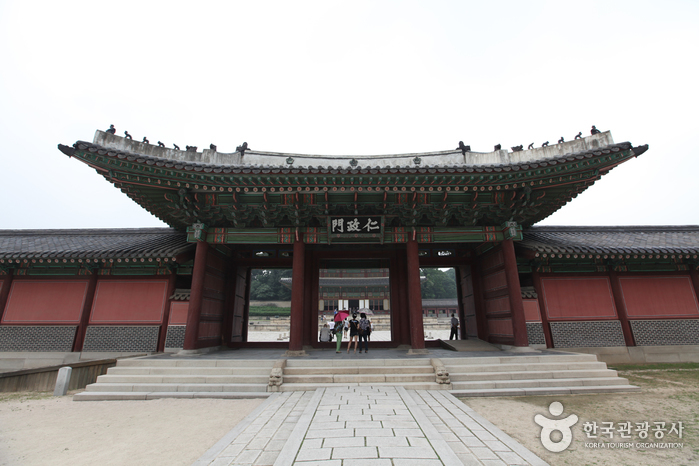
Serving as the main gate of Injeongjeon Hall, Injeongmun Gate was established in 1405 (5th year of King Taejo’s reign during the Joseon dynasty). Later on, the gate was destroyed by multiple fires during the Imjin War (Japanese invasion of Korea in 1592), therefore current form of the establishment displays designs that are more often seen in the late 19th century's. In addition, a lot
of subsidary marks and buildings are removed from the original places and relocated passing the time, however, still remains to represent prestigious ambience.
Injeongmun Gate served as the place for several coronation ceremonies of kings, prince's succession of throne, and many other national affairs celebrated by the royal members who gathered and aligned around this gate.
Tteulan Teahouse (뜰안)
9.1Km 2024-12-10
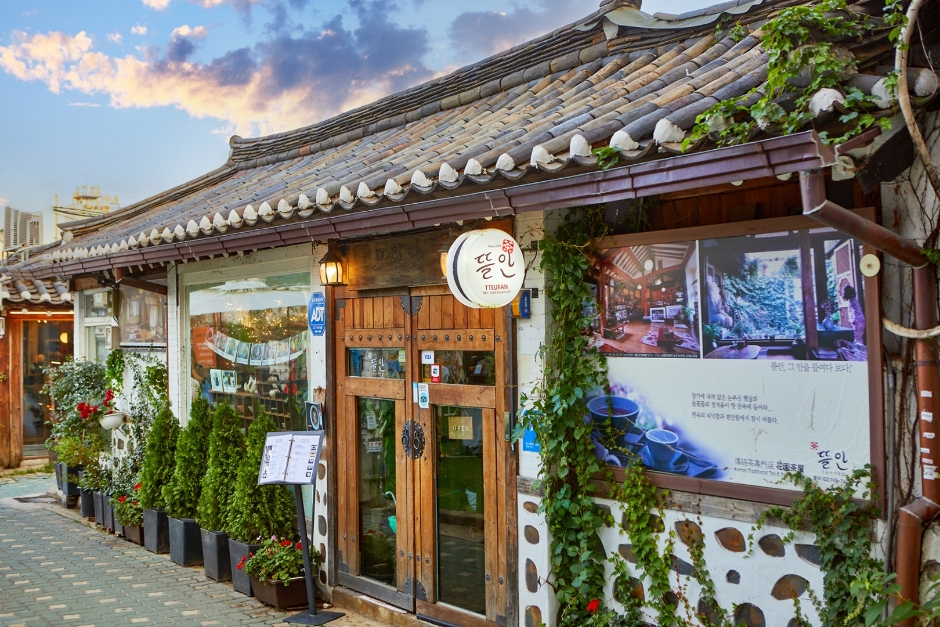
Tteulan Teahouse is a cafe that really allows one to feel the tradition and flair of Korea. Tteulan has two entrances: one facing the wide alley and the other facing the smaller one. The smaller entrance is decorated like a garden, so it feels as if one is stepping into a land of fairy-tales. The café has a floor seating tables with traditional items like gadari soban (a table with legs that curve like a dog's legs), and jogakbo (a textile woven from several pieces of scrap cloth), all of which add to the traditional Korean aesthetic. The menu features ssanghwacha (medicinal herb tea known to help the immune system), a favorite among middle-aged and elderly Koreans; omija tea (omija is a tart berry that grows in East Asia known to be good for lung and bronchial health and boosts immunity); citrus tea (usually made with yuzu which is rich in vitamin C and said to help mitigate fatigue); and pour-over coffee. Traditional desserts include mugwort rice cake (rice cake with mugwort added for herbal flavor, best enjoyed with malt syrup), pumpkin rice cake, and roasted grain powder (a nutritious beverage made with a variety of powdered grain). It can be hard to find seating in the afternoon, so visitors are advised to avoid these hours if they seek to enjoy their drink in peace.
Tapgol Park (탑골공원)
9.1Km 2024-03-04
99, Jong-ro, Jongno-gu, Seoul
+82-2-731-0534
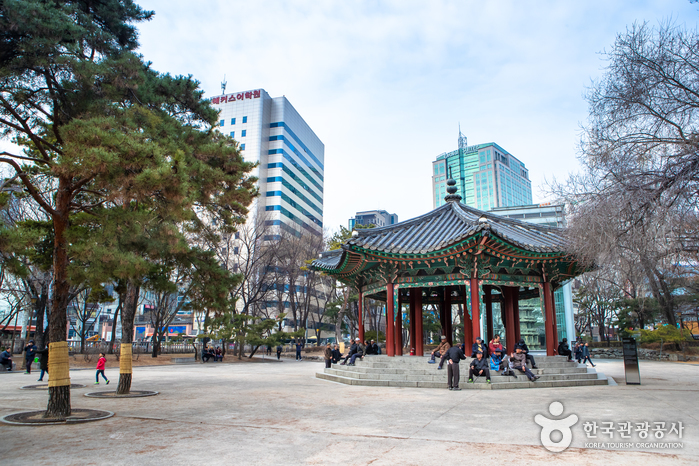
Tapgol Park is the first modern park in Seoul. Having been the site of the Buddhist temple of Wongaksa Temple since 1467, the land was turned into a park in 1897. The park has a significant presence in Korean history, being the place where the March 1 Independence Movement began in 1919. One can find historical sites that hearken back to the struggle, such as the Palgakjeong Pavilion, the center of the movement; cultural heritage sites such as the Ten-story Stone Pagoda of Wongaksa Temple Site and the Stele for the Construction of Daewongaksa Temple at Wongaksa Temple Site; and monuments such as the independence movement relief plate, murals, the statue of Son Byeong-hee, and the statue of Han Yong-un.
 English
 한국어
한국어 日本語
日本語 中文(简体)
 Deutsch
 Français
 Español
 Русский


