![Nature Republic - Gongdeok Station Branch [Tax Refund Shop] (네이처리퍼블릭 공덕역점)](http://tong.visitkorea.or.kr/cms/resource/92/2878392_image2_1.jpg)
Nature Republic - Gongdeok Station Branch [Tax Refund Shop] (네이처리퍼블릭 공덕역점)
18.5Km 2024-04-22
Store #626-138, B200 Baekbeom-ro, Mapo-gu, Seoul
-
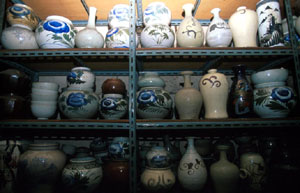
Hwanghak-dong Flea Market (Dokkaebi Market / Manmul Market) (황학동 벼룩시장 (도깨비시장/만물시장))
18.5Km 2025-04-11
11-7 Majang-ro 5-gil, Jung-gu, Seoul
Hwanghak-dong Flea Market was named after the way how merchants travel from one place to another all over the country, as if like fleas hopping around from one spot to another, to collect rare and valuable items. This market was once a haven of antiques and collectibles, but with the formation of old-fashioned art street in 1983 in Janganpyeong, many classic art shops had moved out, leaving only used item and general goods stores. Now, visitors can find stores selling antiques, used furniture, electronics, clocks, jewelry, musical instruments, camera, and machinery – pretty much anything one can name. Hwanghak-dong Flea Market is also referred to as Dokkaebbi Market, to describe how even the most rundown items become just like new, as if like the work of a dokkaebi (Korean folk goblin).

Glasses & People [Tax Refund Shop] (안경과사람들)
18.5Km 2024-06-27
104-2, Yangpyeong-ro, Yeongdeungpo-gu, Seoul
-
![Queens Bucket - Dongdaemun Branch [Tax Refund Shop] (쿠엔즈버킷 동대문)](http://tong.visitkorea.or.kr/cms/resource/47/2878747_image2_1.jpg)
Queens Bucket - Dongdaemun Branch [Tax Refund Shop] (쿠엔즈버킷 동대문)
18.5Km 2024-04-18
5-4, Toegye-ro 64-gil, Jung-gu, Seoul
-
![Olive Young - Gongdeok Station Branch [Tax Refund Shop] (올리브영 공덕역)](http://tong.visitkorea.or.kr/cms/resource/78/2887978_image2_1.jpg)
Olive Young - Gongdeok Station Branch [Tax Refund Shop] (올리브영 공덕역)
18.5Km 2024-04-16
1F, 199, Baekbeom-ro, Mapo-gu, Seoul
-
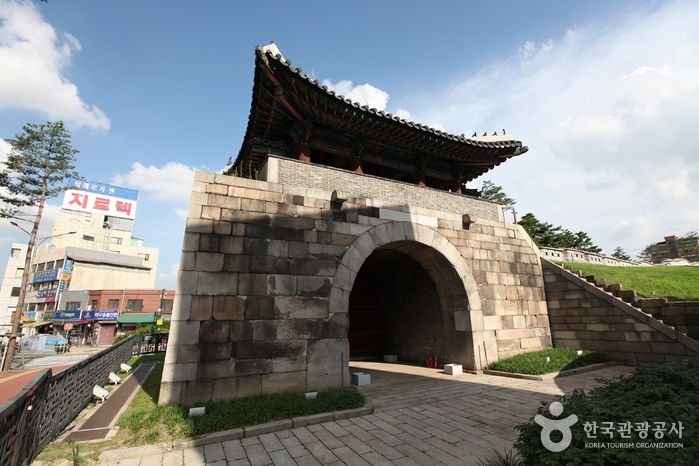
Gwanghuimun Gate (광희문)
18.5Km 2021-02-24
344, Toegye-ro, Jung-gu, Seoul
+82-2-3700-3900
Gwanghuimun Gate is said to have been originally constructed in 1396, the 5th year of King Taejo, at the southeast of the capital city. It was often referred to as Sugumun Gate (water channel gate) and was actually used as a Sigumun, literally meaning “corpse gate,” as funeral processions passed through this gate when exiting to the east.
During the Imjin War (1592-1598), the fortress gate was destroyed to such a degree that it made finding the original location close to impossible. Nevertheless, reconstruction efforts were started in 1711 (37th year of King Sukjong) and the gate was restored together with the gate's watchtower. Gwanghuimun Gate remained intact even when the fortress walls were demolished to build tram tracks during the Japanese occupation, but it was later damaged during the Korean War and left neglected. In 1975, restoration work was carried out to relocate Gwanghuimun Gate to a site 15 meters south of its original location since it stood in the middle of the road.
Ewha Womans University Mokdong Hospital (이화의대부속목동병원)
18.5Km 2025-10-23
1071 Anyangcheon-ro, Yangcheon-gu, Seoul
Ewha Womans University Mokdong Hospital, established in 1993, continues the legacy of Pogoonyogoan (1887), Korea’s first women’s hospital. As a 5th-stage tertiary hospital, it delivers advanced care through specialized centers, treating high-complexity diseases such as cancer, cardiovascular and cerebrovascular disorders, and organ transplantation, as well as chronic conditions like hypertension, diabetes, and joint diseases. With the opening of Cancer Center for Women (2009), Urology Institute (2022), and Blood Cancer Hospital (2025), the hospital has expanded its expertise and patient-centered environment, providing trusted, high-quality medical services.
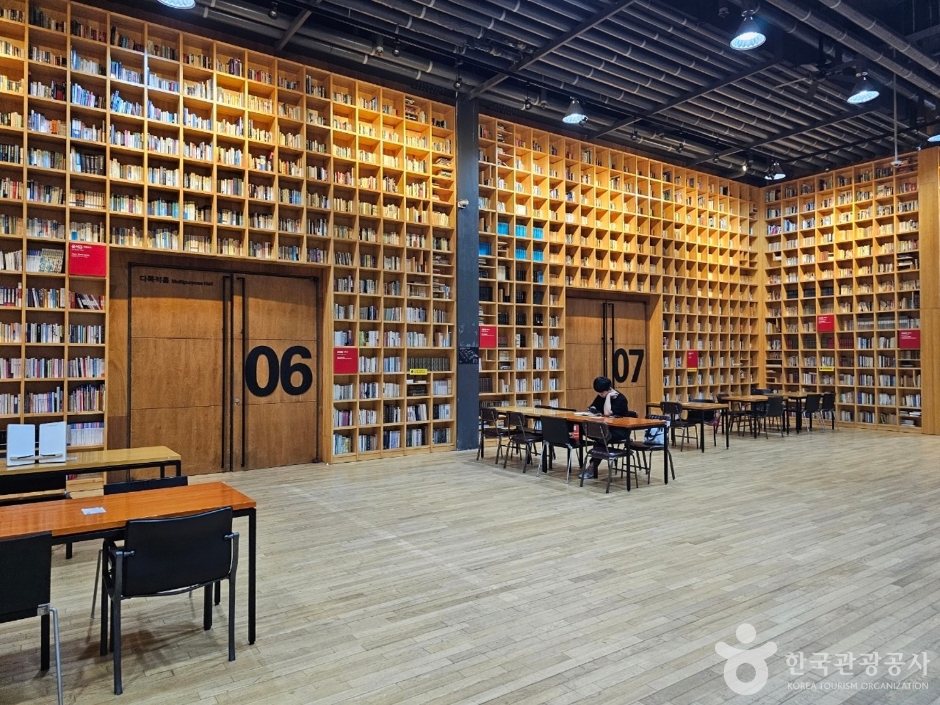
Forest of Wisdom (지혜의 숲)
18.6Km 2025-10-24
145 Hoedong-gil, Paju-si, Gyeonggi-do
◎ Travel information to meet Hallyu’s charm
The music video for Girls’ Generation’s debut song “Into the New World” was filmed here, and Hyoyeon’s dance break scene took place on the outside stairs. The building, which is known for its award-winning architecture, has also served as the backdrop for dramas such as “Romance Is a Bonus Book” and “The World of the Married.”
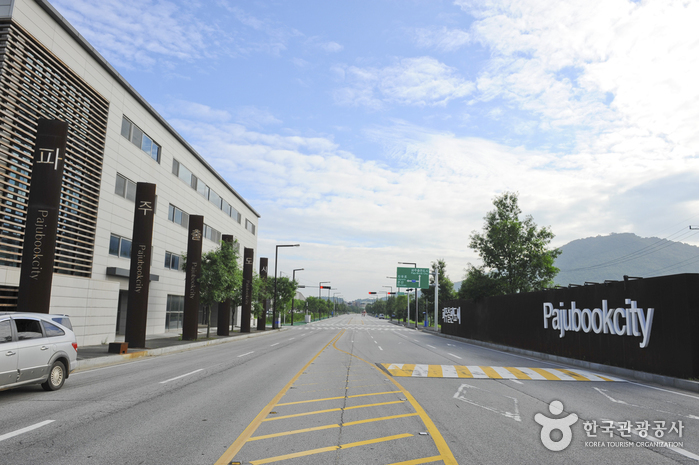
Paju Book City (파주 출판도시)
18.6Km 2024-02-29
Munbal-dong, Paju-si, Gyeonggi-do
+82-31-955-0050
Paju Book City was formed in 1989 by a group of publishers who sought to modernize the distribution structure of Korea’s publishing industry. The addition of structures later on created its current form as a cultural complex. Today, Paju Book City is home to a large collection of publishing houses, printing companies, and bookbinding companies. Some publishing houses run their own libraries, secondhand book shops, and thematic libraries. There are plenty of book cafés and art shops in the area, and visitors can also occasionally enjoy cultural events, lectures, and concerts by publishing houses.
![Sujeong Pharmacy [Tax Refund Shop] (수정약국)](http://tong.visitkorea.or.kr/cms/resource/57/2878757_image2_1.jpg)
Sujeong Pharmacy [Tax Refund Shop] (수정약국)
18.6Km 2024-04-22
1F, 195, Jangchungdan-ro, Jung-gu, Seoul
-
 English
 한국어
한국어 日本語
日本語 中文(简体)
 Deutsch
 Français
 Español
 Русский


