Inwangsan Mountain (인왕산)
15.4Km 2024-03-04
San 2-1, Muak-dong, Jongno-gu, Seoul
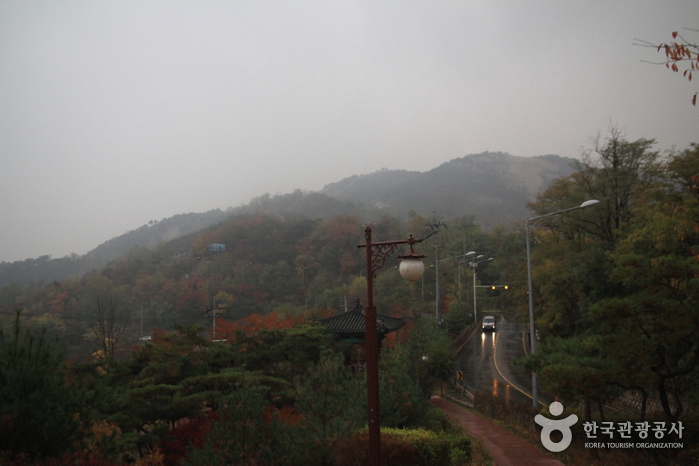
Inwangsan Mountain is a rocky mountain located to the northwestern side of Seoul. It stands 338m tall. The Seoul City Wall is built along its ridge, connecting to the Baegak Mountain Trail. From the summit, one can see the three mountains of Naksan Mountain, Namsan Mountain, and the Bugaksan Mountain surrounding the historical center of Hanyang, the historical name for Seoul in Joseon period, with the Gyeongbokgung Palace at the center. There are five hiking trails, all taking about two hours to complete. It takes about three hours if you want to visit all the peaks of the mountain.
Seoul Fringe Festival (서울프린지페스티벌)
15.5Km 2025-07-24
84-3 Seongmisan-ro 13-gil, Mapo-gu, Seoul
+82-2-325-8150
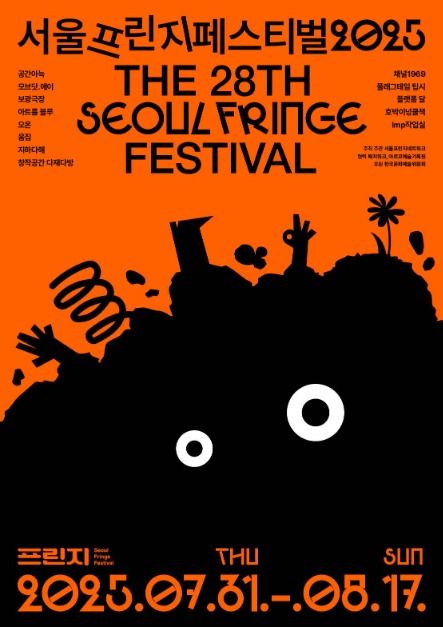
Seoul Fringe Festival has been held every summer annually since 1998. The festival is open to artists of all genres, from dance to music and media art. Due to the open style and non-competitive element of the festival, artists and festival-goers alike are free to express themselves however they choose.
Baek In-je House (백인제가옥)
15.5Km 2025-10-24
16 Bukchon-ro 7-gil, Jongno-gu, Seoul
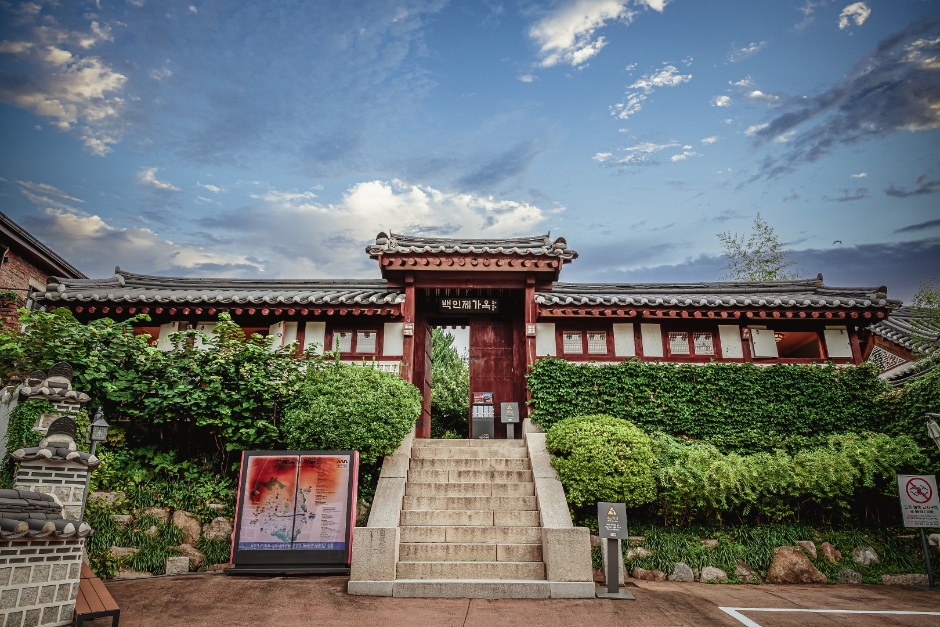
Baek In-je House, located in Bukchon Hanok Village, is a hanok built during the Japanese administration period that portrays modern hanok features. The structure consists of a main room offering a good view of the whole village, spacious bedrooms, a large garden, and annex buildings. As it maintains the beauty of a traditional hanok while incorporating the modern trend of its time, Baek In-je House is considered to be highly valuable in means of both architecture and history, representing the Bukchon Hanok Village together with Yun Bo-seon House.
Baek In-je House was built from black pine, which was first introduced in Seoul during the Gyeongseong Expo in 1907, distinguishing itself from other upper-class houses of its time. Unlike other traditional hanok designs that separate the main building from the other rooms, Baek In-je House connects the two with a hallway, allowing convenient access between the two structures. The house also consists of a Japanese-style hallway and floor mat rooms, reflecting the interior trends of that period. Baek In-je House is also unique in that the main room is partially built as a two-story structure, a style that was never seen in any traditional hanok built during the Joseon period.

Artee Riders Club (아띠인력거)
15.5Km 2022-09-15
43, Bukchon-ro 5-gil, Jongno-gu, Seoul
Artee Riders Club is the first company that offers rickshaw tours in the nation. Not only do you get to ride on the rickshaw to tour around popular attractions including Bukchon Village, Seochon Village, the rickshaw tour guides you to the smaller alleys as well. Travelers to Bukchon Village may have their belongings or luggage stored at the center, and individual's insurance as well as a complimentary drink are offered.
World Cup Park (월드컵공원)
15.5Km 2024-10-23
243-60 World Cup-ro, Mapo-gu, Seoul
Opened on May 1st, 2002, the Wolrd Cup Park was once a 15-year-old landfill that held over 92 million tons of garbage. The park is located near Seoul World Cup Stadium, and is made up of five smaller parks - Pyeonghwa (Peace) Park, Haneul (Sky) Park, Noeul (Sunset) Park, Nanjicheon Park, and Nanji Hangang Park.
* Pyeonghwa Park: Closest to Seoul World Cup Stadium, it holds a pond, garden, children’s playground, and forest. As a representative park of World Cup Park, the park was designed in hopes of peace and harmony between mankind and nature. It is often used as a picnic area and place for nature studies.
* Nanji Hangang Park: Nanji Hangang Park was developed on the banks of the Hangang River. In contrast to other Hangang River parks, Nanji Hangang Park is a water-friendly park that has a gradual slope towards the riverbank. The park consists of a camping ground, soccer field, basketball court, grass field, cruise ship port, and an area for nature studies.
* Haneul Park: Haneul Park consists of vast grassland located at the highest elevation of the five parks. The park's pasture is covered with eulalias and wild flowers in their most natural state. In addition, 30,000 butterflies of different species were introduced in 2000 to stabilize the ecosystem. Five wind-powered generators provide power to the park and the park’s maintenance office. Once a mountain of garbage, it is now a green hill with 22 lookout points offering breathtaking views of Seoul, including the N Seoul Tower, Bukhansan Mountain, and Hangang River. Tall trees are line the park to provide shades and serve as resting spots for visitors. As a popular spot to enjoy the sight of eulalias, the park usually remains open until late in the evening during the Eulalia Festival period.
* Noeul Park: In order to prevent the vast area of land of what was once a wasteland from becoming an unnecessary chunk of land, a nine-hole golf course was constructed in what is now known as Noeul Park. The golf course serves as an environment friendly entertainment park to visitors while stabilizing the geographical formation and has an urban park nearby that offers scenic views of the Hangang River and beautiful sunset. Located west of the golf park is Noeul Square, decorated with shrubs and flowers.
* Nanjicheon Park: Nanjicheon Park was developed from the Nanji Stream, which flowed under Haneul Park. It was once overflowing with sewage runoff from a nearby landfill, but it has since been beautifully restored into a park with clear water. The park is built to serve as a recreational spot for those with for youths, elders, and people with disabilities.
Africa Museum of Art (아프리카미술관)
15.6Km 2022-10-26
24-1, Samcheong-ro, Jongno-gu, Seoul
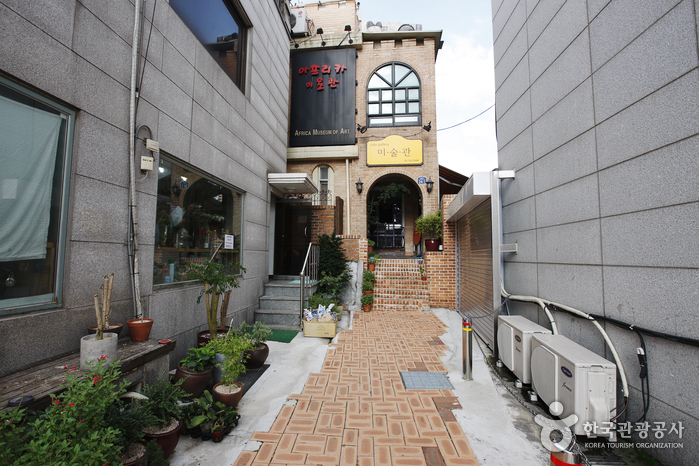
The Africa Museum of Art was established with the purpose of hosting various art festivals and providing the grounds for researching various art themes. A major principle of the gallery is to promote works of art that actively attempt to explore the human mind.
Hanji House (한지가헌)
15.6Km 2025-07-25
31-9 Bukchon-ro, Jongno-gu, Seoul
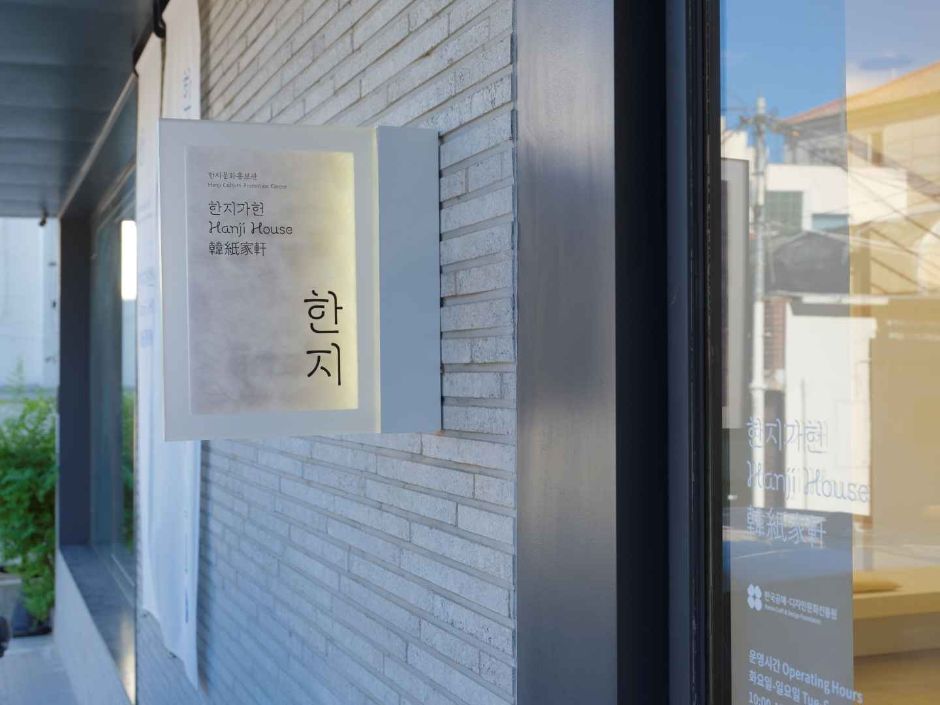
Hanji House was founded to pass on the cultural heritage of hanji, traditional Korean paper, as well as to promote its excellence and uses in everyday life. The center is operated by Korea Craft & Design Foundation, and offers a variety of programs that consist of exhibitions, hands-on activities, classes, and marketing hanji products. On the first floor is Hanji Showroom, where various exhibitions take place to showcase hanji of the past and the present. The basement floor comprises Hanji Open Archive, Hanji Print Studio, and Hanji Workroom, where most of the hands-on activities and classes are held. Hanji House also offers a docent program for exploring the whole area.
Rakkojae Seoul Bukchon Hanok Hotel (락고재 서울 북촌 한옥호텔)
15.6Km 2025-10-27
49-23 , Gyedong-gil, Jongno-gu, Seoul
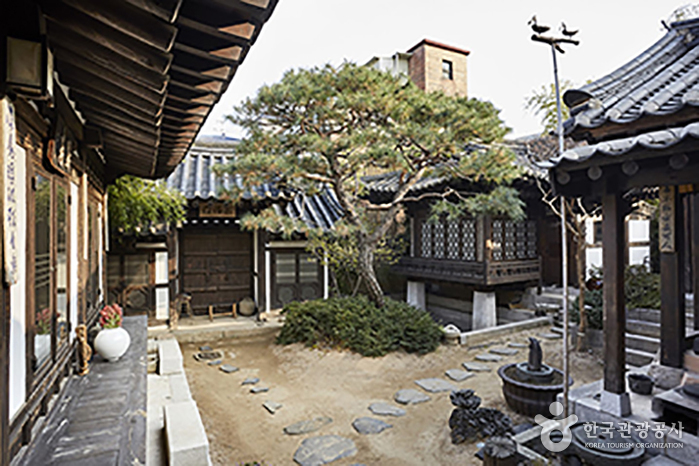
Rakgojae Bukchon Hanok Hotel in Jongru-gu, Seoul, is a traditional hanok compound with a 130-year history, renovated by master carpenter Jeong Yeong-jin. The elegant gate and stone walls, the traditional roof tiles, the jangdokdae jar store, the pavilions and ponds - not to mention the beautiful pine trees - express the archetypal beauty of hanok. Sitting on the daecheongmaru (wooden patio) with a breeze in the trees, guests will feel taken back in time. Guestrooms are clean and comfortable, and visitors can relax in a wood-fired red-clay sauna and a jade-covered ondol room,. Traditional culture programs are available.
Lee Ri-Ja Hanbok Museum (이리자 한복전시관)
15.6Km 2022-08-08
20, Samcheong-ro, Jongno-gu, Seoul
The Lee Ri-Ja Hanbok Museum displays the traditional clothing worn in Korea from birth to death. All hanbok displayed at the museum are created by the hanbok designer Lee Ri-Ja herself, who has over 40 years of experience.
 English
 한국어
한국어 日本語
日本語 中文(简体)
 Deutsch
 Français
 Español
 Русский


