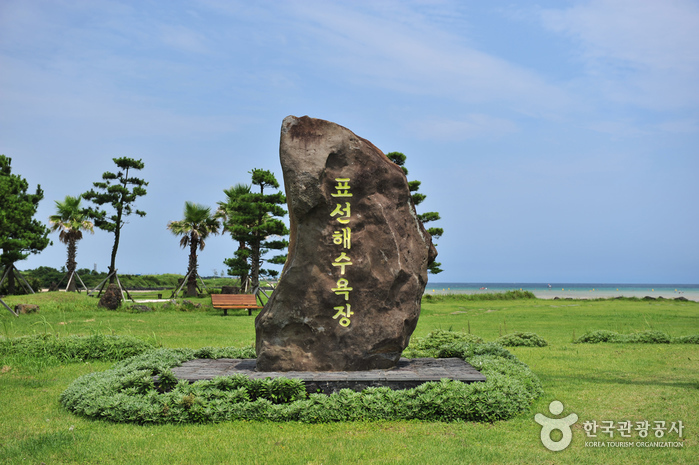
Pyoseon Haevich Beach (표선 해비치 해변)
17.5Km 2025-01-08
Minsokhaean-ro, Seogwipo-si, Jeju-do
Pyoseon Beach in Seogwipo is a spacious beach, taking up more than 150,000 m². During low tide, the beach looks like an elegant circle, and it becomes a circular lake less than 1 meter deep during high tide, and displays many different colors. The beach is a great place for children to play and for watching the sunrise. The sand on the beach is formed out of broken shells, and sand baths are believed to be effective for people suffering from neuralgia. Every August, this beautiful beach hosts the Pyoseon White Sand Festival, which offers fun and colorful events. The beach is equipped with excellent amenities (a campground, abundant parking space, dressing rooms and shower rooms) and surrounded by nearby attractions, such as Seongeup Folk Village and Jeju Folk Village Museum.
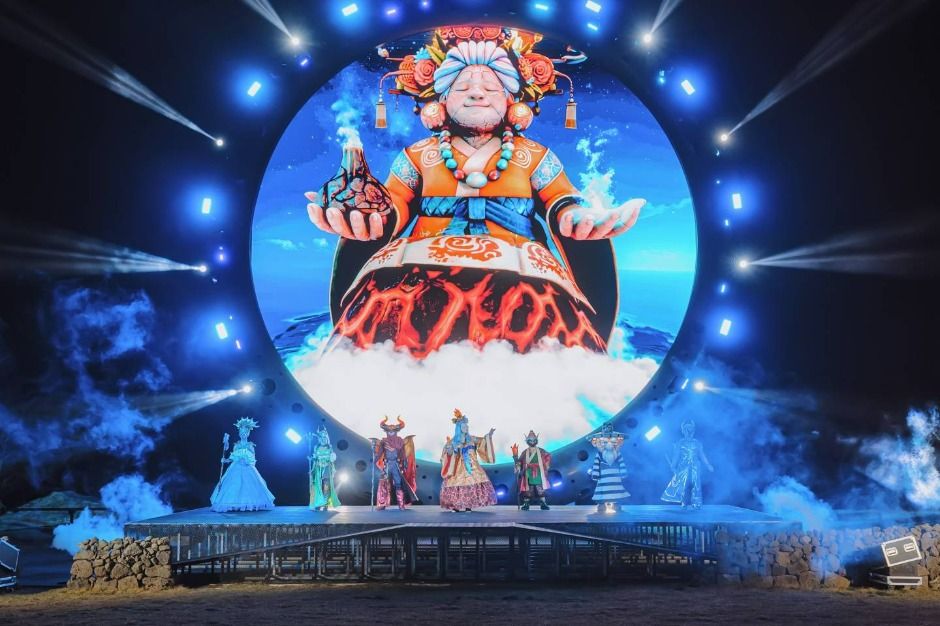
Lumiverse: Island of Light (빛의 섬 루미버스)
17.8Km 2025-07-14
631-34 Minsokhaean-ro, Pyoseon-myeon, Seogwipo-si, Jeju-do
Lumiverse: Island of Light is an evening theme park set in a Jeju folk village as a local-hip cultural entertainment attraction. A gigantic multimedia show and characters inspired by Jeju's folklore bring the night alive. The attraction's name is a portmanteau of "Lumi," wich means light in Latin, and "-verse" from the word "univserse," and is a brand that aims to recreate Jeju's mythical world with lights and arts. Visitors are invited to enjoy the evening with Jeju's mythical gods and goddesses, including the legendary guardian goddess Elderly Mago. The attraction is divided into seven illuminated themed zones, each focusing on one of the seven gods and goddesses. Each theme is decorated using lights, artworks, sound effects and narratives that are sure to enchant one's mind.
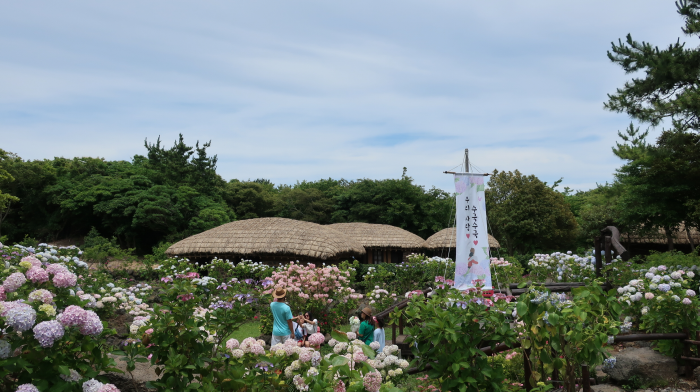
Jeju Folk Village (제주민속촌)
17.8Km 2025-03-17
631-34 Minsokhaean-ro, Pyoseon-myeon, Seogwipo-si, Jeju-do
Jeju Folk Village reproduces the old life of Jeju in the 19th century. More than 100 traditional Jeju houses and folk culture are being recreated and exhibited through archival research. The village is planted with local trees and flowers from Jeju and Korea, so visitors can enjoy flowers in all seasons. It features themed exhibition halls, model houses, and traditional folk games, attracting numerous visitors.

Bengdwigul Cave [UNESCO World Natural Heritage Site] (제주 선흘리 벵뒤굴 [유네스코 세계자연유산])
17.9Km 2022-12-27
Jocheon-eup, Jeju-si, Jeju-do
With a total length of 4,481 meters, Bengdwigul Cave is shaped like a maze and has one of the most complex lava tube structures in the world. For geologists, this cave is invaluable since it demonstrates how lava continuously flowed over the surface of the ground and the complex route it took to eventually form a tube deep underground. Created particularly close to the earth’s surface, this cave has a number of entrance holes to the tunnel. Inside, the complex structure of the cave unfolds in the form of double-tiered or triple-tiered rooms. A range of lava formations such as lava columns and lava bridges have developed inside this mystical tube.
* The UNESCO World Heritage designated Geomunoreum Lava Tube System of Bengdwigul, Manjanggul Cave, Gimnyeonggul, Yongcheondonggul and Dangcheomuldonggul Caves.
![Geomunoreum Lava Tube [UNESCO World Natural Heritage Site] (거문오름 [유네스코 세계자연유산])](http://tong.visitkorea.or.kr/cms/resource/61/2661661_image2_1.jpg)
Geomunoreum Lava Tube [UNESCO World Natural Heritage Site] (거문오름 [유네스코 세계자연유산])
18.2Km 2025-03-13
569-36 Seongyo-ro, Jocheon-eup, Jeju-si, Jeju-do
Geomunoreum Lava Tube stands out as one of the distinct oreum (the Jeju language term for parasitic cones) on Jeju Island, marked by its extensive network of around 20 lava tubes running through the volcanic structure. This site is not only a geological marvel but also a sanctuary for diverse biological species. Visitors begin their journey at the Jeju World Natural Heritage Center, from where a path leads directly to the Geomunoreum Lava Tube. It is important to note that prior reservations are required to visit. The significance of this location as a key geological feature was recognized when it was designated as a UNESCO World Natural Heritage Site in 2007. Additionally, an international trekking event is hosted annually to celebrate its global importance.
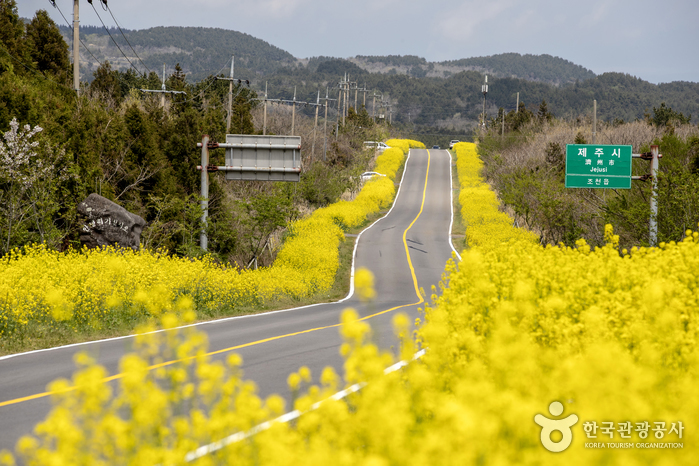
Seogwipo Gasiri Village (Noksan-ro Canola Flower Road) (서귀포 가시리마을 (녹산로 유채꽃도로))
18.4Km 2024-01-09
20 Gasi-ro 565beon-gil, Pyoseon-myeon, Seogwipo-si, Jeju-do
Seogwipo Gasiri Village is where canola flowers and cherry blossoms bloom simultaneously over a 10-kiliometer section from its access road every April, boasting a picturesque driving route. The combination of yellow canola flowers and light pink cherry blossoms is very special. Selected as one of the “100 Beautiful Roads in Korea,” Gasiri Noksan-ro Road is a road that passes through Noksanjang and Gammajang, which were the best horse farms of the Joseon period, and is currently one of the best canola flower roads in Jeju. As such, it is called the "First Sight of the Ten Sights of Gasiri Village." In addition, visitors can enjoy beautiful natural scenery unique to Jeju, such as Ttarabioreum and Keunsaseumioreum Parastic Cones.
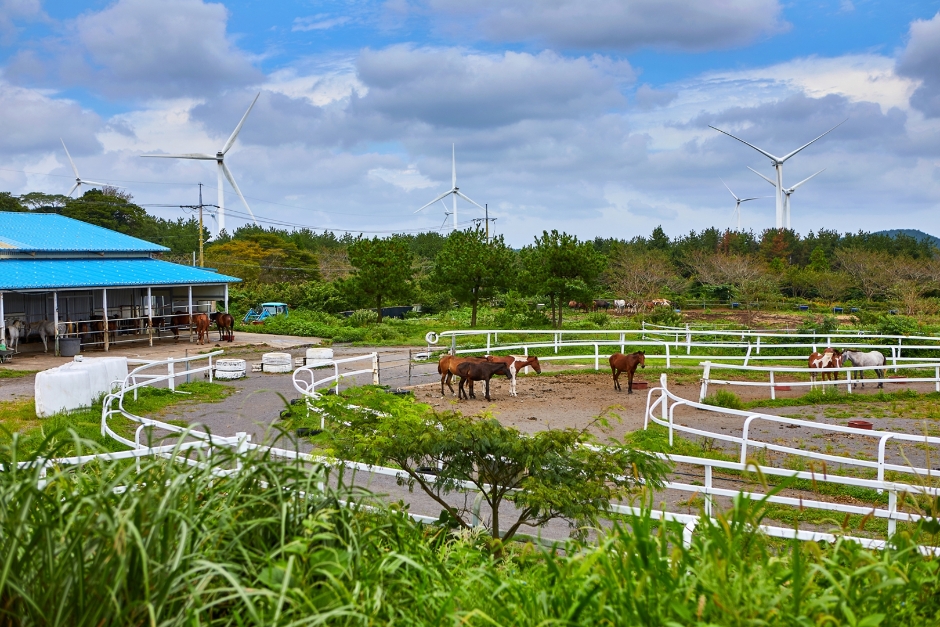
Jeju Horse Park (조랑말체험공원)
18.9Km 2024-01-11
381-15 Noksan-ro, Seogwipo-si, Jeju-do
Jeju Horse Park offers a venue to promote Jeju’s horse culture in an easy and fun way. The park has kept intact the 600-year history of nomadic culture at the site of Gasi-ri Village which used to house Gammajang, the place for raising the best horses during the Joseon dynasty. The park includes the Jeju Horse Museum, Ttarabi horseback riding track, Maeum Cafe, Mongol Yurt Guesthouse, camping site, Art Shop, and an experience place to focus on the Project for a New Cultural Space Creation through the support of the Ministry of Agriculture, Food and Rural Affairs. The Jeju Horse Museum was the first national museum created by a village and its main theme covers the history and culture of the village. It is also regarded as a new form of community business model.
 English
 한국어
한국어 日本語
日本語 中文(简体)
 Deutsch
 Français
 Español
 Русский


