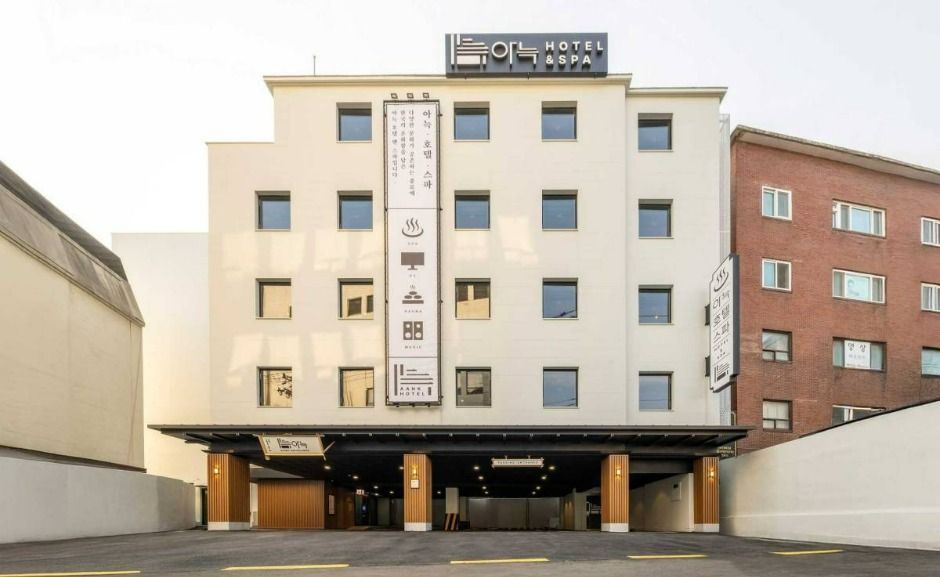
Aank Hotel & Spa Jongno Unni Branch (아늑호텔 앤 스파 종로운니점)
7.8Km 2025-04-24
89 Donhwamun-ro 11ga-gil, Jongno-gu, Seoul
Aank Hotel & Spa Jongno Unni Branch embodies the warmth and charms of Korea. Guests are welcome to unwind with diverse room options to choose from such as the msuic room, signature spa room, desktop 2-PC room, and standard room. It's location in the heart of Seoul makes it a great place for tourists as well as well.
Insadong Cultural Street (인사동 문화의 거리)
7.8Km 2023-12-26
Insa-dong, Jongno-gu, Seoul Metropolitan City
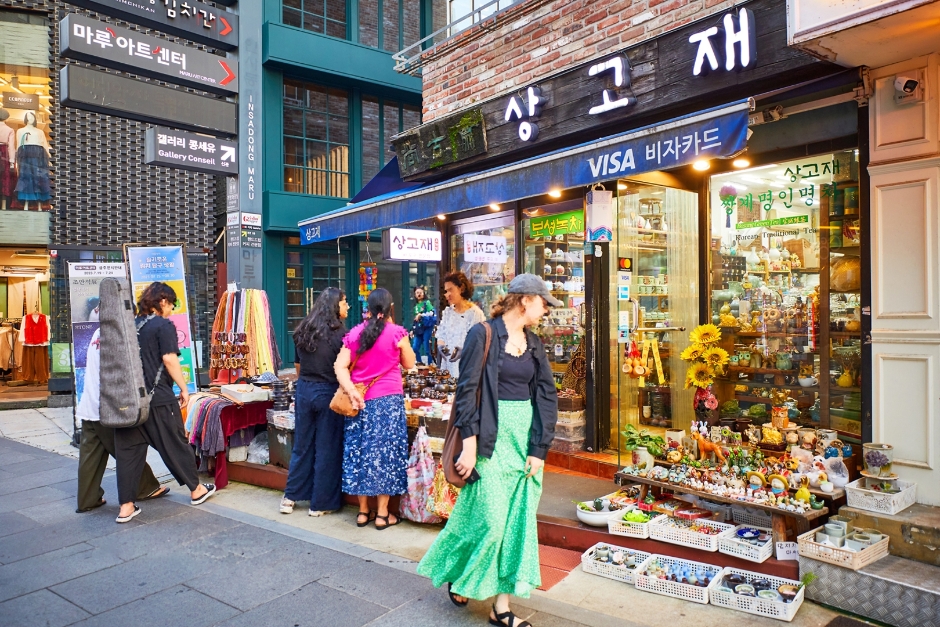
Insadong Cultural Street is a popular tourist destination for visitors from all around the world, thanks to its numerous art galleries, restaurants serving Korean table d’hote, traditional teahouses, and street vendors lining the streets. Its most recognizable feature is the use of Hangeul (Korean script) in storefronts, which allows the visitors to really see just what makes this place so special. Unlike the nearby Ikseon-dong Hanok Street, Insadong Cultural Street has larger streets with wider stores, so it is much easier to traverse. On evenings and weekends, one can find buskers performing on the side of the road.
Sieunjae (시은재)
7.8Km 2024-12-23
439 , Samil-daero, Jongno-gu, Seoul
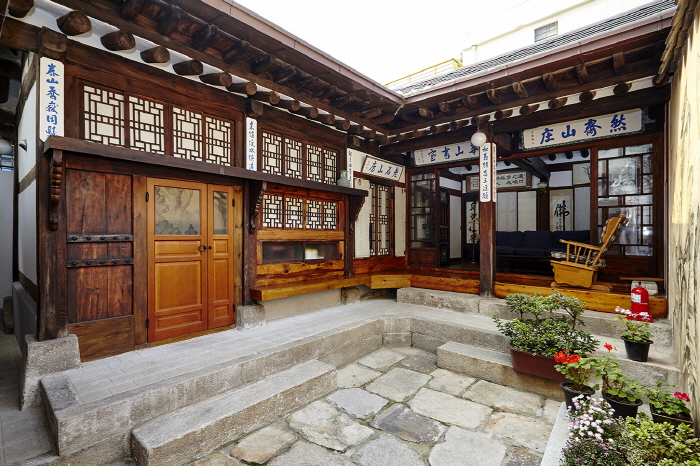
Sieunjae is a hanok stay that has stood in the midst of busy Gyeongun-dong, Jongno-gu, Seoul, for generations. The guestrooms comprise an anbang (bedroom plus living room), three smaller rooms, and a byeolchae or detached house. All rooms have a toilet, and there’s a well-equipped shared kitchen and a washing machine. Guests can either rent individual rooms or the whole hanok. Jongno is convenient for travel to all the historic sites of Seoul, and there’s a public carpark nearby.

Samgaksan Mountain (삼각산)
7.8Km 2024-03-20
Samyang-ro 173-gil, Gangbuk-gu, Seoul
Samgaksan Mountain is a mountain situated on the northern outskirts of Seoul, resembling a folding screen. Its name, meaning triangular mountain, is derived from the presence of three high peaks: Baegundae Peak, Insubong Peak, and Mangyeongdae Overlook. The highest peak, Baegundae Peak, offers a panoramic view of Seoul from its summit, featuring a spacious rock surface where many visitors can sit. Positioned behind Gyeongbokgung Palace, the palace of the Joseon dynasty, Samgaksan Mountain is visible from the rear of the Cheong Wa Dae.
HiKR Ground (하이커 그라운드)
7.8Km 2025-10-29
40 Cheonggyecheon-ro, Jung-gu, Seoul
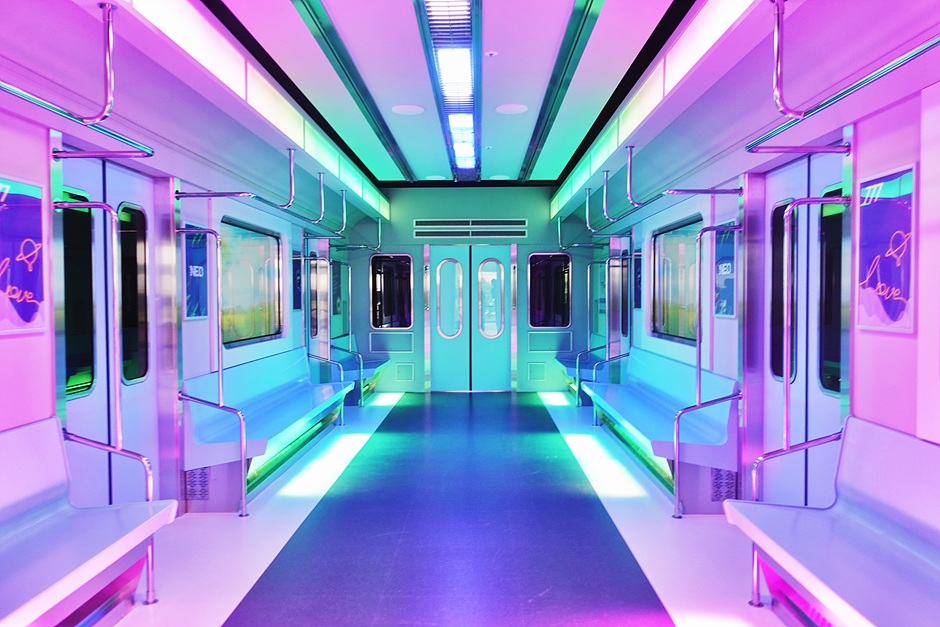
Located inside the Korea Tourism Organization Seoul Center, HiKR Ground is a Korean tourism publicity center where visitors can experience K-pop and view media art at the same time. The name "HiKR Ground" embodies the meaning that Korea (KR) will greet ("Hi") global tourists and become a playground. Notably, it provides Korean tourism content in multiple ways for the younger generation to enjoy. On the first floor, there is a space to enjoy various media arts through the large media screen HiKR Wall, where visitors can see "Landscape of the New City" by media artist Lee Lee-nam, and Korean tourism videos submitted by global hallyu fans. On the second floor, visitors can make their own K-pop music videos using the XR Live Studio. At the window facing the restored Cheonggyecheon Stream, there is a mesmerizing artwork called ''North Wall'' by installation artist Suh Do-ho. On the third and fourth floors, visitors can get immersed in Korean local tourism through various arts, experiences, and exhibitions.
We Ride (위라이드)
7.8Km 2023-07-28
40 , Cheonggyecheon-ro, Jung-gu, Seoul
"The best way to tour Seoul"
With WeRide's certified tour guides, travelers can experience unforgettable memories by riding an electric bicycle to attractions hidden all over Seoul. The tour takes 2 hours and 30 minutes, and participants can safely tour around Seoul with a professional guide. The fun of electric bicycles adds to the joy of the guide's story of Korean culture. If there are guests who cannot ride bicycles, they can use electric rickshaws. There is also a bicycle rental service for bicycle riders traveling in Korea.
Mediround.Corp (주식회사 메디라운드)
7.8Km 2025-10-23
10F, Unit B1031, 8, Gangnam-daero 69-gil, Seocho-gu, Seoul
Mediround is a specialized infrastructure service company providing expert assistance (HELP) for attracting international patients.
- H (Human Resource): Matching medical interpreting and customer service (CS) personnel
- E (Education): Training and development of professionals for international patient attraction
- L (Logic): Registration of international patient attraction institutions and setting up attraction business infrastructure
- P (Promotion): Development of international patient attraction products and global promotion
Mediround operates the international medical coordinator subscription service, Mycoordy. Mycoordy offers information on Korean medical institutions, online consultation, reservation services, interpretating support, and payment services.
MJ FLB ((주)엠제이에프엘비)
7.8Km 2025-10-23
#809, 8F, 40 Cheonggyecheon-ro, Jung-gu, Seoul
MJ FLB attracts foreign patients in eight medical specialties (plastic surgery, dermatology, dentistry, ophthalmology, gynecology, men's urology, orthopedics, and physical checkups), mainly targeting Chinese-speaking clients. It provides dedicated reservation and consultation services to foreign patients. Additionally, it has professional Chinese medical interpreters to ensure smooth communication between the hospital staff and patients, thus ensuring an efficient treatment. MJ FLB attracts foreign patients through customized social media promotions and marketing collaborations with influencers who have experienced its hospital services.
Seoul Plaza (서울광장)
7.8Km 2024-06-19
110 Sejong-daero, Jung-gu, Seoul
Seoul Plaza in front of Seoul City Hall is a historic site where the March 1, 1919 (Samil) Independence Movement and the pro-democracy movement in June 1987 were held. It is also a well-known place where tens of thousands of Korean soccer fans gathered together to watch the 2002 World Cup Games. Being located within the center of the city and surrounded by many historic attractions, including Deoksugung Palace, Seoul Plaza has become a representative attraction of Seoul.
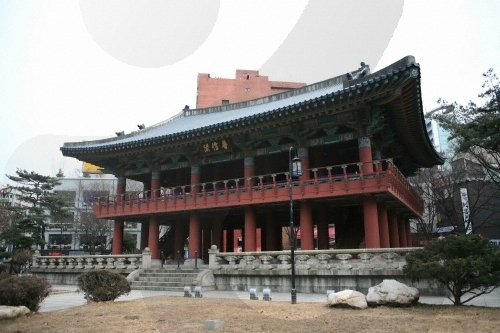
Bosingak Belfry (보신각 터)
7.8Km 2024-03-04
54, Jong-ro, Jongno-gu, Seoul
Bosingak Belfry is also known as Jonggak. It was the site in which a large bell, used to keep the time in Seoul, was found during the Joseon period (1392-1897). Bosingak Belfry was burned down during the Korean War (1950-1953) and was reconstructed in 1979. The original bell was moved to the Gyeongbokgung Palace, and a new bell was forged in 1985. At midnight, January 1, the bell at the Bosingak Belfry is rung to welcome the new year. Many people gather around the belfry to make a wish for their new year.
 English
 한국어
한국어 日本語
日本語 中文(简体)
 Deutsch
 Français
 Español
 Русский


