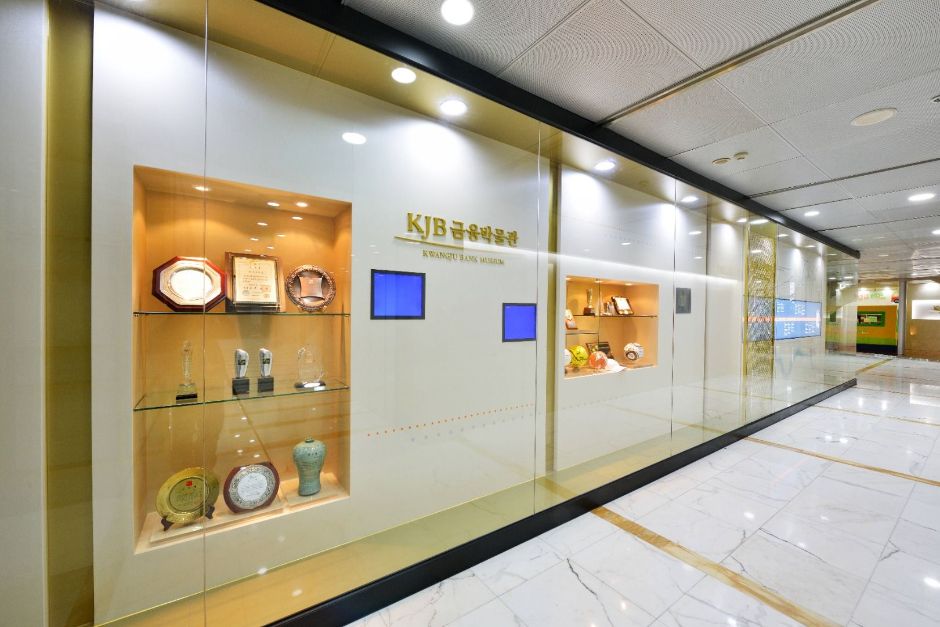
Kwangju Bank Museum (KJB금융박물관 (광주은행 금융박물관))
1.8Km 2024-12-20
225 Jebong-ro, Dong-gu, Gwangju
Kwangju Bank Museum established to celebrate the 44th anniversary of the bank, is the first financial bank in the Honam region. Visitors can explore a collection of over one thousand financial artifacts and learn about the history of financial institutions in the region, as well as the evolution of Korean and global currency at the museum. The museum offers financial educational programs for various age groups and also provides a cultural space, allowing visitors to connect through art and learn more about the region's heritage.

Mudeungsan Lift Monorail (Jisan Park) (무등산 리프트모노레일 (지산유원지))
2.5Km 2025-08-12
14-10 Jiho-ro 164beon-gil, Dong-gu, Gwangju
To use the lift and monorail located at Jisan Park in Gwangju, visitors can purchase a ticket at the ticket office in the convenience store on the first floor and go up to the boarding area on the second floor. Get on the lift with a track length of 745 meters and an operating speed of 12 m/sec and climb for about 20 minutes while enjoying the scenery of Mudeungsan Mountain to arrive at Bitgoeul Station. From here, visitors can transfer to the monorail. Passengers can feel the thrill of riding toward the top on a monorail which can accommodate about 20 people at a time. A spectacular view of Mudeungsan Mountain will unfold in all directions. The view of Gwangju from Palgakjeong Observatory at the end of the monorail is a beautiful sight that visitors to Gwangju must see at least once as it is a famous attraction to enjoy the view of Gwangju.
![Gwangju IAM Guest House [Korea Quality] / 아이엠게스트하우스 [한국관광 품질인증]](http://tong.visitkorea.or.kr/cms/resource/52/2017452_image2_1.JPG)
Gwangju IAM Guest House [Korea Quality] / 아이엠게스트하우스 [한국관광 품질인증]
2.6Km 2024-07-24
23 , Gyeongyang-ro 165beon-gil, Buk-gu, Gwangju
+82-62-528-0012
The cozy and clean I Am Guesthouse in Gwangju, Jeollanam-do, stands right opposite Gwangju station. The guesthouse offers free Korean breakfast and brunch, there’s a personal locker for valuables and a powder room for female travelers. The location is convenient for sightseeing, with Mudeungsan Mountain nearby, and visitors can taste tteokgalbi and other delights of Namdo cuisine in local restaurants.
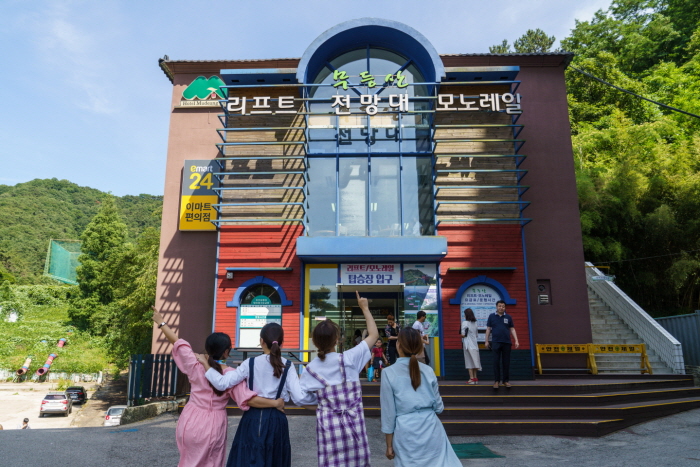
Jisan Recreation Area (지산유원지)
2.7Km 2023-01-25
35-1, Jiho-ro 164beon-gil, Dong-gu, Gwangju
+82-62-221-2760
Jisan Recreation Area reopened around December 2016, resuming monorail operation after 11 years. The unique rattle of a monorail running on one rail gives passengers a thrill. If you ride the monorail, you can see the panoramic view of Gwangju and the top of Mudeungsan Mountain at a glance. The monorail starts on the mountainside, 50 meters away from the end point of the lift, along the forest road, and runs to and from the top of the mountain in Jisan Recreation Area, where the octagonal pavilion is located. After reopening, it became popular among the younger generation through social media and word of mouth as a unique amusement facility where you can enjoy thrills on Mudeungsan Mountain in Gwangju.
Street of Duck Stew (오리요리의 거리)
2.7Km 2025-08-06
125 Gyeongyang-ro, Buk-gu, Gwangju
The Street of Duck Stew in Gwangju is lined with restaurants specializing in duck dishes. Its origins trace back to the 1970s, when a duck farmer began selling duck stew, adding their own twist by incorporating water parsley and perilla seeds to the recipe they had learned. The affordable price and clean, rich taste of stew made it popular among visitors, eventually leading to the formation of the current street. The popular dishes include ori tang (duck stew), ori roseu (grilled duck), and ori jumulleok (spicy stir-fried marinated duck).
De Young Museum (드영미술관)
2.9Km 2024-10-10
6 Seongchon-gil, Dong-gu, Gwangju
De Young Museum is an art gallery located at the entrance to Mudeungsan National Park. The gallery opened in 2018 with the concept of being "forever young" and aims to develop the local culture scene through connections with the local community.
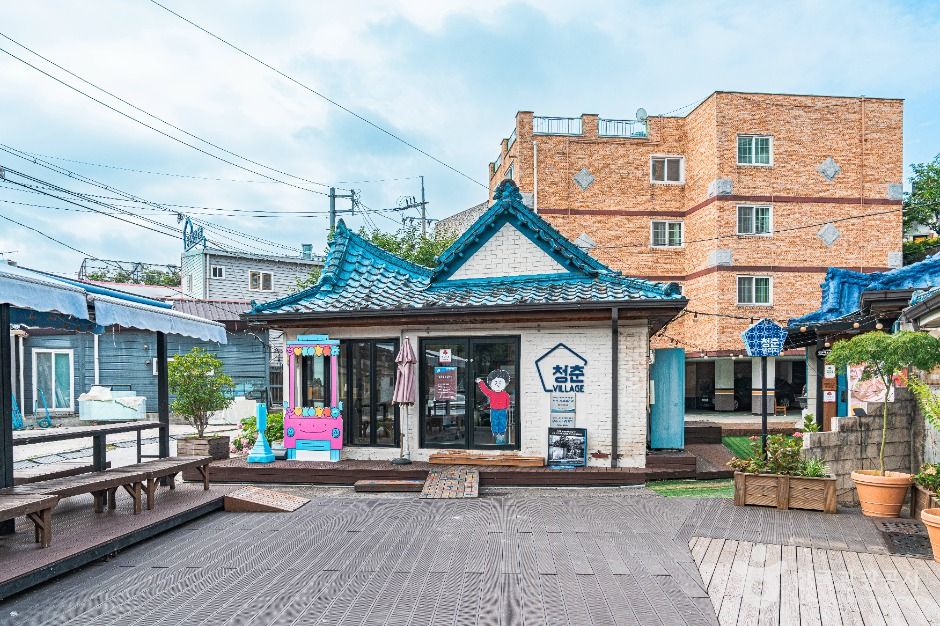
Cheongchun Balsan Village (청춘발산마을)
3.4Km 2025-10-24
12-16 Cheonbyeonjwa-ro, Seo-gu, Gwangju
Balsan Village is a representative neighborhood of Gwangju and is a prime example of how something amazing can come out of hardship. First settled by Korean war refugees, the small houses jam-packed on a hillside attracted young people looking for work in the 1970s and '80s, mainly females working in the garment factories nearby. Recently, the addition of colorful murals and public spaces has given the village a breath of new life.
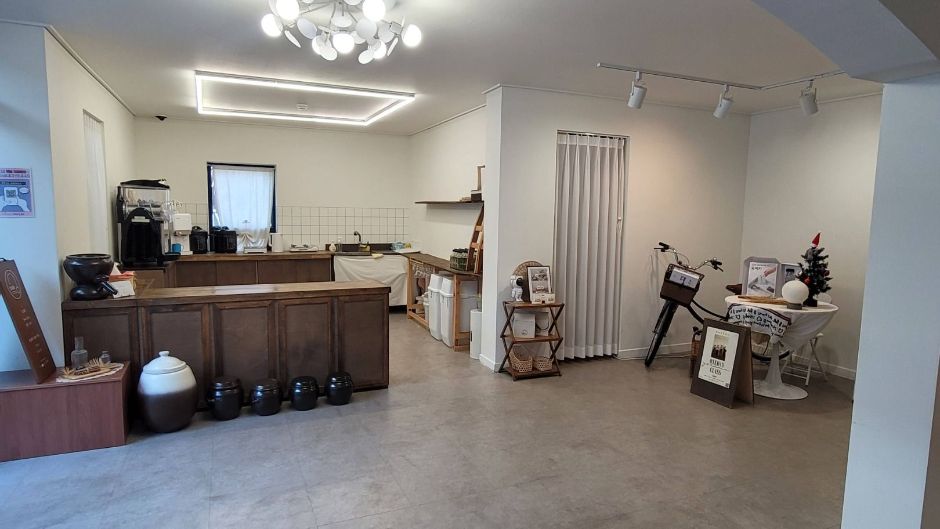
YODAMN (요담엔)
3.7Km 2024-12-20
39-2 Jami-ro 66beon-gil, Buk-gu, Gwangju
YODAMN is a Gwangju-based Company redefining Korea’s fermented traditions. It is known for its premium rice nuruk, a traditional Korean fermentation starter, and products like Yoando yogurt, a malted yogurt and Yomakkey, a makgeolli kit. The company is engaged in research, liquor development, and provides consultation services. Additionally, it offers unique experiences, such as one-day traditional liquor brewing classes, and sells its uniquely developed products. It is a great place for visitors to experience the Gwangju local traditional liquor culture.
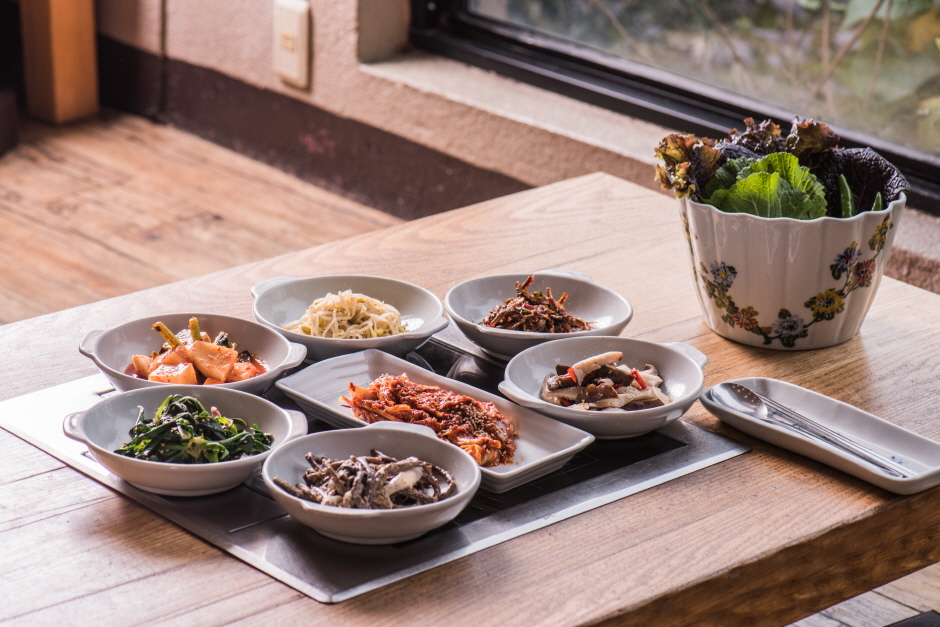
Gaemagowon (개마고원)
3.8Km 2024-10-15
1094 Sangmu-daero, Seo-gu, Gwangju
+82-62-366-3744
Gaemagowon is a hanu (Korean beef) restaurant that has been serving the Gwangju area for over 20 years. The menu includes a variety of dishes using hanu.
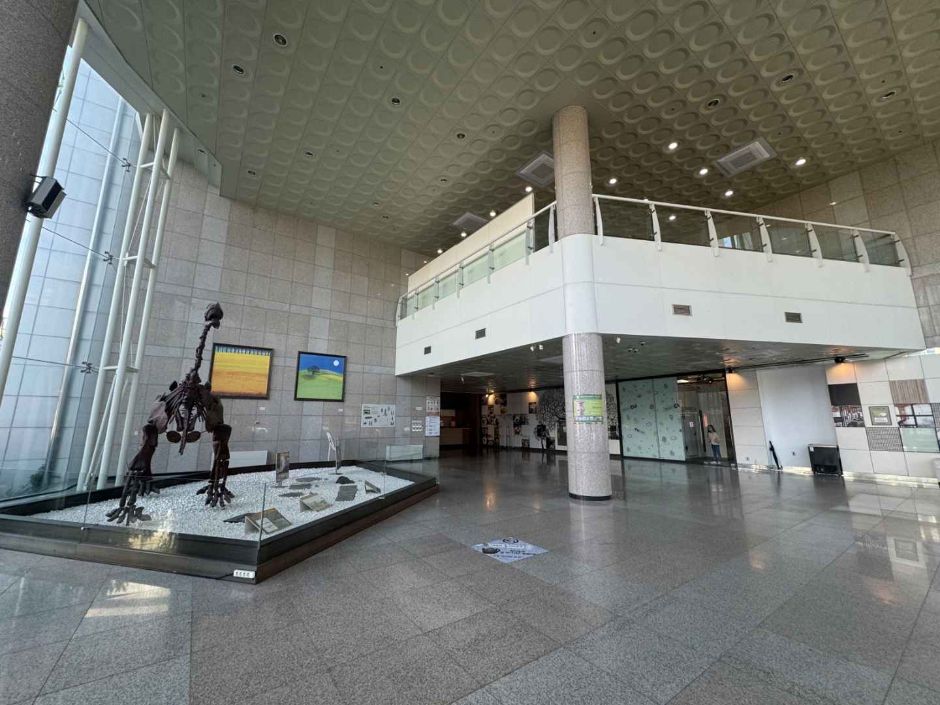
Chonnam National University Museum (전남대학교 박물관)
3.9Km 2025-01-02
77 Yongbong-ro, Buk-gu, Gwangju
The Cheonnam National University Museum showcases a variety of domestic and international works on history, anthropology, culture, and folklore, along with providing research materials. Initially established as a research center for the faculty and students, the museum has evolved into its current form since 2002. Visitors can explore exhibitions on diverse topics and immerse themselves in different cultures at the learning center of the museum.
 English
 한국어
한국어 日本語
日本語 中文(简体)
 Deutsch
 Français
 Español
 Русский


