Korea Military Academy (육군사관학교)
17.3Km 2022-08-30
574, Hwarang-ro, Nowon-gu, Seoul
+82-2-2197-6125
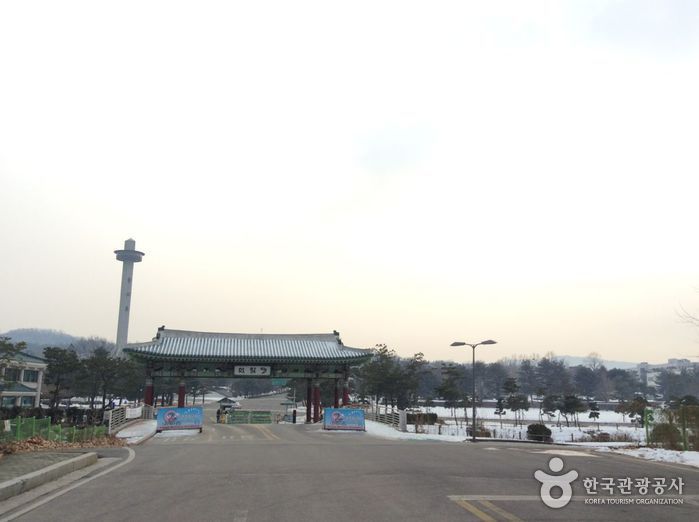
Korea Military Academy is a place of strict rules, patriotism, and military cadets. It was extremely difficult for outsiders to visit the academy until 1997, when a special tourism course was created. The course showcases the major sites at Korea Military Academy. Starting from the school information center, visitors can see the museum, memorial hall, and exhibition center in a 1.5 hour course. The Military Museum displays treasures and materials from each branch of the military, while visitors can see the history of the military and lifestyle of cadets at the memorial hall. However, the highlight of a trip to Korea Military Academy is watching the Hwarang Ceremony, a parade of cadets which takes place every Saturday at 11:30. In the ceremony, cadets don their formal uniform to march. Touring the academy at 10 is perfect for watching the parade later.
Heoninneung Royal Tombs Ecological Preservation Area (Alder Tree Forests) (헌인릉 생태경관보전지역(오리나무림))
17.5Km 2021-12-11
34, Heonilleung-gil, Seocho-gu, Seoul
+82-2-445-0347
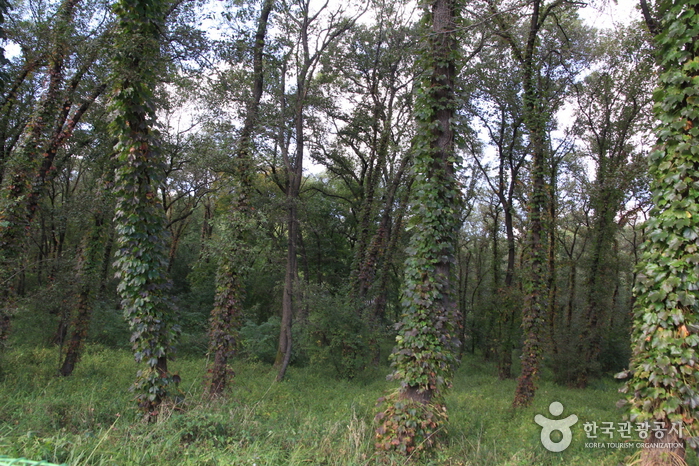
Heonninneung Royal Tombs Ecological Preservation Area is home to alder tree forests. It was officially designated as an ecological preservation area by the Seoul Metropolitan Government in 2005.
![Heolleung and Illeung Royal Tombs [UNESCO World Heritage] (서울 헌릉(태종,원경왕후)과 인릉(순조,순원왕후) [유네스코 세계문화유산])](http://tong.visitkorea.or.kr/cms/resource/42/1985242_image2_1.jpg)
Heolleung and Illeung Royal Tombs [UNESCO World Heritage] (서울 헌릉(태종,원경왕후)과 인릉(순조,순원왕후) [유네스코 세계문화유산])
17.5Km 2021-07-24
36-10, Heonilleung-gil, Seocho-gu, Seoul
+82-2-445-0347
Heolleung and Illeung Royal Tombs house the mounds for two kings of the Joseon dynasty (1392-1910) and their wives: King Taejong (1401-1418) and Queen Wongyeong, along with King Sunjo (1800-1834) and Queen Sunwon. Together, the tombs are referred to as Heonilleung Royal Tomb. The site possesses numerous stone statues and vestiges, and is a good place to experience the culture of the Joseon dynasty.

KSPO Dome (Olympic Gymnastics Arena) (올림픽공원체조경기장)
17.5Km 2025-06-30
424 Olympic-ro, Songpa-gu, Seoul
The KSPO Dome was the arena built for gymnastic events during the 1988 Seoul Summer Olympics, but has been remodeled to host concerts, including for many K-pop stars and international pop stars. The dome can also serve as venue to a range of other events, including showcases, exhibitions, and business events. It is accessible via public transit using Olympic Park Station on Seoul Subway Lines 5 and 9.
Woori Art Hall (우리금융아트홀)
17.5Km 2025-04-01
424 Olympic-ro, Songpa-gu, Seoul
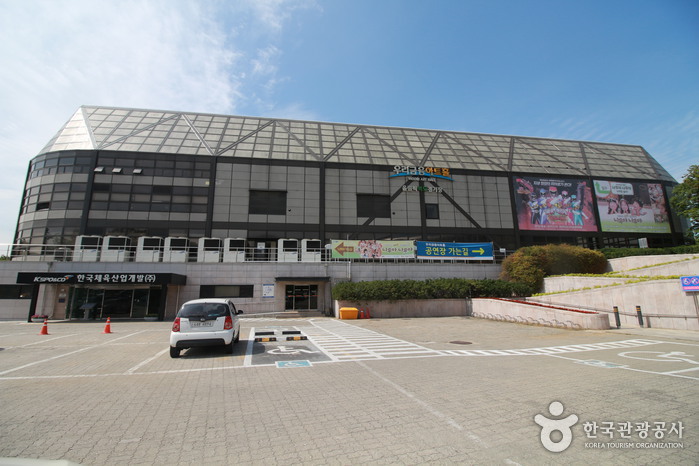
Woori Art Hall is a cultural art space located within Olympic Park, opened in November 2009 after a two-year renovation project from the previous Yeokdo Stadium. The 1,184-seat hall is primarily for musicals, but can also host a range of performances including plays, dance, classical, and modern music.
Goyang Tourist Information Center in Gyeonggi-do (고양관광정보센터)
17.6Km 2025-11-06
1271-1 Jungang-ro, Ilsandong-gu, Goyang-si, Gyeonggi-do
BTS street + RM mural
BTS member RM's hometown is Ilsan, Goyang-si, Gyeonggi-do. He also mentioned Ilsan in his childhood when he gave a speech at the United Nations in 2018 under the theme of 'Speak Yourself'. He attended Baekseok Elementary School and Shinil Middle School, and dreamed of becoming a 'rapper' since middle school. At the Goyang Tourist Information Center, there is a RM mural measuring 18m in x_width and 12m in x_height. In ‘Ma City’, there are lyrics such as “Lake Park is better than the Hangang River,” “La Festa and Western Dome that felt like home,” and “The Hugok Academy Village that raised me as a child” so it’s good to visit these places together.
Soraesan Mountain (소래산)
17.6Km 2024-02-06
Daeya-dong, Sincheon-dong, Siheung-si, Gyeonggi-do
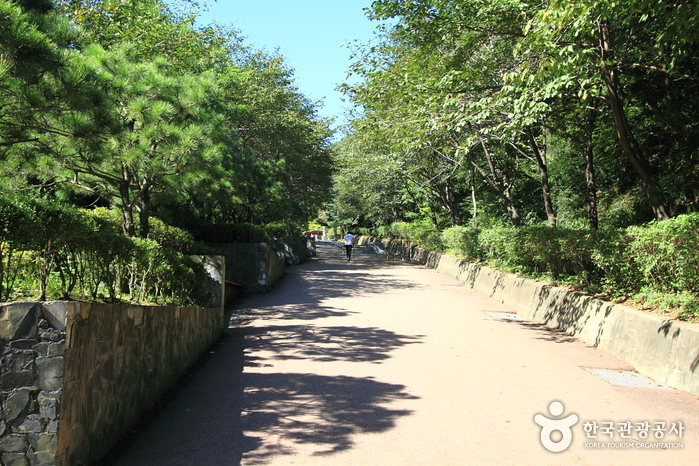
Soraesan Mountain, with an altitude of 299 meters, is situated between Siheung and Incheon. Its name "Sorae" originates from the area's old name, reflecting its rich heritage. The scenic mountain features a forest park, badminton courts, basketball courts, futsal fields, and various other amenities. Notably, midway up the mountain stands the striking Standing Rock-carved Bodhisattva, an impressive 15 meters tall. With numerous hiking trails, the summit of Soraesan Mountain offers breathtaking views of the Yellow Sea, Seoul, and Incheon.
![Taereung and Gangneung Royal Tombs [UNESCO World Heritage] (서울 태릉과 강릉 [유네스코 세계문화유산])](http://tong.visitkorea.or.kr/cms/resource/16/2658216_image2_1.jpg)
Taereung and Gangneung Royal Tombs [UNESCO World Heritage] (서울 태릉과 강릉 [유네스코 세계문화유산])
17.7Km 2022-09-19
681, Hwarang-ro, Nowon-gu, Seoul
+82-2-972-0370
Designated as a Historic Site, Taereung & Gangneung Royal Tombs is comprised of two tombs. Taereung Royal Tomb houses the burial mound of Queen Munjeong who was the second queen of King Jungjong, the 11th King of the Joseon dynasty, and Gangneung Royal Tomb houses the burial mounds of King Myeongjong, the 13th King of Joseon dynasty, and Queen Insun. King Myeongjong ascended the throne after his elder brother, King Injong, when he was twelve years old at Geunjeongjeon Hall in Gyeongbokgung Palace in 1545. The king’s mother, Queen Munjeong ruled behind the scenes, acting as guardian for eight years.
Dobongsan Mountain (도봉산)
17.7Km 2021-06-29
Dobong-dong, Dobong-gu, Seoul
+82-2-954-2566
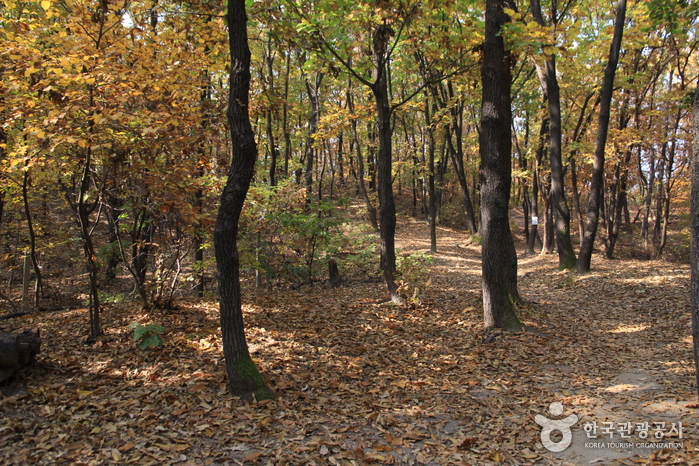
Dobongsan Mountain, located in the northeastern section of Bukhansan National Park, is known for the magnificent rock formations of the main peak, Jaunbong Peak (740.2 m), as well as Manjangbong, Seoninbong, Jubong, Obong Peaks and Uiam Rock. Seoninbong Peak in particular has 37 hiking courses, including the famous Bakjwi (Bat) Course.
The mountain is also home to Cheonchuksa Temple, the oldest temple in the region, and several other temples including Mangwolsa and Hoeryongsa Temples, as well as a number of beautiful valleys such as Dobonggyegok, Songchugyegok, Obonggyegok and Yeongeocheongyegok Valleys. Dobongsan Mountain is easily accessible by public transportation, making it a popular attraction for people living in Seoul.
Pungnap-dong Toseong Fortress (서울 풍납동 토성)
17.7Km 2025-01-10
Pungnap-dong, Songpa-gu, Seoul
+82-2-2147-2800
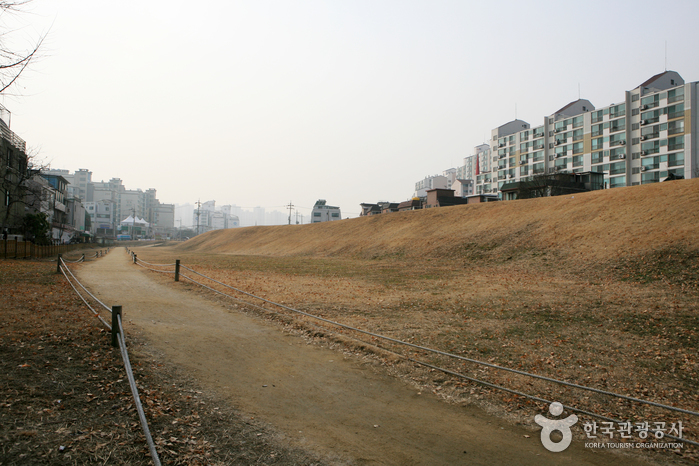
Onjo, the progenitor of Kingdom Baekje, first settled in Wiryeseong Hanam. But exact location is still unknown. One thing for sure, however, is that Pungnaptoseong Fortress, Mongchontoseong Fortress, Bangidong Ancient Tombs of Baekje, Seokchondong Stone Mound Tomb of Early Baekje are the remains of Baekje. Pungnaptoseong Fortress faces Hangang River to its west and connects to Mongchontoseong Fortress to the south. To the northwest faces Achasanseong Fortress over Hangang River and far to the southeast is Namhansanseong Fortress.
Pungnaptoseong Fortress, located at the south end of Cheonhodaegyo Bridge over Hangang River, is one of the remains of Early Baekje. Originally, the fortress was 4km in circumference, but due to massive overflowing of Hangang River during flood season in 1925, most of the fortress was lost and only 2.7km of it remains. To the east of the fortress are 4 vestiges of the fortress gates. The remains from the prehistoric era through the Samguk (Three States) era have been unearthed, indicating that this place was a residential area well before the Baekje Era. Through vigorous excavation, some people suggest that there used to be a palace located here during the Baekje Era.
 English
 한국어
한국어 日本語
日本語 中文(简体)
 Deutsch
 Français
 Español
 Русский


