
Incheon Sejong Hospital (인천세종병원)
17.8Km 2025-10-23
20 Geyangmunhwa-ro, Geyang-gu, Incheon
Incheon Sejong Hospital is the most visited hospital by foreign patients with heart disease.
Known as one of the best hospitals for heart diseases including minimally invasive heart surgery and artificial heart surgery, about 6,000 foreigners come to us for treatment each year.
Currently, patients are from various countries, such as Russia, Kazakhstan, other CIS countries, Mongolia, the United States, Guam, and China.
About 2,000 employees are working together to become one of the world's top 100 hospitals by 2030.
Sejong Hospital in the world, a hospital trusted and satisfied by global customers.
Sangdong Lake Park (상동호수공원)
17.8Km 2021-08-17
15, Jomaru-ro 85beon-gil, Wonmi-gu, Bucheon-si, Gyeonggi-do
Sangdong Lake Park is the largest park in Bucheon. A 2.5-kilometer promenade runs along a man-made lake, providing a refreshing and cool environment for a light exercise. The park also offers a beautiful sight year round thanks to the seasonal flowers that decorate the area. Some of the park's main facilities include a fountain, park square, wildflower garden, and sports facilities.
Korea Manhwa Museum (한국만화박물관)
17.9Km 2025-10-24
1 Gilju-ro, Bucheon-si, Gyeonggi-do
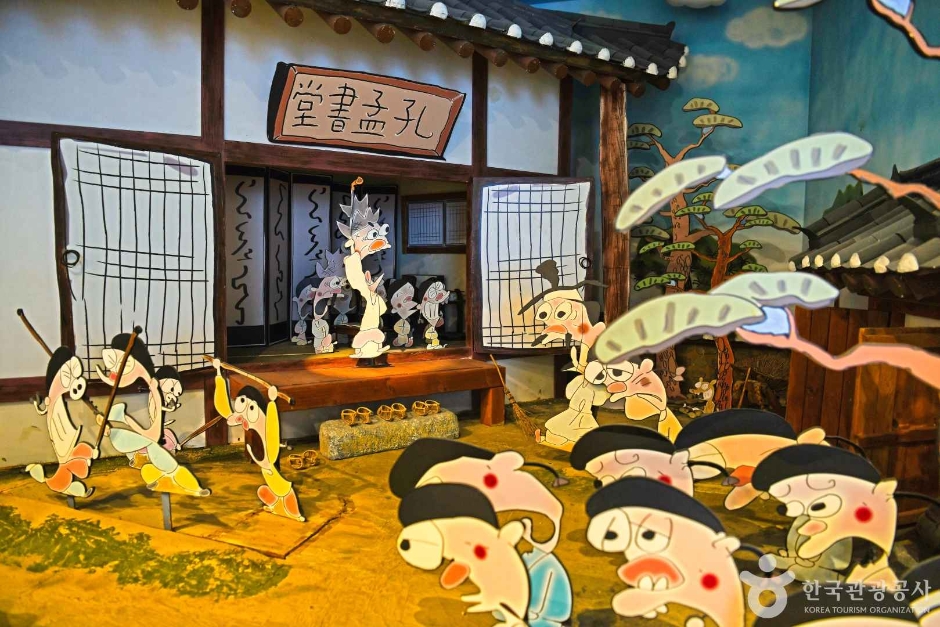
This museum collects and stores Korean cartoons and related materials, which are the basis for the creation of K-Webtoons. It covers everything from old cartoons to characters and webtoons that are gaining global popularity recently. It is composed of the Korean Manhwa History Museum, the Manhwa Experience Exhibition Hall, the Manhwa Library, and the Manhwa Video Screening Hall. There is also a corner where you can try coloring your own webtoon.
Shinheung Leisure Town (신흥레저타운)
18.0Km 2024-02-16
406-9 Yuwonji-ro, Jangheung-myeon, Yangju-si, Gyeonggi-do
Shinheung Leisure Town is a leisure complex that operates Water World in the summer and Snow World in the winter. Water World, a summer-only leisure facility, is renowned for its clean water and features 400 cabana seatings. Snow World, available only in winter, offers a variety of activities including snow sledge riding, ice sledge riding, smelt-catching activities, and more.
Gyeonggi Cheonggyesa Temple (청계사(경기))
18.3Km 2021-11-23
475, Cheonggye-ro, Uiwang-si, Gyeonggi-do
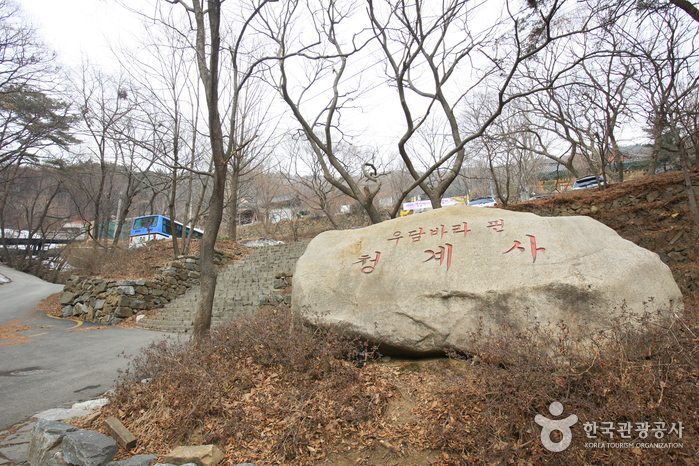
Cheonggyesa Temple is a Buddhist temple near Baegunhosu Lake that became well-known as the site of udumbara flower, a rarity that blooms on Buddhist statues. Built during the Silla Kingdom, the temple offers many sights, including the Cheonggyesa Temple Monument, Geungnakjeon Hall, the bell tower, Samseonggak Shrine, Ksitigarbha Hall, and Gamnoji Pond. Among the many things to see, visitors should not miss a glimpse of the Bronze Bell of Cheonggyesa Temple and the Wood Printing Block in Cheonggyesa Temple. Created in the 27th year of the reign of King Sukjong (1701) of the Joseon dynasty, the Bronze Bell has been designated as a national treasure, and is adorned with elaborate patterns.
Soraesan Mountain (소래산)
18.3Km 2024-02-06
Daeya-dong, Sincheon-dong, Siheung-si, Gyeonggi-do
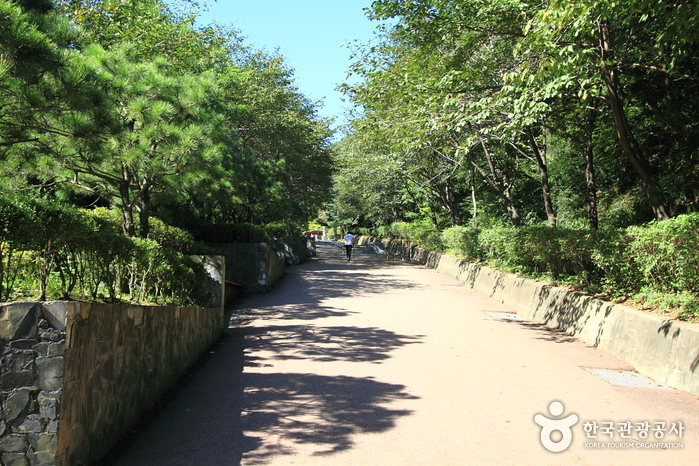
Soraesan Mountain, with an altitude of 299 meters, is situated between Siheung and Incheon. Its name "Sorae" originates from the area's old name, reflecting its rich heritage. The scenic mountain features a forest park, badminton courts, basketball courts, futsal fields, and various other amenities. Notably, midway up the mountain stands the striking Standing Rock-carved Bodhisattva, an impressive 15 meters tall. With numerous hiking trails, the summit of Soraesan Mountain offers breathtaking views of the Yellow Sea, Seoul, and Incheon.
![Yangju Olleung Royal Tomb [UNESCO World Heritage] (양주 온릉(단경왕후) [유네스코 세계문화유산])](http://tong.visitkorea.or.kr/cms/resource/10/757410_image2_1.jpg)
Yangju Olleung Royal Tomb [UNESCO World Heritage] (양주 온릉(단경왕후) [유네스코 세계문화유산])
18.3Km 2025-01-07
255-41, Hoguk-ro, Yangju-si, Gyeonggi-do
Olleung Royal Tomb is the royal tomb of Queen Dangyeong (1487-1557), consort of King Jungjong, the 11th ruler of the Joseon dynasty. Queen Dangyeong married King Jungjong when she was 13 years old. In 1506, when King Jungjong ascended to the throne, she became a queen as well, but she was deposed due to her father leading a coup against her husband's acendancy. Therefore, her grave was not regarded as a royal tomb until 1739.
Munjeong-dong Rodeo Street (문정동 로데오거리)
18.4Km 2025-03-29
10, Dongnam-ro 4-gil, Songpa-gu, Seoul
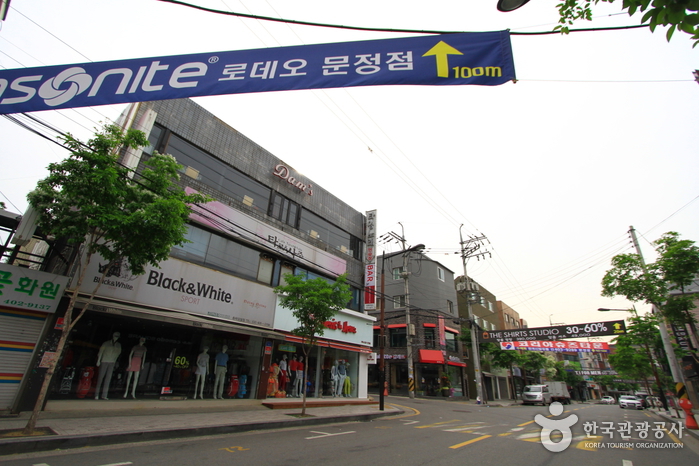
Munjeong-dong Rodeo Street is a large shopping district containing over 200 brand-name discount stores. The street is T-shaped, with a 1-kilometer-long main street connected to a 400-meter-long alley, and the Munjeong 1-dong Resident Center located at the center. For shoppers’ convenience, there is a public parking lot (if visitors purchase goods at Rodeo Street, they can park here for free) and a parking lot for foreign tourists only (free of charge). Munjeong-dong Rodeo Street is one of Korea’s major shopping streets with customers ranging from teenagers to adults, since discount stores stocking sports wear, casual wear, shoes, men’s and ladies’ suits, and golf wear are all located on this street. Moreover, this is a great place to find deals on famous brands, at prices lower than at a department store. On some items you can get discounts of up to 70-80%.
Since most of the goods are stock from previous seasons, it might be better to purchase the more classic styles rather than the trendy fashions. In some cases, the goods might have been slightly crumpled or stained during the transfer from warehouse storage, but taking them to the dry-cleaners should fix most problems. However you should be careful when looking at the sewing quality, and check for missing buttons.
One more thing to bear in mind is the shopping season. Even discount stores have periods when stock runs low. The best time to shop is immediately after the stores in Rodeo Street restock their merchandise. This is done at about the same time as department stores. There is also an enormous variety of goods to choose from during the Rodeo Festivals in May and September. The purchased goods are exchangeable but non-refundable, so check the quality of the products carefully before purchasing.
In addition, Munjeong-dong Rodeo Street has a wide selection of restaurants and entertainment facilities. There are a number of pizza places, coffee shops, and food courts, as well as internet cafes and game rooms in the alleys behind the stores. Visitors can also relax in the surrounding parks. There’s a park with a 600-year-old zelkova tree right behind the Munjeong 1-dong Resident Center.
Munjeong Rodeo Street is not just a shopping district; it’s a cultural area. The ‘Munjeong-dong Cultural Festival’ takes place every year in May, and the ‘Munjeong-dong Rodeo Festival’ takes place in May every other year. During these festivals, visitors can watch traditional Korean performances, traditional wedding ceremonies, international fashion parades, hip-hop dancing, and more.
A charity sale is held on weekends and national holidays on the open-air stage of the Munjeong 1-dong Resident Center, and merchandise is sold for even bigger discounts.
Ogeum Park (오금공원)
18.4Km 2025-01-17
363 Ogeum-ro, Songpa-gu, Seoul
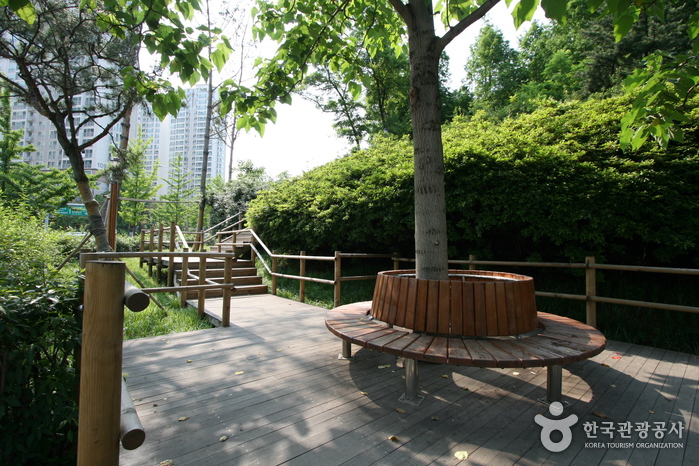
Ogeum Park is a park created by cultivating a mountain with an altitude of 200 meters, providing a panoramic view of Seoul's Songpa district. The park features walking trail, various exercise equipment, and facilities such as badminton and tennis courts. The lawn bowling court is available for use by reservation. There is a toddler forest experience ground and an adventure playground for children, offering activities like rope climbing, rock climbing, net climbing, slides, and spider web climbing.
 English
 한국어
한국어 日本語
日本語 中文(简体)
 Deutsch
 Français
 Español
 Русский


