![Yeonwoohouse [Korea Quality] / 연우하우스 [한국관광 품질인증]](http://tong.visitkorea.or.kr/cms/resource/52/3009452_image2_1.jpg)
Yeonwoohouse [Korea Quality] / 연우하우스 [한국관광 품질인증]
5.1Km 2023-09-12
5-13 , Bukchon-ro 12-gil, Jongno-gu, Seoul
+82-2-742-1115
Yeonoo House is a quiet and cozy traditional hanok in Bukchon Hanok Village, Jongno, Seoul. There are two small rooms, each with its own bathroom. Residents can access a superb panoramic view of Bukchon Hanok Village by mounting a ladder up to the roof. As Yeonoo is an old building, careful attention is paid to hygiene management. Gyeongbokgung Palace, Cheonggyeonggung Palace, and Changdeokgung Palace are all nearby.

Dongnimmun Gate (독립문)
5.1Km 2022-12-15
251, Tongil-ro, Seodaemun-gu, Seoul
Dongnimmun stands at the location originally known as Yeongeun, where envoys were once treated. When a Chinese envoy visited, the King would go out through this door to greet. In 1898, to announce the independence from Japan, Dongnimun was constructed with the fund collected by the citizens. The traces of the past still remain on Dongnimmun with two pillars in front of Dongnimmun being the remains of Yeongeunmun.
The Arc de Triomphe in France can be recalled in comparison to Dongnimmun. Dongnimmun was built using granite with a passageway x_height of 14.28 meters. On the top it is written ‘Dongnimmun’ in Korean with the national flag drawn on each side. On the inner-left side there are stone stairs leading to the attic. The national flower Mugunghwa are planted around Dongnimmun. Now it is surrounded by roads and it is eye-catching to view when passing by.
Hwangsaengga Kalguksu (황생가칼국수)
5.1Km 2024-03-18
78 Bukchon-ro 5-gil, Jongno-gu, Seoul
+82-2-739-6334
Hwangsaengga Kalguksu is a specialty restaurant located near Gyeongbokgung Palace, known for its kalguksu (noodle soup). Kalguksu is a type of noodle soup made by thinly slicing dough into noodles with a knife and boiling them in a broth made from beef bones, clams, or seafood. Their menu includes options like wang mandu (jumbo mandu), hanu suyuk (boiled Korean beef slices), kongguksu (noodles in cold soybean soup), beoseot jeongol (mushroom hot pot), and mandutguk (mandu soup). It was selected as a Michelin Guide Seoul 2023 restaurant.
![Jeongneung Royal Tomb [UNESCO World Heritage] (서울 정릉(신덕왕후) [유네스코 세계문화유산])](http://tong.visitkorea.or.kr/cms/resource/91/2622291_image2_1.jpg)
Jeongneung Royal Tomb [UNESCO World Heritage] (서울 정릉(신덕왕후) [유네스코 세계문화유산])
5.1Km 2021-02-09
116, Arirang-ro 19-gil, Seongbuk-gu, Seoul
+82-2-914-5133
Jeongneung Royal Tomb is the tomb of Queen Sindeok, the second wife of King Taejo (1392-1398), founder of the Joseon dynasty (1392-1910). The queen met a sudden death due to health complications. Although one of her sons was the crown prince, he was killed by a successive brother, Yi Bang-won, in order to obtain the throne. After Yi Bang-won rose to the throne as King Taejong, he relocated Queen Sindeok's tomb to outside of the city walls.
![Kum Bak Yeon [Tax Refund Shop] (금박연)](http://tong.visitkorea.or.kr/cms/resource/74/3313974_image2_1.jpg)
Chebudong Janchijip Dwaejigalbi (체부동잔치집돼지갈비)
5.1Km 2024-03-18
24 Jahamun-ro 1-gil, Jongno-gu, Seoul
+82-2-722-3555
Chebudong Janchijip Dwaejigalbi is a restaurant where marinated pork galbi are grilled over charcoal fire. It offers various side dishes along with rich soybean paste jjigae. Enjoying cold buckwheat noodles with the tender marinated pork galbi, which are well-aged, is also recommended. Additionally, there are individual menu items such as dubu jeongol (bean curd hot pot), hoe naengmyeon (cold buckwheat noodles with raw fish), bibimbap, and gamjajeon (potato pancake).
Hanboknam (한복남)
5.2Km 2021-01-27
17, Bukchon-ro 5ga-gil, Jongno-gu, Seoul
+82-10-6485-8507
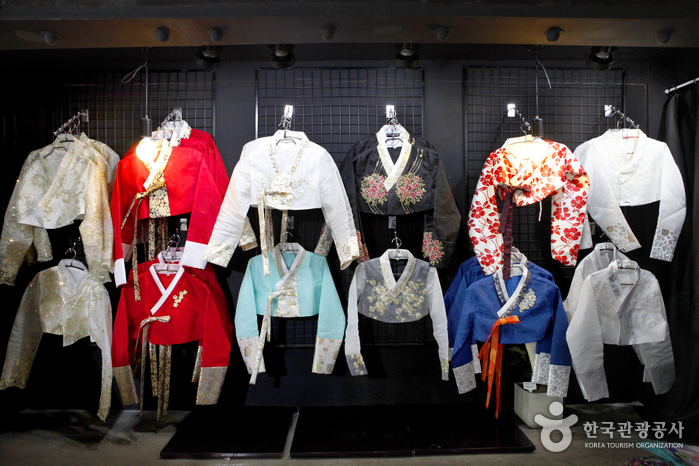
Started in Jeonju in 2012, Hanboknam strived to promote the beauty of hanbok, earning recognition by the Ministry of Culture, Sports and Tourism in 2015. Following this, Hanboknam opened a hanbok exhibition and rental shop in the Bukchon area of Seoul in 2016. The shop provides customers with numerous styles of hanbok, from royalty to beggars. The rental shop also offers various accessories to pair with the different hanbok for a complete look.
Seodaemun Prison History Museum (서대문형무소역사관)
5.2Km 2024-12-02
251 Tongil-ro, Seodaemun-gu, Seoul
Seodaemun Prison was built under the Japanese administration to imprison independence movement activists. It first opened on October 21, 1908 under the name Gyeongseong Prison. Eventually, so many activists were imprisoned that the building had to be expanded. At that time, the name changed to Seodaemun Prison on September 3, 1912. Eighty years later, the prison was turned into Seodaemun Independence Park on August 15, 1992 to commemorate the Korean patriots who were tortured in prison, giving their lives for freedom. Of the many buildings, only seven were preserved for their historical significance, among which three prison buildings and the execution site were designated as a Historic Site. In 1998, the park underwent another transformation into today's Seodaemun Prison History Hall to educate the public on the importance of Korea's independence and the sacrifices of those who fought to achieve it.
Seoul Sajik Park (사직공원(서울))
5.2Km 2021-11-12
89, Sajik-ro, Jongno-gu, Seoul
+82-2-2148-4149
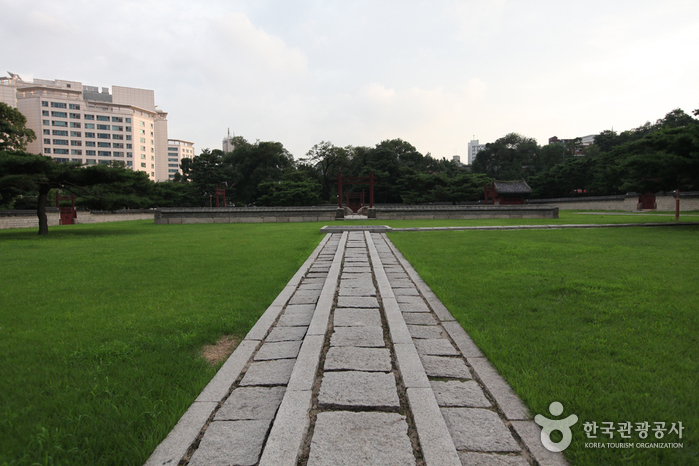
Sajik Park is one of the three most popular parks in Jongno-gu along with Tapgol Park and Samcheong Park. Located west of the Government Complex-Seoul on the southeastern foothills of Inwangsan Mountain, the park measures an impressive 188,710 m².
The name of the park dates back to 1395 when Taejo Yi Sung-gye made Sajik Altar (altar to the State deities) at the center of the park. "Sa" refers to the deity of the earth while "jik" refers to the deity of the five grains. Rites wishing for a good harvest were held regularly at Sajik Altar.
In the park are several playgrounds, statues of Sin Saimdang, Hwanghakjeong, and Yulkog Yi I, and the Municipal Children's Library. Dangun Shrine and Jongno Library are situated nearby. By following the path next to Sajik Park for approximately 5 minutes, travelers can reach the Inwangsan hiking path with relative ease.
 English
 한국어
한국어 日本語
日本語 中文(简体)
 Deutsch
 Français
 Español
 Русский


