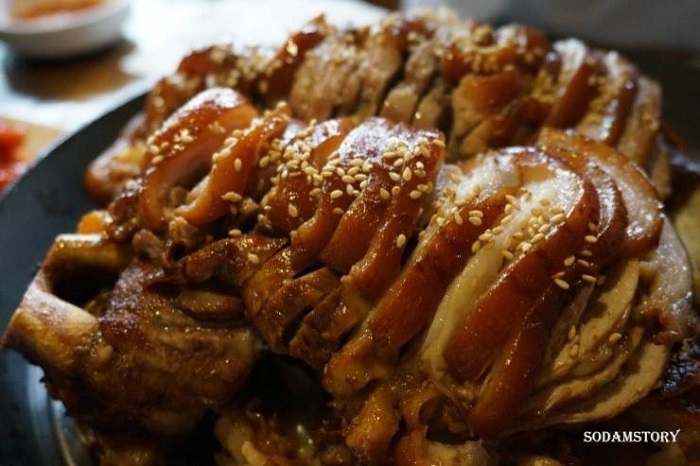
Madang Jokbal (마당족발)
13.5Km 2024-10-15
175, Neungdong-ro, Gwangjin-gu, Seoul
+82-2-468-3030
It is a restaurant with an outdoor terrace. This Korean dishes restaurant is located in Gwangjin-gu, Seoul. The most famous menu is braised pigs' feet.

Chaum (차움의원)
13.5Km 2025-10-23
(2nd Floor, Pie'n Polus), 442 Dosan-daero, Gangnam-gu, Seoul
Founded in 1960, CHA Hospital has grown into a global medical institution, delivering high-quality care across 91 facilities in 7 countries, backed by over 60 years of medical expertise. Among its distinguished institutions is Chaum, a cutting-edge anti-aging and wellness center that integrates western medicine, oriental medicine, integrative medicine, and holistic approaches, including exercise prescription and food therapy, to promote optimal health.
At Chaum, we go beyond standard checkups. Unlike typical dermatology clinics, we offer advanced skin care solutions utilizing stem cell conditioned media. Our treatments focus on wrinkle prevention, enhancing skin hydration, and reducing melanin production, helping you maintain youthful, radiant skin.
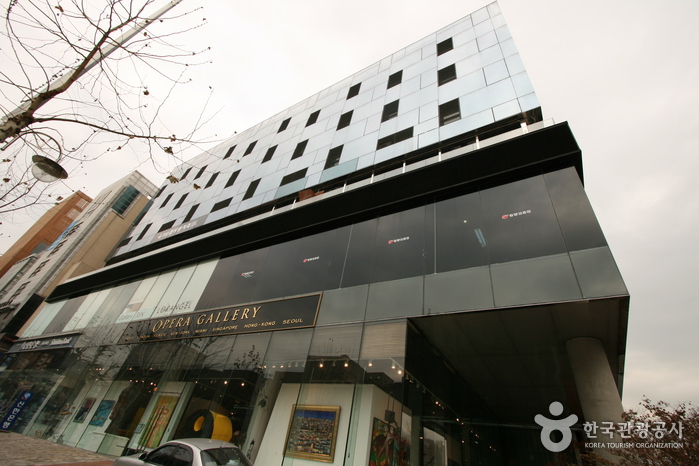
Park Ryu Sook Gallery (박여숙화랑)
13.5Km 2025-01-08
461, Apgujeong-ro, Gangnam-gu, Seoul
+82-2-549-7575
Soon after its opening in 1983, the Park Ryu Sook Gallery moved to Cheongdam-dong, an uncharted territory back in 1988. Ever since, the gallery has played a significant role in turning the region into one of the most representative art places in Korea. The Park Ryu Sook Gallery mainly deals with modern art, and contributes to the development of Korea's modern art scene by recruiting and supporting talented rookies in the field, and by introducing artwork of major modern artists from abroad. Moreover, the gallery works to promote Korean art worldwide by joining major art fairs such as the Chicago, Koln, and Basel art fairs.
Through these and similar activities, the Park Ryu Sook Gallery works to provide the public the invaluable opportunity to enjoy quality artwork, maximize their own creativity, and take a moment out of their hectic lives to indulge in a little self-reflection.
SHINE BEAUTY MEDICAL (해우광해외무역)
13.5Km 2025-10-23
#510, MV Tower, 55 Gangnam-daero 132-gil, Gangnam-gu, Seoul
This International Medical Agency Company has been engaged in international patient attraction since 2015, focusing on South Korea and Vietnam (Hanoi and Ho Chi Minh City). The representative has experience at Konkuk University Hospital/ International Medical Center and currently serves as an expert advisor for the Ministry of Health and Welfare and the Korea Health Industry Development Institute in the fields of overseas medical expansion and international patient attraction. In addition, the institution is designated as an official international patient attraction partner of Gangnam District, Seoul, and collaborates with a wide range of medical institutions—including plastic surgery clinics, dermatology clinics, urology clinics, dental clinics, ophthalmology clinics, and Korean traditional medicine hospitals—to support both international patient attraction and overseas medical expansion.
April 31 Plastic Surgery (4월31일성형외과)
13.6Km 2025-10-23
(April 31 Building), 707 Nonhyeon-ro, Gangnam-gu, Seoul
Established in 1999, April 31 Plastic Surgery boasts a long history and solid brand power.
A unique name, April 31 Plastic Surgery
April 31 doesn't exist, so we came up with a special day that doesn't exist anywhere else. Our motto is to be the hospital that gives patients a new birthday.
Our medical specialists and staff are committed to professionalism and patient satisfaction, continuously striving to meet patients' expectations.
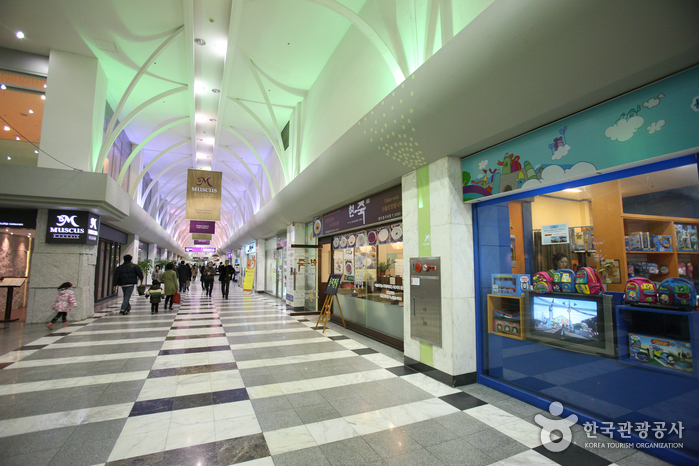
Central City (센트럴시티)
13.6Km 2025-03-28
176, Sinbanpo-ro, Seocho-gu, Seoul
+82-2-6282-0114
Connected to the Express Bus Terminal Station, Central City is a large lifestyle cultural complex. With in the City are a department store, movie theater, bus terminal, hotel, and shopping malls. Especially, Familie Station & Garden is home to beauty salons, restaurants and coffe shops that are famous and unique. One can also explore attractions such as the Express Bus Terminal Underground Shopping Mall and Banpo Wholesale Flower Market, enriching the experience of the area.

Mouse Rabbit (마우스래빗)
13.6Km 2025-10-30
10, Neungdong-ro 11-gil, Gwangjin-gu, Seoul
SUPER JUNIOR Yesung
SUPER JUNIOR’s Yesung, who loves coffee, opened this cafe with her younger brother. It is also called 'Yesung Cafe' and is visited by domestic fans as well as foreign customers. Yesung serves himself, and it is decorated like a hideout. The cafe building, which consists of the first basement floor and the second floor above ground, catches the eye with a different theme for each floor. Ssamanko Smoothie and Icy Blue Smoothie are popular menu items.
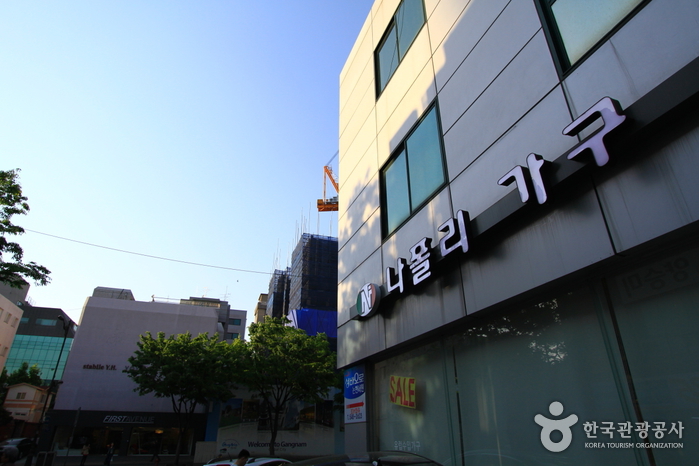
Nonhyeon Furniture Street (논현가구거리)
13.6Km 2025-03-16
106 Hakdong-ro, Gangnam-gu, Seoul
Nonhyeon Furniture Street, extending over 900 meters from Nonhyeon Station to Hakdong Station on the Seoul Subway, is renowned for its dense aggregation of furniture stores. Established as a dedicated furniture street in 1970, it now features showrooms and sales outlets from over 100 furniture companies. This destination allows visitors to browse and compare an extensive variety of furniture in one convenient location, including design furniture, craft furniture, kitchen sets, office furnishings, and imported pieces. Additionally, it hosts the annual Gangnam Design Week, a prominent event showcasing the latest trends in furniture design.
Yeson Voice Center (예송이비인후과 음성센터)
13.6Km 2025-10-23
773 Samseong-ro, Gangnam-gu, Seoul
Yeson Voice Center is the only center of its kind in Korea that implements various high-tech treatment methods.
It provides multilaryngeal muscle Botox injection tailored to patients with spasmodic dysphonia to significantly increase the length of their normal voice period, while increasing the possibility of curing the disease. As such, the center provides patients with spasmodic dysphonia, a disease previously considered incurable, with renewed hope.
Additionally, the center uses advanced surgical techniques, including microflap laryngomicrosurgery, to treat various diseases such as vocal cord nodules, vocal cord polyps, Reinke's edema or vocal fold cyst, allowing patients to recover their clean and clear voices.
The center also provides laryngoplasty, enabling transgender individuals to change their voices to their preferred gender identity, for a thorough transition.
Yeson Voice Center has created a new healthcare treatment culture. It is committed to steadfastly conducting research to provide patients in Korea with new medical services they have not experienced before and to get closer to its patients.
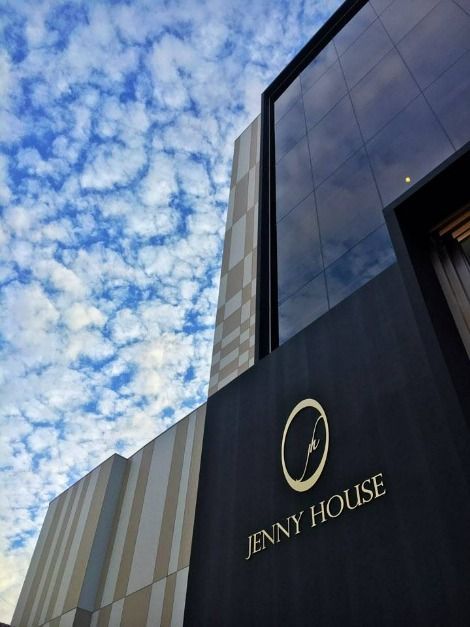
Jennyhouse (제니하우스)
13.7Km 2025-03-15
56 Seolleung-ro 146-gil, Gangnam-gu, Seoul
010-5689-1484
Step into Jennyhouse, Korea’s top luxury beauty salon, for an unforgettable hair and makeup transformation. Renowned for its exceptional service and artistry, Jennyhouse is where celebrities like Son Ye-jin, Han Ji-min, and Suzy achieve their iconic looks.
Upon booking a reservation, clients can choose from a range of services tailored to their style and needs. Whether it’s a glamorous red-carpet makeover, a trendy K-beauty hair transformation, or elegant wedding styling, Jennyhouse's team of 80 expert artists ensures a personalized experience.
Expect cutting-edge techniques, top-tier products, and meticulous attention to detail. Jennyhouse offers the experience for clients to embrace the best of K-beauty and leave with a look that’s uniquely theirs. At Jennyhouse, every client walks out feeling confident, radiant, and ready to shine.
 English
 한국어
한국어 日本語
日本語 中文(简体)
 Deutsch
 Français
 Español
 Русский


