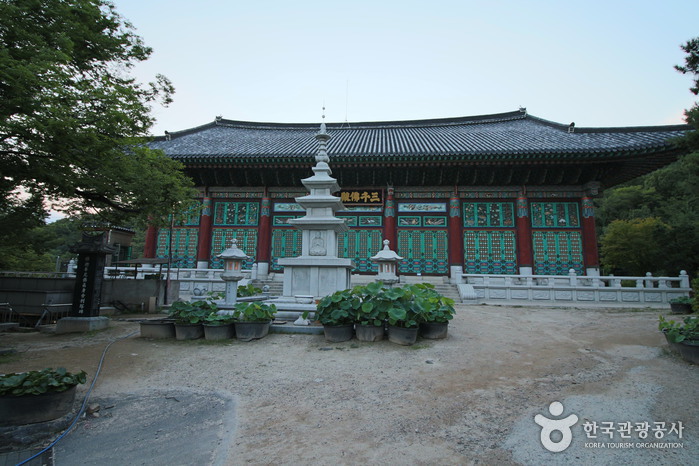
Bongwonsa Temple (봉원사)
1.8Km 2023-03-13
120, Bongwonsa-gil, Seodaemun-gu, Seoul
+82-2-392-3007
Located on the outskirts of Ansan Mountain in Bongwon-dong, Seodaemun-gu, Seoul, Bongwonsa Temple, as the center of Korean Buddhism Taego, is a thousand-year-old temple with a long history and tradition. In 889 (3rd year of Shilla Queen Jinseong’s reign), Monk Doseon founded it at the ground of Yeonhui Palace (now Yonsei Univ.) and named it Banyasa temple. It was destroyed during the Imjin War in 1592, and later in 1748 (the 24th year of Joseon King Yeongjo’s reign), it was rebuilt and renamed “Bongwonsa” by two Buddhist monks, Chanjeup and Jeungam.
“Yeongsanjae,” one of the Buddhist rituals and also a National Intangible Cultural Property, takes place at Bongwonsa on June 6 every year wishing for world peace and the reunification of North and South Korea. It was designated as one of the Intangible Cultural Heritage of Humanity by UNESCO in 2009. During Yeongsanjae, visitors can enjoy the Buddhist arts such as Beompae (Buddhist temple music for rituals) and dancing. Also, during summertime, Seoul Lotus Flower Culture Festival takes place, where visitors can enjoy the beautiful lotus flowers which are a symbol of Buddhism.
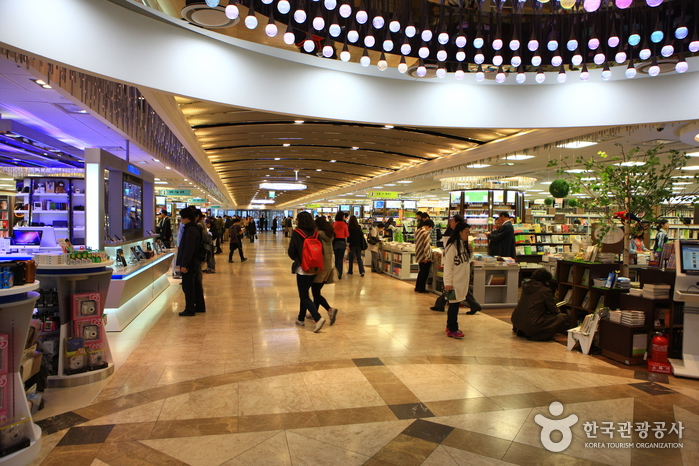
Kyobo Book Centre Gwanghwamun (교보문고)
1.8Km 2024-12-04
1 Jong-ro, Jongno-gu, Seoul
02-3295-0312
Kyobo Book Centre is the first large-scale bookstore in Korea, and this particular store can be found next to Gwanghwamun Square. Kyobo Book Centre Gwanghwamun divides its internal area into 11 sections and organizes them in a way that allows readers to find books easily. The store also has specialized shops for stationery, digital devices, and accessories, as well as exhibition spaces and cafés.

Stenlee (스텐리)
1.8Km 2025-10-23
15th Floor, 1 Jongno (Kyobo Life Building), Jongno-gu, Seoul
Stenlee is a specialized agency that provides comprehensive support to medical patients, corporate groups and business delegations visiting Korea. We design and manage tailored MICE and medical programs (checkups, medical treatment, fam tours, medical trainings, seminars, incentive trips, etc) handling everything from booking to transportation, translation and interpretation. Our strength lies in optimizing schedules, cost and cultural immersion to ensure efficient results and comfortable stay for our clients.
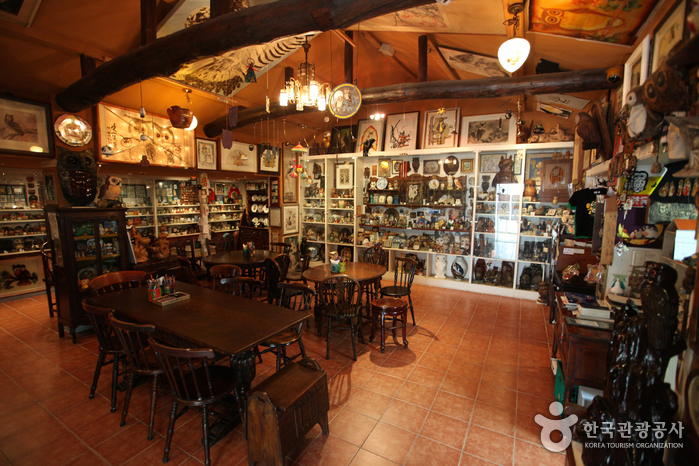
Owl Museum (부엉이박물관)
1.8Km 2022-09-19
143, Bukchon-ro, Jongno-gu, Seoul
+82-2-3210-2902
The Owl Museum is filled with over 2,000 pieces of owl-themed arts and crafts collected from all over the world by the owner. Renovated from a house, the museum has a feel of an antique café as the owner offers a cup of coffee or tea to visitors. Located near the city, those interested in owls should stop for a view and a drink. Various stories of how the collection was gathered as well as information on owls are also interesting.
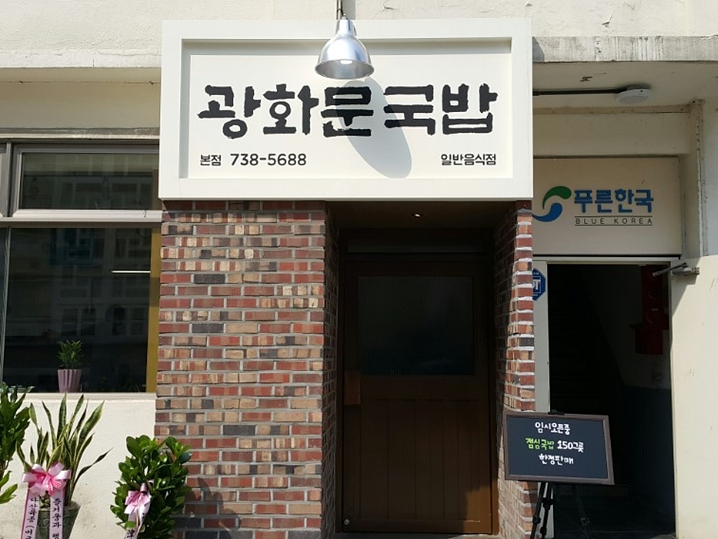
Gwanghwamun Gukbap (광화문국밥)
1.8Km 2024-06-19
53 Sejong-daero 21-gil, Jung-gu, Seoul
Gwanghwamun Gukbap is a dwaeji gukbap (pork and rice soup) restaurant operated by Chef Park Chanil. Its distinctive feature lies in using only black pork loin and shoulder to enhance the flavor. The signature dish is the dwaeji gukbap, which boasts a mild, clean, and deep flavor. In addition to that, they also offer dwaeji suyuk (boiled pork slices) and pisundae (sundae with pork blood). Known for its authentic taste of rice soup and rich broth, it's a popular destination for many.
Baek In-je House (백인제가옥)
1.9Km 2025-10-24
16 Bukchon-ro 7-gil, Jongno-gu, Seoul
+82-2-724-0200
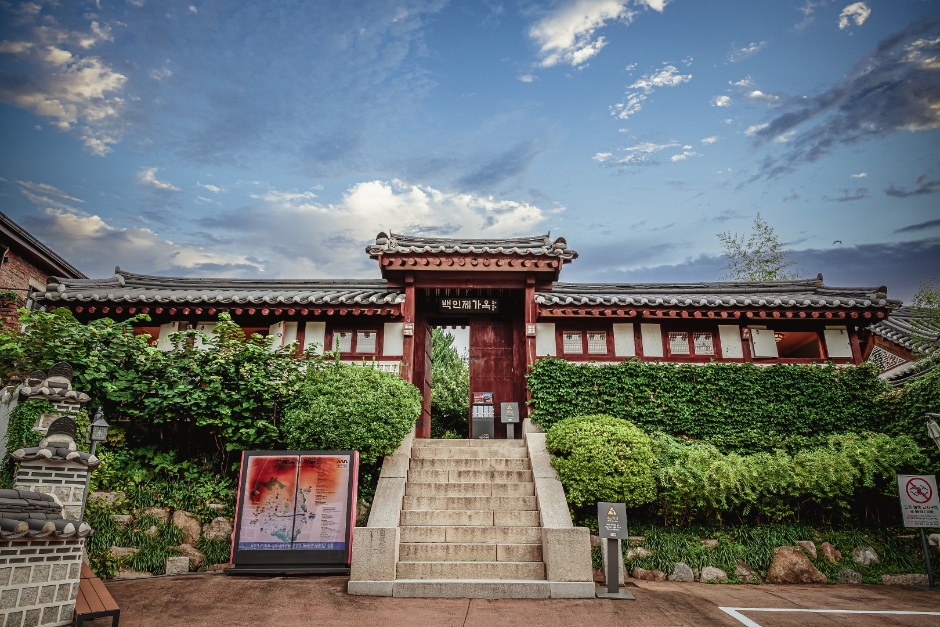
Baek In-je House, located in Bukchon Hanok Village, is a hanok built during the Japanese administration period that portrays modern hanok features. The structure consists of a main room offering a good view of the whole village, spacious bedrooms, a large garden, and annex buildings. As it maintains the beauty of a traditional hanok while incorporating the modern trend of its time, Baek In-je House is considered to be highly valuable in means of both architecture and history, representing the Bukchon Hanok Village together with Yun Bo-seon House.
Baek In-je House was built from black pine, which was first introduced in Seoul during the Gyeongseong Expo in 1907, distinguishing itself from other upper-class houses of its time. Unlike other traditional hanok designs that separate the main building from the other rooms, Baek In-je House connects the two with a hallway, allowing convenient access between the two structures. The house also consists of a Japanese-style hallway and floor mat rooms, reflecting the interior trends of that period. Baek In-je House is also unique in that the main room is partially built as a two-story structure, a style that was never seen in any traditional hanok built during the Joseon period.
Modern Shabu House Gwanghwamun D Tower Branch (모던샤브하우스 광화문D타워점)
1.9Km 2025-12-02
17 Jong-ro 3-gil, Jongno-gu, Seoul
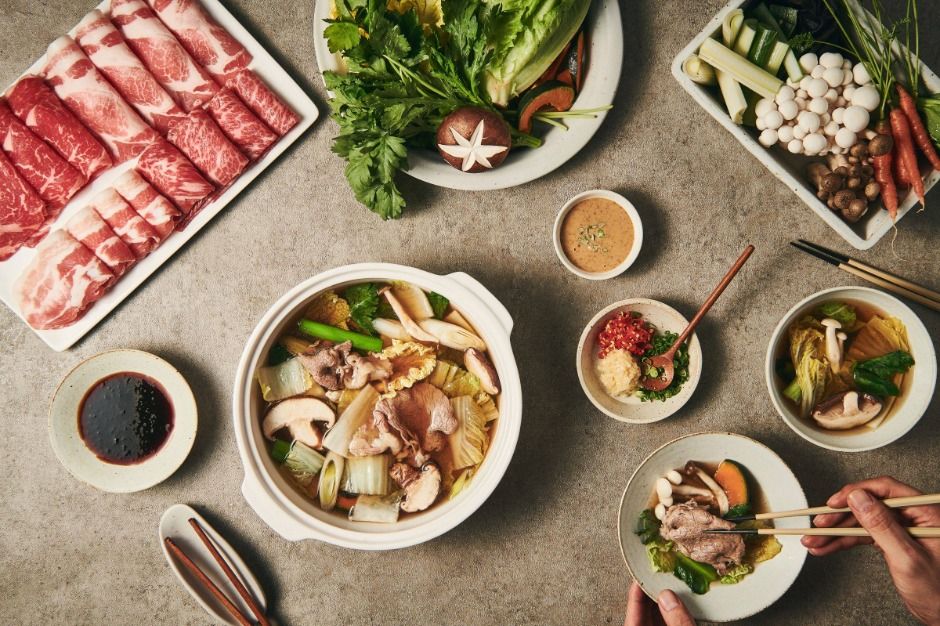
Located in Jongno-gu, Modern Shabu House Gwanghwamun D Tower Branch offers a selection of specialty broths to enjoy unlimited beef, pork, and vegetables. The restaurant serves four cuts of pork and beef in every course. The interior is designed with natural materials like earth, stone, and wood, inspired by the fluid process of cooking ingredients like meat and vegetables in a pot. The design reflects the natural movement and flow of ingredients as they cook together. The restaurant also has a range of private rooms, making it a popular choice for families with children and for gatherings, providing a comfortable dining experience.
Ilmin Art Museum (일민미술관)
1.9Km 2022-09-27
152, Sejong-daero, Jongno-gu, Seoul
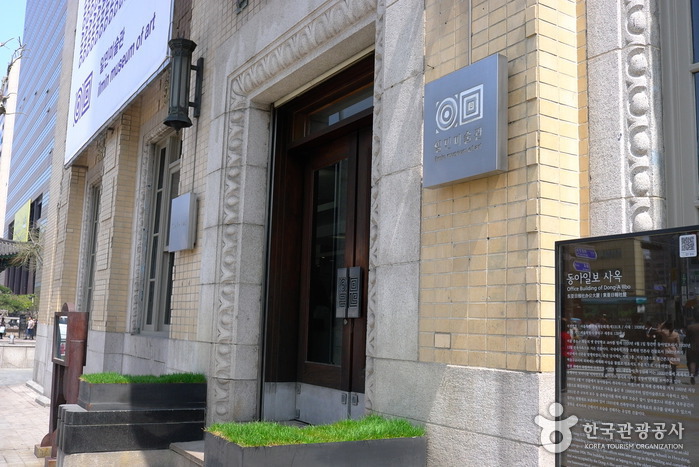
The Ilmin Art Museum located in former Dong-A Newspaper Building, was formed in honor of their honorable and late CEO Kim Sang-man. The museum was established in December of 1996, and with a full renovation in 2001, large exhibition hall and Ilmin collection was placed in. Through the renovation, the combination of glass and steel made Artrium aimed to become one of the best comtemporary museum, connecting the museum to the streets of Gwanghwamun.
This museum boasts a large Ilmin collection. There are 430 pieces of Ilmin collection from Goryeo dynasty (918-1392) to present, 1,200 pieces in the Donga Newspaper's collection of art, and 100 pieces of art owned by Hyundai Corporation. The Ilmin Collection mostly consists of pieces that Kim Sang-man collected from ceramics to aesthetic paintings. The Dongah Newspaper's collection has time-relevant pieces that are important in history.
Aromind (아로마인드)
1.9Km 2024-01-30
19-7 Bukchon-ro 5-gil, Jongno-gu, Seoul
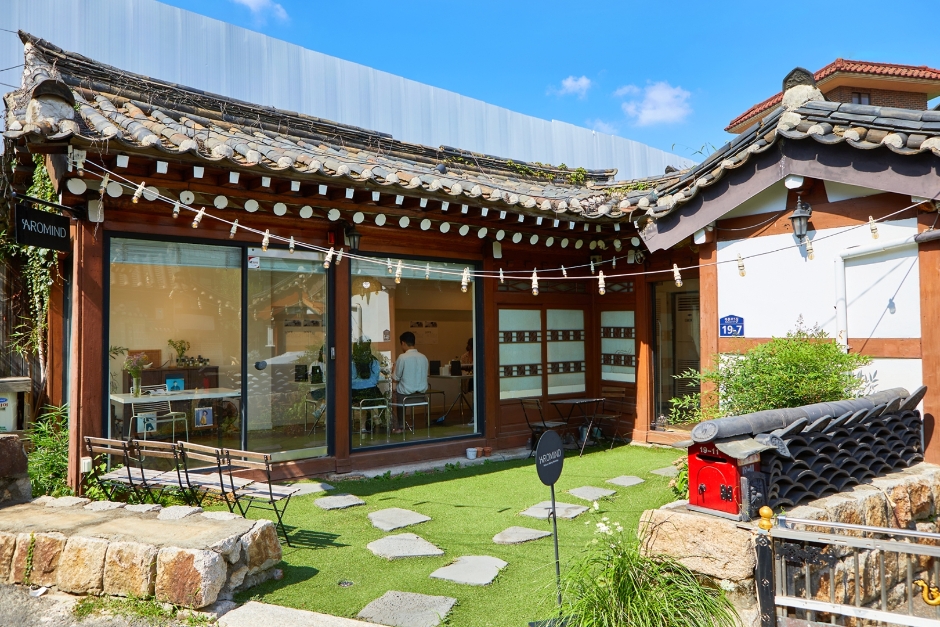
Aromind is a perfume workshop that offers a perfume-making experience with a professional perfumer in a quiet hanok building. Visitors can create their own one-of-a-kind perfume by choosing three out of 30 different scent options that change on a seasonal basis. A perfume one-day class is held for one to eight people for one to one and a half hours. The fee for the experience includes a 50 ml product and a 10 ml sample. They also offer the class in Korean with English interpretation when there non-Korean speaking participants. Aromind is the perfect place to create your own scent to associate your memory of Korea.
Jogyesa Temple (조계사(서울))
1.9Km 2024-10-25
55 Ujeongguk-ro, Jongno-gu, Seoul
As the main temple as well as the district head temple of the Jogye order in Seoul, Jogyesa Temple is the center of Korean Buddhism. The temple was built in the late 14th century during the Goryeo period but was completely destroyed in a fire. It was rebuilt under the name of Gakwangsa Temple in 1910 with the effort of many respectful monks, namely Han Yong-un and Lee Hee-gwang. The temple was given a role as the head temple of Korea’s Buddhism and renamed to Tegosa Temple in 1936. In 1954, a purification drive took place to eliminate Japanese influence and revive traditional Buddhism, which established the present day Jogyesa Temple as a result.
Jogyesa Temple plays an important role in Korean Buddhism as the head temple of the Jogye order. Jogyesa Temple’s Dharma Hall serves as the main venue for several Buddhist events, holding rituals, lectures, ceremonies, and other events all year long. The annual lantern festival in celebration of Buddha's birthday also takes place at this temple.
 English
 한국어
한국어 日本語
日本語 中文(简体)
 Deutsch
 Français
 Español
 Русский


