World Pansori Festival (월드판소리페스티벌)
4.5Km 2025-07-30
28 Toegye-ro 34-gil, Jung-gu, Seoul
+82-2-904-2835
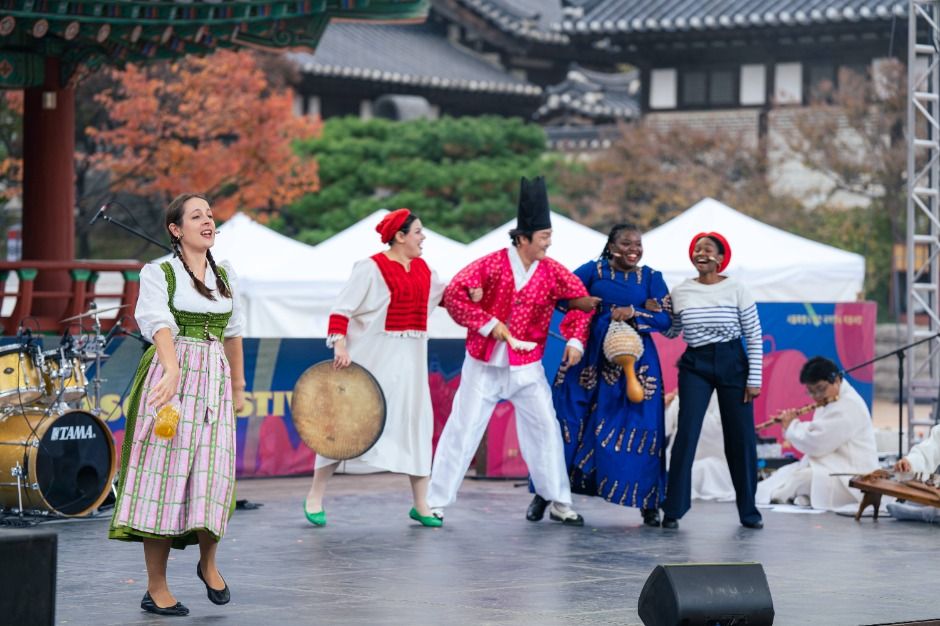
World Pansori Festival is an international music festival that aims to promote pansori, the traditional Korean epic chant, and its values. The festival consists of a variety of performances and concert programs based on its yearly theme. In addition, the festival also has interactive activities for the attendees, such as a free pansori lesson and arts-and-crafts, to make pansori and traditional Korean music more accessible to the public.
Korea House (한국의집)
4.5Km 2025-10-23
10, Toegye-ro 36-gil, Jung-gu, Seoul
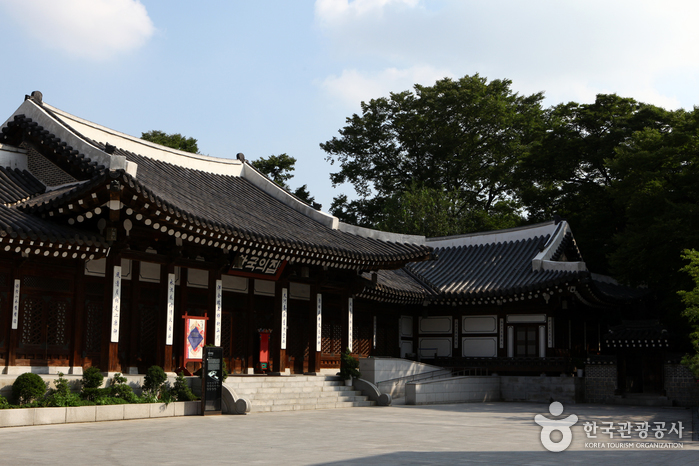
The Korea House was opened in 1981. It is a traditional Korean building that introduces the culture and lifestyle of Koreans, where you can experience traditional architecture and a classical atmosphere. The building was built in the style of the Joseon Dynasty's Jagyeong-jeon building at the Gyeongbok Palace. It is the only building built in the traditional architectural style. You will feel its antiquity as you enter the building.
It is divided into the Haerin-gwan (a space for people to get acquainted with each other), the Traditional Theater, and three annex buildings (Munhyang-ru, Nokeum-jeong and Cheongwu-jeong). At Haerin-gwan, you can enjoy traditional music at Garak-dang and try traditional food at Sohwa-dang. In the square of Garak-dang you can view a traditional wedding (on the weekends) or people playing folk games. Also, at the Traditional Theater, about 156 seats are available, and in the afternoons Human Cultural Assets or members of the National Center for Korean Traditional Performing Arts and the National Corps members present traditional music and dances. Sinayui, Salpuri, Pansori, the Drum Dance and the Bongsan Mask Dance are the most popular programs for foreigners. The programs are all explained in English and Japanese.
In the Cultural Gift Shop you can view various crafts made by traditional craftsmen. It is always open and the crafts are for sale as well. There are pottery, ceramics, golden crafts, knots and embroidery etc; approximately 500 pieces of artwork made by craftsmen from 20 different fields. Next to the House of Korea is the Namsan-gol Hanok Village where visitors can explore traditional houses.
Seoul City Wall Museum (한양도성박물관)
4.5Km 2023-12-22
283, Yulgok-ro, Jongno-gu, Seoul
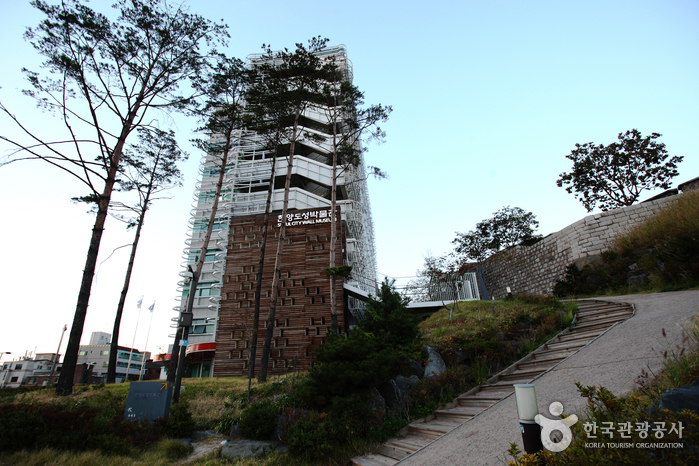
Hanyangdoseong, the Seoul City Wall, built in 1396, was the city fortress wall that protected the capital city Seoul for over 600 years. The fortress wall was built along the terrains and although it became partially damaged during the modernization process, its original form remains well to this day, making it a cultural heritage that coexists with the modern city. The Seoul City Wall Museum, located in Heungjinjimun Park, is a museum containing the history and culture of city wall from the Joseon dynasty to the present. It is a cultural space with a permanent exhibition hall, special exhibition hall, city wall information center, and study room.
The Hyoosik Aank Hotel Sinchon (더휴식 아늑호텔 신촌점)
4.5Km 2025-04-09
49 Yonsei-ro 2-gil, Seodaemun-gu, Seoul
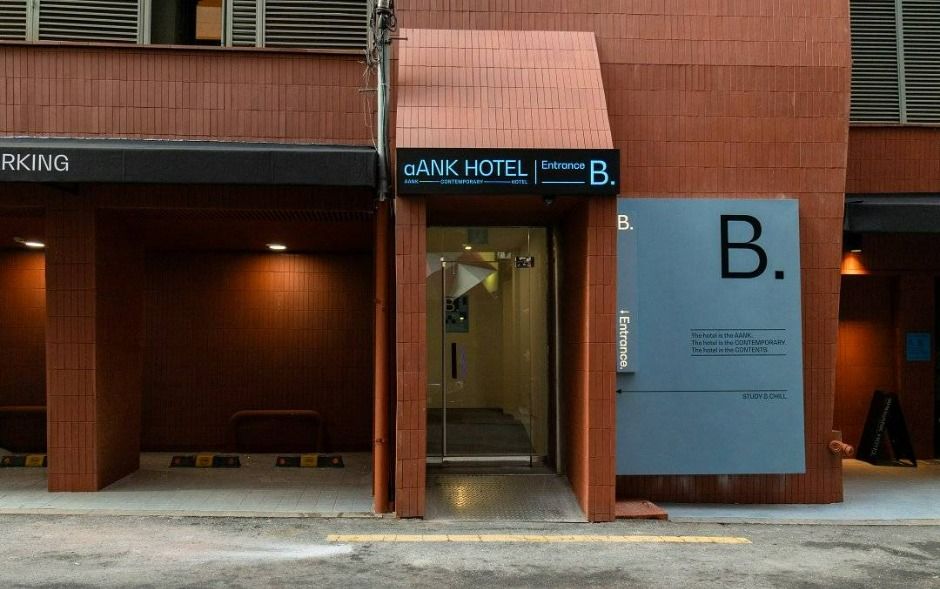
The Hyoosik Aank Hotel Sinchon welcomes guests with a neat and modern atmosphere. Each room is tailored to suit every guest's need with comfort as the main priority. The hotel's room types include a standard room, music room, multi-room equipped with Playstation 4, PC room, creative illust room equipped with a drawing tablet, creative piano room, and a business room. The hotel also has a parking lot, guest lounge, coin laundry, and a ping pong table.
Dongdaemun Shopping Complex·Dongdaemun Shopping Town (동대문 종합시장·동대문 쇼핑타운)
4.5Km 2025-06-30
266 Jong-ro, Jongno-gu, Seoul
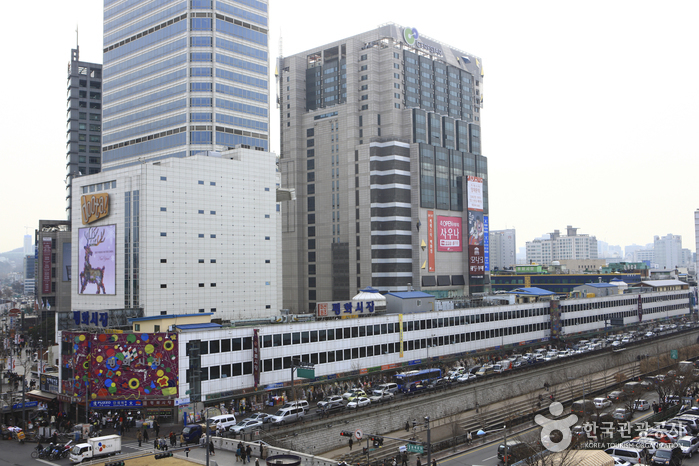
Dongdaemun Shopping Complex is one of Korea’s most well-known markets. It was founded in December 1970 as the largest of its kind in Asia and has maintained that status for the last 40 years. Browsing the plethora of shops, you can find fabric and clothing following all the latest global fashion trends. Dongdaemun Shopping Complex continues to build up its reputation as a hub of international design.
Namsangol Hanok Village (남산골한옥마을)
4.6Km 2025-07-14
28 Toegye-ro 34-gil, Jung-gu, Seoul
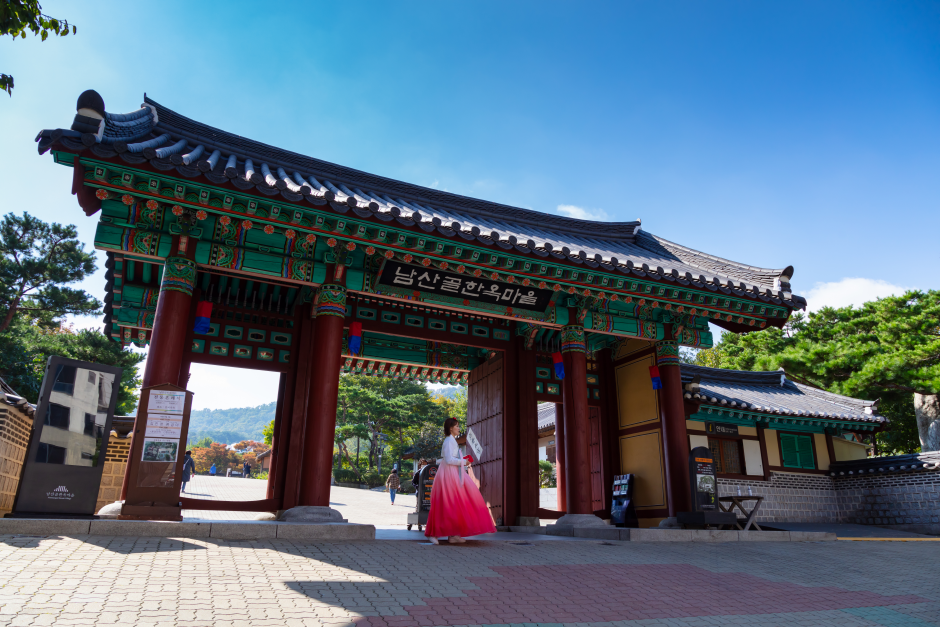
Namsangol Hanok Village opened in 1998 on the northern side of Namsan Mountain in the center of the capital. This village has five restored hanok (traditional Korean house) premises, a pavilion, a traditional garden, a performance art stage, and a time capsule plaza, making it a perfect spot for locals and tourists to take a leisure walk. Upon entering from the front gate, visitors will get a taste of Korea's traditional life while escaping from bustling city life. The traditional garden with its pavilion and old houses creates a peaceful ambiance before the forested Namsan Mountain. A time capsule commemorating Seoul’s 600th anniversary was buried in 1994 at the highest point of the village and is scheduled to be reopened 400 years later in 2394.
The five hanok premises at Namsangol Hanok Village once belonged to aristocrats and government officials of the Joseon dynasty. Each house was originally located in a different neighborhood, but they were all moved to this area and restored to their original form. The houses were rebuilt using their original materials, except for one house, where the materials were too old and deteriorated to be reused. The premises were carefully restored and replicated according to their original form to depict the owners’ social class and personality. These buildings are now used as an exhibit to portray the living environment during the Joseon dynasty and as a venue for educational and cultural programs for children and tourists.
Some of the unique programs and activities to participate in include wearing hanbok, folding hanji (traditional Korean paper), writing in Korean, traditional tea ceremony, traditional etiquette school, and herbal medicine experience. There are also taekwondo demonstrations and other various performances held around the village. Visitors can also try traditional games such as yunnori (traditional board game), or understand more about the area through a guided tour.
Ahn Junggeun Memorial Museum (안중근의사기념관)
4.6Km 2024-03-06
91, Sowol-ro, Jung-gu, Seoul
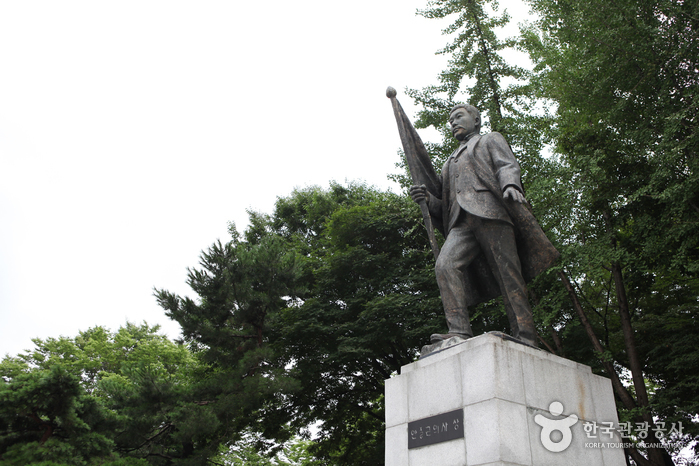
The Ahn Junggeun Memorial Museum honors the memory of Ahn Junggeun (1879-1910), an independence activist and soldier who advocated for Korean independence and peace in Asia. He fought against the Japanese to defend the Korean Empire (1897-1910). He was executed in 1910 for assassinating Hirobumi Ito, the Japanese who led the invasion of Korea in 1909, in Harbin, China.
Seoul Namsan Gugakdang (서울 남산국악당)
4.6Km 2021-08-02
28, Toegye-ro 34-gil, Jung-gu, Seoul
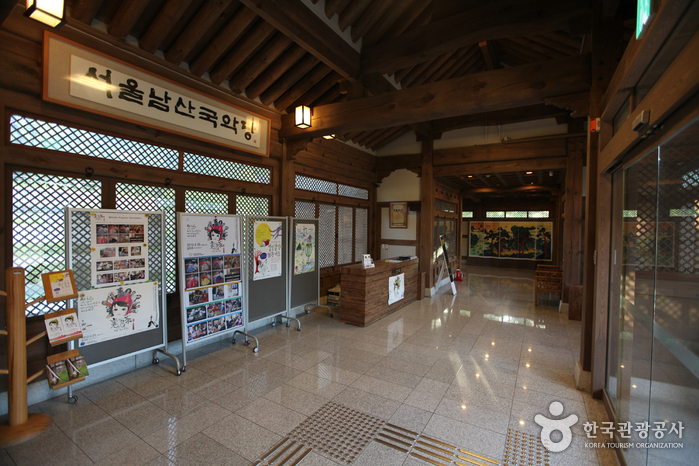
Seoul Namsan Gukakdang was established by Seoul Metropolitan Government as a representative traditional art-centered performance hall in 2007. It is comprised of one ground and two basement levels. The performance hall is located on the basement floor with 300 seats, equipped with facilities that deliver pansori sounds and gayageum music to every seat. Visitors can make a reservation at the Namsangol Hanok Village website.
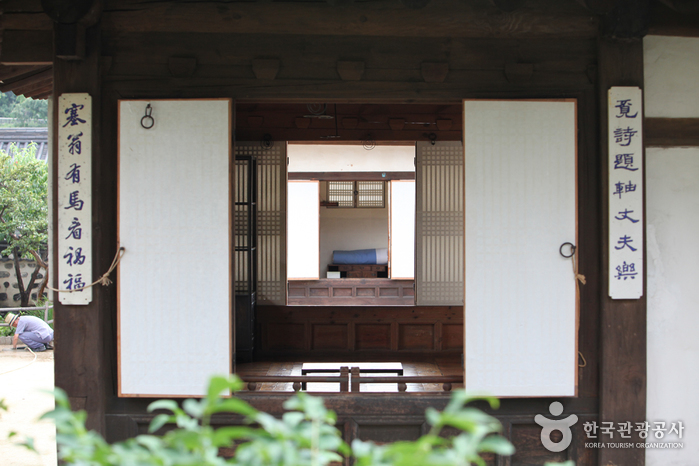
Haepungbuwongun Yun Taekyeong's Jaesil (해풍부원군윤택영댁재실)
4.6Km 2021-11-10
28, Toegye-ro 34-gil, Jung-gu, Seoul
Haepungbuwongun Yun Taekyeong's Jaesil is a shrine house built by the father-in-law of King Sunjong of Joseon dynasty in 1906 when his daughter was proclaimed the crowned princess of Joseon and entered Changdeokgung Palace to later become Queen Sunjeong. Red pine trees salvaged from the demolition of Gyeongungung Palace were used to construct the house. It was originally located in Jegi-dong, Dongdaemun-gu, but was later restored and moved to its present location. The shrine of the house that was destroyed in 1960 was also restored.
Because the house is more of a shrine rather than residential living quarters, it has many unique features. For example, unlike other houses, it has the anchae (women’s quarters) located across from sarangbang (men’s quarters) with daecheong (living room) positioned between them.
Hwanggeum Kongbat (황금콩밭)
4.6Km 2025-10-31
9 Mapo-daero 16-gil, Mapo-gu, Seoul
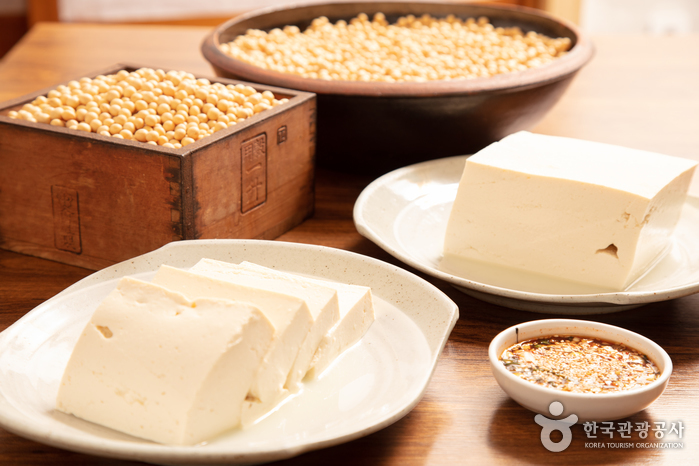
Hwanggeum Kongbat specializes in bean curd, using 100% Korean-grown soybeans and salt to make their bean curd fresh daily. The restaurant is famous for their method of making a bean curd that is smooth and maintains the nutty yet sweet flavor of the soybeans.
 English
 한국어
한국어 日本語
日本語 中文(简体)
 Deutsch
 Français
 Español
 Русский


