![Olive Young - Myeong-dong Main Branch [Tax Refund Shop] (올리브영 명동본점)](http://tong.visitkorea.or.kr/cms/resource/81/2888381_image2_1.jpg)
Olive Young - Myeong-dong Main Branch [Tax Refund Shop] (올리브영 명동본점)
1.2Km 2024-04-23
53, Myeongdong-gil, Jung-gu, Seoul
-
![Daehyun Mojo.S.Phine - Lotte Seoul Station Branch [Tax Refund Shop] (대현 모조에스핀 롯데서울역)](http://tong.visitkorea.or.kr/cms/resource/77/2889077_image2_1.jpg)
Daehyun Mojo.S.Phine - Lotte Seoul Station Branch [Tax Refund Shop] (대현 모조에스핀 롯데서울역)
1.3Km 2024-04-22
405, Hangang-daero, Jung-gu, Seoul
-

Gabor - Lotte Seoul Station Branch [Tax Refund Shop] (가버 롯데서울역)
1.3Km 2024-04-22
Lotte Outlet Seoul Station Branch, 405, Hangang-daero, Jung-gu, Seoul
-
![Dressing Guess - Lotte Seoul Station Branch [Tax Refund Shop] (드레싱 게스 롯데서울역)](http://tong.visitkorea.or.kr/cms/resource/40/2889340_image2_1.jpg)
Dressing Guess - Lotte Seoul Station Branch [Tax Refund Shop] (드레싱 게스 롯데서울역)
1.3Km 2024-04-16
4F, 405, Hangang-daero, Jung-gu, Seoul
-
![Y.Concepts - Lotte Seoul Station Branch [Tax Refund Shop] (Y컨셉 롯데서울역)](http://tong.visitkorea.or.kr/cms/resource/14/2889614_image2_1.jpg)
Y.Concepts - Lotte Seoul Station Branch [Tax Refund Shop] (Y컨셉 롯데서울역)
1.3Km 2024-04-18
2F Lotte Outlet Seoul Station Branch, 405, Hangang-daero, Jung-gu, Seoul
-
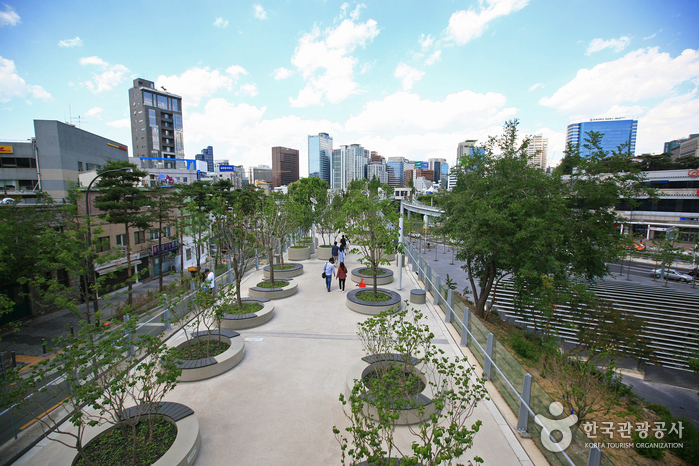
Seoullo 7017 (서울로 7017)
1.3Km 2025-10-24
405, Hangang-daero, Jung-gu, Seoul
+82-2-120
Originally opened in 1970, Seoullo 7017 was an elevated road that crossed over the Seoul Station railway, but when it became dilapidated and unusable for traffic, it was converted into a park in 2017. It is about 17 metres above the ground and offers a panoramic view of the Seoul Station Railway and the city of Seoul. It is directly connected to Seoul Station.
![Ziozia Ssts - Myeong-dong Branch [Tax Refund Shop] (지오지아 SSTS 명동점)](http://tong.visitkorea.or.kr/cms/resource/21/2891121_image2_1.jpg)
Ziozia Ssts - Myeong-dong Branch [Tax Refund Shop] (지오지아 SSTS 명동점)
1.3Km 2024-04-22
6, Myeongdong 8na-gil, Jung-gu, Seoul
-
Arumdaun Nara Dermatology Clinic - Myeongdong (아름다운나라피부과의원 명동점)
1.3Km 2025-11-21
4th Floor, 6 Myeongdong 8na-gil, Jung-gu, Seoul
Founded in 2000. Our clinic is led by a board-certified dermatologist. One of only 2% of doctors in Korea who are certified dermatology specialists who personally provides all consultations and treatments.
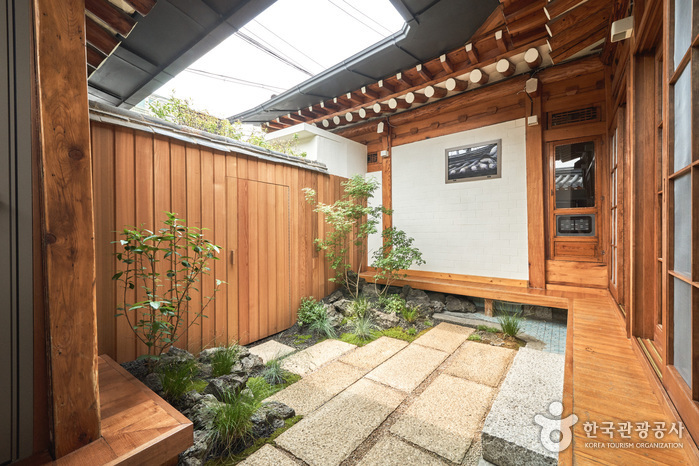
STAY dayoff (스테이 데이 오프)
1.3Km 2024-12-23
6 , Jahamun-ro 1da-gil, Jongno-gu, Seoul
+82-504-0904-2406
Stay Day Off is a hanok stay just off Jahamun-no - known locally as ‘Food Street’ - in Seochon Village to the west of Gyeongbokgung Palace in Seoul. It’s a 5-minute walk from Gyeongbokgung Station on Subway Line 3, so transport access is good. The main building comprises two bedrooms with queen-size bed, a living room and kitchen, and two bathrooms. The annex building is rather special: it has a bath and sauna behind a window wall with a fine view of the hanok garden. There’s a 10% discount for guests staying more than two nights during the week.
Jogyesa Temple (조계사(서울))
1.3Km 2024-10-25
55 Ujeongguk-ro, Jongno-gu, Seoul
As the main temple as well as the district head temple of the Jogye order in Seoul, Jogyesa Temple is the center of Korean Buddhism. The temple was built in the late 14th century during the Goryeo period but was completely destroyed in a fire. It was rebuilt under the name of Gakwangsa Temple in 1910 with the effort of many respectful monks, namely Han Yong-un and Lee Hee-gwang. The temple was given a role as the head temple of Korea’s Buddhism and renamed to Tegosa Temple in 1936. In 1954, a purification drive took place to eliminate Japanese influence and revive traditional Buddhism, which established the present day Jogyesa Temple as a result.
Jogyesa Temple plays an important role in Korean Buddhism as the head temple of the Jogye order. Jogyesa Temple’s Dharma Hall serves as the main venue for several Buddhist events, holding rituals, lectures, ceremonies, and other events all year long. The annual lantern festival in celebration of Buddha's birthday also takes place at this temple.
 English
 한국어
한국어 日本語
日本語 中文(简体)
 Deutsch
 Français
 Español
 Русский


