
Dal Café (달 카페)
2.2Km 2024-03-18
94-1 Samcheong-ro, Jongno-gu, Seoul
+82-2-735-7355
Dal Café is a café located in Bukchon Hanok Village, housed within a traditional Korean hanok. "Dal" means "moon" in Korean. The café is designed with lighting fixtures that give the impression of the moon hanging on the wall, making it a perfect spot for photography. The signature menu item here is the traditional Korean shaved ice with topping served in a traditional pot.
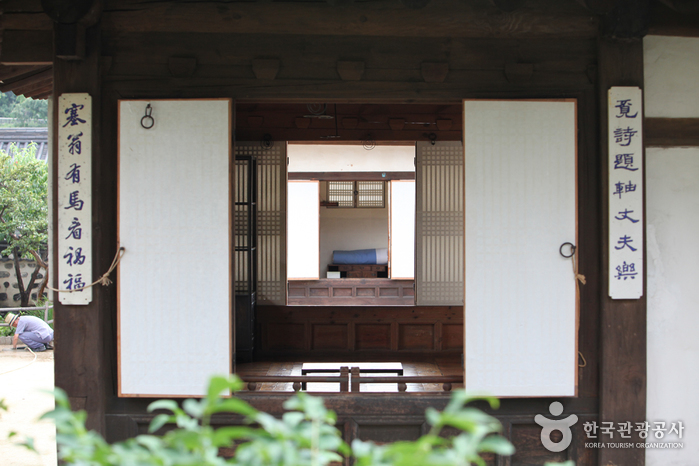
Haepungbuwongun Yun Taekyeong's Jaesil (해풍부원군윤택영댁재실)
2.2Km 2021-11-10
28, Toegye-ro 34-gil, Jung-gu, Seoul
+82-2-3396-5882
Haepungbuwongun Yun Taekyeong's Jaesil is a shrine house built by the father-in-law of King Sunjong of Joseon dynasty in 1906 when his daughter was proclaimed the crowned princess of Joseon and entered Changdeokgung Palace to later become Queen Sunjeong. Red pine trees salvaged from the demolition of Gyeongungung Palace were used to construct the house. It was originally located in Jegi-dong, Dongdaemun-gu, but was later restored and moved to its present location. The shrine of the house that was destroyed in 1960 was also restored.
Because the house is more of a shrine rather than residential living quarters, it has many unique features. For example, unlike other houses, it has the anchae (women’s quarters) located across from sarangbang (men’s quarters) with daecheong (living room) positioned between them.
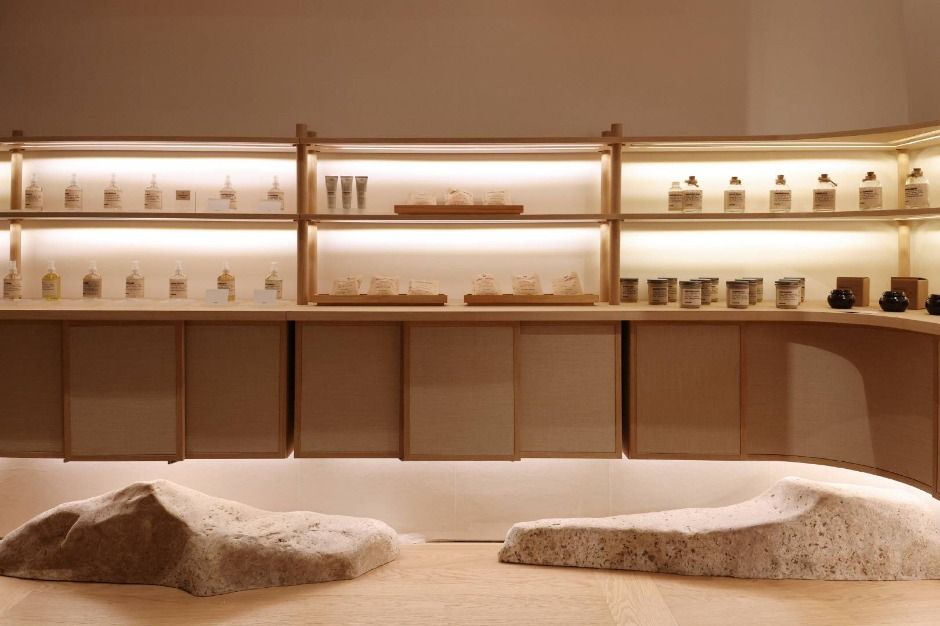
GRANDHAND. Gahoe (그랑핸드 가회점)
2.2Km 2025-12-04
61 Bukchon-ro 11-gil, Jongno-gu, Seoul
Launched in 2014 at a small hanok in Bukchon Hanok Village, this Korean perfume brand now has nine stores around Seoul. With no advertisements or online sales, GRANDHAND has preserved its roots for years. GRANDHAND. Gahoe located amidst the beautiful surroundings of Bukchon Hanok Village and various art museums has customers of all ages and nationalities.
![Yeonwoohouse [Korea Quality] / 연우하우스 [한국관광 품질인증]](http://tong.visitkorea.or.kr/cms/resource/52/3009452_image2_1.jpg)
Yeonwoohouse [Korea Quality] / 연우하우스 [한국관광 품질인증]
2.2Km 2023-09-12
5-13 , Bukchon-ro 12-gil, Jongno-gu, Seoul
+82-2-742-1115
Yeonoo House is a quiet and cozy traditional hanok in Bukchon Hanok Village, Jongno, Seoul. There are two small rooms, each with its own bathroom. Residents can access a superb panoramic view of Bukchon Hanok Village by mounting a ladder up to the roof. As Yeonoo is an old building, careful attention is paid to hygiene management. Gyeongbokgung Palace, Cheonggyeonggung Palace, and Changdeokgung Palace are all nearby.
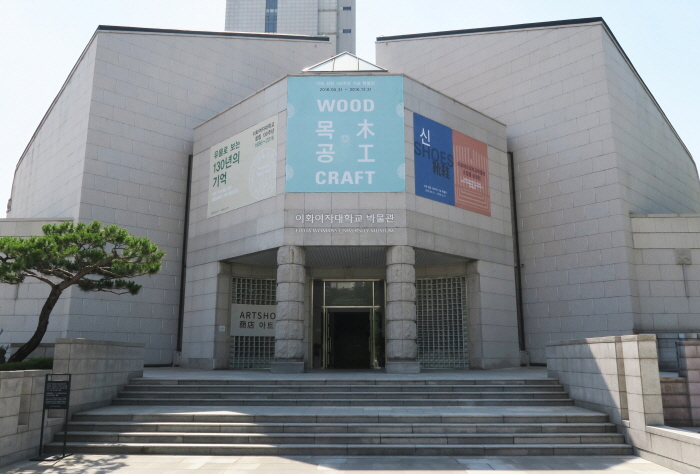
Ewha Womans University Museum (이화여자대학교박물관)
2.2Km 2022-09-14
52, Ewhayeodae-gil, Seodaemun-gu, Seoul
+82-2-3277-3152
The Ewha Womans University Museum was established in 1935 with the goal of preserving the cultural heritage of Korea. Originally, items related to folk art, traditional woodwork, and pottery were put on display in the hall of the main university to keep them from being confiscated during the Japanese occupation. This later led to the opening of the museum to display and store the growing collection.
Regular exhibitions of the museum’s collection have been taking place annually from 1972. Since 1996, the museum also held special exhibitions that focus on other themes related to cultural heritage. Additional small-scale exhibitions are also held frequently to promote Korea's traditional culture and art.
A ceramics research facility as well as a more traditional museum, a large portion of the museum’s efforts is focused on the research and excavation of kilns. To this aim, excavation teams from the museum have traveled to various parts of the country to conduct studies on historic sites and assess the value of artifacts. Through the publication of books and reports on its discoveries, the museum has contributed to raising knowledge and awareness of Korean cultural heritage in academia and among the public.
Ewha Welcome Center (이화웰컴센터)
2.2Km 2022-09-13
52, Ewhayeodae-gil, Seodaemun-gu, Seoul
+82-2-3277-3277
Ewha Welcome Center opened in 2013 as the first promotional center and visitor center of its kind on a university campus in Korea, comprised of an information desk, exhibition lounge, and gift shop. The information desk offers useful information to help visitors get the most out of their Ewha campus experience. The exhibition lounge introduces the history, traditions, and vision of the present-day and future of the university year-round. Visitors can purchase university gear at the gift shop. Furthermore, foreign visitors can take part in a range of campus tour programs in English and Chinese for an enriching experience.
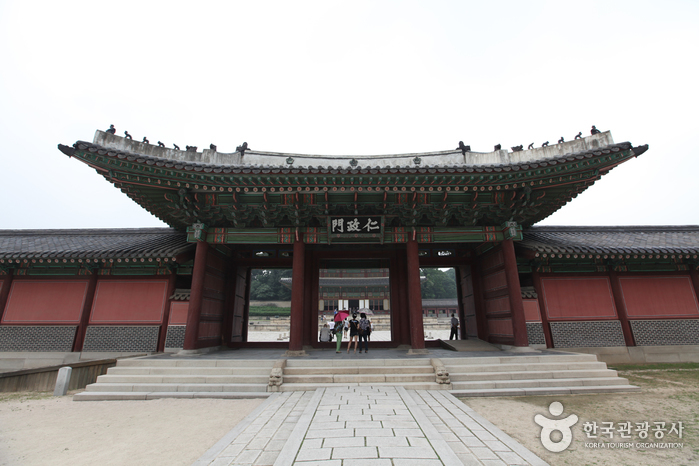
Changdeokgung Injeongmun Gate (창덕궁 인정문)
2.3Km 2025-01-14
99, Yulgok-ro, Jongno-gu, Seoul
+82-2-3668-2300
Serving as the main gate of Injeongjeon Hall, Injeongmun Gate was established in 1405 (5th year of King Taejo’s reign during the Joseon dynasty). Later on, the gate was destroyed by multiple fires during the Imjin War (Japanese invasion of Korea in 1592), therefore current form of the establishment displays designs that are more often seen in the late 19th century's. In addition, a lot
of subsidary marks and buildings are removed from the original places and relocated passing the time, however, still remains to represent prestigious ambience.
Injeongmun Gate served as the place for several coronation ceremonies of kings, prince's succession of throne, and many other national affairs celebrated by the royal members who gathered and aligned around this gate.
Bongwonsa Temple (봉원사)
2.3Km 2023-03-13
120, Bongwonsa-gil, Seodaemun-gu, Seoul
+82-2-392-3007
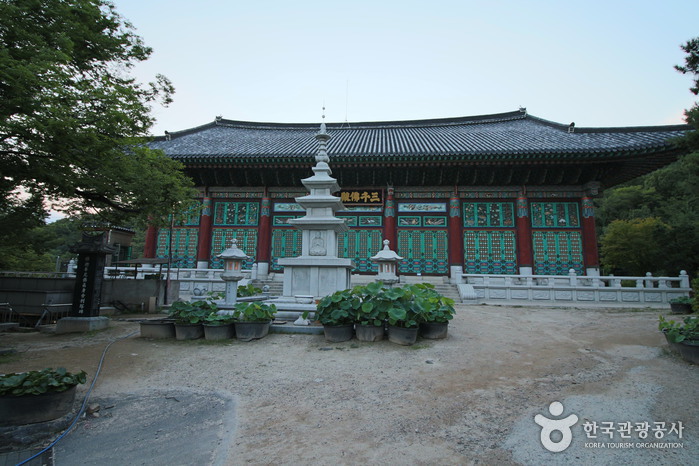
Located on the outskirts of Ansan Mountain in Bongwon-dong, Seodaemun-gu, Seoul, Bongwonsa Temple, as the center of Korean Buddhism Taego, is a thousand-year-old temple with a long history and tradition. In 889 (3rd year of Shilla Queen Jinseong’s reign), Monk Doseon founded it at the ground of Yeonhui Palace (now Yonsei Univ.) and named it Banyasa temple. It was destroyed during the Imjin War in 1592, and later in 1748 (the 24th year of Joseon King Yeongjo’s reign), it was rebuilt and renamed “Bongwonsa” by two Buddhist monks, Chanjeup and Jeungam.
“Yeongsanjae,” one of the Buddhist rituals and also a National Intangible Cultural Property, takes place at Bongwonsa on June 6 every year wishing for world peace and the reunification of North and South Korea. It was designated as one of the Intangible Cultural Heritage of Humanity by UNESCO in 2009. During Yeongsanjae, visitors can enjoy the Buddhist arts such as Beompae (Buddhist temple music for rituals) and dancing. Also, during summertime, Seoul Lotus Flower Culture Festival takes place, where visitors can enjoy the beautiful lotus flowers which are a symbol of Buddhism.
Samcheong Sujaebi (삼청동수제비)
2.3Km 2024-03-04
101-1 Samcheong-ro, Jongno-gu, Seoul
+82-2-735-2965
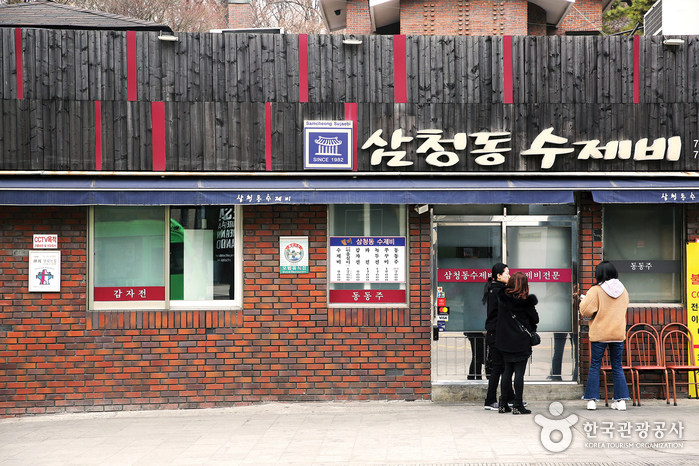
Samcheong Sujaebi is a handmade sujebi (hand-pulled dough soup) specialty restaurant located in Samcheong-dong. Sujebi is a dish made by tearing hand-pulled dough into pieces and boiling it in anchovy broth, among other broths. The signature menu features sujebi with sliced pumpkin, clams, and potatoes, all boiled together and served in a pot. Another specialty is the potato pancake made exclusively from 100% potatoes. Nearby attractions include Bukchon Hanok Village, the National Museum of Modern and Contemporary Art, and Gyeongbokgung Palace.
![Olive Young - Chungmuro Station Branch [Tax Refund Shop] (올리브영 충무로역)](http://tong.visitkorea.or.kr/cms/resource/68/2888868_image2_1.jpg)
Olive Young - Chungmuro Station Branch [Tax Refund Shop] (올리브영 충무로역)
2.3Km 2024-04-18
222, Toegye-ro, Jung-gu, Seoul
-
 English
 한국어
한국어 日本語
日本語 中文(简体)
 Deutsch
 Français
 Español
 Русский


