
Ground Seesaw Seochon (그라운드시소 서촌)
1.3Km 2023-01-17
18-8, Jahamun-ro 6-gil, Jongno-gu, Seoul
Ground Seesaw is a cultural complex located in Seochon, Jongno presented by Media & Art, an exhibition production company, and designed by SoA, an architecture firm, and Loci Studio, a landscaping studio. Visitors are able to check out a variety of exhibits at Ground Seesaw Seochon.
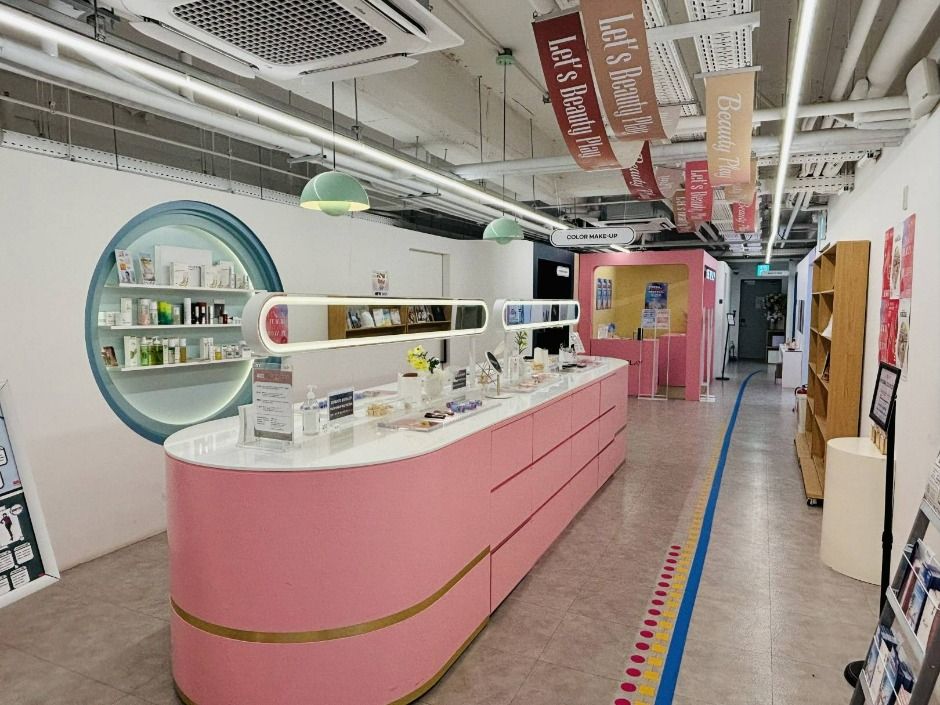
Beauty Play (뷰티플레이)
1.3Km 2025-11-14
73 Myeongdong-gil, Jung-gu, Seoul
Beauty Play is a K-beauty experience center operated by the Korea Cosmetics Industry Institute and supported by the Ministry of Health and Welfare. It offers a wide variety of sample Korean beauty products for testing as well as diverse beauty experience programs such as makeup touch-up service (choice of base, eyes, or lips), personal color test, and skin evaluation. Visitors can also ask for product recommendation based on their skin type or skincare concerns. Beauty Play also frequently hosts free one-day classes, which are announced online via its official website. It also hosts a variety of sample product giveaway events and the exhibited products get changed every two months, allowing visitors to get familiarized with lesser known quality products as well.
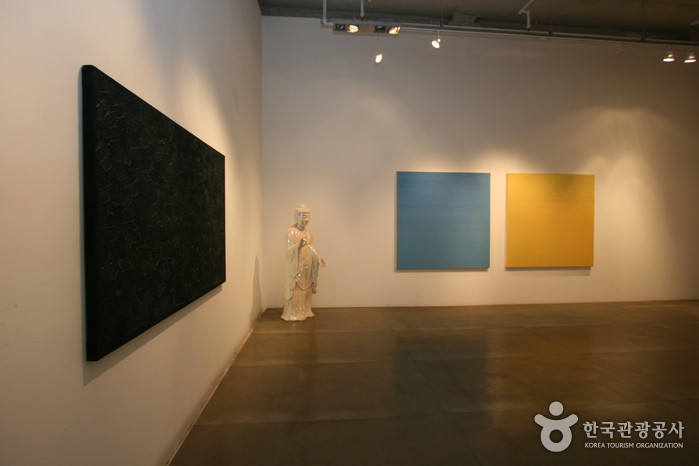
Gallery Simon (갤러리 시몬)
1.3Km 2022-09-15
20, Jahamun-ro 6-gil, Jongno-gu, Seoul
Since its opening in April, 1994, Gallery Simon has continued to focus on promoting the beauty of modern art. Exhibitions include works from experienced artists as well as the works of budding artists, both from Korea and abroad. Select artists, referred to collectively as "Simon's Friends," have exhibitions annually. The changing collections allow the museum and featured artists to constantly strive for improvement and follow the changes in art over time.
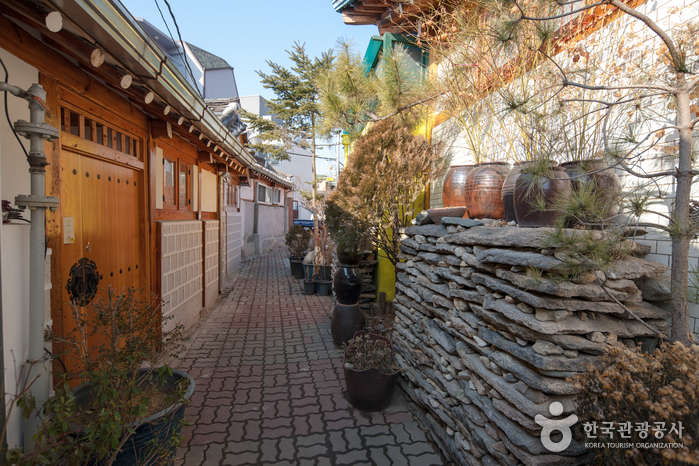
Seochon Village (서촌마을)
1.3Km 2024-12-02
45 Pirundae-ro, Jongno-gu, Seoul (Nuha-dong)
Seochon Village is the name given to the area to the west of Gyeongbokgung Palace. It is a historic village, home to old shops and hanok buildings that have stood the test of time. Korean traditions and contemporary sensibilities coexist within Seochon Village’s maze-like alleyways, creating the unique ambience that makes the district so beloved. One can find shops, guesthouses, cafés, and restaurants in the village.
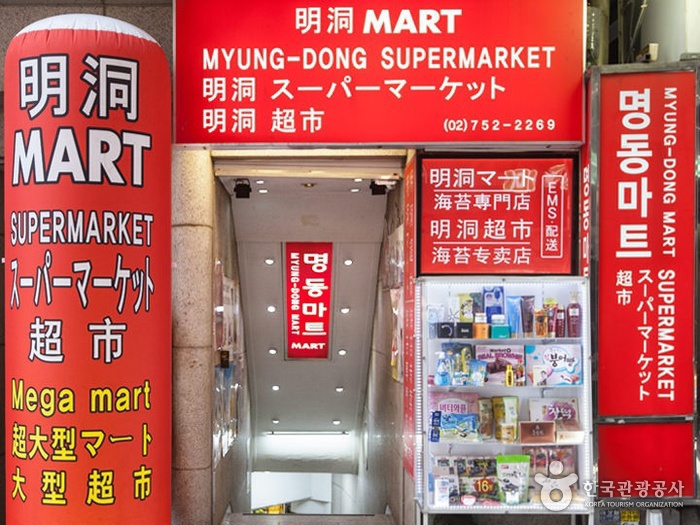
Harmony Mart Myeong-dong Station Branch (하모니마트 명동역점)
1.3Km 2024-12-23
58 , Myeongdong 10-gil, Jung-gu, Seoul
Harmony Mart Myeongdong Station Branch is a discount supermarket specializing in Korean products popular with foreign tourists. It’s on the 1st basement floor of the Shinil Building annex, just a minute's walk from Exit 8 of Myeongdong Subway Station, Jungu, Seoul. Shop here for kimchi, seaweed, ginseng products, tea, ramen, handicrafts, daily necessities and souvenirs. English, Chinese, and Japanese are spoken, and payments can be made in yen and yuan. With purchases of KRW 50,000 or more, there’s free delivery to accomodations within a 5km radius.
Reberry Clinic Myeongdong (리베리의원 명동점)
1.3Km 2025-11-28
#201, 2nd Floor & #301, 3rd Floor, 58 Myeongdong 10-gil, Jung-gu, Seoul
1. A dedicated medical director is personally assigned to each client, ensuring responsible and individualized care.
2. We go beyond consultation — every session is a professional medical treatment.
3. With our LifeBiz AI-powered 3D analysis camera, we provide an objective and precise facial assessment.
4. Our treatments are guided by a scientific skin-type classification system for accurate and tailored results.
5. Through 3D facial analysis, pigmentation diagnosis, and skin-type classification, we design a fully customized treatment pathway.
6. At Libery Clinic Aesthetic, we offer not only advanced medical procedures, but also warm décolleté and therapeutic massage care for a holistic experience.
Museum Kimchikan (뮤지엄 김치간)
1.3Km 2025-06-19
(4-6th floor, Maru Art Center), 35-4 Insadong-gil, Jongno-gu, Seoul
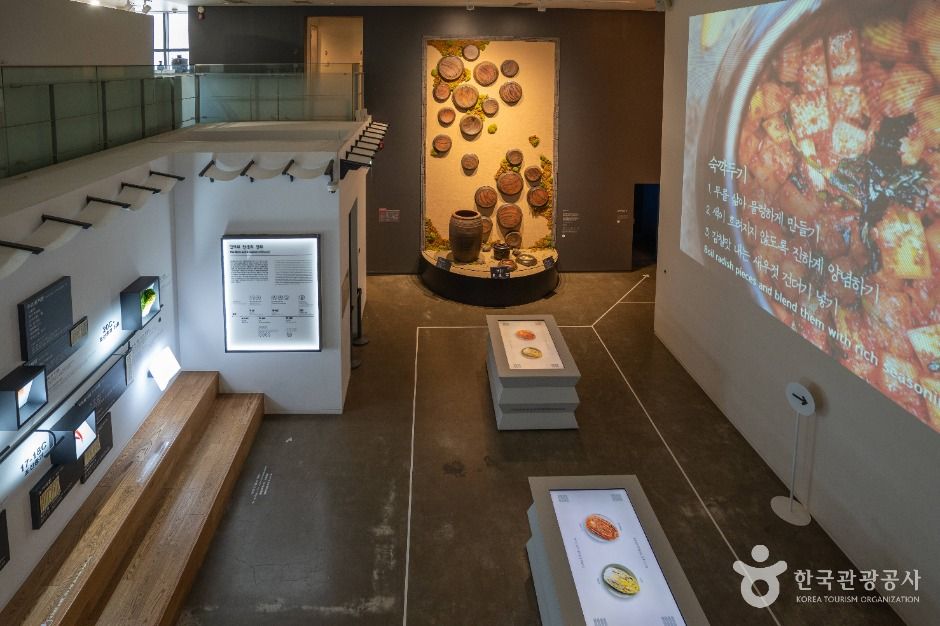
Museum Kimchikan is a museum dedicated to kimchi in Insa-dong’s Maru Art Center. The exhibition details the culture, history, trajectory, and efficacy of kimchi and teaches the visitors how to make kimchi through videos. Visitors can also sample different types of kimchi. The museum offers both individual and group experience programs.
Myeongdong Cathedral (서울 명동성당)
1.4Km 2022-12-27
74, Myeongdong-gil, Jung-gu, Seoul
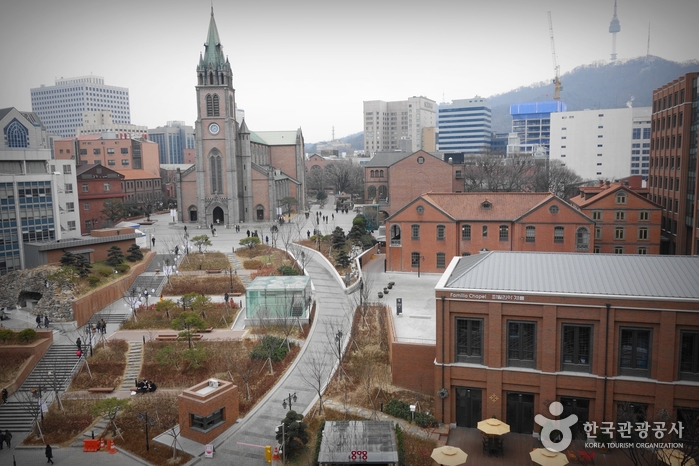
Myeongdong Cathedral is the Church for Archdiocese of Seoul and was also the birthplace for the Roman Catholic Church community in Korea. The church houses the remains of several individuals: Bishop Laurent Joseph Marie Imbert (1796-1839), and priests Peter Simon (1803-1839), James (Jacques Honor Chastan, 1803-1839) and Pourthie Jean Antoine Charles (1830-1866) and four martyrs.
Myeongdong Cathedral is located in downtown Seoul and tourists frequently come and visit the place. Near the cathedral are other tourism spots such as Namsangol Hanok Village preserving Korean traditional houses, N Seoul Tower overlooking Seoul and Namdaemun Market, a traditional market with a wide variety of food and goods.
NKDB North Korean Human Rights Exhibition Hall (북한인권전시실)
1.4Km 2025-11-13
393 Samil-daero, Jongno-gu, Seoul
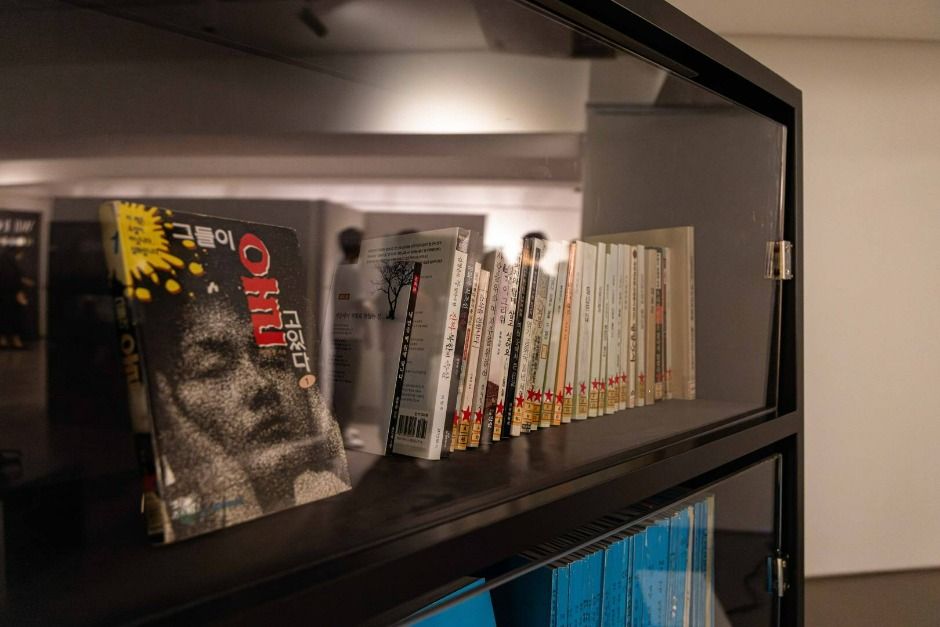
The NKDB North Korean Human Rights Exhibition Hall is a permanent exhibition space dedicated to North Korean human rights. Although it is a small space, it resonates deeply and serves as a "dark tourism" site that records and testifies to the ongoing reality of human rights violations in North Korea. The North Korean Human Rights Information Center (NKDB), which operates this exhibition hall, is the organization that collects and archives the most extensive records of human rights concerning North Korean residents in the world. The testimonies and records presented here represent a living history, a story unfolding in the present, unavailable elsewhere. Through donated North Korean artifacts, including these records, visitors can glimpse the present-day North Korea and encounter artwork by North Korean defectors.
Of one book and stay (일독일박)
1.4Km 2024-12-23
11-1 , Pirundae-ro 3-gil, Jongno-gu, Seoul
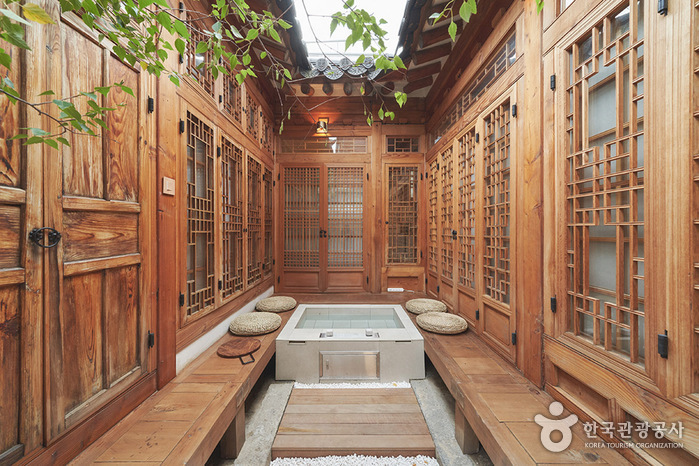
Ildogilbak in Seochon Village, Seoul, is a private hanok stay that has been stylishly renovated with modern facilities. The bedroom, kitchen and dining room are located around the courtyard. Tired travellers can soak their feet in the small courtyard footbath while sitting on the veranda. There’s a queen size bed in the bedroom, and a large table in the dining room where you can read a book and chat. There is also an attic space where you can fall asleep looking at the stars through a small skylight. The kitchen is well equipped, and there’s a tub in the bathroom.
 English
 한국어
한국어 日本語
日本語 中文(简体)
 Deutsch
 Français
 Español
 Русский


