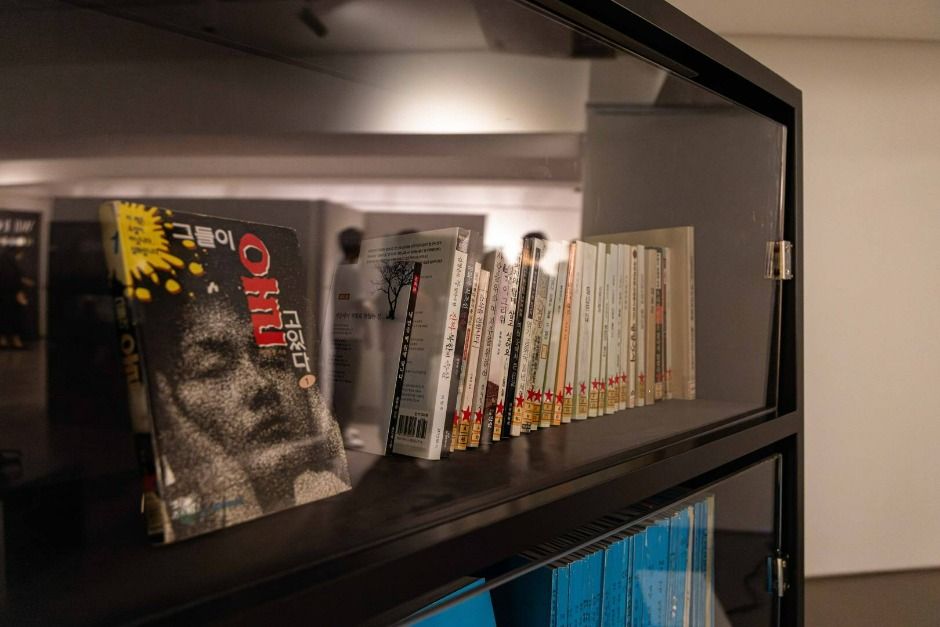
NKDB North Korean Human Rights Exhibition Hall (북한인권전시실)
1.4Km 2025-11-13
393 Samil-daero, Jongno-gu, Seoul
The NKDB North Korean Human Rights Exhibition Hall is a permanent exhibition space dedicated to North Korean human rights. Although it is a small space, it resonates deeply and serves as a "dark tourism" site that records and testifies to the ongoing reality of human rights violations in North Korea. The North Korean Human Rights Information Center (NKDB), which operates this exhibition hall, is the organization that collects and archives the most extensive records of human rights concerning North Korean residents in the world. The testimonies and records presented here represent a living history, a story unfolding in the present, unavailable elsewhere. Through donated North Korean artifacts, including these records, visitors can glimpse the present-day North Korea and encounter artwork by North Korean defectors.
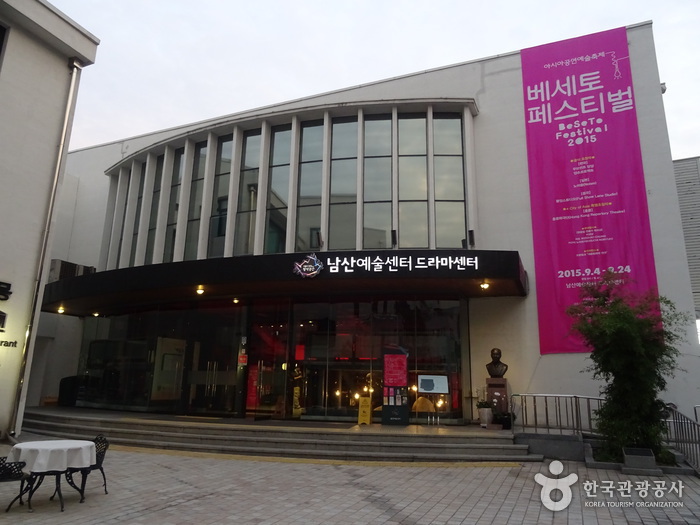
Namsan Arts Center (남산예술센터)
1.4Km 2021-08-26
138, Sopa-ro, Jung-gu, Seoul
+82-2-758-2150
Namsan Arts Center, reopened as a creative space in Seoul in September 2009. It redefined the colors and characteristics of the theater, aiming for a modern theater production center centered on creative premieres, a contemporary performance venue where visitors can feel the pulse of the times, and a theater capable of various experiments.
Namsan Arts Center Drama Center is the first modern folk theater in Korea and the oldest performance hall in which the original architectural form has been preserved. Under the concept of "Contemporary & New Wave," the center continues to produce domestic original plays, and through active exchanges with excellent overseas theaters, build a repertoire of high-quality works that can read domestic and overseas trends, and present contemporary cultural diversity.

Sejong Village Food Street (세종마을 음식문화거리)
1.5Km 2025-06-17
Chebu-dong, Jongno-gu, Seoul
Previously known as Geumcheongyo Market, it was officially named Sejong Village Food Street in 2011, as King Sejong was born in this village. The street is full of lively energy and features both long-standing restaurants, also known as nopo in Korean, and recently established trendy eateries. Its convenient location and inviting atmosphere make it a popular place to visit.
Templestay Information Center (템플스테이 홍보관)
1.5Km 2022-10-17
56, Ujeongguk-ro, Jongno-gu, Seoul
+82-2-2031-2000
Templestay Information Center offers various information and services regarding templestays and temple meals for domestic and international visitors. The center also operates traditional cultural experiences, such as tea time with a Buddhist monk, traditional culture activities and more.
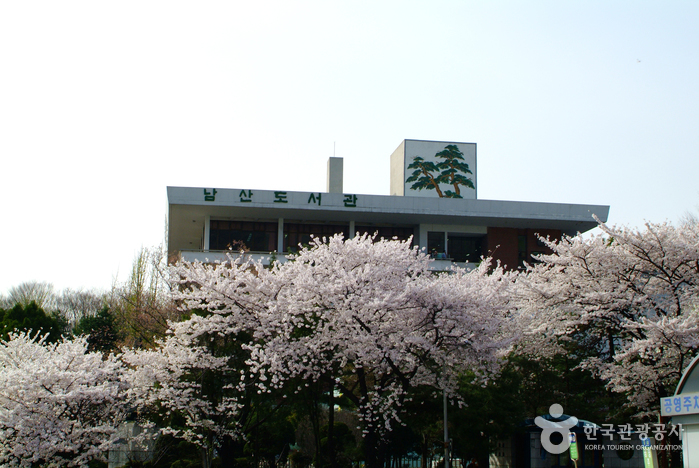
Namsan Library (서울특별시교육청 남산도서관)
1.5Km 2021-07-07
109, Sowol-ro, Yongsan-gu, Seoul
+82-2-754-7338
Namsan Library opened as Kyeongseong Prefectural Library in 1922 as a public library in Myeong-dong, Jung-gu, Seoul. The library was moved to the current site in 1964 with a newly built building and its name changed to Namsan Library in 1965. This concrete building was built in 1964 and was designed by architect Lee Haeseong. It was designated as Seoul Future Heritage in 2013, credited for its preservation value.
It is comprised of 19 rooms and educational areas including the Humanity and Social Science Hall, Nature Science Hall, Language and Literature Hall, Electronic Information Room and more. Since opening, the library has collected nearly 500,000 books, 16,000 non-book materials, 700 continuing resources, and other special materials like old books, oriental books (including Japanese books), and more. Namsan Library also operates a reading treatment program unique to this library that began in 2005. The program includes remodeling of reading consultation room, training for people in charge of reading treatment, workshops, programs for individuals and groups. Also, various exhibitions, lectures, shows, cultural classes and other events are available all year long to enhance lifelong education.
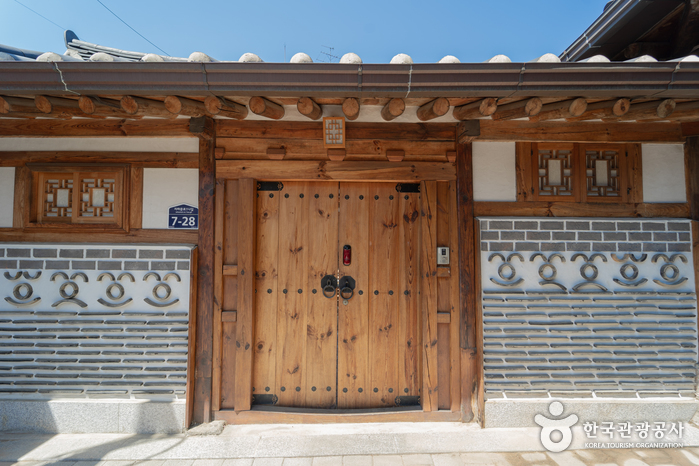
Seoul Hanok Stay (JNP Stay) (서울한옥스테이(jnpstay))
1.5Km 2024-10-30
7-28 , Jahamun-ro 1na-gil, Jongno-gu, Seoul
+82-10-5720-6800
Seoul Hanok Stay (JNP Stay) is a private hanok stay located 3 minutes' walking distance from Gyeongbokgung Station. You can play traditional Korean games such as jejichagi (hacky sack), yut nori (board game), and tuho (arrow-throwing) in the yard, and cooking barbecue adds to the charm of the hanok. From the yard, you can enjoy the sky view, feel the gentle breeze, and observe raindrops falling from the eaves.
Museum Kimchikan (뮤지엄 김치간)
1.5Km 2025-06-19
(4-6th floor, Maru Art Center), 35-4 Insadong-gil, Jongno-gu, Seoul
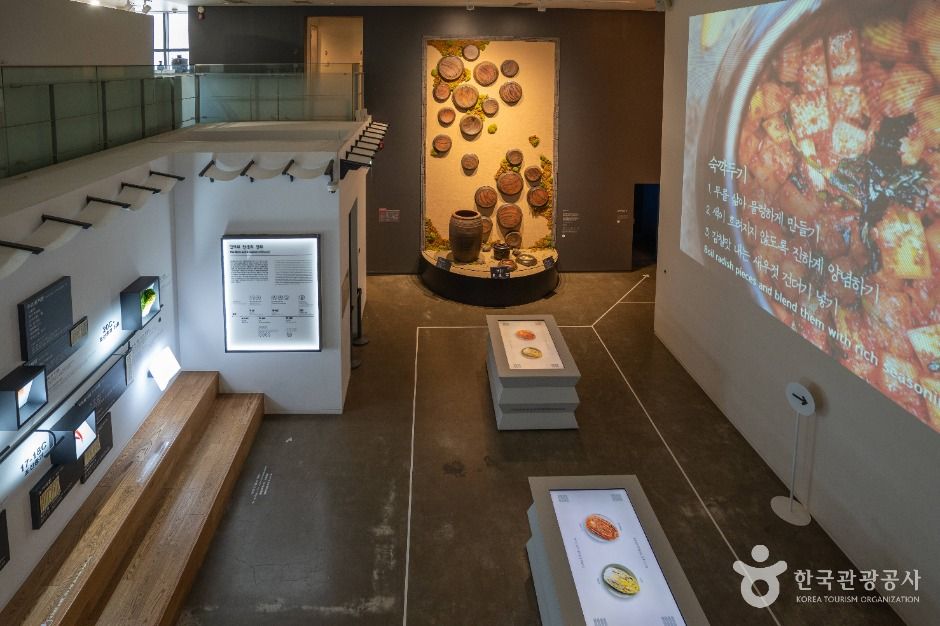
Museum Kimchikan is a museum dedicated to kimchi in Insa-dong’s Maru Art Center. The exhibition details the culture, history, trajectory, and efficacy of kimchi and teaches the visitors how to make kimchi through videos. Visitors can also sample different types of kimchi. The museum offers both individual and group experience programs.
Insadong Cultural Street (인사동 문화의 거리)
1.5Km 2023-12-26
Insa-dong, Jongno-gu, Seoul Metropolitan City
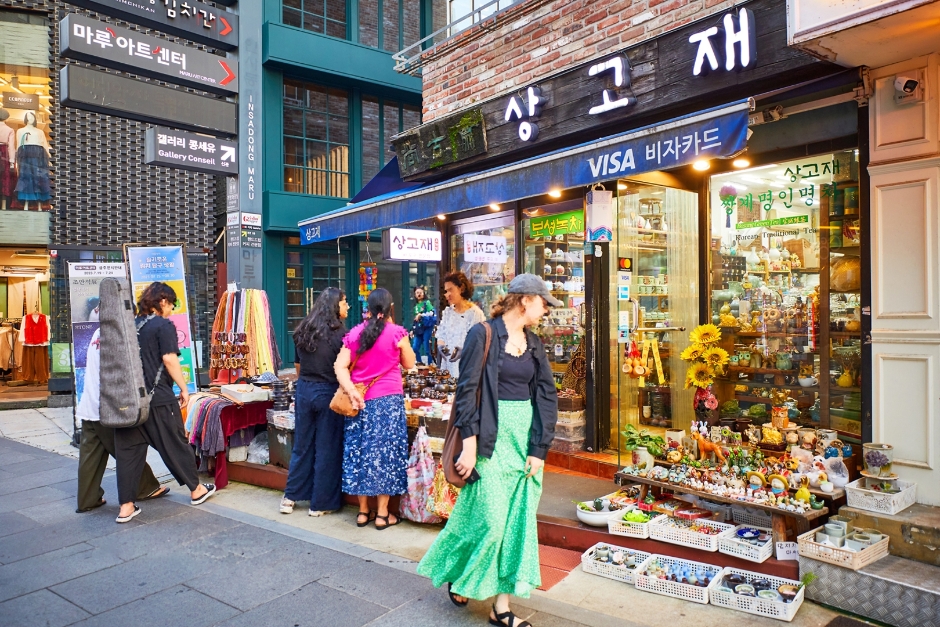
Insadong Cultural Street is a popular tourist destination for visitors from all around the world, thanks to its numerous art galleries, restaurants serving Korean table d’hote, traditional teahouses, and street vendors lining the streets. Its most recognizable feature is the use of Hangeul (Korean script) in storefronts, which allows the visitors to really see just what makes this place so special. Unlike the nearby Ikseon-dong Hanok Street, Insadong Cultural Street has larger streets with wider stores, so it is much easier to traverse. On evenings and weekends, one can find buskers performing on the side of the road.
STAY dayoff (스테이 데이 오프)
1.5Km 2024-12-23
6 , Jahamun-ro 1da-gil, Jongno-gu, Seoul
+82-504-0904-2406
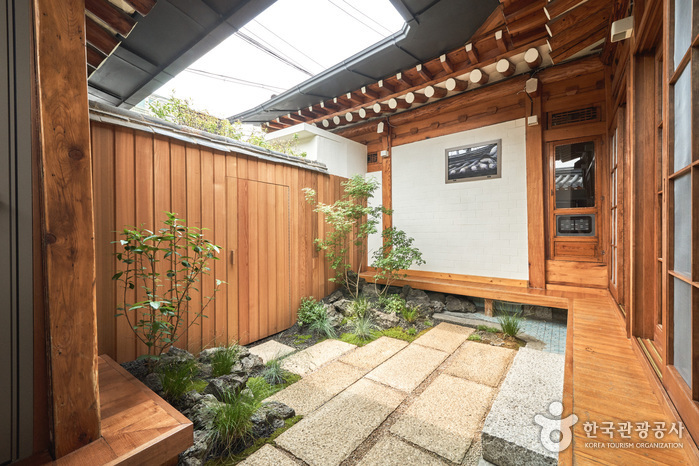
Stay Day Off is a hanok stay just off Jahamun-no - known locally as ‘Food Street’ - in Seochon Village to the west of Gyeongbokgung Palace in Seoul. It’s a 5-minute walk from Gyeongbokgung Station on Subway Line 3, so transport access is good. The main building comprises two bedrooms with queen-size bed, a living room and kitchen, and two bathrooms. The annex building is rather special: it has a bath and sauna behind a window wall with a fine view of the hanok garden. There’s a 10% discount for guests staying more than two nights during the week.
Daelim Museum (대림미술관)
1.5Km 2022-07-29
21, Jahamun-ro 4-gil, Jongno-gu, Seoul
+82-2-720-0667
The Daelim Museum, built by the Daelim Group, was first established in Daejeon in 1996 and later moved to Jongno, Seoul in 2002. The art gallery studies, analyzes, and presents modern art through the lens of photography and holds exhibitions centered around photo media.
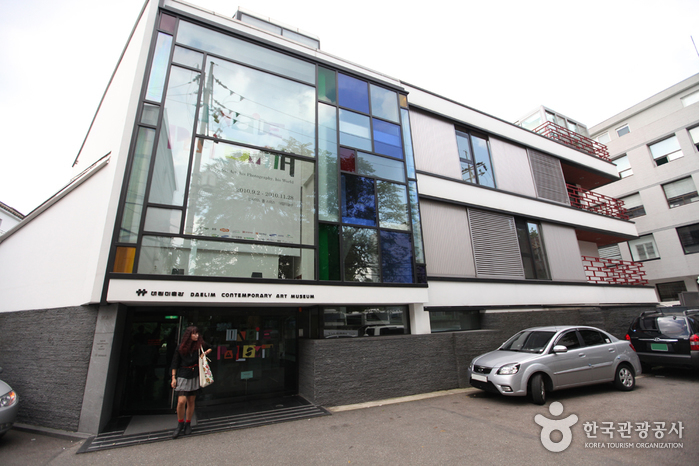
The museum is located in the residential area of Tongui-dong, near the time-honored Gyeongbokgung Palace. The museum, which was designed by French architect, Vincent Cornu, and built by the Daelim Corporation, opened its door to the public in late May 2002.
On the first floor, there is a garden, parking lot, reception desk, storage area, and conference room. On the second and third floor are offices and exhibition hall approximately 595 m² in size, consisting of small and large rooms, a long gallery, and a special high-ceilinged exhibition space. On the fourth floor, there is a seminar room that can seat up to 120 guests and a balcony with a beautiful view. From the balcony of the seminar room, Visitors can also enjoy a wide open view of Inwangsan Mountain and Bukhansan Mountain. The stained glass panels (designed to reflect the beauty of traditional Korean wrapping cloth) and the scenic lounges on the 2nd and 3rd floors of the building add to the overall charm.
Above all else, the museum was designed with consideration of the photos, which are very sensitive to humidity, light, and temperature.
 English
 한국어
한국어 日本語
日本語 中文(简体)
 Deutsch
 Français
 Español
 Русский


