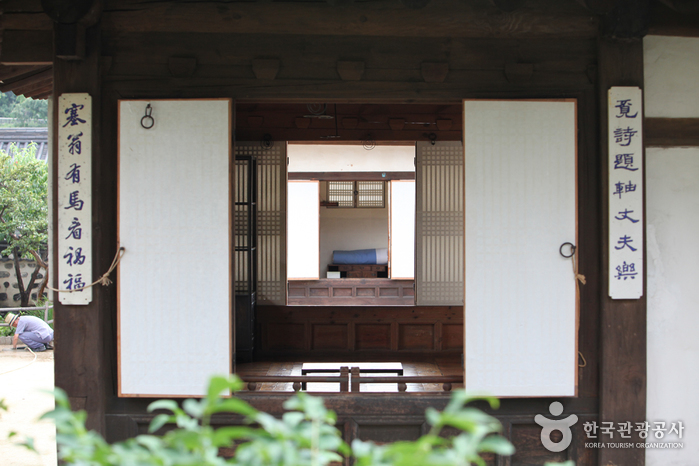
Haepungbuwongun Yun Taekyeong's Jaesil (해풍부원군윤택영댁재실)
2.2Km 2021-11-10
28, Toegye-ro 34-gil, Jung-gu, Seoul
Haepungbuwongun Yun Taekyeong's Jaesil is a shrine house built by the father-in-law of King Sunjong of Joseon dynasty in 1906 when his daughter was proclaimed the crowned princess of Joseon and entered Changdeokgung Palace to later become Queen Sunjeong. Red pine trees salvaged from the demolition of Gyeongungung Palace were used to construct the house. It was originally located in Jegi-dong, Dongdaemun-gu, but was later restored and moved to its present location. The shrine of the house that was destroyed in 1960 was also restored.
Because the house is more of a shrine rather than residential living quarters, it has many unique features. For example, unlike other houses, it has the anchae (women’s quarters) located across from sarangbang (men’s quarters) with daecheong (living room) positioned between them.
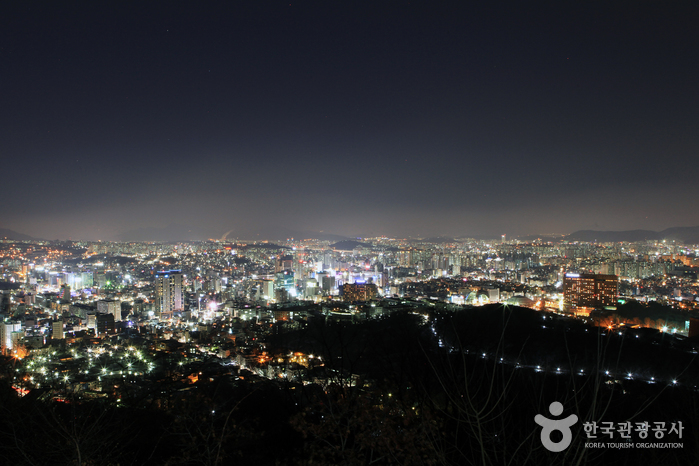
Seoul Namsan Park (남산공원(서울))
2.2Km 2024-03-18
231 Samil-daero, Jung-gu, Seoul
Namsan Mountain rises in the heart of Seoul at an altitude of 265 meters and has been a significant landmark since the Joseon dynasty (1392-1897), leaving behind several ruins. It was heavily damaged in the early 20th century, but was partially restored in 1968 with the creation of the park. Highlights include Namsan Tower and love locks left by numerous couples. Visitors can also easily reach the top by a cable car or bus.
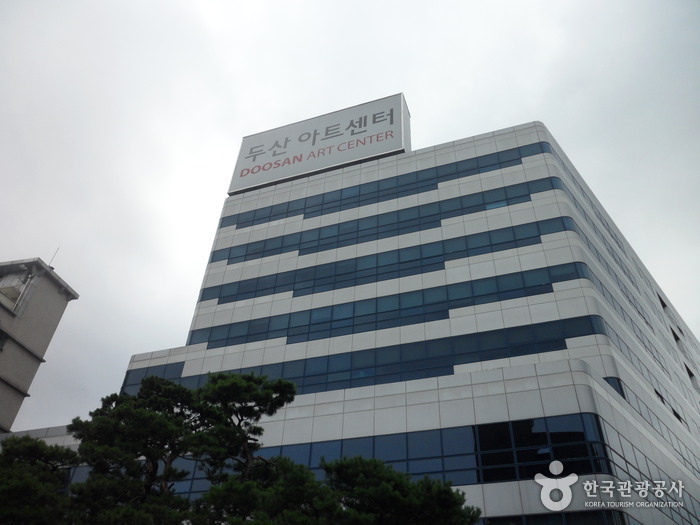
Doosan Art Center (두산아트센터)
2.3Km 2021-11-01
15, Jong-ro 33-gil, Jongno-gu, Seoul
Doosan Art Center, which opened on October 1, 2007, is structured around three different spaces: The Yonkang Hall, exclusively designed for musical performances, Space 111, a “space for art incubation,” and the Doosan Gallery, built for installations.
The Yongang Hall, a theater with 620-person seating capacity, has specially designed lightings and a world-class audio-visual system to provide a second-to-none sensory experience.
Space 111 can accommodate a broad range of performing arts, from theater and dance to film and music concerts. The Doosan Gallery is open to the public, and art exhibitions and performances here can be enjoyed free of charge.
All three theaters include spacious lobbies with handicapped access, designated seating for parents with infants, and meeting areas. Rest rooms are also available nearby, in order to avoid long queues and long walks during intermission.
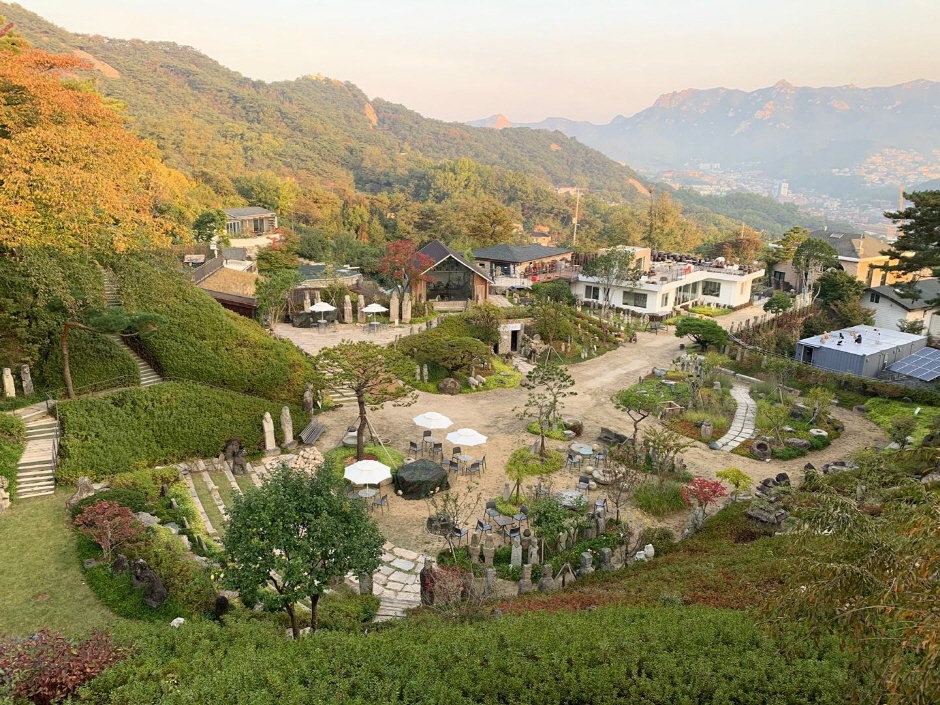
Mok In Museum Mok Seok Won (목인박물관 목석원)
2.3Km 2021-09-01
46-1, Changuimun-ro 5-gil, Jongno-gu, Seoul
Mok In Museum Mok Seok Won relocated in 2019 from Insa-dong to Buam-dong. Six exhibition halls offer visitors a look at wooden figures from around the world. Mokin refers to traditional wooden sculptures carved in shapes of human figures or various animals. The museum holds around 12,000 wooden folk sculptures including those used to decorate funeral carriages and temples mostly from the Joseon dynasty up to modern times. The museum also has an outdoor exhibition hall that harmonizes the sculptures with nature.
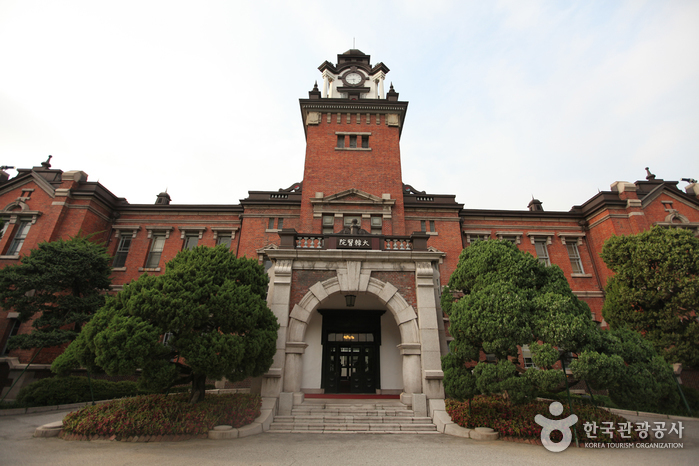
The Museum of Medicine (서울대학교병원의학박물관)
2.3Km 2024-03-18
101 Daehak-ro, Jongno-gu, Seoul
The Museum of Medicine is located in the building of the former Daehan Medical Center, the oldest modern hospital in Korea. It is a medical museum that provides a comprehensive view of the development of modern medicine in Korea, the history of medical devices, and the transformation of Seoul National University Hospital. Through permanent and special exhibitions, the museum showcases medical artifacts and documents related to the history of medicine.
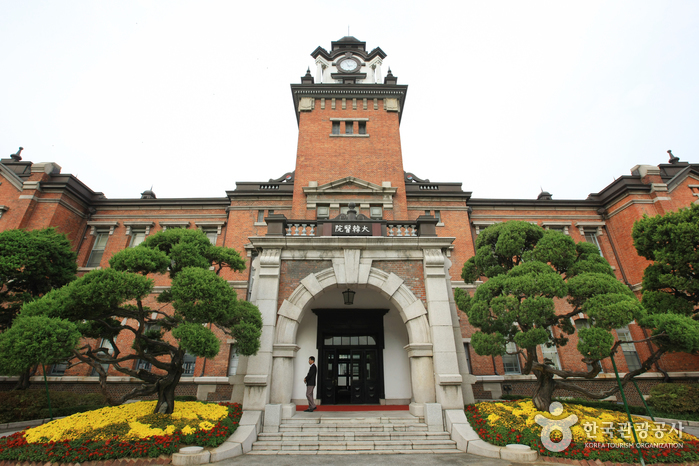
Seoul Daehan Hospital (서울 대한의원)
2.3Km 2021-12-23
101, Daehak-ro, Jongno-gu, Seoul
Daehanuiwon (Daehan Medical Center) is an antique two-story brick building within the grounds of Seoul National University Hospital. It was established under the direct administration of the Uijeongbu (State Council), combining the Gwangjewon (under the Home Ministry), Gyeongseong Medical School and the Korean Red Cross Hospital (under the Royal Household).
Built in the Madubong Hill area, this location where Hamchunwon, the outer garden of Changgyeonggung Palace, once stood in 1484 (15th year of King Seongjong), was also once the site of Gyeongmogung Palace, where King Jeongjo enshrined the mortuary tablet of his birth father Crown Prince Sado Seja in 1776 (the year King Jeongjo ascended to the throne).
These places that held importance for the royal family were destroyed as the Japanese built Gyeongseong Empire University in its place. In 1907, with the announcement of the plan to establish Daehan Medical Center, construction began on the main building, seven wards and affiliated buildings. Construction was completed in November 1908.
The Daehan Medical Center opened in Gwangjewon, but upon Japanese colonization in 1910, its name was changed to the Japanese Viceroyalty Hospital. In 1926, it was included as a part of Gyeongseongjeguk University to become a university hospital. Since the liberation of Korea in 1945, it has been a hospital affiliated with Seoul National University.

Cheongun Literature Library (청운문학도서관)
2.3Km 2023-08-16
40 , Jahamun-ro 36-gil, Jongno-gu, Seoul
Cheongun Literature Library is located at the foot of Inwangsan Mountain and can be reached by following the mountain's walking trail starting from Changuimun Gate along the fortress wall. This public hanok library is designed in consideration of the sloped topography and the natural scenery of Inwangsan Mountain. The library consists of two floors: an underground floor and a ground floor. While the ground floor is designed as a traditional hanok, the underground floor is made of concrete to support the hanok building and the spacious outdoor yard. By implementing the natural slope in the library's design, the underground southern entrance is exposed, allowing sunlight to enter. The underground floor features a wide collection of books while the ground floor serves as a place for reading. The natural environment surrounding the library adds to the hanok building's traditional and peaceful charms.
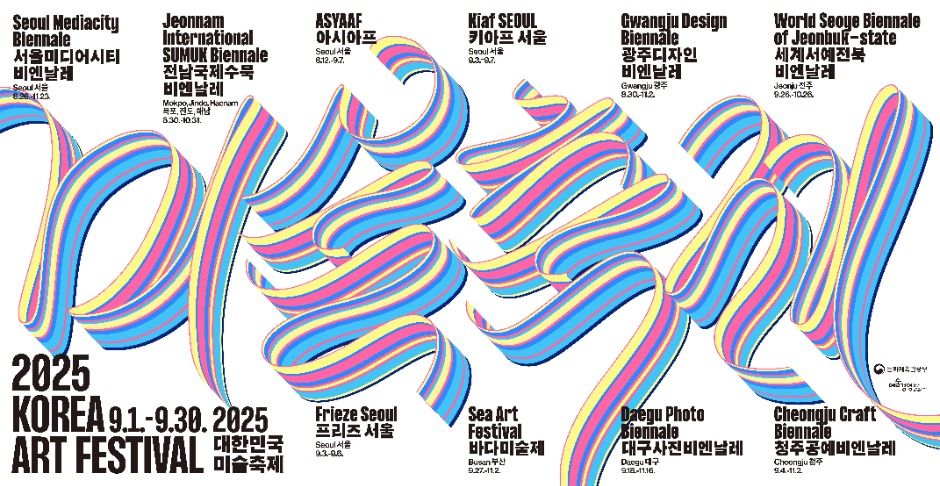
Korea Art Festival (대한민국 미술축제)
2.4Km 2025-07-31
57 Daehak-ro, Jongno-gu, Seoul
+82-70-7575-0980
Korea Art Festival is the nation's largest art festival that connects the 12 major art fairs and biennales taking place nationwide. The 2025 festival takes place in September, inviting visitors to enjoy the world of art.
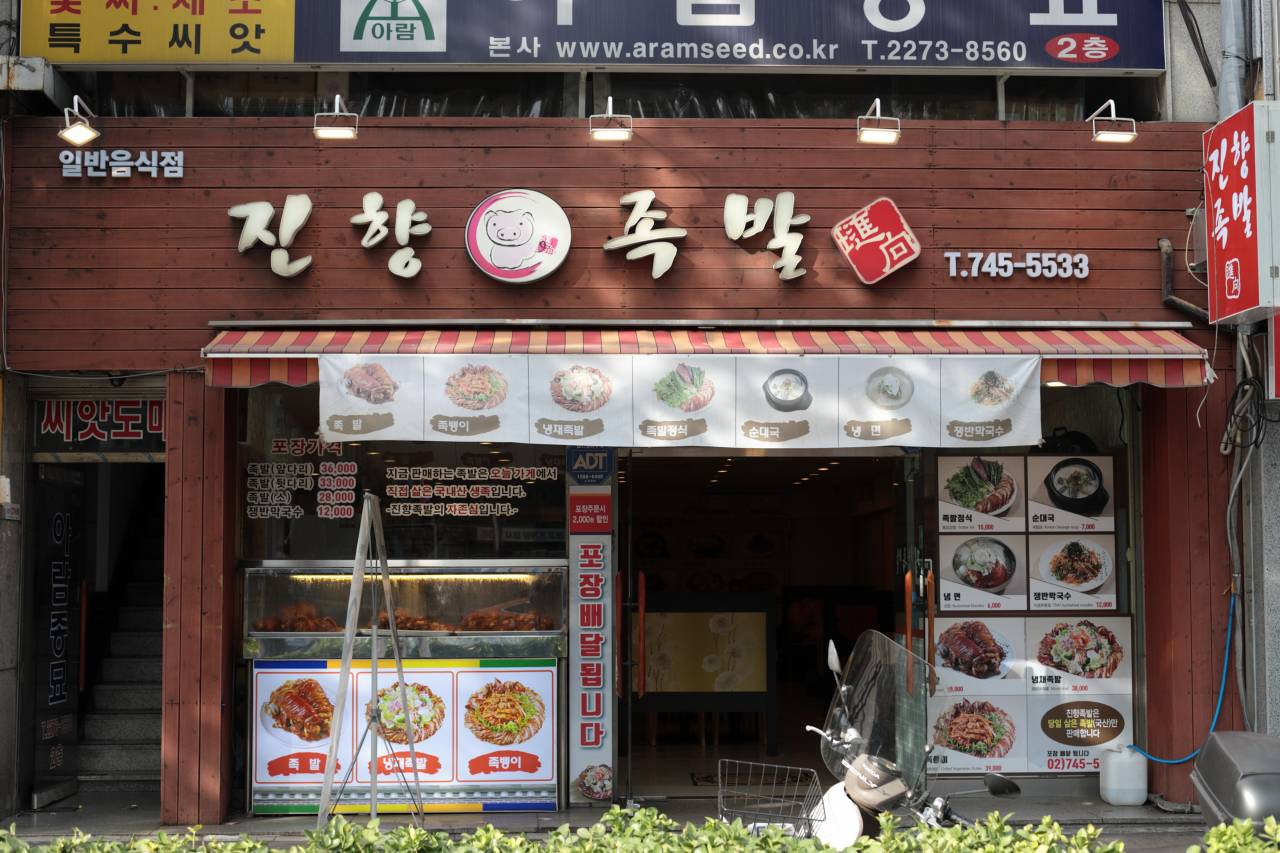
Jinhyang Jokbal (진향족발)
2.5Km 2024-10-15
231-1, Jong-ro, Jongno-gu, Seoul
A pig's trotter(s) specialty restaurant located near Jongno 5(o)ga Station in Seoul. One of the top 5 jokbal (pig's trotter) restaurants in Seoul. This restaurant's signature menu is braised pigs' feet.
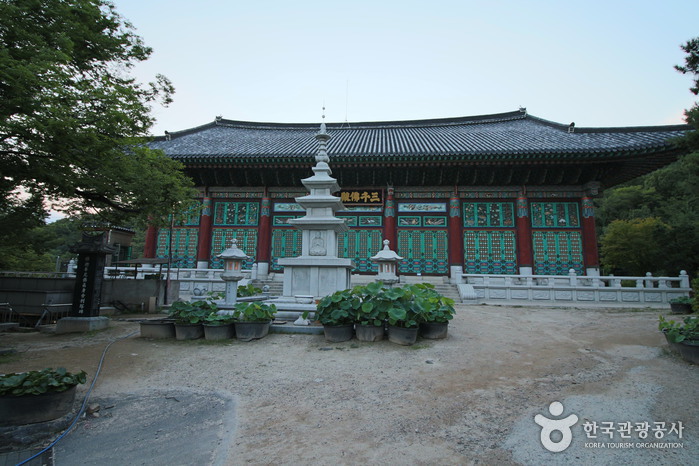
Bongwonsa Temple (봉원사)
2.5Km 2023-03-13
120, Bongwonsa-gil, Seodaemun-gu, Seoul
Located on the outskirts of Ansan Mountain in Bongwon-dong, Seodaemun-gu, Seoul, Bongwonsa Temple, as the center of Korean Buddhism Taego, is a thousand-year-old temple with a long history and tradition. In 889 (3rd year of Shilla Queen Jinseong’s reign), Monk Doseon founded it at the ground of Yeonhui Palace (now Yonsei Univ.) and named it Banyasa temple. It was destroyed during the Imjin War in 1592, and later in 1748 (the 24th year of Joseon King Yeongjo’s reign), it was rebuilt and renamed “Bongwonsa” by two Buddhist monks, Chanjeup and Jeungam.
“Yeongsanjae,” one of the Buddhist rituals and also a National Intangible Cultural Property, takes place at Bongwonsa on June 6 every year wishing for world peace and the reunification of North and South Korea. It was designated as one of the Intangible Cultural Heritage of Humanity by UNESCO in 2009. During Yeongsanjae, visitors can enjoy the Buddhist arts such as Beompae (Buddhist temple music for rituals) and dancing. Also, during summertime, Seoul Lotus Flower Culture Festival takes place, where visitors can enjoy the beautiful lotus flowers which are a symbol of Buddhism.
 English
 한국어
한국어 日本語
日本語 中文(简体)
 Deutsch
 Français
 Español
 Русский


