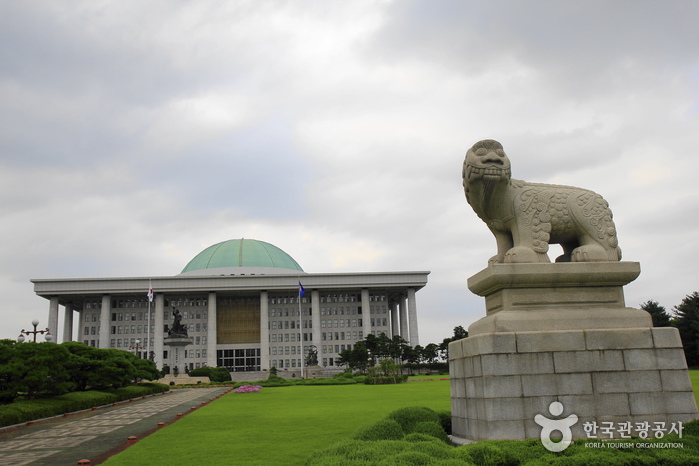
The National Assembly Building (국회의사당)
6.9Km 2024-02-29
1, Uisadang-daero, Yeongdeungpo-gu, Seoul
+82-2-788-2114
The National Assembly Building stands as the symbol of Korean democracy. It consists of the National Assembly Building, the National Assembly Library, and the Memorial Hall. Visitors can take part in programs such as observing the Plenary Chamber and visiting the Children's Museum. Because it is a great place to learn about Korean history and politics, it is a popular tourist site. Visitors are required to make reservations for their visit, which can be done through the webpage.

Glovi Plastic Surgery (글로비성형외과의원)
6.9Km 2025-10-23
(6th Floor, EGI Building), 843 Nonhyeon-ro, Gangnam-gu, Seoul
"Glovi Plastic Surgery strives to understand the hearts of our clients."
While standards of beauty have varied across eras and individuals, true beauty remains timeless. At Glovi Plastic Surgery, we are dedicated to discovering and delivering enduring beauty by continuously researching and refining our techniques to ensure the highest level of satisfaction for each patient.
With extensive experience and exceptional technical expertise, Glovi Plastic Surgery offers personalized cosmetic surgery programs tailored to individual characteristics. Our dedicated stem cell research lab, certified by the Ministry of Science, ICT and Future Planning as an R&D department, showcases our differentiated technological capabilities. Additionally, we provide customer satisfaction programs that prioritize patient safety and convenience.
Glovi Plastic Surgery's commitment to rewarding your choice with beauty and confidence continues every day.
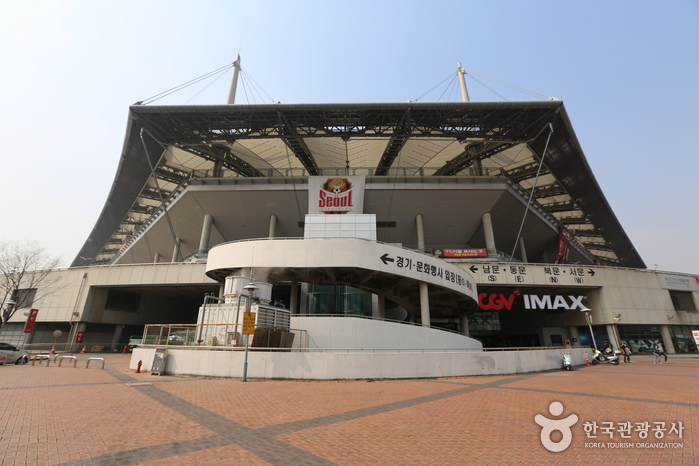
Seoul World Cup Stadium (서울월드컵경기장)
7.0Km 2025-03-15
240 World Cup-ro, Mapo-gu, Seoul
+82-2-2128-2000
Seoul World Cup Stadium, constructed for the 2002 World Cup co-hosted by South Korea and Japan, stands as the largest soccer-specific stadium in Korea. Currently serving as the home ground for FC Seoul's K-League , it also hosts matches for the South Korean national soccer team. The vicinity boasts large-scale supermarkets, cinemas, sports centers, and saunas. Nearby attractions include Haneul Park and Pyeonghwa Park.
Grand Plastic Surgery (그랜드성형외과의원)
7.0Km 2025-10-23
(#601, 6th Floor, JB Miso Building), 841 Nonhyeon-ro, Gangnam-gu, Seoul
With top-notch multidisciplinary medical staff
and a one-stop total healthcare system,
we lead the world in aesthetic medicine.
Grand Plastic Surgery opened its doors in 2004.
In its 19-year history, we established ourselves as Korea's leading aesthetic medicine group.
We are the hospital of choice for more than 30,000 international patients, attracting patients from more than 100 countries around the world with a top-tier specialized medical consultation system, a well-organized safety system, and distinguished services tailored to both domestic and international patients.
Grand Plastic Surgery promises satisfactory surgical results to our patients with our long-standing surgical experience and know-how, and aims to become a medical group capable of leading not only Korea but also Asia and the world.
L CREER (엘크레)
7.0Km 2025-10-24
41 Dosan-daero 15-gil, Gangnam-gu, Seoul
L Creer is a makeup platform operated by a makeup artist with 27 years of experience in charge of makeup for IU and actress Han Ye-seul. Customers can easily experience the beauty consulting that celebrities receive at an affordable price. It has a reputation for providing meticulous and detailed beauty consulting. When visiting for the first time, eyebrow shape consulting is the most popular service where you get to receive eyebrow care and learn how to apply eyebrow make up. Reservations are required before visiting.
Dream Plastic Surgery (드림성형외과)
7.0Km 2025-10-23
(2nd Floor, Seokyeong University Building), 848 Nonhyeon-ro, Gangnam-gu, Seoul
Since its opening in 1999, Dream Plastic Surgery has shared its treatment philosophy, future vision, and management mindset while giving high satisfaction to customers by providing advanced treatment services and developing a hospital culture. In addition, by building a hospital management network system, we make all efforts to lead the medical community in the 21st century by sharing treatment information, management knowledge, employee retraining, and service know-how. We have 8 plastic surgery specialists and 10 medical staff including resident anesthesiologists. With various technologies and know-how accumulated over 25 years, we have created beauty for many patients at home and abroad.
Yeouido Park (여의도공원)
7.0Km 2024-04-08
68, Yeouigongwon-ro, Yeongdeungpo-gu, Seoul
Yeouido Park is a large recreational area located on Yeouido Island in the central part of Seoul. It was once originally covered with black asphalt, and people frequented the place for bicycling and roller-skating. The construction began in 1997 and opened officially in February 1999. It is now the place where many people in the city come to rest and enjoy strolling around, playing sports, and cultural events.

Spa Lei (스파레이)
7.0Km 2022-09-19
5, Gangnam-daero 107-gil, Seocho-gu, Seoul
+82-2-545-4002
Situated in Seocho-gu Jamwon-dong,
The 3.0 Clinic (더3.0피부과의원)
7.0Km 2025-10-23
(4th Floor, Cham Building, Sinsa-dong), 48 Apgujeong-ro 28-gil, Gangnam-gu, Seoul
The 3.0 Clinic has successfully developed a method to treat acne without using conventional acne dermatological treatments that have inevitably accompanying side effects, which require taking cumbersome medications with side effects, and require continuous management. We were invited to give a lecture at the American Academy of Dermatology and also gave lectures in China and Europe. We also developed a simple injection method to reduce sebum, which had no proper treatment. In addition, we developed a method to blur the shape of intractable scars and received an award at the Eastern Asia Dermatology Congress in Japan.
Our skin and body have incredible power. If you understand the reasons why our skin is like this, what changes, and results and take fundamental care of your skin, you can treat acne without taking medicine and atopic dermatitis without steroids.
Symptom relief for the 1.0 generation, fundamental cause and resolution for the 2.0 generation, and prevention for the 3.0 generation. We aim to help people improve the power of their skin!
Dr. Kim's Stem Cell Clinic (김현수내과의원)
7.0Km 2025-11-26
(7th Floor, Ssangbong Building), 874 Eonju-ro, Gangnam-gu, Seoul
As the only stem cell therapy hospital in Korea, we continue to treat patients with Cellgram®, the world's first stem cell drug. We have established a collaboration system for stem cell therapy with major hospitals in Korea including Severance Hospital, Asan Medical Center, and Samsung Medical Center. In November 2023, we were designated by the Ministry of Health and Welfare as an Advanced Regenerative Medicine Organization, and continued our stem cell research.
Dr. Kim’s Stem Cell Clinic has a wealth of technology and experience in the treatment of various diseases using adult stem cells.
Dr. Kim Hyun Soo, a specialist with 32-year practice experience, uses autologous stem cells to treat conditions such as heart disease, cirrhosis, multiple sclerosis, spinal cord injury, and stroke.
 English
 한국어
한국어 日本語
日本語 中文(简体)
 Deutsch
 Français
 Español
 Русский


