
Seoul Hiking Tourism Center - Bukhansan Branch (서울도심등산관광센터(북한산))
10.6Km 2024-03-05
5F, 181-7 Ui-dong, Gangbuk-gu, Seoul
The Seoul Hiking Tourism Center is located 5 minutes on foot from Exit 2 of Bukhansan Ui Station and provides various services to hikers. It provides hiking course guidance and information (available in Korean, English, Chinese, and Japanese) about the mountains of Seoul, including Bukhansan, Bugaksan, and Inwangsan Mountains, as well as promotional materials such as Seoul hiking tourism guidebooks and maps. Also, it operates hiking tour programs with various themes every week for foreigners and offers hiking gear rental services such as hiking boots, hiking attire, trekking poles, gloves, and crampons for foreigners. (Koreans accompanied by foreigners can also rent the gear.) In addition, there is a storage locker and lounge for visitors, so they can pack up and rest before hiking.
Gwanak Starlight Walk (관악별빛산책)
10.6Km 2025-12-15
1642-7 Sillim-dong, Gwanak-gu, Seoul
+82-2-828-5743
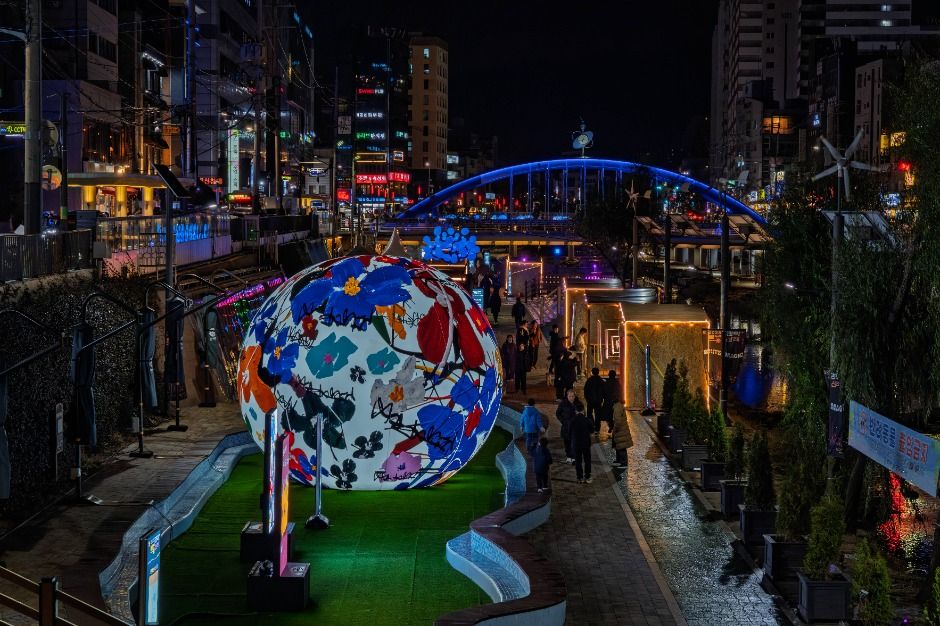
Gwanak Starlight Walk is a signature winter festival of Gwanak-gu in Seoul. It's a lighting festival where visitors can enjoy beautiful light installation along Byeolbitnaerincheon Stream. The event area spans 300-meters from Sillimgyo Bridge to Bongnimgyo Bridge. The diverse lighting artworks created by ten different Korean artist teams come together to create a space where stories of individuals all become one as a community. Various hands-on programs offer visitors a chance to see and enjoy the sights and sounds of the city throughout the festival period.
Yongmasan Mountain (용마산)
10.7Km 2021-06-18
53, Yongmasan-ro 62-gil, Jungnang-gu, Seoul
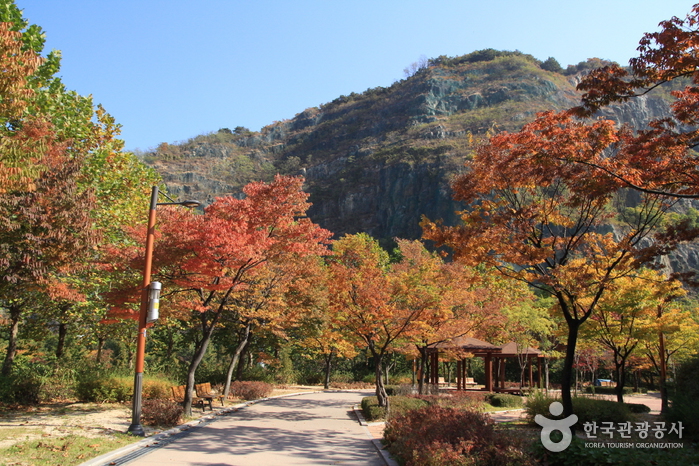
With an altitude of 348 meters, Yongmasan Mountain is the highest peak of Achasan Mountain. The mountain stretches through the ridges of Manguri Park and Junggok-dong, with trails connecting to Achasan Mountain Fortress and the back gate of Children’s Grand Park. Nearby parks include Yongmapokpo Park and Yongmasan Sagajeong Park.

Gilsang Ceramics (길상도예)
10.7Km 2025-11-05
15-9 Gangnam-daero 39-gil, Seocho-gu, Seoul
The pottery workshop experienced by BTS
It is a famous pottery workshop for ARMY as a place where BTS experienced in ‘RUN BTS’. Jimin made cups for V, Jin for Jung kook, and V for SUGA. You can design and make cups, vases, plates, water bottles, etc. with a potter's wheel and handbuilding. It's also fun to make it after the works of BTS members.
Seoul Doseonsa Temple (도선사(서울))
10.7Km 2025-06-25
504 Samyang-ro 173-gil, Gangbuk-gu, Seoul
Doseonsa Temple was established 1,100 years ago during the latter part of the Silla Kingdom when the renowned Buddhist priest Doseonguksa was traveling through the mountains. After visiting the site, Doseonguksa made a prophecy that led to the construction of the temple. According to legend, he used only his walking stick to carve the large Bodhisattva that sits at the temple. Interestingly enough, the statue does not show any evidence of chisel marks, further adding to the mystery of how the statue was made.
During the 7th year of King Gwangmu of the Joseon dynasty, Doseonsa Temple was officially named the representative temple of Korea with the purpose of promoting Cheongdamdaejongsa's Korean Buddhism movement, aiming at a religious revival. Due to these special circumstances Deseonsa Temple gained a high reputation and much recognition, which have held strong to this day.
Inside the temple, visitors can view the remains and written works of Cheongdamdaejongsa in the Cheongdamdaejongsa Memorial Hall. Next to the road leading to Cheonbuljeon Hall is a pond where you can toss a coin and make a wish and just past Yongammun Gate is a hiking path connecting Baegundae Cliff and Insubong Peak. Inside the Ksitigarbha Hall are portraits of President Park Chung-hee, Yuk Yeong-su, and Hyundai Chairman Chung Ju-yung. In front of the hall is a tree that is said to have been planted by a Buddhist priest who brought it from India 200 years ago. Historical artifacts can be found throughout the temple.
Seoul Arts Center (예술의전당)
10.7Km 2025-01-17
2406 Nambusunhwan-ro, Seocho-gu, Seoul
The Seoul Arts Center is the representative art complex of Korea. It is comprised of the Opera House, Concert Hall, Art Gallery, Calligraphy Museum, Art Material Hall, and an outdoor stage. You can enjoy various performances and exhibitions all in one site.
The Opera House and Concert Hall consist of a total of five performance halls offering an average of 800 performances ever year, whereas the Art Gallery and Calligraphy Museum has seven exhibition halls providing various exhibitions throughout the year. The outdoor stage also provides various genres of performances all year round.
Hangaram Art Museum in Seoul Arts Center (예술의전당 한가람미술관)
10.7Km 2022-12-16
2406, Nambusunhwan-ro, Seocho-gu, Seoul
Hangaram Art Museum, located in the left wing of the Seoul Arts Center, displays a unique exhibition of formative arts. Established in 1990, the museum has a total area of 15,540 ㎡ and contains 6 exhibition halls (including one for oversized artwork), a storage area, and an art shop. The building features a lighting system that controls the humidity and temperature and is equipped with a luminous ceiling system that captures natural sunlight and feeds it into the museum, allowing visitors to enjoy a brightly lit viewing area.
The Art Square in front of the museum houses a wide range of exclusive artwork and serves as a venue for various events such as the Cloz Art Market. Visitors may also enjoy the open-air café right in front of the building or dine at “Yehyang,” a traditional Korean restaurant right down the stairs.
Seoul Sports Complex (Jamsil Sports Complex) (서울종합운동장(잠실종합운동장))
10.7Km 2024-12-02
25 Olympic-ro, Songpa-gu, Seoul
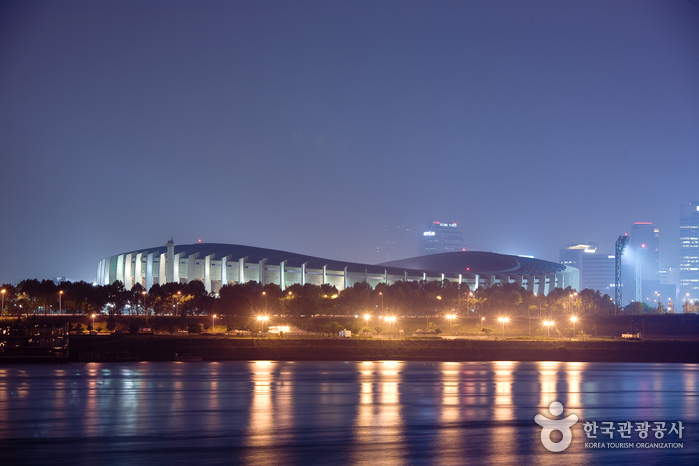
Seoul Sports Complex, located in Songpa, Seoul, hosted the 1986 Asian Games and the 1988 Summer Olympics. It consists of a main stadium, a baseball stadium, an indoor stadium, a students' gymnasium, an indoor swimming pool, and auxiliary stadiums. It serves as the venue for professional baseball and basketball games in Korea, as well as frequent K-pop concerts. Conveniently linked to subway lines 2 and 9, it offers easy access for visitors.
National Gugak Museum (국립국악박물관)
10.7Km 2021-08-13
2364, Nambusunhwan-ro, Seocho-gu, Seoul
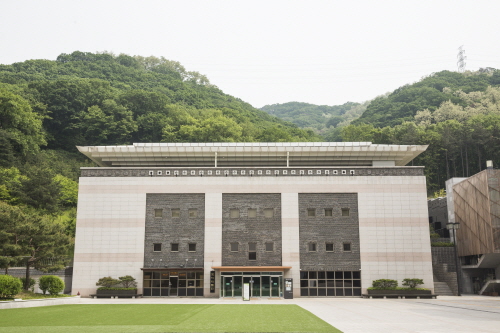
The National Gugak Museum opened on February 23, 1995 as the first gugak museum in Korea, featuring approximately 6,000 pieces of gugak-related materials and relics which have both historical and cultural value. It is comprised of seven themed permanent exhibition halls that present 250 pieces of audio and video clips regarding gugak. In the 3D room, visitors can enjoy 3D animation at all times. The museum also hosts special exhibitions in unique and interesting themes.
National Gugak Center (국립국악원)
10.7Km 2025-01-17
2364 Nambusunhwan-ro, Seocho-gu, Seoul
The National Gugak Center is the governing body established to preserve and promote traditional Korean performing arts. The center can accommodate every type of traditional performing arts, such as palace music, court music, and all other genres including major productions of changgeuk (Korean musical drama). Originally opened in Busan in 1951, the center moved to its current location in Seoul in 1987. The center also opened branch locations in Namwon, Jindo, and Busan in 1992, 2004, and 2008 respectively.
 English
 한국어
한국어 日本語
日本語 中文(简体)
 Deutsch
 Français
 Español
 Русский


