
Redtable Inc (주식회사 레드테이블)
1.3Km 2025-10-23
10F, SIGNATURE TOWER(WEST),100,Cheonggyecheon-ro, Jung-gu, Seoul
We are a Google partner in Korea that provides services for searching, inquiries, consultations, bookings, and payments related to hospitals, wellness centers, and aesthetic services on Google.
We focus on attracting global tourists from English-speaking countries, Japan, and other Asian regions.
Additionally, Redtable Inc is an official agency of Meituan-Dianping (the largest integrated platform in China), specializing in marketing and promotions for the Chinese market.
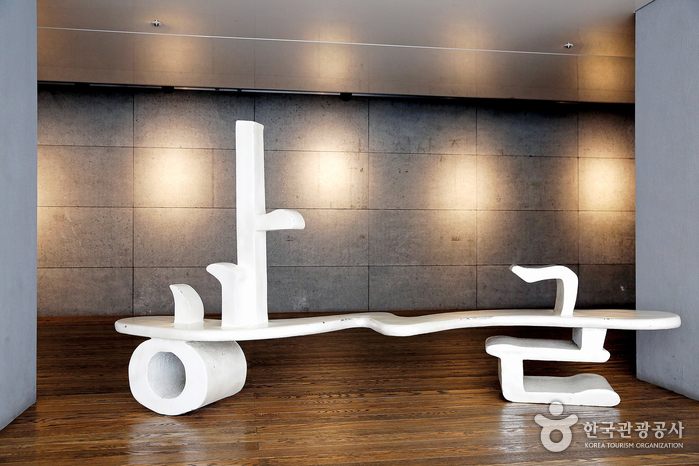
The Story of King Sejong (세종이야기)
1.3Km 2022-09-13
jiha 175, Sejong-daero, Jongno-gu, Seoul
+82-2-399-1000
The Story of King Sejong comprises six different sections with a total area of 3,200 square meters. The museum consists of exhibition zones, an event space, video room, shop and more to display King Sejong’s scientific, artistic, military, and political contributions, including the theory of Minbon, which recognized the people as the base of politics. King Sejong, the 4th king of the Joseon dynasty (1397-1450, reigning from 1418-1450) was responsible for some of the most brilliant achievements in the history of Korea, including the creation of Hangeul (Korean alphabet) and great advancements in the areas of science, culture, art and politics.
GS25 - Junggu Toegye Branch [Tax Refund Shop] (GS25중구퇴계점)
1.3Km 2024-06-27
180, Toegye-ro, Jung-gu, Seoul
-
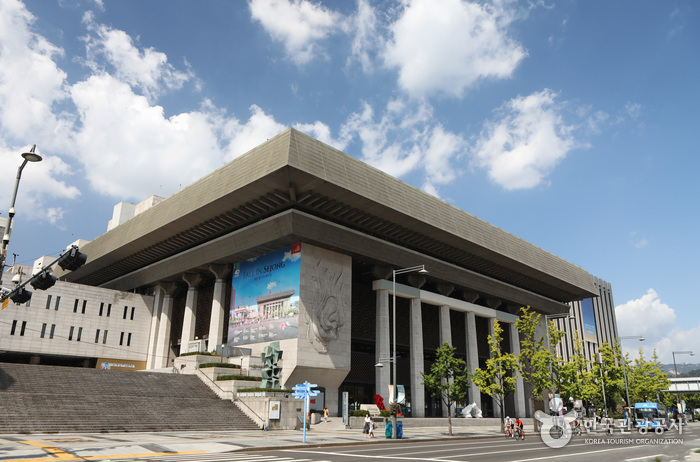
Sejong Center (세종문화회관)
1.3Km 2023-06-14
175, Sejong-daero, Jongno-gu, Seoul
+82-2-399-1000
Sejong Center, officially known as Sejong Center for the Performing Arts, opened on July 1, 1999 to provide citizens with a cultural art space. Having completed a grand remodeling project in 2007, Sejong Center offers customer-friendly programs aimed at improving the quality of art performances in a comfortable resting area. Comprising the Grand Theater of Sejong Center, Sejong M Theater, Sejong Chamber Hall, Exhibition Hall, and other subsidiary facilities, Sejong Center is a multicultural art center.
Various genres of performances including traditional, classic, and crossover have taken place in the center, giving many opportunities for cultural nostalgia.
* Opened April 14, 1978
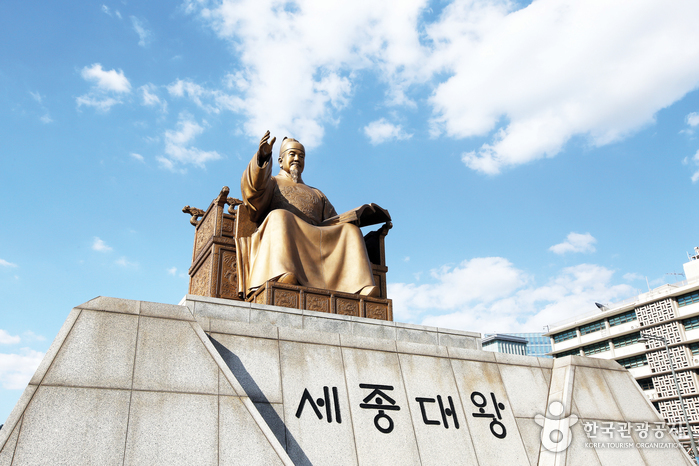
King Sejong Statue (세종대왕 동상)
1.3Km 2024-03-04
175, Sejong-daero, Jongno-gu, Seoul
+82-2-2133-7713
King Sejong Statue can be found at Seoul’s Gwanghawmun Square. The statue commemorates King Sejong the Great (1397-1450, reign 1418-1450), the fourth king of Joseon (1392-1897). He is thought to be the greatest king in Korean history, for he is credited with great developments in science and technology, expansion of Joseon’s territory, and the creation of the Korean script, [Hangeul]. King Sejong’s likeness can be found on the 10,000 won bill as well.
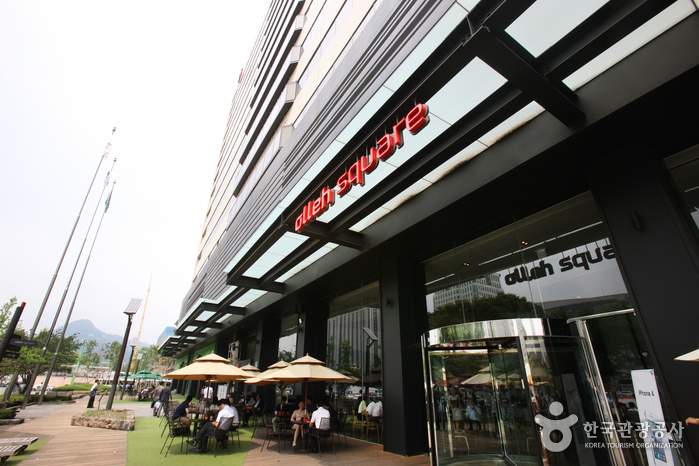
KT Square (KT스퀘어)
1.3Km 2021-07-08
178, Sejong-daero, Jongno-gu, Seoul
+82-1577-5599
KT Square is a multi-complex that offers various cultural performances as well as hands-on experiences of the latest in IT technology. Gallery 130 showcases the history of KT Corp.
Statue of Admiral Yi Sun-Shin (충무공 이순신 동상)
1.3Km 2024-03-04
175, Sejong-daero, Jongno-gu, Seoul
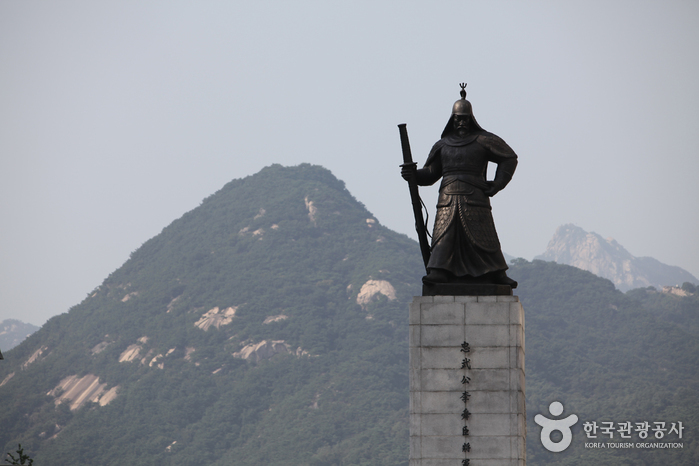
The Statue of Admiral Yi Sun-Shin can be found at Gwanghwamun Square in Seoul. Admiral Yi Sun-shin (1545-1598) was a naval commander who served during the Japanese invasion of Korea (also known as Imjin War: 1592-1598). The undefeated admiral achieved 23 victories against the Japanese navy using innovative tactics, and he is thus considered as one of the greatest generals in the history of Korea. Admiral Yi’s likeness can be found on the 100 won coin.
Namsan Octagonal Pavilion (남산 팔각정)
1.3Km 2021-06-19
105, Namsangongwon-gil, Yongsan-gu, Seoul
+82-2-3783-5900
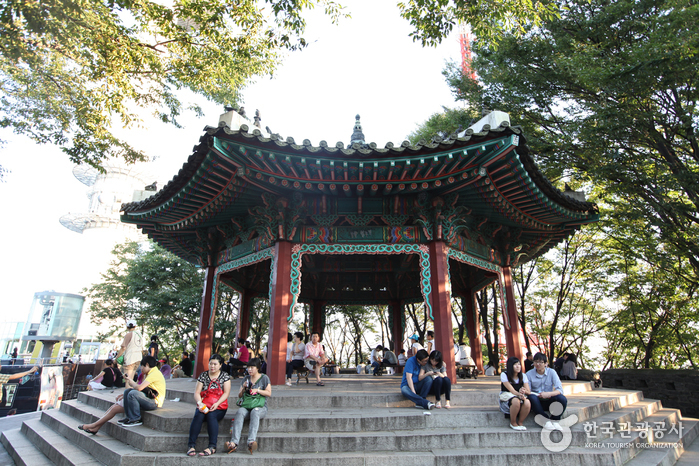
Originally known as Unamjeong Pavilion, the pavilion was built in 1959 to commemorate Rhee Syngman. It was demolished by the 4.19 movement in 1960 and was rebuilt on November 11, 1968. This pavilion now sits atop Namsan Mountain, with views covering the entirety of Seoul below. As it is a prime spot to view the first sunrise of the year, the annual sunrise festival takes place every New Year's Day.
Gyeonghuigung Palace (경희궁)
1.4Km 2024-07-09
45 Saemunan-ro, Jongno-gu, Seoul
+82-2-724-0274
Gyeonghuigung Palace, a designated Historic Site, was originally called the large palace by Saemun Gate, or the Western Palace, for its location within the city. It was not until the eighth year of Gwanghaegun (1616) that the palace was used as a royal residence for the king, changing the name to Gyeongdeokgung Palace. The name later changed again to the current Gyeonghuigung Palace in 1760. The palace grounds included many halls but they were mostly all burned down in a fire in 1829. After the Japanese occupation began, all remaining buildings on the site were torn down and the palace grounds were turned into Gyeongseong Middle School (now Seoul High School). The school moved to Gangnam area in 1987, afterwhich the previous location was turned into a park. The palace grounds currently hold Seoul Museum of Art and walking paths, as well as a restoration of Heunghwamun Gate, the main gate of the palace, and Sungjeongjeon Hall, the main hall, completed in November 1994.
NKDB North Korean Human Rights Exhibition Hall (북한인권전시실)
1.4Km 2025-11-13
393 Samil-daero, Jongno-gu, Seoul
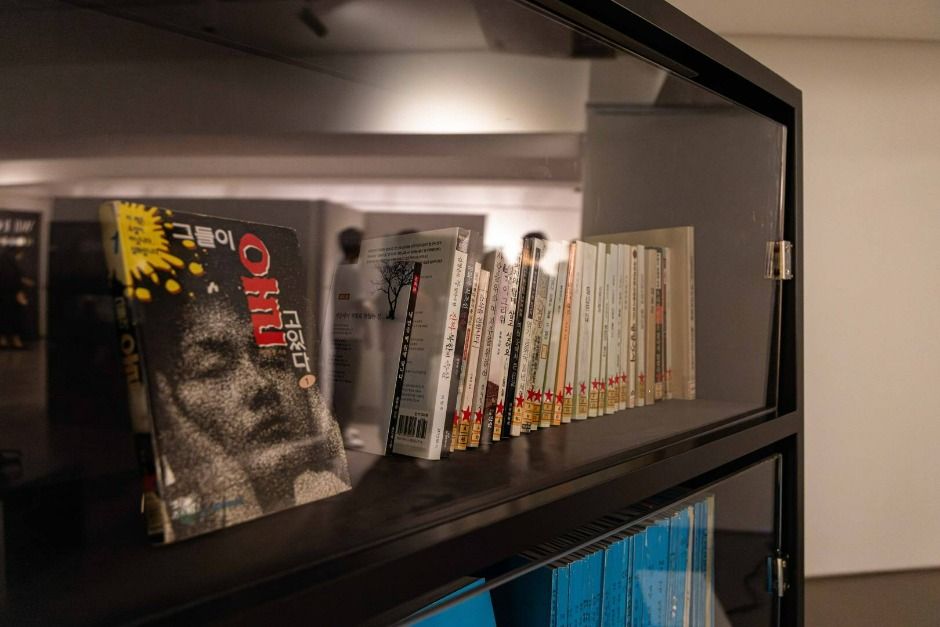
The NKDB North Korean Human Rights Exhibition Hall is a permanent exhibition space dedicated to North Korean human rights. Although it is a small space, it resonates deeply and serves as a "dark tourism" site that records and testifies to the ongoing reality of human rights violations in North Korea. The North Korean Human Rights Information Center (NKDB), which operates this exhibition hall, is the organization that collects and archives the most extensive records of human rights concerning North Korean residents in the world. The testimonies and records presented here represent a living history, a story unfolding in the present, unavailable elsewhere. Through donated North Korean artifacts, including these records, visitors can glimpse the present-day North Korea and encounter artwork by North Korean defectors.
 English
 한국어
한국어 日本語
日本語 中文(简体)
 Deutsch
 Français
 Español
 Русский


