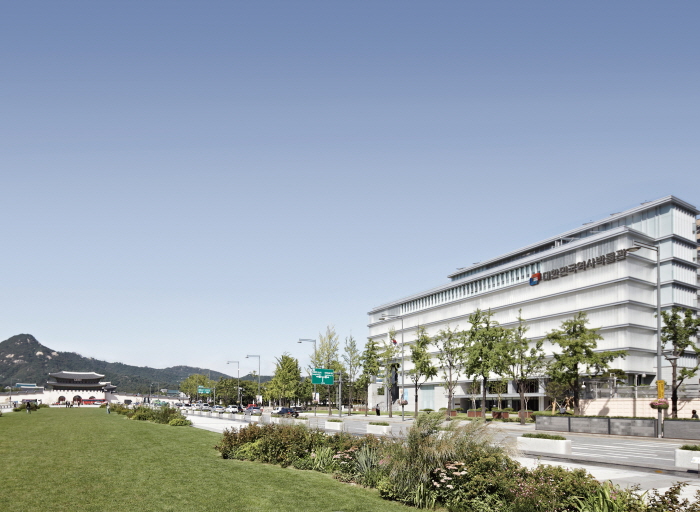
National Museum of Korean Contemporary History (대한민국역사박물관)
.0M 2022-12-27
198, Sejong-daero, Jongno-gu, Seoul
+82-2-3703-9200
The National Museum of Korean Contemporary History opened on December 26, 2012, and showcases Korea's modern history, from the opening of Incheon Port to current times. The museum provides an in-depth look at the changes in the nation through exhibitions and educational programs, as well as researching, developing, and collecting materials. The museum is comprised of four exhibition halls; Prelude to the Republic of Korea, Foundation of the Republic of Korea, Development of the Republic of Korea, and Modernization of South Korea, toward the World. In addition, the Korean History Dream Village features a hands-on program hall for children to learn modern and contemporary history. In addition to special exhibitions, the museum also offers educational and cultural programs for children.

HANILKWAN - Gwanghwamun Branch (한일관 광화문)
147.7M 2024-03-18
50, Jong-ro 1-gil, Jongno-gu, Seoul
+82-2-722-7557
It is a store that has been operating with a long tradition since 1939. This Korean dishes restaurant is located in Jongno-gu, Seoul. The most famous menu is bulgogi.
Gwanghwamun Plaza (광화문 광장)
152.3M 2025-03-13
172 Sejong-daero, Jongno-gu, Seoul
+82-2-120
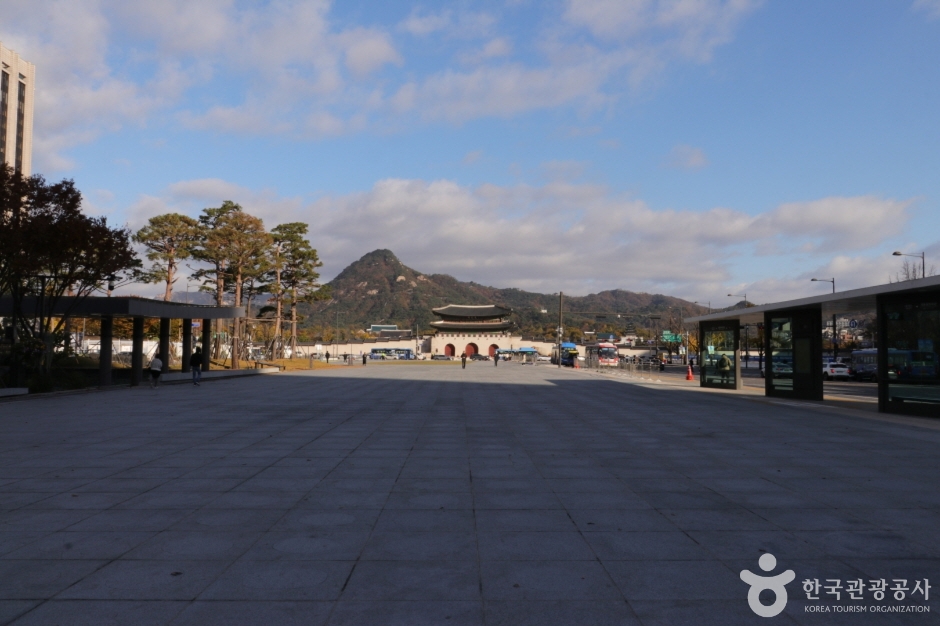
Gwanghwamun Plaza was opened to the public in August 2022 after renovation. Sejong-ro, the main street of Seoul with 600 years of history, has been reborn as a space for historical and cultural experiences by restoring Yukjo Street. Woldae (Elevated Ceremonial Stage) was reconstructed at the entrance of the "Plaza that Recovers the History of Gwanghwamun," and the statue of Haetae, an imaginary animal that judges good and evil, has been restored. In addition, traces of Yukjo Street, the main street of Hanyang in the past, were restored in the ‘Plaza that recreates the scenery of Yukjo Street’ near Sejong-ro Park, with a scale model installed. This is an excellent place for a stroll with beautiful scenery, including Gyeongbokgung Palace and Bugaksan Mountain.
Sejong-ro Park (세종로공원)
159.3M 2022-08-31
jiha 189, Sejong-daero, Jongno-gu, Seoul
+82-2-722-9598
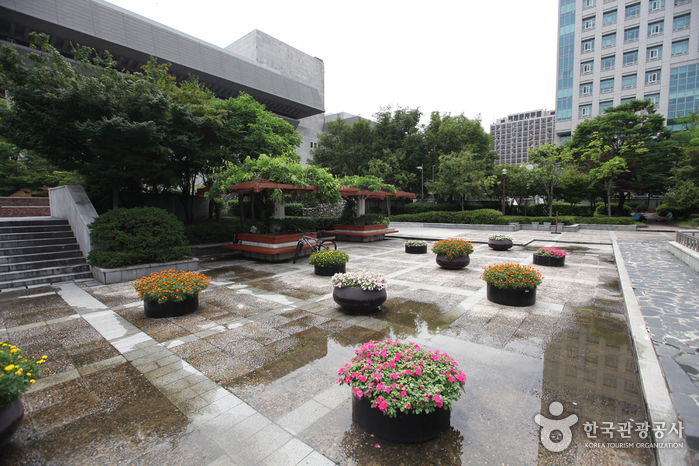
Sejong-ro Park is located next to Sejong Center for the Performing Arts in central Seoul. Inside the park, there are wooden benches and shaded areas where people can sit and relax. Also available are water fountains, a round outdoor stage, and various sculptures. The lunch crowd from the nearby office buildings often come to the park during weekdays. On the weekends, the park is also used as a venue for outdoor weddings.
Seoul's anthem and the poem "Bulnori" by Ju Yo-han are written on a memorial stone that can be found inside the park.
Statue of Admiral Yi Sun-Shin (충무공 이순신 동상)
175.8M 2024-03-04
175, Sejong-daero, Jongno-gu, Seoul
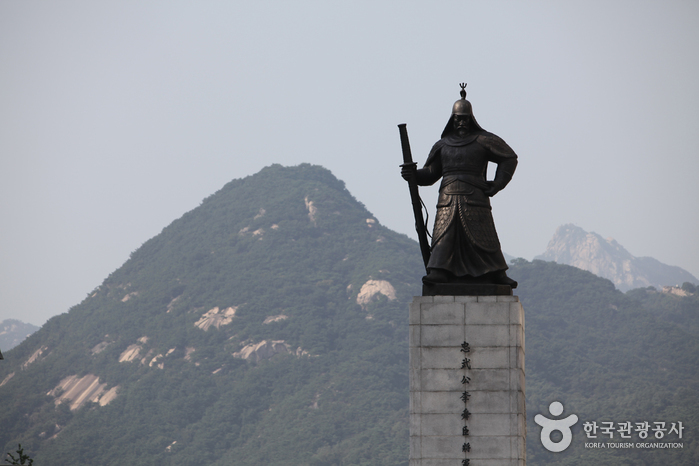
The Statue of Admiral Yi Sun-Shin can be found at Gwanghwamun Square in Seoul. Admiral Yi Sun-shin (1545-1598) was a naval commander who served during the Japanese invasion of Korea (also known as Imjin War: 1592-1598). The undefeated admiral achieved 23 victories against the Japanese navy using innovative tactics, and he is thus considered as one of the greatest generals in the history of Korea. Admiral Yi’s likeness can be found on the 100 won coin.
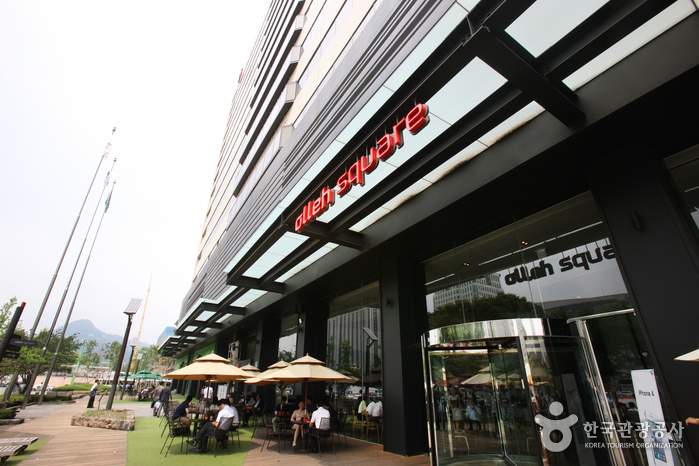
KT Square (KT스퀘어)
189.6M 2021-07-08
178, Sejong-daero, Jongno-gu, Seoul
+82-1577-5599
KT Square is a multi-complex that offers various cultural performances as well as hands-on experiences of the latest in IT technology. Gallery 130 showcases the history of KT Corp.
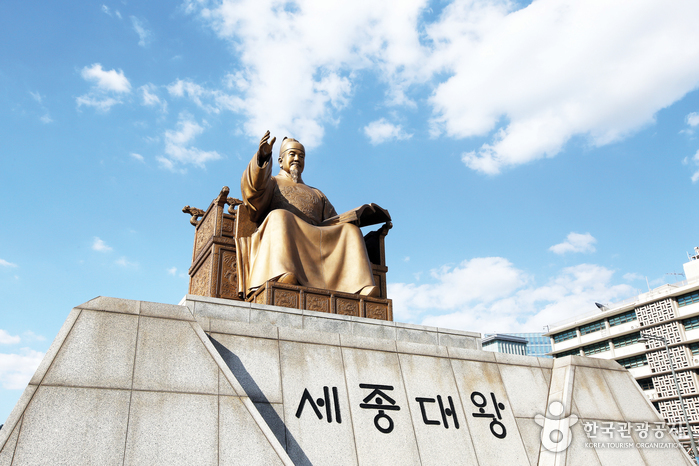
King Sejong Statue (세종대왕 동상)
210.2M 2024-03-04
175, Sejong-daero, Jongno-gu, Seoul
+82-2-2133-7713
King Sejong Statue can be found at Seoul’s Gwanghawmun Square. The statue commemorates King Sejong the Great (1397-1450, reign 1418-1450), the fourth king of Joseon (1392-1897). He is thought to be the greatest king in Korean history, for he is credited with great developments in science and technology, expansion of Joseon’s territory, and the creation of the Korean script, [Hangeul]. King Sejong’s likeness can be found on the 10,000 won bill as well.
The Story of King Sejong (세종이야기)
224.5M 2022-09-13
jiha 175, Sejong-daero, Jongno-gu, Seoul
+82-2-399-1000
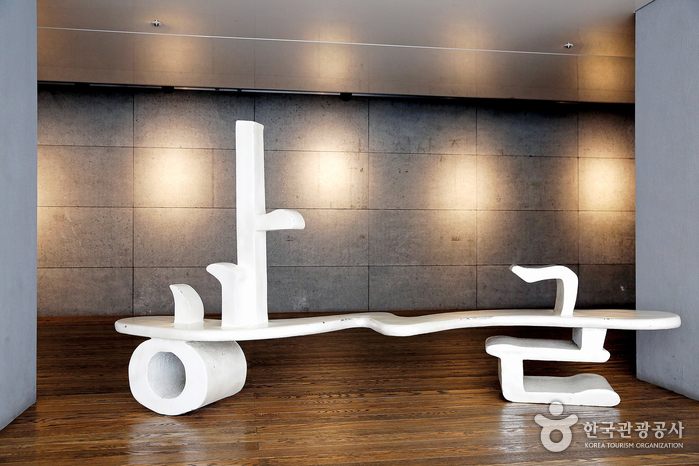
The Story of King Sejong comprises six different sections with a total area of 3,200 square meters. The museum consists of exhibition zones, an event space, video room, shop and more to display King Sejong’s scientific, artistic, military, and political contributions, including the theory of Minbon, which recognized the people as the base of politics. King Sejong, the 4th king of the Joseon dynasty (1397-1450, reigning from 1418-1450) was responsible for some of the most brilliant achievements in the history of Korea, including the creation of Hangeul (Korean alphabet) and great advancements in the areas of science, culture, art and politics.
Gwanghwamun Gate (광화문)
255.1M 2024-12-04
161 Sajik-ro, Jongno-gu, Seoul
+82-2-3700-3900
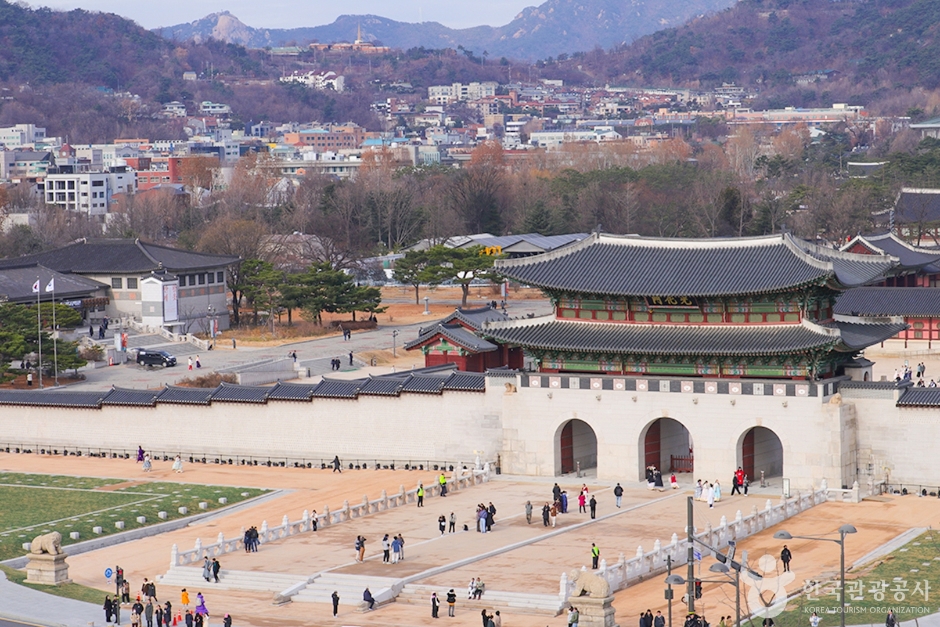
Built in 1395 under the reign of King Taejo, the first king of the Joseon dynasty, Gwanghwamun Gate is the southern gate of Gyeongbokgung Palace. It is also the main gate of the palace, therefore larger and fancier in comparison to the other gates. Gwanghwamun Gate consists of three arched gates; the center gate was used by the king, while the other two were used by the crown prince and royal officials. The tall granite walls of the gate serve as a platform for the wooden gate tower that watches over the city. The gate has a sign with its name written at the top center of the gate tower.
Gwanghwamun Gate went through several damages and restorations over the course of history. It was first severely damaged during the Imjin War (1592-1598) and was not restored until the reconstruction of Gyeongbokgung Palace in 1864. Under the Japanese administration, the gate was demolished and relocated to the north of the palace's eastern gate, followed by series of damages during the Korean War (1950-1953). In 1968, Gwanghwamun Gate was relocated back to the south of the palace and was rebuilt using concrete; however, the gate’s position was shifted a few meters away from its original location. In 2006, a major reconstruction project took place to restore Gwanghwamun Gate to its original state and location, disassembling the structure completely and replacing concrete with granite and wood. After three years and eight months of construction, Gwanghwamun Gate was fully restored to its original form and was open to the public on August 15, 2010.
 English
 한국어
한국어 日本語
日本語 中文(简体)
 Deutsch
 Français
 Español
 Русский


