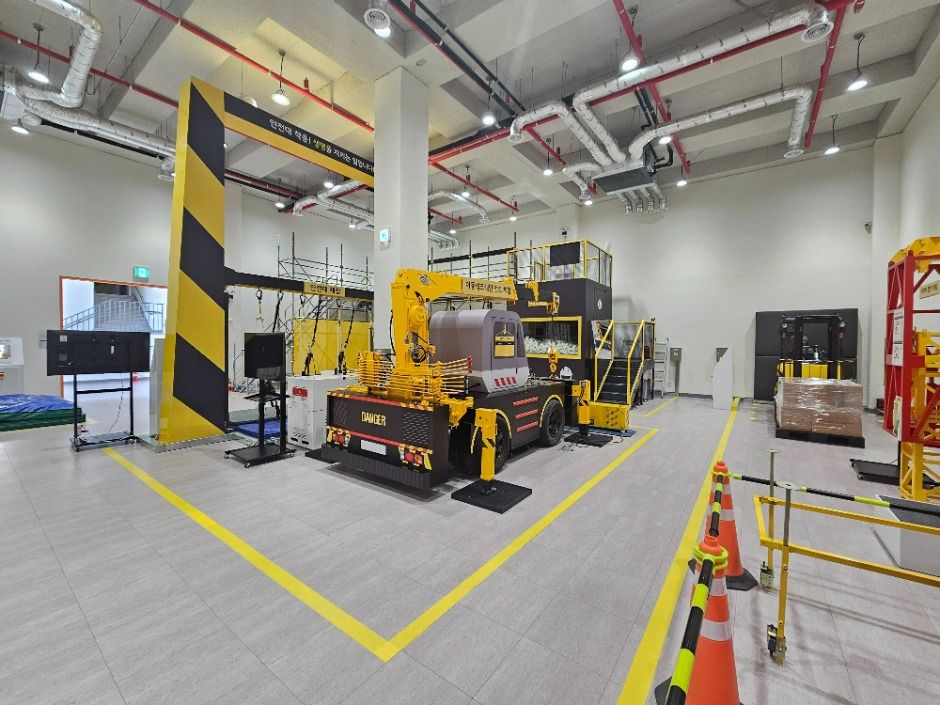
Damyang Safety Experience Training Center (KOSHA) (담양 안전체험장(안전보건공단))
4.7Km 2025-07-30
219 Byeongmok-ro, Geumseong-myeon, Damyang-gun, Jeollanam-do
Damyang Safety Experience Training Center offers programs to raise safety awareness by providing hands-on experiences of accidents that can occur in daily life. There are around 36 experience programs with a focus on the prevention of accidents such as fire, entrapment, and electric shock, as well as first aid. The VR zone at the center offers a vivid experience of various accidents and accident prevention measures, making the training more engaging. The educational programs are available for people of all ages.
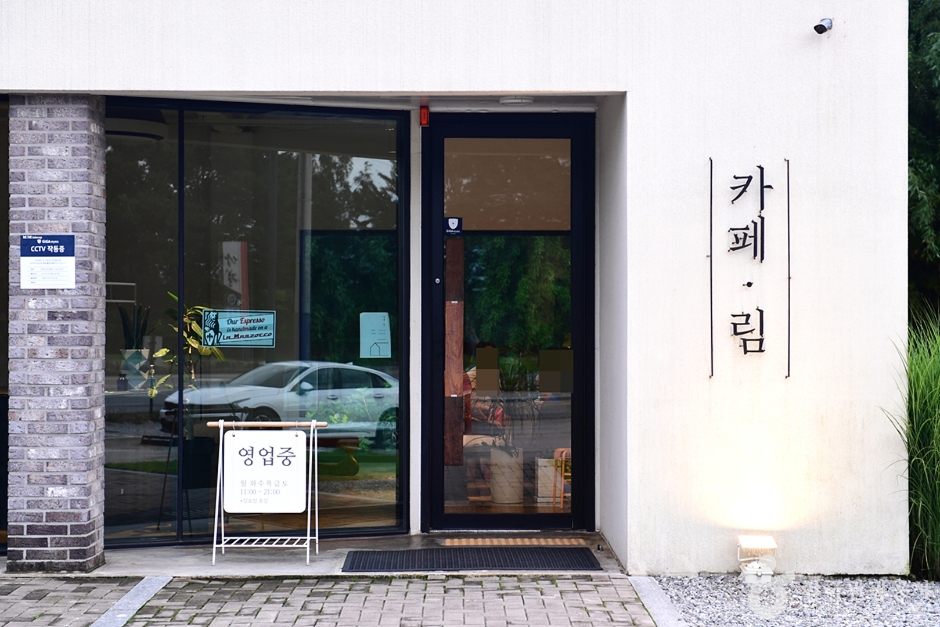
Café Limm (카페 림)
6.8Km 2024-11-12
192 Songgangjeong-ro, Bongsan-myeon, Damyang-gun, Jeollanam-do
Café Limm is a beautiful café nestled in the backdrop of lush bamboo forests in Damyang. With bamboo trees both inside and outside the café, it feels like stepping into a bamboo forest. Their signature menu item is the shakecoco (coconut milk espresso shake), made with shaken espresso and coconut milk. Visitors can also capture picturesque moments in this café that resembles a scene from an oriental painting.

Damyang Resort Spa (담양리조트 온천)
7.4Km 2022-12-28
202, Geumseongsanseong-gil, Damyang-gun, Jeollanam-do
Damyang Resort is a large resort complex comprised of a hotel, spa, arboretum, and event plaza. The spa is spread over a ground floor and basement floor, with both men's and women's pools, as well as many event pools and an open-air hot spring. Additional facilities include a jjimjilbang (Korean-style sauna), skincare center, and massage center. The hot springs use water with a mix of 20 minerals, including germanium, strontium, sulfuric ions, calcium, and lithium. The mineral mix helps soothe skin, relieve stress, and improve blood circulation to prevent many diseases and ailments.
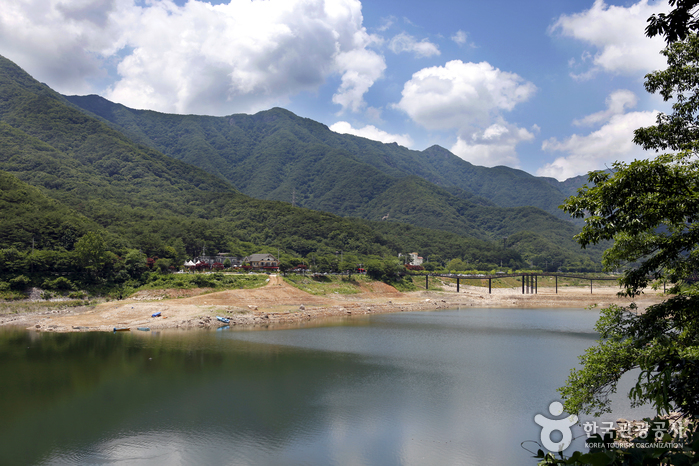
Damyangho Lake (담양호)
8.0Km 2025-01-10
Geumseongsanseong-gil, Damyang-gun, Jeollanam-do
Damyangho Lake is a man-made lake, created in 1976 with the construction of a dam on Yeongsangang River. The lake is set at the base of the picturesque Chuwolsan and Geumseongsan Mountains, and its crystal clear water is the habitat of many different freshwater fish species including pond smelt, catfish, snakehead, carp and leather carp. With Damyangho Lake at the center, the area is surrounded by Chuwolsan Tourism Area, Gamagol Youth Camping Grounds and Geumseong Mountain Fortress. The mountain’s lakeside road, which passes through a tunnel at the mid-section of the mountain, is a popular scenic driving road.
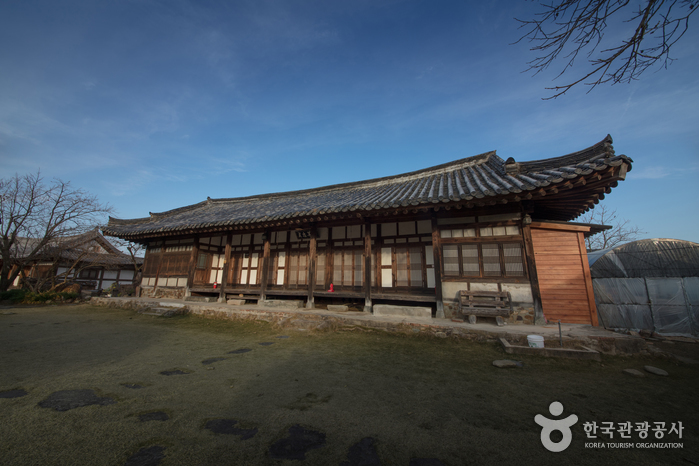
Gotaekhanok (고택 한옥에서)
8.8Km 2024-12-23
88-9 , Doldam-gil, Damyang-gun, Jeollanam-do
In A Hanok is a grand old house in Samjinae Village, Changpyeong, Jeollanam-do - a member of the international Slow City movement. The house comprises a sarangchae (men’s house), an anchae (women’s house), outbuildings and a spacious yard and garden. Local tourist destinations such as Soswaewon Garden, Songgangjeong Pavilion, and Damyang’s bamboo forest and redwood road are all within 30 minutes, of the house. Visitors can rest here while drinking in the atmosphere of the old Korean countryside.
Geumseongsanseong Fortress (담양 금성산성)
9.0Km 2025-01-13
Dorim-ri, Damyang-gun, Jeollanam-do
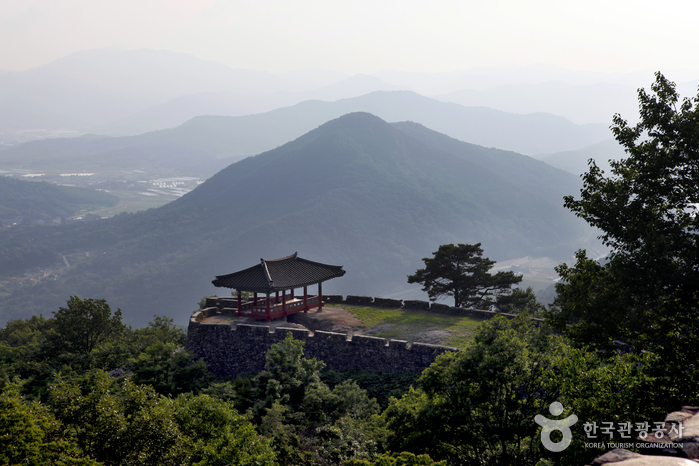
Geumseongsanseong Fortress in Geumseongsan Mountain (603m) forms a boundary
between two small villages located on the border of two provinces (Geumseong-myeon,
Damyang-gun, Jeollanam-do and Sunchang-gun, Jeollabuk-do) and is one of the
three popular mountains of the Honam region (the Southwestern region of Korea
that includes Jeollanam-do and Jeollabuk-do). The fortress is surrounded by
two walls connecting Cheolmabong Peak, Undaebong Peak, and Jangdaebong Peak.
The total length of the outer wall is 6.486 meters and inner wall is 859 meters.
Historians are uncertain about the year the fortress was built, and
have concluded that it dates back to the Three Kingdoms Period (57 BC – 676 AD) based on an examination of the ruins and remains discovered in the surrounding
area. The fortress was reconstructed in 1409 and repaired in 1610 after the
Imjin War (1592-1598). Following that, it continued to develop into a strong
military base.
- Classification: Historic Site No. 353
- Date of Designation: August 24, 1991
- Owner: Park Jinseong and 85 persons
- Age: Three States Era
- Site Area: 1,349,977㎡
- Kind of Cultural Properties: Castle Site
May 18th National Cemetery (국립 5·18 민주묘지)
9.0Km 2024-07-11
200 Minju-ro, Buk-gu, Gwangju
The May 18th National Cemetery in Gwangju is a symbol of freedom and democracy. The cemetery holds the graves of 764 victims of the May 18th Democratic Uprising in 1980, seven structures, and many monuments.
Damyang Bamboo Forest (Damyang Marsh) (담양대나무숲 - 담양습지)
10.4Km 2025-01-13
656-2, Taemok-ri, Daejeon-myeon, Damnyang-gun, Jeollanam-do
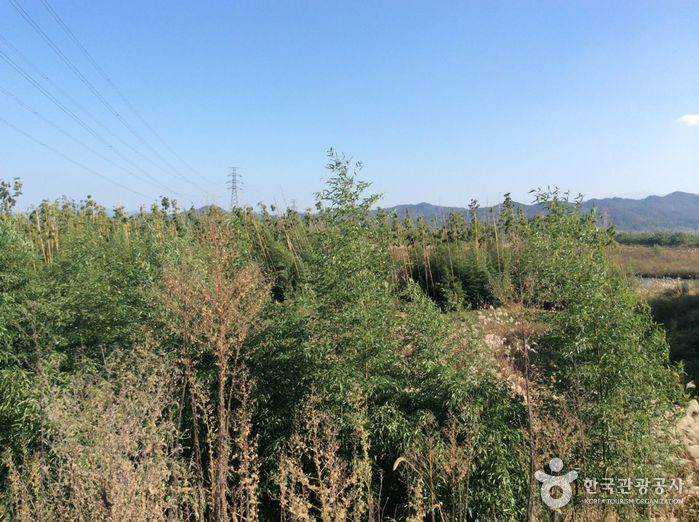
Situated between Damyang-gun and Gwangju Metropolitan City, Damyang Wetland is one of the best places to experience the ecology of Yeongsangang River. It is a habitat for the hawk, wildcat, Boreal digging frog (endangered species), and kestrel. It became the first river wetland to be designated as a wetland reserve in 2004.
Chuwolsan Mountain (추월산)
10.5Km 2025-01-13
981, Chuwolsan-ro, Damyang-gun, Jeollanam-do
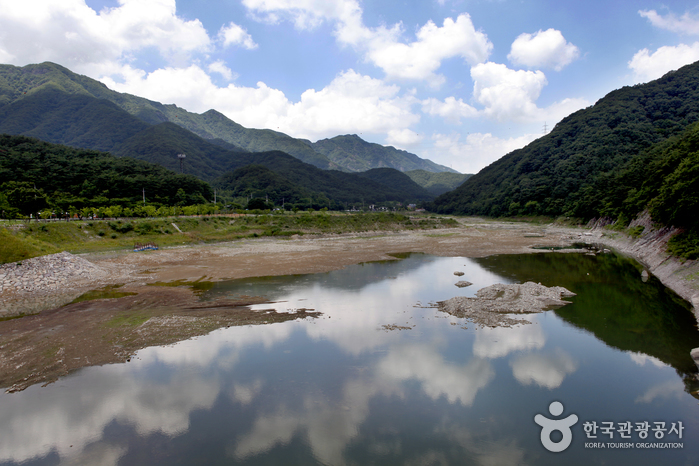
Located 13 kilometers away from Damyang-eup, Chuwolsan Mountain (731 m) was designated Jeollanam-do Provincial Monument No. 4 and is one of the five famous mountains of Jeollanam-do. It marks the boundary between Jeollanam-do, South Jeolla Province (Wolgye-ri, Yong-myeon, the most northern town in Damyang-gun) and Jeollabuk-do, North Jeolla Province (Bokheung-myeon, Sunchang-gun). The mountain has a dense forest, rock formations and stones, and rock walls that look like manmade fortifications with a narrow path to the west which can accommodate only one person at a time.
Shaped like a Buddhist monk lying down when it is seen from Damyang-eup's side, it is popular for its various naturally grown medicinal herbs as well as rare kinds of Chuwolsan orchids. The base of the mountain has gentle slopes and densely packed old pine trees, making it the best destination for families in summer. The hiking trail is hard to climb despite the fact that the peak is not very high. However, it is visited by mountain climbers all year long.
Before reaching Sangbong Peak, there is a hermitage and a mineral spring that never dries up. The peak also boasts an impressive view of the surrounding area, including Damyangho Lake. Chuwolsan Mountain was a battle site during the Imjin War along with the nearby Geumseongsanseong Fortress. The last battle of Donghak Peasant Revolution also took place at Chuwolsan Mountain.
Sunchang Gangcheonsa Temple (강천사 (순창))
11.9Km 2024-04-07
270, Gangcheonsan-gil, Sunchang-gun, Jeonbuk-do
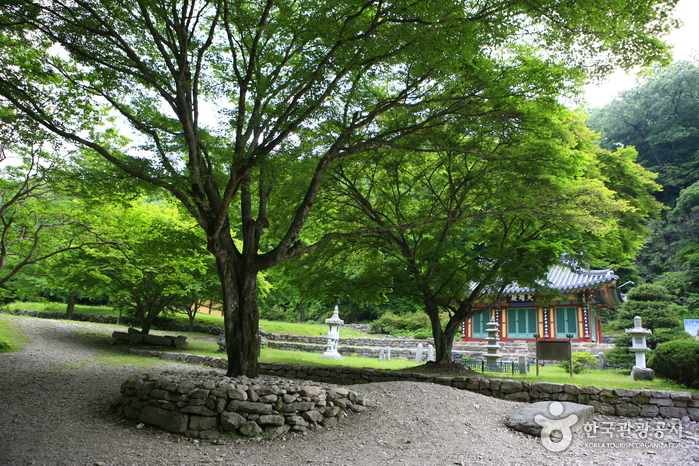
Located approximately 1.8 kilometers from the entrance of Gangcheonsan County Park, Gangcheonsa Temple was built by Monk Doseon during the first year of Queen Jinseong of Silla (AD 887). In the third year of King Chungsuk of Goryeo (1316), the temple saw the addition of a five-story stone pagoda, built by Monk Deokhyeon. At its peak, the temple was said to have had 12 hermitages and housed 1,000 monks. It was burned down during the Imjin War (1592-1598), leaving only the pagoda, but was rebuilt a few years later by Monk Soyo during the 37th year of King Seonjo (1604). Unfortunately, the temple was burned down again in the Korean War, but was once again restored to its original state in 1959.
Cultural assets found at the temple include Stone Guardian Post of Chungsin-ri & Namgye-ri, Sunchang Guesthouse, and the Three-story Stone Pagoda of Sunhwa-ri. Nearby tourist attractions include Geumseongsanseong Fortress, Yongsopokpo Falls, Gangcheonho Lake, Damyangho Lake, Chuwolsan Mountain, Huimunsan Mountain, and Naejangsan National Park.
 English
 한국어
한국어 日本語
日本語 中文(简体)
 Deutsch
 Français
 Español
 Русский


