
Seodaemun Independence Park (서대문독립공원)
2.4Km 2022-12-15
251, Tongil-ro, Seodaemun-gu, Seoul
Seodaemun Independence Park was built on the former Seoul Detention Camp. It was used to imprison thousands of Korean independence activists until the liberation from the Japanese occupation on August 15, 1945, as well as the political prisoners during the political turmoil in the 1960s. When the prison was moved to Uiwang-si, Gyeonggi-do in November 1987, the area was restored and turned into a memorial park in August 15, 1992 to honor the sacrifices of the martyrs. The park preserves seven prison buildings, an execution ground, underground women’s prison, and the March 1st Movement Monument that has been moved from Tapgol Park in Jongno.
One of the most significant monuments of the Seodaemun Independence Park is Dongnimmun Gate (Independence Gate), which has been designated a Historic Site. Nearby is Dongnipgwan (Independence Hall), originally called Mohwagwan, which was used to greet Chinese envoys during the Joseon dynasty. Today, the hall enshrines 2,327 tablets inscribed with the names of Koreans who died for the cause of national independence. Standing right next to Dongnimmun Gate are the remnants of Yeongeunmun Gate, another Historic Site. Other sights inside the park include the Patriotic Martyr Monument, Declaration of Independence Monument, and Statue of Dr. Seo Jae-pil, who was an independence activist and publisher of Korea’s first independent newspaper. The main highlight of the park is the Seodaemun Prison History Hall, a former prison building that was renovated into a history museum.
World Pansori Festival (월드판소리페스티벌)
2.4Km 2025-07-30
28 Toegye-ro 34-gil, Jung-gu, Seoul
+82-2-904-2835
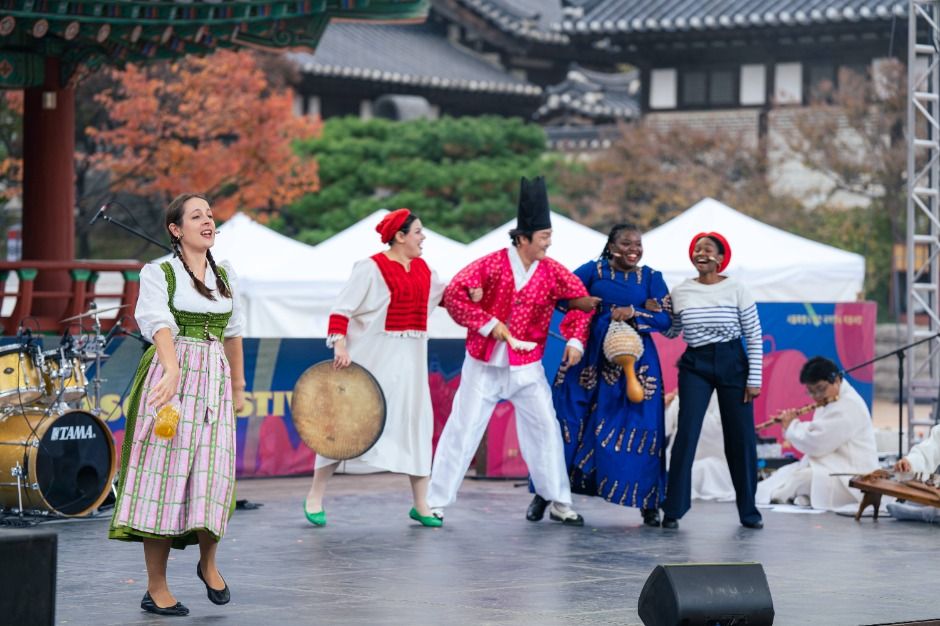
World Pansori Festival is an international music festival that aims to promote pansori, the traditional Korean epic chant, and its values. The festival consists of a variety of performances and concert programs based on its yearly theme. In addition, the festival also has interactive activities for the attendees, such as a free pansori lesson and arts-and-crafts, to make pansori and traditional Korean music more accessible to the public.
Gilsangsa Temple (Seoul) (길상사(서울))
2.4Km 2025-06-17
68 Seonjam-ro 5-gil, Seongbuk-gu, Seoul
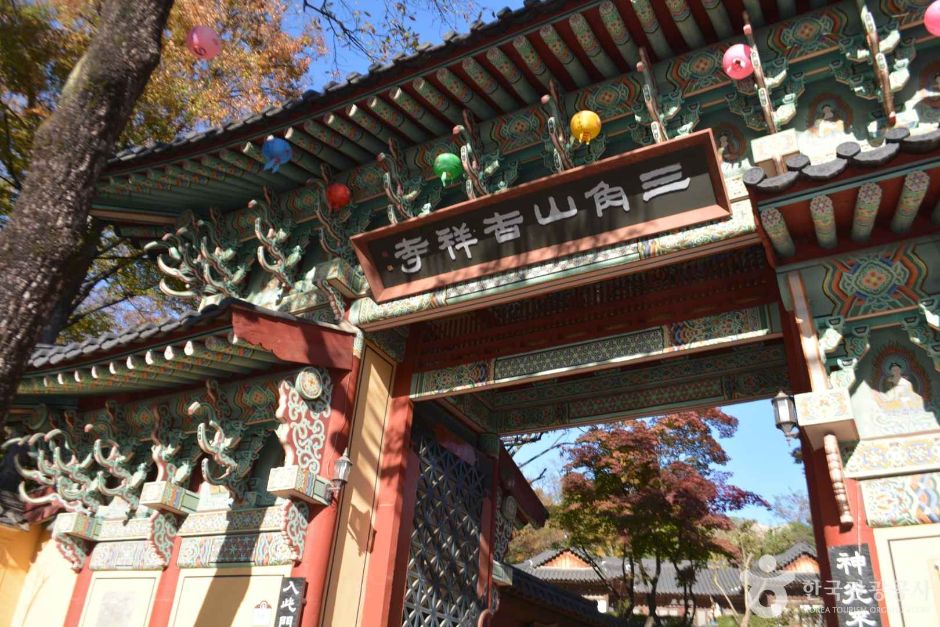
Gilsangsa Temple is a prominent temple located in Seongbuk-dong, Seoul. The name Gilsangsa means "a favorable and auspicious temple." Visitors can experience temple, participate in Buddhist practices, and even enjoy Templestay programs on weekends. In fall, visitors can admire red spider lilies and wildflowers, immersing themselves in the beauty of nature and finding inner peace.
Dongnimmun Gate (독립문)
2.4Km 2022-12-15
251, Tongil-ro, Seodaemun-gu, Seoul
Dongnimmun stands at the location originally known as Yeongeun, where envoys were once treated. When a Chinese envoy visited, the King would go out through this door to greet. In 1898, to announce the independence from Japan, Dongnimun was constructed with the fund collected by the citizens. The traces of the past still remain on Dongnimmun with two pillars in front of Dongnimmun being the remains of Yeongeunmun.
The Arc de Triomphe in France can be recalled in comparison to Dongnimmun. Dongnimmun was built using granite with a passageway x_height of 14.28 meters. On the top it is written ‘Dongnimmun’ in Korean with the national flag drawn on each side. On the inner-left side there are stone stairs leading to the attic. The national flower Mugunghwa are planted around Dongnimmun. Now it is surrounded by roads and it is eye-catching to view when passing by.
Seodaemun Prison History Museum (서대문형무소역사관)
2.4Km 2024-12-02
251 Tongil-ro, Seodaemun-gu, Seoul
Seodaemun Prison was built under the Japanese administration to imprison independence movement activists. It first opened on October 21, 1908 under the name Gyeongseong Prison. Eventually, so many activists were imprisoned that the building had to be expanded. At that time, the name changed to Seodaemun Prison on September 3, 1912. Eighty years later, the prison was turned into Seodaemun Independence Park on August 15, 1992 to commemorate the Korean patriots who were tortured in prison, giving their lives for freedom. Of the many buildings, only seven were preserved for their historical significance, among which three prison buildings and the execution site were designated as a Historic Site. In 1998, the park underwent another transformation into today's Seodaemun Prison History Hall to educate the public on the importance of Korea's independence and the sacrifices of those who fought to achieve it.
Dongdaemun Shopping Complex·Dongdaemun Shopping Town (동대문 종합시장·동대문 쇼핑타운)
2.4Km 2025-06-30
266 Jong-ro, Jongno-gu, Seoul
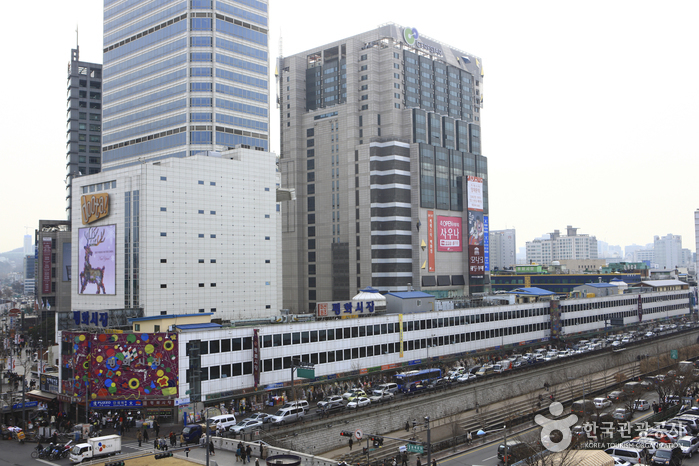
Dongdaemun Shopping Complex is one of Korea’s most well-known markets. It was founded in December 1970 as the largest of its kind in Asia and has maintained that status for the last 40 years. Browsing the plethora of shops, you can find fabric and clothing following all the latest global fashion trends. Dongdaemun Shopping Complex continues to build up its reputation as a hub of international design.
Seoul City Wall Museum (한양도성박물관)
2.5Km 2023-12-22
283, Yulgok-ro, Jongno-gu, Seoul
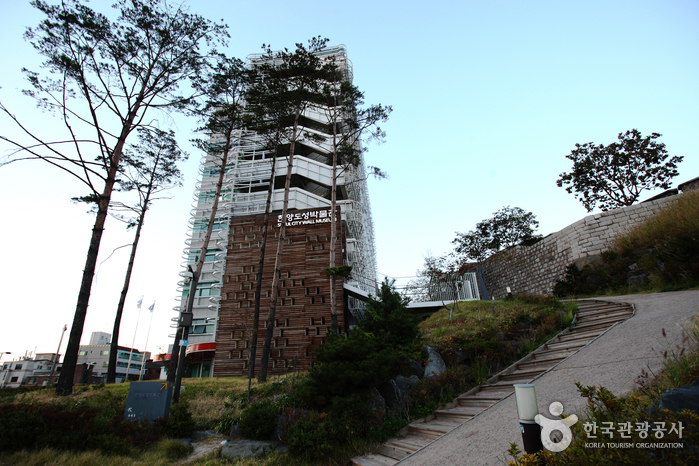
Hanyangdoseong, the Seoul City Wall, built in 1396, was the city fortress wall that protected the capital city Seoul for over 600 years. The fortress wall was built along the terrains and although it became partially damaged during the modernization process, its original form remains well to this day, making it a cultural heritage that coexists with the modern city. The Seoul City Wall Museum, located in Heungjinjimun Park, is a museum containing the history and culture of city wall from the Joseon dynasty to the present. It is a cultural space with a permanent exhibition hall, special exhibition hall, city wall information center, and study room.
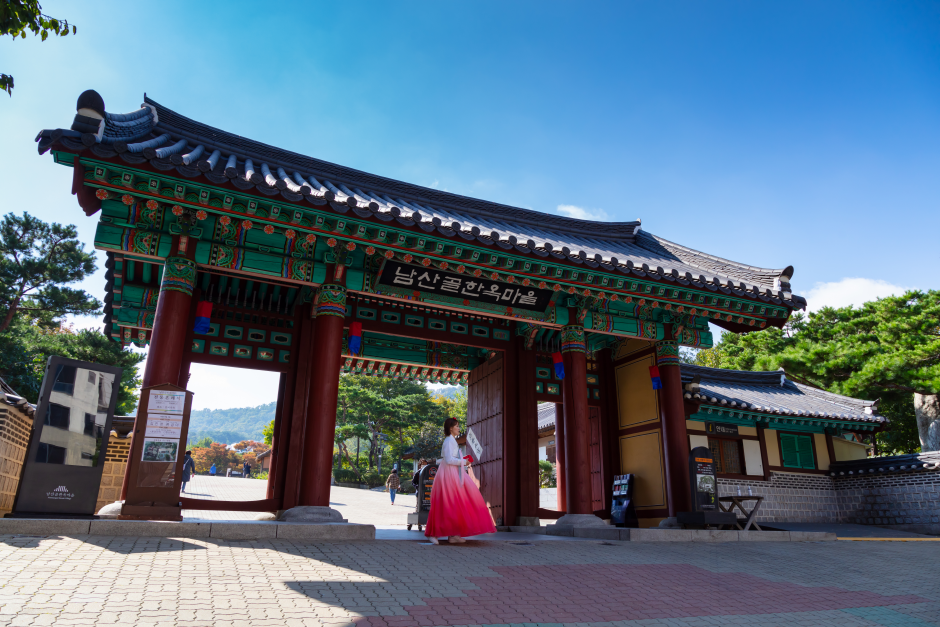
Namsangol Hanok Village (남산골한옥마을)
2.5Km 2025-07-14
28 Toegye-ro 34-gil, Jung-gu, Seoul
Namsangol Hanok Village opened in 1998 on the northern side of Namsan Mountain in the center of the capital. This village has five restored hanok (traditional Korean house) premises, a pavilion, a traditional garden, a performance art stage, and a time capsule plaza, making it a perfect spot for locals and tourists to take a leisure walk. Upon entering from the front gate, visitors will get a taste of Korea's traditional life while escaping from bustling city life. The traditional garden with its pavilion and old houses creates a peaceful ambiance before the forested Namsan Mountain. A time capsule commemorating Seoul’s 600th anniversary was buried in 1994 at the highest point of the village and is scheduled to be reopened 400 years later in 2394.
The five hanok premises at Namsangol Hanok Village once belonged to aristocrats and government officials of the Joseon dynasty. Each house was originally located in a different neighborhood, but they were all moved to this area and restored to their original form. The houses were rebuilt using their original materials, except for one house, where the materials were too old and deteriorated to be reused. The premises were carefully restored and replicated according to their original form to depict the owners’ social class and personality. These buildings are now used as an exhibit to portray the living environment during the Joseon dynasty and as a venue for educational and cultural programs for children and tourists.
Some of the unique programs and activities to participate in include wearing hanbok, folding hanji (traditional Korean paper), writing in Korean, traditional tea ceremony, traditional etiquette school, and herbal medicine experience. There are also taekwondo demonstrations and other various performances held around the village. Visitors can also try traditional games such as yunnori (traditional board game), or understand more about the area through a guided tour.
Namsan Cable Car (남산 케이블카)
2.5Km 2024-10-25
83 Sopa-ro, Jung-gu, Seoul
Namsan Cable Car provides a panoramic view of downtown Seoul. The cable car has been in operation for over 40 years, taking tourists and residents alike to Namsan Seoul Tower, one of the most representative tourist attractions in the city.
Korea Furniture Museum (한국가구박물관)
2.5Km 2025-10-24
121 Daesagwan-ro, Seongbuk-gu, Seoul
The Korea Furniture Museum, located on a hill in Seongbuk-dong, Seoul, is a special museum that displays items related to Korea's traditional living culture. The museum exhibits wooden furniture made in the late Joseon dynasty by material (persimmon tree, maple tree, paulownia tree, zelkova tree, pine tree, papers, etc.), by the type of space (men’s quarters, women’s quarters, kitchen, etc.), and by regional characteristics. It also exhibits interior decorations, flower walls, chimneys, and yards, as well as ten traditional Korean houses.
This museum operates through a guided tour (maximum of 20 people per group) only, suitable for showing Korea's housing culture that harmonizes furniture and nature. The old household items, “furniture,” are displayed in rooms outside glass storage boxes, allowing visitors to experience a beautiful traditional culture.
Since it was selected as the official luncheon venue for the spouses of leaders of 20 countries at the 2010 G20 Seoul Summit, there has been a steady stream of state guests and worldwide celebrities, including Chinese President Xi Jinping and his wife, the German President, the Prime Minister of Hungary, the Prime Minister of Singapore, the King and Queen of Belgium, the King of Sweden, the head of the IMF, and movie stars Brad Pitt, and Victoria Beckham.
In addition, it was selected as the "most beautiful museum in Seoul” by CNN in 2011. The museum also served as an interview location for BTS members, who are receiving global attention. As such, it is attracting attention as a representative tourist destination in Seoul and a cultural space preferred by government ministries and companies. Tours require reservations, which can be made through the website.
 English
 한국어
한국어 日本語
日本語 中文(简体)
 Deutsch
 Français
 Español
 Русский


