
The Hyundai Seoul (더현대 서울)
6.8Km 2024-07-22
108 Yeoui-daero, Yeongdeungpo-gu, Seoul
The Hyundai Seoul, an ultra-modern flagship store, is located in the heart of Seoul, the center of globally trending K-content. Under the slogan of "Echoes for the Future," The Hyundai Seoul presents the vision for a happier tomorrow and standards for new life. Featuring an innovative design of spaces, global content curation, and, even, futuristic technologies, The Hyundai Seoul is the most prominent new global landmark in Seoul. At The Hyundai Seoul, the latest global trends in interior and architectural design can be witnessed from encounters with novel materials, the balance between planes and lines, and creative interior design filled with light. As soon as one steps into The Hyundai Seoul, the Sounds Forest and Waterfall Garden welcome them with open arms. This incredible piece of nature encountered in such a high-tech structure designed for the future is amazingly beautiful. A vast 3,306-square-meter indoor garden with natural grass and sunlight falling through the glass ceiling located some 20 meters high delivers echoes of a forest to all visitors. Art is a language in the broadest category that can be felt and empathized with without speaking. A large 595-square-meter three-dimensional exhibit instantaneously and overwhelmingly stimulates inspiration as soon as one enters. Inspiration for better lives and communication for culture start here. An artwork by Studio Swine designed with a message from nature - Unite & Shine, STUDIO SWINE - and appreciated by the audience that feels and enjoys it meets with high-end brands on the Exclusive Label (1F) floor.
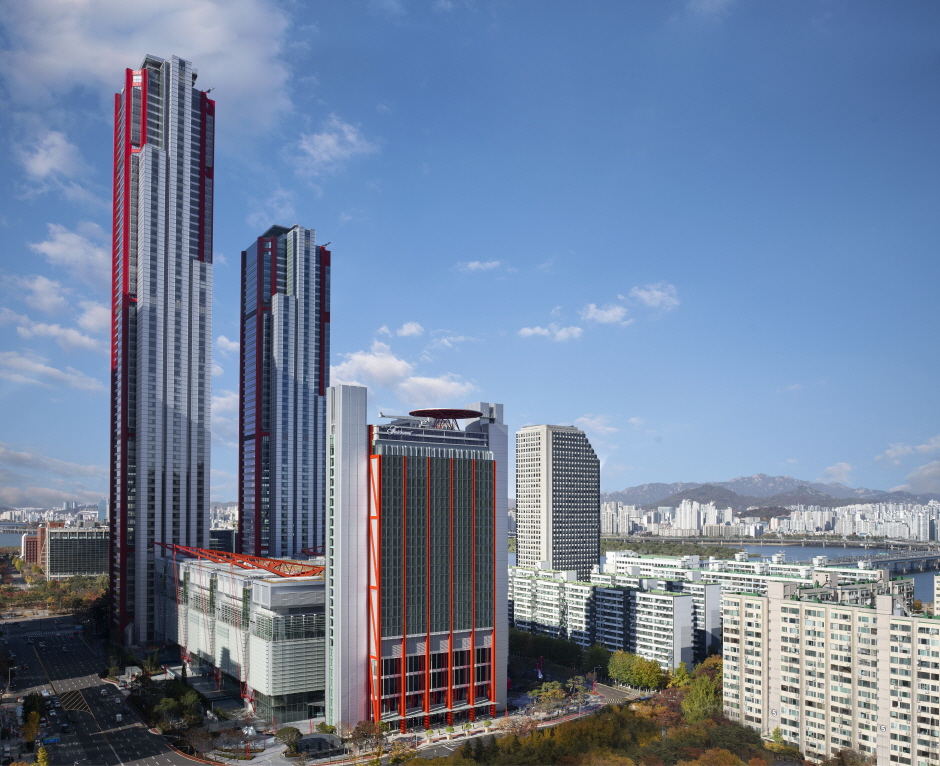
Fairmont Ambassador Seoul (페어몬트 앰배서더 서울 (Fairmont Ambassador Seoul))
6.8Km 2025-10-27
108 Yeoui-daero, Yeongdeungpo-gu, Seoul
◎ Travel information to meet Hallyu’s charm - "Strange Lawyer Woo Young-woo"
In the drama, an incident occurred during a wedding ceremony held at this hotel, and it is the place where Youngwoo visited to investigate. It is a 5-star luxury hotel with 308 rooms, and it is very impressive to see the skyline and view of Seoul. As it is close to Hangang Park as well as Hyundai Department Store and IFC Mall, it is the perfect place to stay, relax and enjoy shopping at the same time.
Bamseom Island (Ecosystem Conservation Area) (밤섬 생태경관 보전지역)
6.8Km 2025-04-29
Yeouido-dong, Yeongdeungpo-gu, Seoul
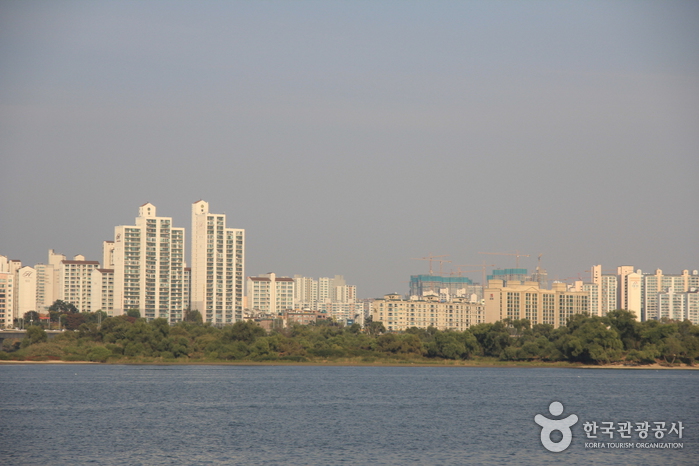
Located at the Hangang River, Bamseom Island derives its name from its chestnut-like shape (bam in Korean). The island was designated as an Ecosystem Conservation Area by the Seoul Metropolitan Government in 1999 and was later recognized as Ramsar Wetland in 2012. Now an uninhabited island, Bamseom Island was once home to around 443 people, who were relocated after the island was exploded as part of the Yeouido Development Project. Today, it is known as a habitat for numerous migratory birds and plant species. People can enjoy views of the Island from Bamseom Park.

BIOFACE CLINIC (비오페이스의원)
6.8Km 2025-11-21
10th Floor, Human Tower, 605 Gangnam-daero, Seocho-gu, Seoul
BIOFACE Clinic is a dermatology clinic located in Sinsa, Seoul.
We specialize in non-surgical anti-aging treatments such as skin tightening, lifting, body contouring, and skin boosters.
Our medical team provides personalized care based on extensive clinical experience and advanced equipment.
Signature treatments include Ultherapy, InMode, Onda, Potenza, Rejuran, and Stem Cell Boosters.
BIOFACE Clinic offers professional consultation and systematic aftercare for both local and international patients.
Seoul Upcycling Plaza (서울새활용플라자)
6.8Km 2024-01-05
49 Jadongchasijang-gil, Seongdong-gu, Seoul
Saehwaryong is a Korean term for upcycling, a process of redesigning or recycling discarded resources or materials to give them a new value or purpose. Seoul Upcycling Plaza operates upcycling-related exhibitions, upcycling practice education and experience programs, design studios, upcycling stores, workshops, and more. It is a great place to look around for ideas and inspirations on how to use products for longer periods of time. The plaza demonstrates the first step to creating a resource-recycling society.
Deesse Plastic Surgery (청담여신성형외과의원)
6.8Km 2025-10-29
(14th-15th Floors, Nonhyeon-dong), 108 Dosan-daero, Gangnam-gu, Seoul
Deesse Plastic Surgery provides the highest level of medical care in Korea in the fields of lip plastic surgery, rhinoplasty, facial bone contouring, face-lift, and eyelid surgery. Many foreign patients are visiting us after hearing about our reputation. In order to provide high-quality medical services to foreign patients, we have interpretation coordinators available for Japanese, Chinese, Thai, and other languages on site. Also, we constantly strive to improve the quality of medical services to ensure the best experience for international patients. As a result, the hospital is rapidly gaining recognition by people around the world interested in receiving plastic surgery in Korea, and the results have been remarkable and foreign customers who visited our hospital showed high satisfaction. Our efforts have been rewarded in 2023 as we were designated by the Ministry of Justice for excellent medical tourism.
Trinity Women's Clinic (트리니티여성의원)
6.8Km 2025-10-23
3F, 108 Dosan-daero, Gangnam-gu, Seoul
Trinity Women’s Clinic provides the best medical service for women suffering from health issues unique to women, such as vaginitis, fibroids, and menopause.
The clinic aims to enhance patients’ quality of life through accurate and safe treatments. It aspires to become a reliable clinic that treats both women's minds and bodies. The clinic focuses on women's health and uterine treatments. At the same time, it guarantees optimum outcomes realized through its proven facilities, equipment, and safe medical environment.
Through continuous technological development and acquiring new medical knowledge, Trinity Women’s Clinic offers innovative treatments, including HIFU procedures, to improve patient health.
Ruby Plastic Surgery Clinic (루비성형외과의원)
6.8Km 2025-10-23
9th-10th Floors, Lex Tower, 108 Dosan-daero, Gangnam-gu, Seoul
Ruby Plastic Surgery, located at Sinsa Station in Gangnam, is a premium medical institution where board-certified specialists in plastic surgery and dermatology collaborate to provide personalized beauty solutions. We offer a comprehensive range of treatments including eyes, nose, facelift, facial contouring, body contouring, body lift, skin lifting, and skin rejuvenation. With extensive experience in serving international patients, we ensure safety, state-of-the-art equipment, and a systematic post-care program. Prioritizing patient satisfaction and natural results, we deliver medical services at a truly global standard.
ID Hospital (아이디병원)
6.9Km 2025-10-23
142 Dosan-daero, Gangnam-gu, Seoul
ID Hospital offers innovative medical services and one-stop solutions, delivering value that is more than just beauty. A plastic surgery clinic comparable to a large hospital, ID Hospital ensures safe, personalized treatments with cutting-edge technology and world-class expertise.
From facial contouring to Mommy Makeover, the clinic creates harmonious transformations that enhance patient's natural beauty and confidence.
ID Clinic (Sinsa Branch) (아이디의원(신사점))
6.9Km 2025-10-23
6F, 142 Dosan-daero, Gangnam-gu, Seoul
ID Cosmedical Group, consisting of ID Plastic Surgery and ID Dermatology, has launched a beauty clinic brand with a new concept that combines its extensive expertise and experience.
Based on its high-quality medical services, ID Clinic offers personalized beauty solutions with exceptional convenience at reasonable costs.
 English
 한국어
한국어 日本語
日本語 中文(简体)
 Deutsch
 Français
 Español
 Русский


