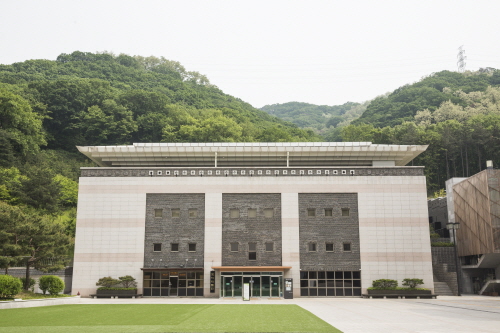
National Gugak Museum (국립국악박물관)
10.5Km 2021-08-13
2364, Nambusunhwan-ro, Seocho-gu, Seoul
The National Gugak Museum opened on February 23, 1995 as the first gugak museum in Korea, featuring approximately 6,000 pieces of gugak-related materials and relics which have both historical and cultural value. It is comprised of seven themed permanent exhibition halls that present 250 pieces of audio and video clips regarding gugak. In the 3D room, visitors can enjoy 3D animation at all times. The museum also hosts special exhibitions in unique and interesting themes.

National Gugak Center (국립국악원)
10.5Km 2025-01-17
2364 Nambusunhwan-ro, Seocho-gu, Seoul
The National Gugak Center is the governing body established to preserve and promote traditional Korean performing arts. The center can accommodate every type of traditional performing arts, such as palace music, court music, and all other genres including major productions of changgeuk (Korean musical drama). Originally opened in Busan in 1951, the center moved to its current location in Seoul in 1987. The center also opened branch locations in Namwon, Jindo, and Busan in 1992, 2004, and 2008 respectively.
Riverside Spa Land (강변스파랜드)
10.5Km 2024-03-19
2nd basement level, 45, Guuigangbyeon-ro, Gwangjin-gu, Seoul
Riverside Spa Land opened in 1988. It contains a Korean-style sauna (jjimjilbang), restaurant, and a large game center. The spa facilities utilize underground mineral water rich in sulfur, which is said to be effective toward atopy and other skin disorders. Because it is located at the heart of Seoul, it is very accessible, and Riverside Spa Land’s wide range of facilities and services make it a popular destination for many.
Dong Seoul Tourist Hotel (동서울 관광호텔)
10.5Km 2025-01-07
38, Guuigangbyeon-ro, Gwangjin-gu, Seoul
Dong Seoul Tourist Hotel is a boutique hotel located close to Gangbyeon Station (Subway Line 2) and Dong Seoul Bus Terminal. The hotel offers quality service and is suitable for leisure and business travelers. The rooms on the third and fourth floor are decorated in various themes.
St. Peter's General Hospital (강남베드로종합병원)
10.6Km 2025-10-23
2633 Nambusunhwan-ro, Gangnam-gu, Seoul
Gangnam St. Peter's Hospital is a comprehensive medical center with 15 departments, including spine & joint care, cerebrovascular & cardiovascular diseases, hyperhidrosis, facial spasms, pain management, and nephrology, urology, and women’s health.
With 30 years of clinical experience and a cooperative, multidisciplinary approach, we provide trustworthy medical services to international patients as well.
Moving forward, we will continue to uphold our core values and vision by providing patient-centric care that comforts both the body and mind. We are committed to collaborative treatment, social contribution, and continuous academic research, all built upon our 30 years of accumulated expertise.
Seoul Hiking Tourism Center - Bukhansan Branch (서울도심등산관광센터(북한산))
10.6Km 2024-03-05
5F, 181-7 Ui-dong, Gangbuk-gu, Seoul
The Seoul Hiking Tourism Center is located 5 minutes on foot from Exit 2 of Bukhansan Ui Station and provides various services to hikers. It provides hiking course guidance and information (available in Korean, English, Chinese, and Japanese) about the mountains of Seoul, including Bukhansan, Bugaksan, and Inwangsan Mountains, as well as promotional materials such as Seoul hiking tourism guidebooks and maps. Also, it operates hiking tour programs with various themes every week for foreigners and offers hiking gear rental services such as hiking boots, hiking attire, trekking poles, gloves, and crampons for foreigners. (Koreans accompanied by foreigners can also rent the gear.) In addition, there is a storage locker and lounge for visitors, so they can pack up and rest before hiking.
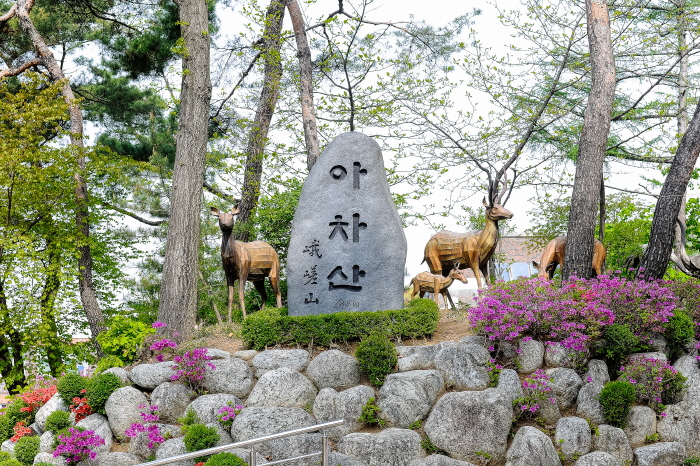
Achasan Mountain (아차산)
10.6Km 2024-03-07
Acheon-dong, Guri-si, Gyeonggi-do
Achasan Mountain is a 295m-high mountain that stretches across Seoul and the city of Guri. Its proximity to the city makes it an accessible destination for hiking in Seoul. The hiking trails are maintained quite well, so even beginners can enjoy hiking in the mountain. From the summit of Achasan Mountain, one can enjoy the beautiful view of Seoul and the Hangang River. In fall, the mountain is famous for its fall colors as well.
DOWON TOUR (도원국제여행사)
10.7Km 2025-10-23
(#323), 9 Gongneung-ro 59ga-gil, Nowon-gu, Seoul
Based on my previous experience as a Korean and Japanese language guide in China, I established Dowon International Travel Agency in 2023.
Our main focus is on medical tourism for Chinese clients, offering not only tours of popular destinations and shopping in Korea, but also services for VIP guests such as plastic surgery and health checkups.
Seoul Doseonsa Temple (도선사(서울))
10.7Km 2025-06-25
504 Samyang-ro 173-gil, Gangbuk-gu, Seoul
Doseonsa Temple was established 1,100 years ago during the latter part of the Silla Kingdom when the renowned Buddhist priest Doseonguksa was traveling through the mountains. After visiting the site, Doseonguksa made a prophecy that led to the construction of the temple. According to legend, he used only his walking stick to carve the large Bodhisattva that sits at the temple. Interestingly enough, the statue does not show any evidence of chisel marks, further adding to the mystery of how the statue was made.
During the 7th year of King Gwangmu of the Joseon dynasty, Doseonsa Temple was officially named the representative temple of Korea with the purpose of promoting Cheongdamdaejongsa's Korean Buddhism movement, aiming at a religious revival. Due to these special circumstances Deseonsa Temple gained a high reputation and much recognition, which have held strong to this day.
Inside the temple, visitors can view the remains and written works of Cheongdamdaejongsa in the Cheongdamdaejongsa Memorial Hall. Next to the road leading to Cheonbuljeon Hall is a pond where you can toss a coin and make a wish and just past Yongammun Gate is a hiking path connecting Baegundae Cliff and Insubong Peak. Inside the Ksitigarbha Hall are portraits of President Park Chung-hee, Yuk Yeong-su, and Hyundai Chairman Chung Ju-yung. In front of the hall is a tree that is said to have been planted by a Buddhist priest who brought it from India 200 years ago. Historical artifacts can be found throughout the temple.
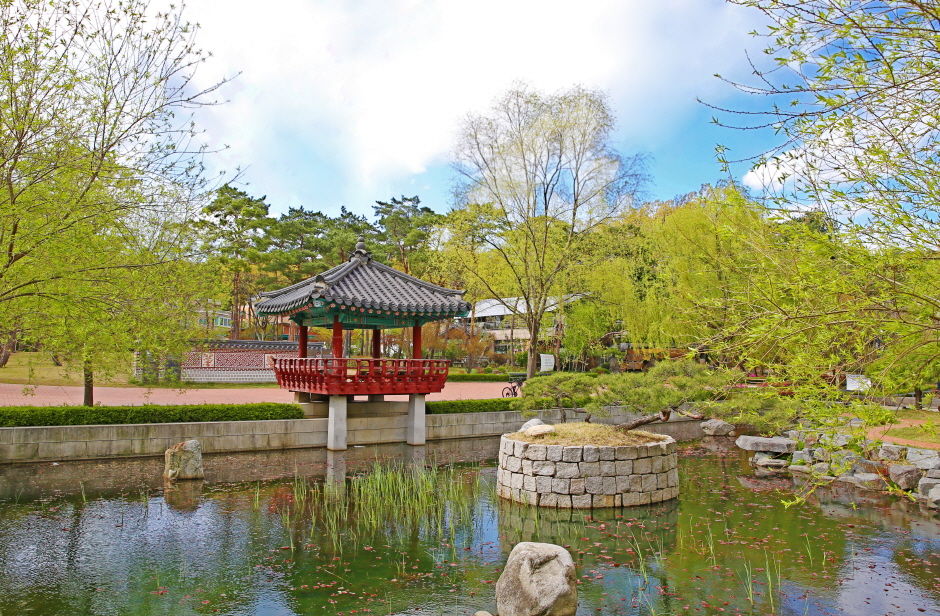
Wondangsaem Park (원당샘공원)
10.7Km 2024-02-15
16 Haedeung-ro 32ga-gil, Dobong-gu, Seoul
Wondangsaem Pond is named after the Wondang village, where the Yun family settled about 600 years ago. It is a park that harmoniously blends a traditional pond with a Hall of Rejoicing Pavilion called Samojeong, a wall fall, and a floral wall. During autumn, the golden foliage of an 800-year-old ginkgo tree enriches the surroundings, and a deck path around the tree offers a delightful stroll.
 English
 한국어
한국어 日本語
日本語 中文(简体)
 Deutsch
 Français
 Español
 Русский


