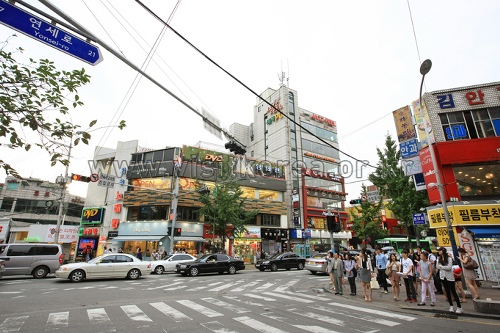
Yeonsero (Yonsei University Street) (연세로)
4.8Km 2022-10-25
Area of Yeonse-ro, Sedaemun-gu, Seoul
This road takes you from Sinchon Subway Station right to Yonsei University. Like branching tree roots, the numerous side streets diverge off the main road. In 1999 Yonsei College Street was designated as “The Road One Wants to Walk.” Since then, this famous street has been improved upon even more, placed on tourist maps and promoted by businesses. A visitor to this area can eat at a plethora of restaurants, coffee shops and stores. In the afternoon hours, you can also enjoy the taste of small food stands that line the sidewalks.
Choi Hyeok Korean Medicine Clinic (최혁한의원)
4.8Km 2025-10-23
(1st Floor), 52 Yangnyeongdong-gil, Dongdaemun-gu, Seoul
Choi Hyeok Korean Medicine Clinic is particularly popular among Japanese visitors. Words about our affordable prices, friendly services, and dedication of the chief and the staff have spread in Japan, which has attracted over 2,000 Japanese visitors to the clinic annually. We offer an extensive array of services, including skin care, wrinkle removal, bloodletting acupuncture, weight-loss herbal medicine (hanyak), lipolysis acupuncture, gongjindan, kyungokgo, and “Magic Powder.” We accept appointments for wrinkle therapy on Sundays. We deliver hanyak to patients’ hotels if they are not too far away. We also ship to patients’ homes in Japan. You are always welcome to contact us on Line or Instagram.

Seodaemun Culture & Sports Center Swimming Pool (서대문 문화체육회관 실내수영장)
4.8Km 2024-03-20
39 Baekryeonsa-gil, Seodaemun-gu, Seoul
Seodaemun Culture & Sports Center Swimming Pool, covering 973 square meters, features a total of seven lanes with both adult and children's pools. The facility provides regular swimming lessons, survival swimming lessons, aqua aerobics, and more. The water quality is maintained using a natural salt electrolysis system. For free swimming, visitors can purchase tickets from the kiosk on the second floor, receive wristbands from the information desk, and enjoy the facility at an affordable cost.
Seoul Gyeongdong Market (서울 경동시장)
4.8Km 2024-12-03
3 Gosanja-ro 36-gil, Dongdaemun-gu, Seoul
As the nation began to recover from the aftermath of the Korean War, farmers from the northern Gyeonggi-do region and Ganwon-do gathered around the old Seongdong Station (renamed ‘Hansol Donguibogam’) to sell their produce and wares. The farmers’ impromptu gathering on the fallow farmland to make their transactions soon led to the birth of a new marketplace. With the recent remodeling of the market, including the long-neglected Gyeongdong Theater, the place feels totally renewed and full of energy. Thanks to the renovation and diverse food stalls, the place is always bustling and filled with people.
Starbucks Gyeongdong Market (스타벅스 경동1960)
4.8Km 2024-12-27
3 Gosanja-ro 36-gil, Dongdaemun-gu, Seoul
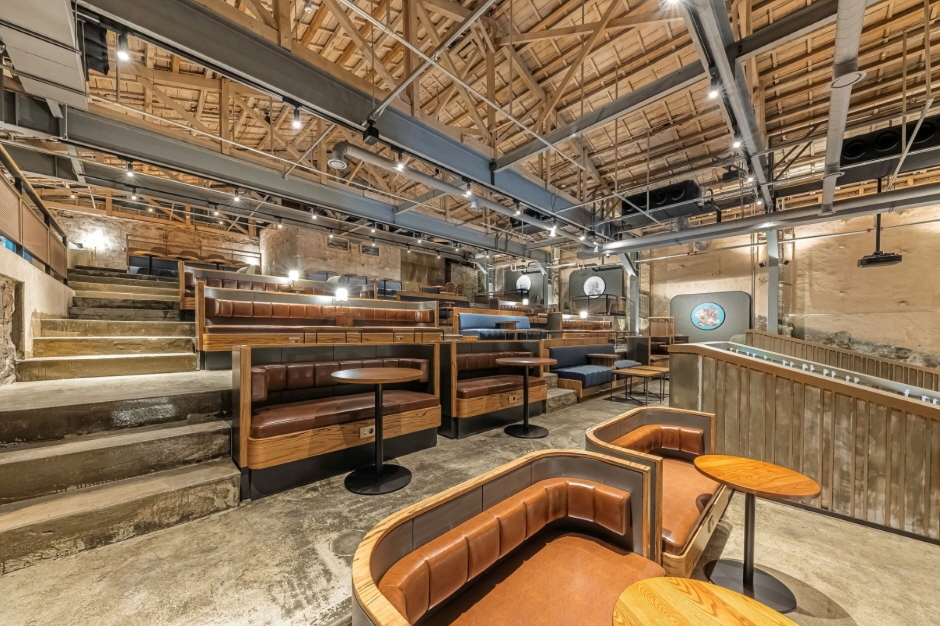
Restored Gyeongdong Market space and the 5th community store for a win-win relationship with local economy
This 5th Starbucks Community Store is housed in a restored theater in Gyeongdong Market. The store has a win-win agreement with local merchants. Starbucks created a multiple cultural space in collaboration with LG Electronics such as LG Gold Star Radio Refresh Center. Every week, local artists and college students present culture and art performances on the stage that recreated the theatre concept. To offer a special experience suitable to an old theater, Starbucks developed the Retro Theater-like CND. For differentiated customer experiences, the store sells store-baked crafted food and exclusive merchandise.
Sinchon Dain Dental Hospital (신촌다인치과병원)
4.8Km 2025-10-23
(10th-11th Floors, Grand Plaza), 94 Sinchon-ro, Mapo-gu, Seoul
Our main dental hospital, spanning approximately 1,740 square meters, is conveniently located near Sinchon Station, just a 40-minute drive from both Gimpo International Airport and Incheon International Airport, making it easily accessible for international patients. We are staffed by around 60 specialized medical professionals and equipped with the latest technology, including an in-house laboratory for fast and precise dental work. Our team includes nine expert directors in orthodontics, prosthodontics, conservative dentistry, oral surgery, and periodontology, ensuring comprehensive and systematic care in each specialty. We offer a wide range of advanced procedures for our international patients, including implants, complex extractions, orthodontics, periodontal treatment, and prosthetic care, as well as high-quality neurological and aesthetic treatments.
Soon Chun Hyang University Hospital Seoul (순천향대학교 부속 서울병원)
4.9Km 2025-10-23
59 Daesagwan-ro, Yongsan-gu, Seoul
Soonchunhyang University Hospital Seoul has established a systematic and dedicated system for international patients covering all stages from pre-entry processes to departure and aftercare. Based on the medical records provided by the patient, we consult with the medical staff of each specialty to come up with an estimated treatment plan and costs to help patients prepare for their treatment in Korea. Our dedicated outpatient and inpatient teams provide expert medical interpretation, guidance, and integrated appointment management to ensure prompt and organized medical care for international patients throughout their stay. Complete with spacious and comfortable rooms, the International Ward is staffed by coordinators and a nursing team reserved for international patients. Multidisciplinary care with organized systems, state-of-the-art medical equipment, and top-notch medical staff ensure accurate diagnosis and the best treatment outcomes possible.
Seoul Eungbongsan Mountain (응봉산(서울))
4.9Km 2024-07-05
1540 Geumho-dong 4-ga, Seongdong-gu, Seoul
From Eungbongsan Mountain, one can easily see the Hangang River, Seoul Forest, Jamsil Sports Complex and more in the eastern part of Seoul. With such a great view of the Hangang River, the mountain is often packed with visitors including many photographers. The mountain serves as a venue for diverse events, including a sunrise festival on New Year's Day and forsythia festival around April during the flowering season.
Sinchon Sisters Hostel (신촌 시스터즈)
4.9Km 2024-12-23
24 , Baekbeom-ro 2-gil, Mapo-gu, Seoul
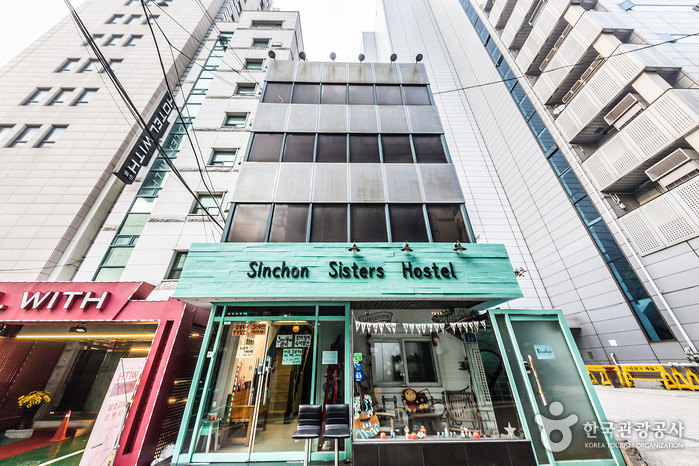
Sinchon Sisters is a friendly guesthouse in Mapo-gu, Seoul, that caters for young travelers. Rooms are for two, three or four people, and each room has its own bathroom. There is no separate dining area, but you can bring food into your room and there’s a microwave for visitors’ use. Washing machines and dryers are also provided (payment needed). Transport is convenient: Sinchon Station and Sogang University Station are a 5 minutes’ walk away, and there are bus stops nearby - including for the airport express bus service. The Hongdae, Hapjeong, Mangwon, and Sangsu areas are all nearby.
SEVEN LUCK CASINO - Seoul Dragon City Branch (세븐럭카지노(서울드래곤시티점))
5.1Km 2023-07-21
95, Cheongpa-ro 20-gil, Yongsan-gu, Seoul
A special experience at the center of Seoul
Seven Luck Casino in Seoul Dragon City is located in Yongsan, Seoul, the center of Korean tradition and culture. This casino branch presents a grand x_height and wide space, decorated with a sensual interior design for elegance and comfort on a site of 3,146.96 m2. It is full of up-to-date casino facilities, such as Baccarat, Blackjack, Roulette, Tai-Sai, Seven Luck Poker, Casino War, Electronic Table Games (ETG), and slot machines. There are many famous hotels, tourist sites, and cultural heritage sites nearby Seven Luck Casino in Seoul Dragon City. Besides the casino, visitors can experience various traditional and contemporary cultures of South Korea.
* Seven Luck Casino is exclusively for the use of foreigners.
* Must be 19 years of age or older to enter.
* Passports are required to verify the age and nationality of patrons.
* Metal detectors are used as an added safety precaution.
 English
 한국어
한국어 日本語
日本語 中文(简体)
 Deutsch
 Français
 Español
 Русский


