
Seoul Miz Hospital (서울미즈병원)
13.3Km 2025-10-23
1041 Cheonho-daero, Gangdong-gu, Seoul
Seoul Miz Hospital is a women’s specialized hospital located in Gangdong-gu, Seoul. It provides medical services in obstetrics and gynecology, breast and thyroid surgery, internal medicine, dermatology and plastic surgery, and pediatrics, while also operating a health promotion center. With its newly expanded building, the hospital has established an International Medical Center to support the treatment of foreign patients.
Ewha Womans University Seoul Hospital (이화의대부속서울병원)
13.3Km 2025-10-23
260 Gonghang-daero, Gangseo-gu, Seoul
Ewha Womans University Seoul Hospital is designed with a focus on optimizing care for infectious diseases, featuring 3-bed standard wards and single-bed rooms in all intensive care units. Building on our long history of excellence in women’s education, treatment, and research, we have established a competitive edge by specializing in women’s cancers, including breast, thyroid, uterine, and ovarian cancers. Our expertise extends beyond women’s health, offering specialized medical services for severe conditions such as bladder, stomach, and colorectal cancers, as well as cardiovascular diseases. We also provide comprehensive care for chronic adult conditions like hypertension, diabetes, and obesity.
Our recently opened Ewha Womans University Cerebrovascular Hospital and Ewha Womans University Aorta and Vascular Hospital are equipped with the latest technology to offer advanced surgery and treatment for stroke, aneurysms, heart, and aortic diseases. The Ewha Womans University Mother and Baby Hospital is dedicated to the specialized care of high-risk mothers and newborns, ensuring the best outcomes for maternal and child health. Additionally, we offer personalized health management through our specialized centers, including the Wellness Health Checkup Center and the Well-Aging Center, to support our patients’ overall well-being.
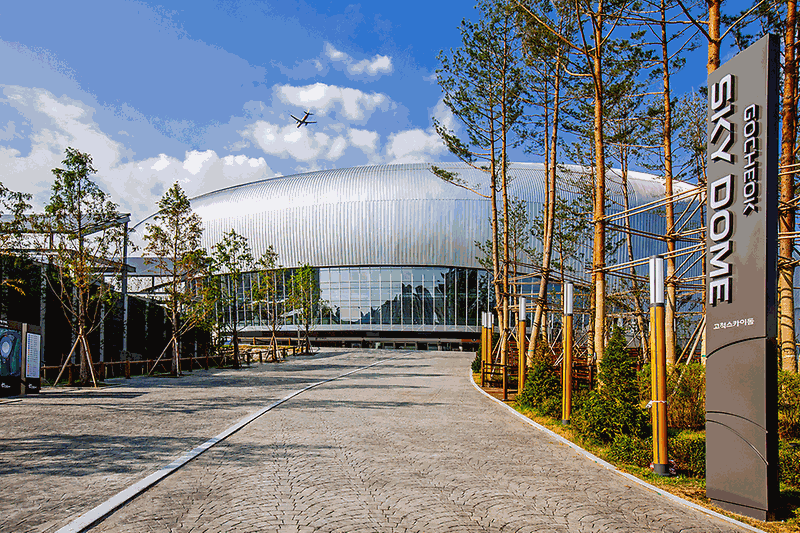
Gocheok Sky Dome (고척 스카이돔)
13.4Km 2023-09-05
430 , Gyeongin-ro, Guro-gu, Seoul
Gocheok Sky Some is the first dome-type baseball stadium to be built in Korea. Since its establishment in 2015, the stadium has been used as a venue for diverse events, including baseball games, athletic sports, performances, concerts, and more. The stadium consists of two basement floors and four above-ground floors with 16,783 seats. Gocheok Sky Dome serves as a cultural facility for the public that can host events regardless of season and weather. A baseball-themed street is connected to the dome for baseball fans. Several other sports-related facilities and retailers are also available.
Sungsam Medical Foundation, Miz Medi Hospital (성삼의료재단미즈메디병원)
13.5Km 2025-10-23
295 Gangseo-ro, Gangseo-gu, Seoul
MizMedi Hospital began as an obstetrics and gynecology center specializing in infertility treatment in 1991. In 2000, we expanded to become a general hospital for women, providing comprehensive care for infertility and a wide range of women's health issues.
- The first JCI-certified hospital in Korea specializing in women's healthcare
- An obstetrics and gynecology hospital accredited by the Ministry of Health and Welfare
- 64 specialists and 322 highly skilled employees
- Serving 390,000 patients and delivering 4,000 babies each year
- Performing over 8,000 surgeries each year, with most gynecologic conditions treated laparoscopically, and more than 1,700 in vitro fertilization procedures, frozen embryo transfers, and artificial insemination treatments— with a pregnancy success rate of over 50%
Proudly, we are MizMedi Hospital.
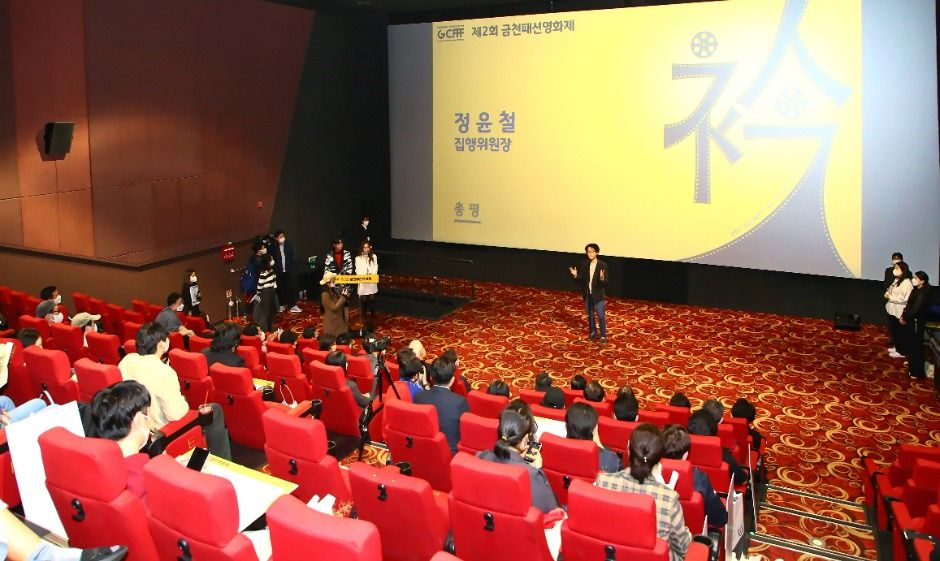
Geumcheon Fashion Film Festival (금천패션영화제)
13.6Km 2025-07-11
90 Digital-ro 9-gil, Geumcheon-gu, Seoul
+82-2-809-8238
The Geumcheon Fashion Film Festival is the nation's only film festival to focus on the theme of fashion, and takes place in the fashion industry sector of Geumcheon-gu.
YONSEI HEAL DENTAL CLINIC (연세힐치과의원)
13.6Km 2025-11-24
1st–2nd Floor, Ujangsan Harrington Tower, 231 Gangseo-ro, Gangseo-gu, Seoul
Yonsei Heal Dental Clinic has upheld the values of trust and healing since its founding in 2014. Guided by a patient-centered philosophy, a team of ten specialized doctors works collaboratively to deliver precise and safe treatments using world-class digital systems. With expertise spanning implants, digital restorative care, and laminates, the clinic pursues excellence in both function and aesthetics. Built on integrity and meticulous care, Yonsei Heal Dental restores not only smiles but also the quality of life.
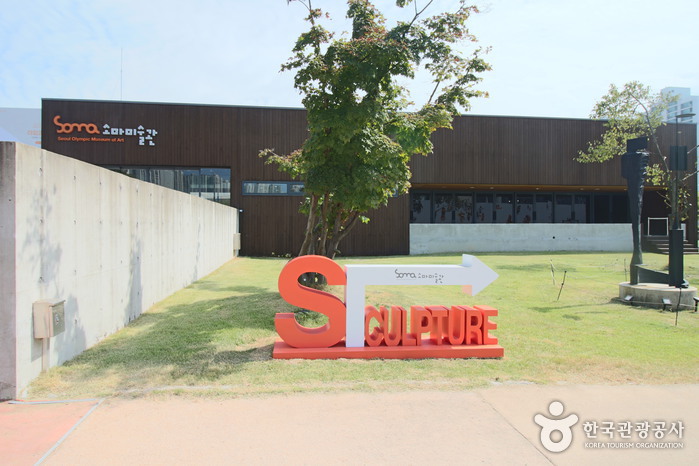
Soma Museum of Art (소마미술관)
13.6Km 2023-04-13
424, Olympic-ro, Songpa-gu, Seoul
Soma Museum of Art was opened in September 2004 as a cultural space amid the nature of Seoul Olympic Park. The museum displays over 222 sculptures, and offers a variety of cultural and educational programs, including the nation's first drawing center and archive.
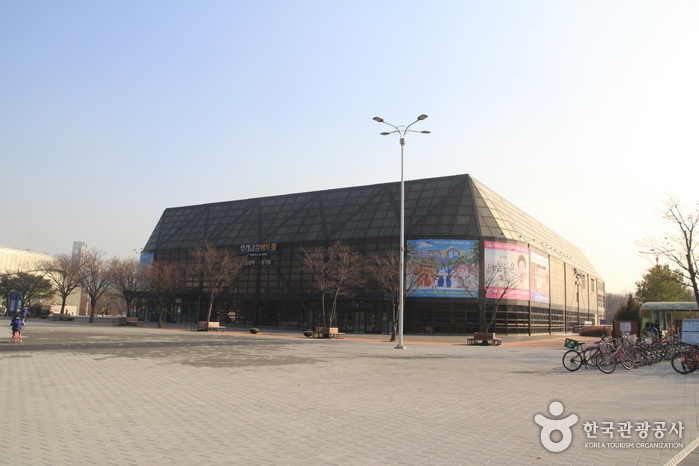
Olympic Park Stadium (올림픽공원 경기장)
13.6Km 2021-06-11
424, Olympic-ro, Songpa-gu, Seoul
Olympic Park is an expansive outdoor area for Seoul residents to enjoy, offering facilities and venues for a range of events including athletic competitions, concerts and other performances. The park houses athletic facilities including the gymnasium of the ’88 Seoul Olympic Games, a fencing stadium, weightlifting stadium, swimming pool and tennis courts. Moreover, those venues are multi-purpose facilities that can host a wide range of events and performances.
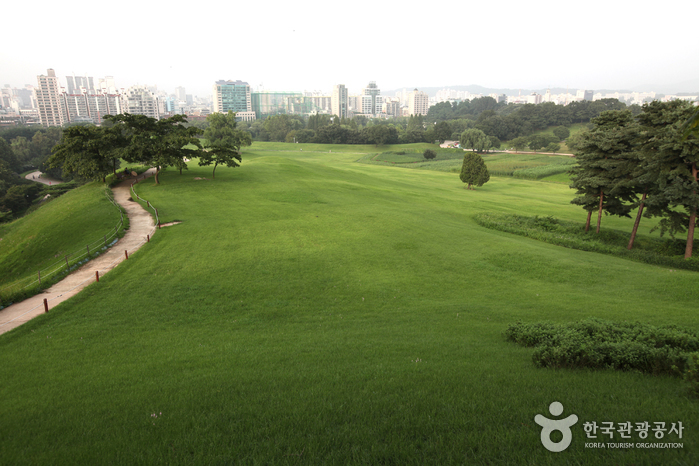
Seoul Mongchontoseong Earthen Fortification (서울 몽촌토성)
13.6Km 2024-03-12
424, Olympic-ro, Songpa-gu, Seoul
Mongchontoseong Earthen Fortification is an ancient earthen fortress built during the Hanseong period of the ancient Korean kingdom of Baekje (BC 18-AD 660). It is believed to have been constructed in the 3rd to 4th centuries. Utilizing the natural advantages of the Hangang River, it served defensive purposes with its trench and log barrier. Excavated relics from the Baekje era are on display at the Seoul Baekje Museum. The site is situated within the Olympic Park in Songpa, Seoul.
Chuncheonok (춘천옥)
13.6Km 2024-10-15
19 Digital-ro 12-gil, Geumcheon-gu, Seoul
Chuncheonok is a Korean restaurant located near Gocheok Skydome. The signature menu is memil makguksu (buckwheat noodles). Served with a sweet sauce, the bibim makguksu (spicy buckwheat noodles) features a refreshing broth poured generously over the noodles, preventing them from becoming soggy. With a lower buckwheat content, the noodles have a smooth texture. It pairs well with tender and odorless bossam (napa wraps with pork). Nearby attractions include Gureumsan Forest Park, Boramae Park, and Anyangcheon Stream.
 English
 한국어
한국어 日本語
日本語 中文(简体)
 Deutsch
 Français
 Español
 Русский


