Jongno Cheonggye Special Tourist Zone (종로 청계 관광특구)
1.1Km 2021-12-30
99, Yulgok-ro, Jongno-gu, Seoul
+82-2-2148-1861
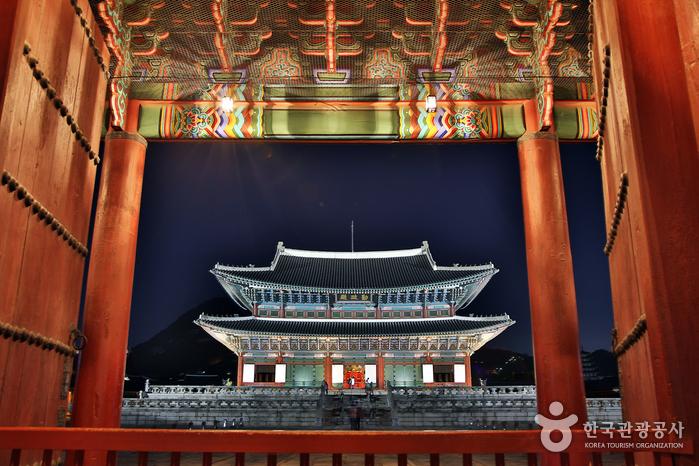
Jongno Cheonggye Special Tourist Zone stretches from Seorin-dong to Changsin-dong between Cheonggyecheon Stream and Jong-ro. It includes Youth Street, Gwangjang Market, Sewoon Electronics Department Store, lighting stores, pharmacy & medical device stores, badge stores, Stamp Street, Stationery · Toy Market, Aquarium Street, Shoes Market, and other markets totalling to approximately 14,000 shops. Nearby attractions include modern high-story buildings as well as Gyeongbokgung, Changdeokgung, Changgyeonggung, Deoksugung, and Unhyeongung Palaces, Jongmyo Shrine, and Insa-dong, merging traditions, modernism, culture, and markets alike.
Thought to be at the heart of Seoul, Cheonggyecheon Stream is located in the dense cultural area of Seoul where various press networks, organizations, bookstores and other major corporations are situated. Walking along Cheonggyecheon Stream is a famous activity for tourists. Also, the area is the venue for the Seoul Lantern Festival every winter. Keeping its traditional scene including narrow alleys, old-fashioned hanok buildings and various stores still fully intact, the tourist zone has enough fun places for sightseeing as well as tasty restaurants in every corner for a more enjoyable visit.
Myeongdong Cathedral (서울 명동성당)
1.1Km 2022-12-27
74, Myeongdong-gil, Jung-gu, Seoul
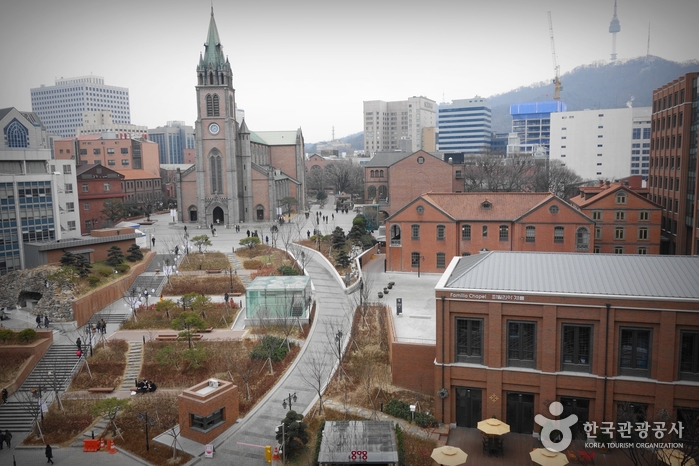
Myeongdong Cathedral is the Church for Archdiocese of Seoul and was also the birthplace for the Roman Catholic Church community in Korea. The church houses the remains of several individuals: Bishop Laurent Joseph Marie Imbert (1796-1839), and priests Peter Simon (1803-1839), James (Jacques Honor Chastan, 1803-1839) and Pourthie Jean Antoine Charles (1830-1866) and four martyrs.
Myeongdong Cathedral is located in downtown Seoul and tourists frequently come and visit the place. Near the cathedral are other tourism spots such as Namsangol Hanok Village preserving Korean traditional houses, N Seoul Tower overlooking Seoul and Namdaemun Market, a traditional market with a wide variety of food and goods.
Myeongdong Beer Festival (명동맥주페스티벌)
1.2Km 2025-05-20
14, Myeongdong-gil, Jung-gu, Seoul
+82-70-8670-2182
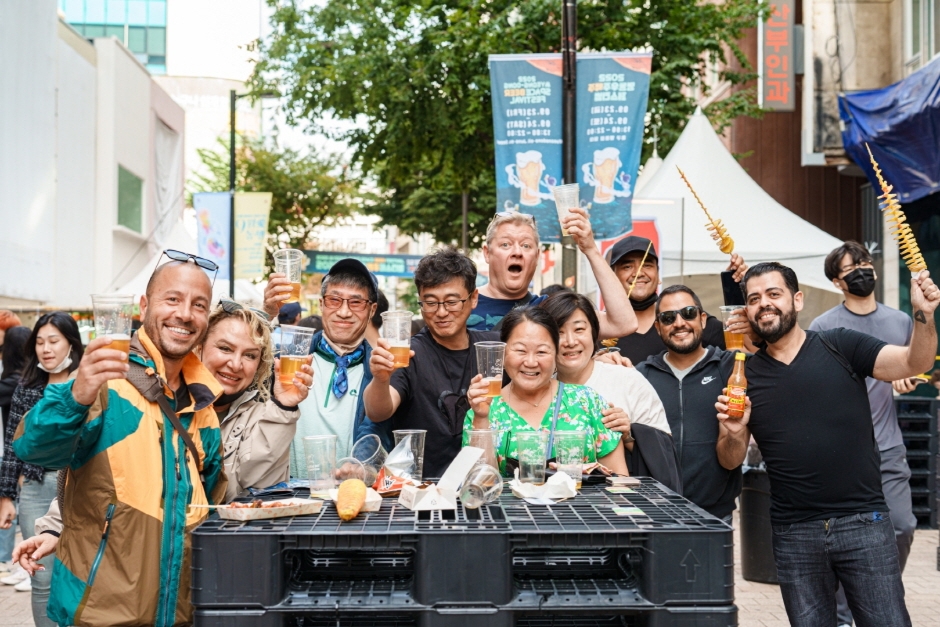
Myeongdong Beer Festival provide a chance to find one's preference through beer. Enjoy the cool fall weather with fun people all around.

Myungbo Art Hall (명보아트홀)
1.2Km 2025-04-15
47 Mareunnae-ro, Jung-gu, Seoul
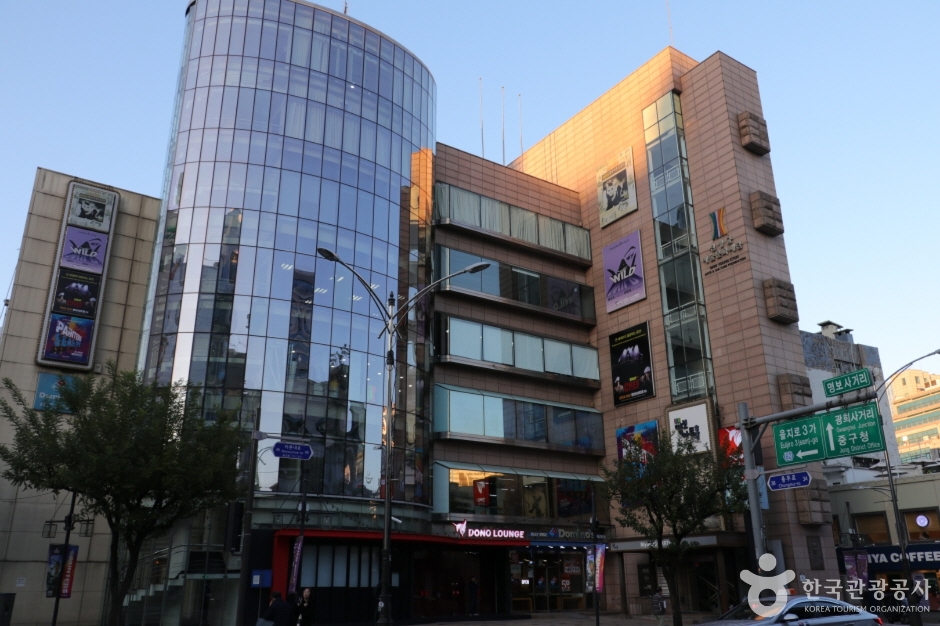
Located in Euljiro 3(sam)-ga, the heart of Seoul, Myungbo Art Hall is a cultural complex that consists of a professional theatre hall. Renovated from Myungbo Theater in 2009, Myungbo Art Hall is equipped with state-of-the-arts lighting and sound equipment that guarantees high-quality theatre experience for the audience. In addition, the hall also has comfortable seats along with other amenities for the audience's convenience. Myungbo Art Hall aims to globalize Korean performance culture by creating a variety of content that incorporate Korean theatre with tourism. This area is also where the house of Admiral Yi Sun-sin was located, which is honored with a memorial plaque listing his accomplishments.
Choong Ang High School (중앙고등학교)
1.2Km 2025-10-23
164 Changdeokgung-gil, Jongno-gu, Seoul
+82-2-742-1321
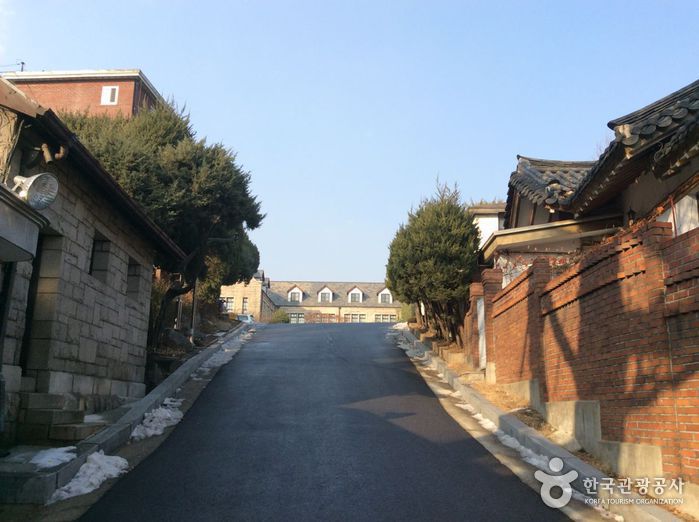
Choong Ang High School is located in Jong-ro near Samcheongdong-gil. It was built to educate the public at the beginning of the 20th century. The school’s main building was reconstructed in 1937 after the original two-story brick house was destroyed in 1934. The main building situated in front of the main gate is a two-story H-shaped granite stone building in Gothic style, with a four-story tower in the middle.
The school holds historical significance because it was designed by Park Dong Jin, one of Korea's first modern architects and the designer of Korea University’s main building, library, and the Chosun Ilbo Newspaper Company building. The main building of Choong Ang High School is designated as Historic Site No. 281. Many national leaders were educated at the gothic building during the grim period when Korea was trying to escape Japanese colonial rule.
Daelim Museum (대림미술관)
1.2Km 2022-07-29
21, Jahamun-ro 4-gil, Jongno-gu, Seoul
+82-2-720-0667
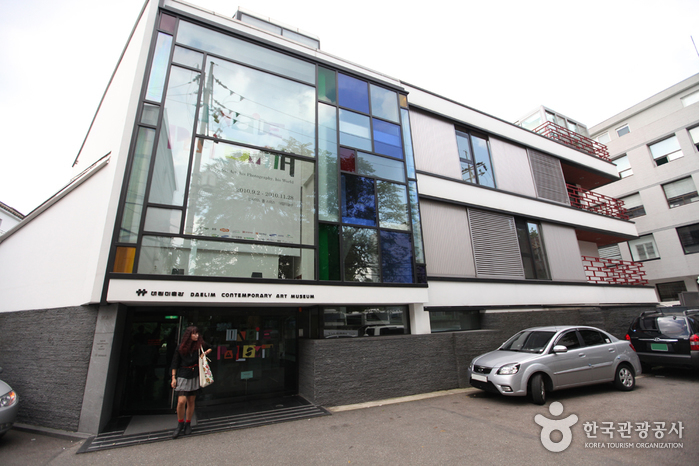
The Daelim Museum, built by the Daelim Group, was first established in Daejeon in 1996 and later moved to Jongno, Seoul in 2002. The art gallery studies, analyzes, and presents modern art through the lens of photography and holds exhibitions centered around photo media.
The museum is located in the residential area of Tongui-dong, near the time-honored Gyeongbokgung Palace. The museum, which was designed by French architect, Vincent Cornu, and built by the Daelim Corporation, opened its door to the public in late May 2002.
On the first floor, there is a garden, parking lot, reception desk, storage area, and conference room. On the second and third floor are offices and exhibition hall approximately 595 m² in size, consisting of small and large rooms, a long gallery, and a special high-ceilinged exhibition space. On the fourth floor, there is a seminar room that can seat up to 120 guests and a balcony with a beautiful view. From the balcony of the seminar room, Visitors can also enjoy a wide open view of Inwangsan Mountain and Bukhansan Mountain. The stained glass panels (designed to reflect the beauty of traditional Korean wrapping cloth) and the scenic lounges on the 2nd and 3rd floors of the building add to the overall charm.
Above all else, the museum was designed with consideration of the photos, which are very sensitive to humidity, light, and temperature.
Kumho Art Hall (금호아트홀)
1.2Km 2021-05-28
76, Saemunan-ro, Jongno-gu, Seoul
+82-2-6303-1977
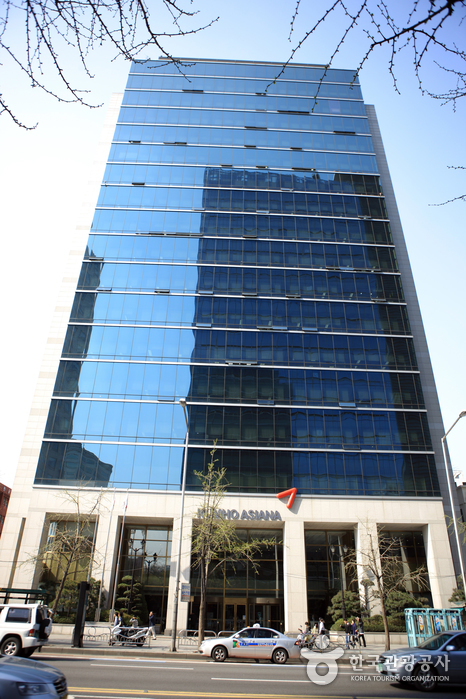
Kumho Art Hall was built in 2000 exclusively for classical music concerts, with 390 seats, the perfect structure for chamber concerts. All seats are recital hall chairs and the wide spacing between rows of chairs helps the audience to have a pleasant time. Upon entering the theater, all cell phones will turn off automatically. This helps all visitors to enjoy the concert without being interrupted by ringing cell phones. The interior is cozy and luxurious, and the stage is made of maple.
Danha(단하)
1.2Km 2025-11-05
39-7 Palpan-gil, Jongno-gu, Seoul
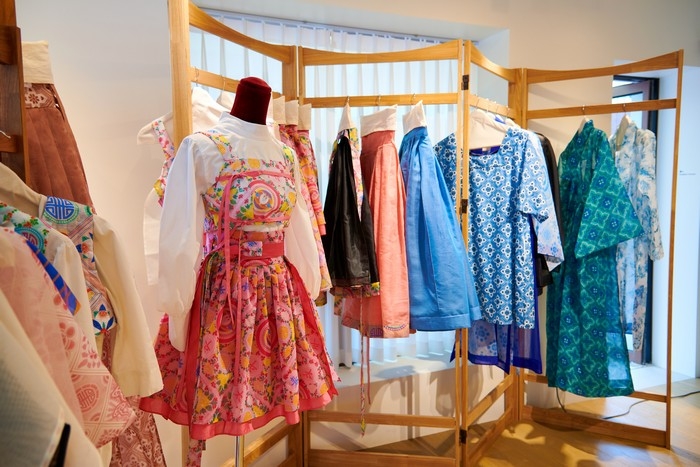
BLACKPINK's “HOW YOU LIKE THAT” music video created a sensation, reaching 100 million views within 32 hours of its release. The most noteworthy part of the music video was the hanbok they wore. Danha, which was in charge of making the costumes, improved the traditional hanbok and completely recreated it as a stage costume, garnering attention from all over the world. Danha is famous for designing hanboks using traditional patterns. The patterns engraved on the clothes in the BLACKPINK music video used the phoenix design pattern of the royal cloth. Danha's hanbok can be purchased through the online shop, and if you want to have it custom-made, you can visit Danha Maison after making a reservation.
 English
 한국어
한국어 日本語
日本語 中文(简体)
 Deutsch
 Français
 Español
 Русский


