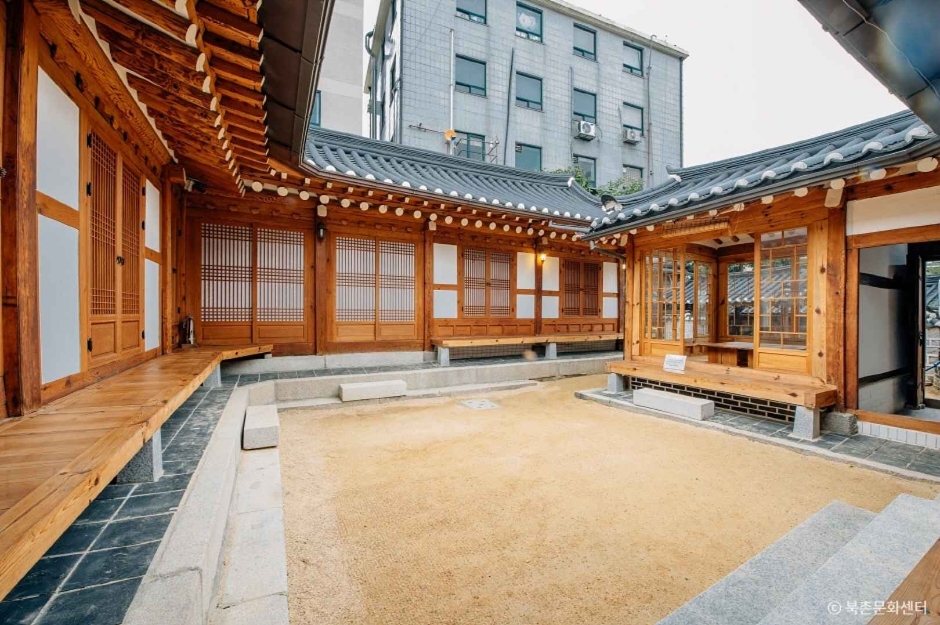
Bukchon Cultural Center (북촌문화센터)
780.6M 2025-06-19
37 Gyedong-gil, Jongno-gu, Seoul
Bukchon Cultural Center, located in a hanok, was established to offer traditional cultural experience opportunities for visitors to the area. The programs include tea ceremony, handicraft, and gugak as well as a Public Relations Exhibition Hall introducing Bukchon culture and hanok. Also, the center houses a space and a pavilion for visitors to relax while traveling.

Eight Scenic Views of Bukchon (북촌 8경)
780.6M 2024-03-18
37, Gyedong-gil, Jongno-gu, Seoul
+82-2-2148-4161
The Eight Scenic Views of Bukchon can be found at the Bukchon Hanok Village between Gyeongbokgung Palace and Changdeokgung Palace. Bukchon was historically a district where the aristocracy of Joseon had resided in, so it is still home to a large number of traditional dwellings, called hanok in Korean. The eight views are as follows: No. 1, view of Chengdeokgung Palace; No. 2, view of Wonseo-dong Handicraft Road; No. 3, view of the Gahoe-dong area; No. 4, view from the hill at Gahoe-dong (Bukchon Observatory); No. 5, the view of the road uphill at Gahoe-dong; No. 6, the view of the road downhill at Gahoe-dong; No. 7, the view at house number (beonji) 31, Gahoe-dong; No. 8, the view of the stone stairway at Samcheong-dong.
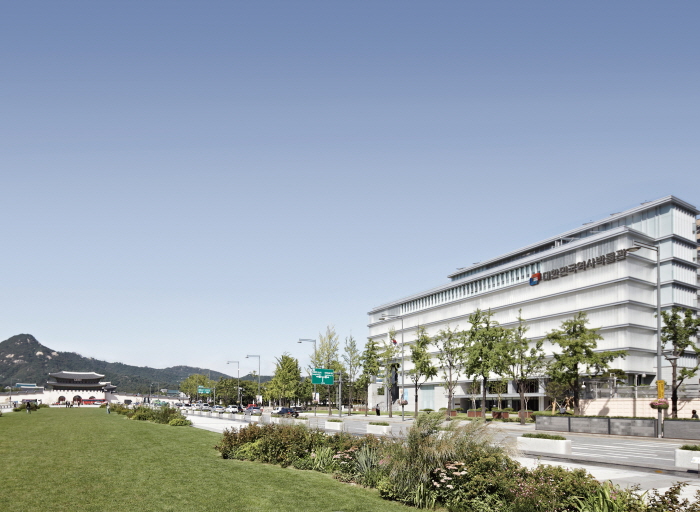
National Museum of Korean Contemporary History (대한민국역사박물관)
782.8M 2022-12-27
198, Sejong-daero, Jongno-gu, Seoul
+82-2-3703-9200
The National Museum of Korean Contemporary History opened on December 26, 2012, and showcases Korea's modern history, from the opening of Incheon Port to current times. The museum provides an in-depth look at the changes in the nation through exhibitions and educational programs, as well as researching, developing, and collecting materials. The museum is comprised of four exhibition halls; Prelude to the Republic of Korea, Foundation of the Republic of Korea, Development of the Republic of Korea, and Modernization of South Korea, toward the World. In addition, the Korean History Dream Village features a hands-on program hall for children to learn modern and contemporary history. In addition to special exhibitions, the museum also offers educational and cultural programs for children.
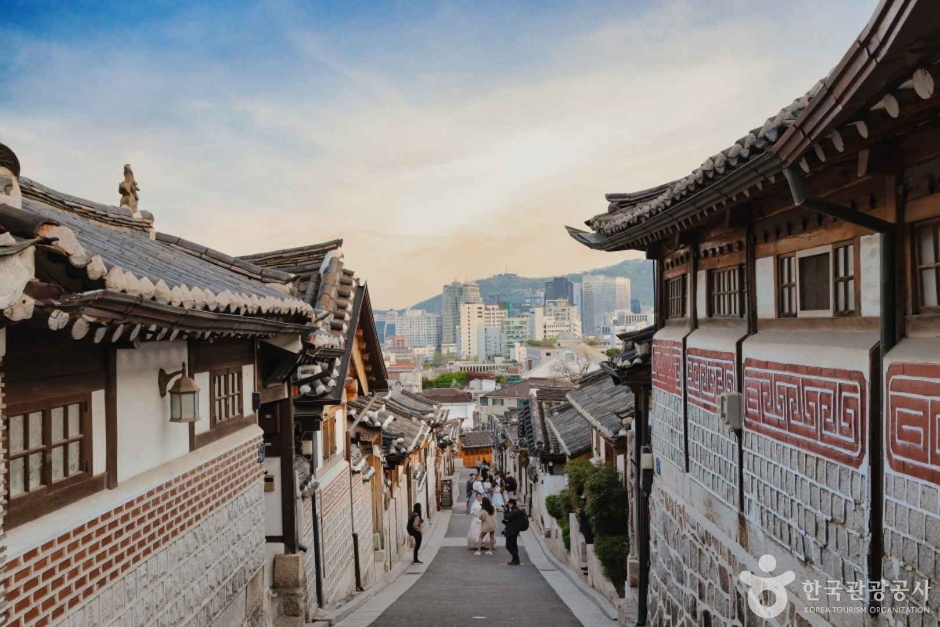
Bukchon Hanok Village (북촌한옥마을)
790.3M 2025-06-19
37 Gyedong-gil, Jongno-gu, Seoul
Surrounded by Gyeongbokgung Palace, Changdeokgung Palace and Jongmyo Shrine, Bukchon Hanok Village is home to hundreds of traditional houses, called hanok, that date back to the Joseon dynasty. The name Bukchon, which literally translates to "northern village," came about as the neighborhood lies north of two significant Seoul landmarks, Cheonggyecheon Stream and Jongno. Today, many of these hanoks operate as cultural centers, guesthouses, restaurants and tea houses, providing visitors with an opportunity to experience, learn and immerse themselves in traditional Korean culture. As Bukchon Hanok Village is an actual neighborhood with people's homes, visitors are advised to be respectful at all times while looking around.
![Frisbee - Gwanghwamun Branch [Tax Refund Shop] (FR광화문점(금강 프리스비))](http://tong.visitkorea.or.kr/cms/resource/73/2878573_image2_1.jpg)
Frisbee - Gwanghwamun Branch [Tax Refund Shop] (FR광화문점(금강 프리스비))
796.0M 2024-04-16
1F, 8, Cheonggyecheon-ro, Jung-gu, Seoul
-
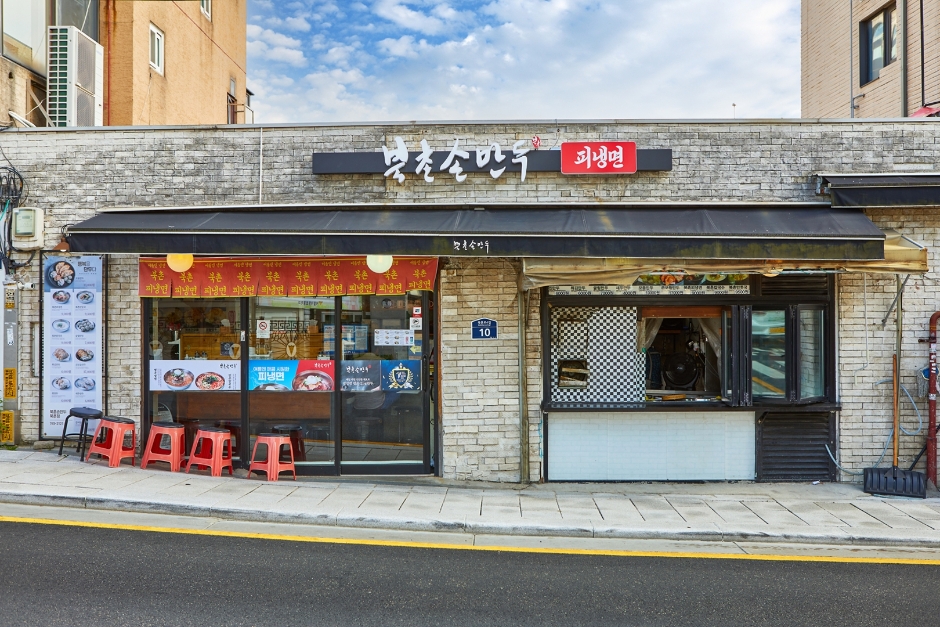
Bukchon Son Mandu Bukchon Branch (북촌손만두 북촌점)
796.0M 2024-12-10
This third-generation family-owned handmade mandu restaurant has been in business since 1953. Its handmade mandu bears the tradition of nearly 70 years. This restaurant distinguishes itself above others with its unique expertise in the art of mandu-making and fresh ingredients, capturing deep flavors with care in each mandu. A full spread of mandu is available here, from steamed mandu to thin-skin mandu, deep-fried mandu, shrimp mandu, and galbi mandu, which can be ordered in individual pieces or as an assorted package. Mandu and noodles go perfectly together, and here, visitors can enjoy mandu with cold buckwheat noodles or noodle soup. The most recommended menu is the noodle soup, which serves thick, plump noodles in warm broth. But that does not mean that the cold buckwheat noodles are lacking: cold buckwheat noodles are served in a cool, red kimchi broth.
Jongmyo Shrine [UNESCO World Heritage] (종묘 [유네스코 세계유산])
796.8M 2024-07-05
157 Jong-ro, Jongno-gu, Seoul
+82-2-765-0195
Jongmyo Shrine was the primary place of worship for kings and their queens throughout the Joseon dynasty. The shrine was built at the same time as Gyeongbokgung Palace, under the orders of King Taejo, the first king of the Joseon dynasty. The shrine is the site of the royal memorial service, called Jongmyo Jaerye, a national event that has been passed down since the Three Kingdoms period. During the Joseon dynasty, the ritual was held on the first month of a seasonal change and the twelfth month of the lunar year.
London Bagel Museum Anguk Main Store (런던베이글뮤지엄 안국점)
797.3M 2024-02-20
20 Bukchon-ro 4-gil, Jongno-gu, Seoul
London Bagel Museum is a bagel specialty shop adorned with a wooden-tone interior and a garland in the shape of the British flag. The bagels are made using the traditional British method of fermenting the dough, boiling it, and then baking it in the oven. Jambon butter sandwich bagel, made with sesame bagel filled with ham and butter, is a signature menu item.
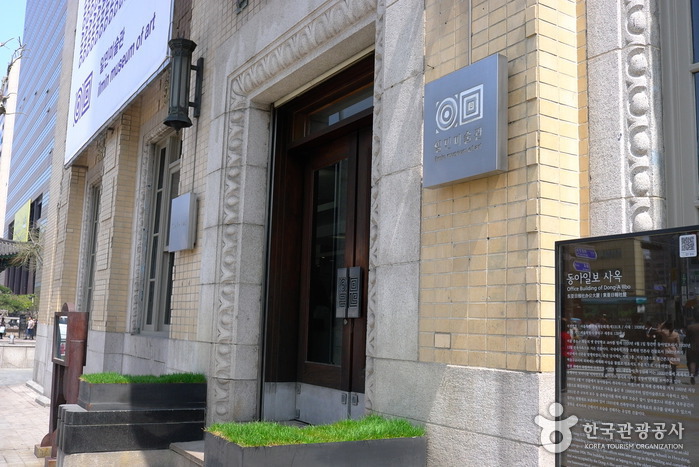
Ilmin Art Museum (일민미술관)
803.5M 2022-09-27
152, Sejong-daero, Jongno-gu, Seoul
The Ilmin Art Museum located in former Dong-A Newspaper Building, was formed in honor of their honorable and late CEO Kim Sang-man. The museum was established in December of 1996, and with a full renovation in 2001, large exhibition hall and Ilmin collection was placed in. Through the renovation, the combination of glass and steel made Artrium aimed to become one of the best comtemporary museum, connecting the museum to the streets of Gwanghwamun.
This museum boasts a large Ilmin collection. There are 430 pieces of Ilmin collection from Goryeo dynasty (918-1392) to present, 1,200 pieces in the Donga Newspaper's collection of art, and 100 pieces of art owned by Hyundai Corporation. The Ilmin Collection mostly consists of pieces that Kim Sang-man collected from ceramics to aesthetic paintings. The Dongah Newspaper's collection has time-relevant pieces that are important in history.
![Seoul Papyrus [Tax Refund Shop] (서울파피루스)](http://tong.visitkorea.or.kr/cms/resource/74/2878574_image2_1.jpg)
 English
 한국어
한국어 日本語
日本語 中文(简体)
 Deutsch
 Français
 Español
 Русский


