Bongwonsa Temple (봉원사)
3.9Km 2023-03-13
120, Bongwonsa-gil, Seodaemun-gu, Seoul
+82-2-392-3007
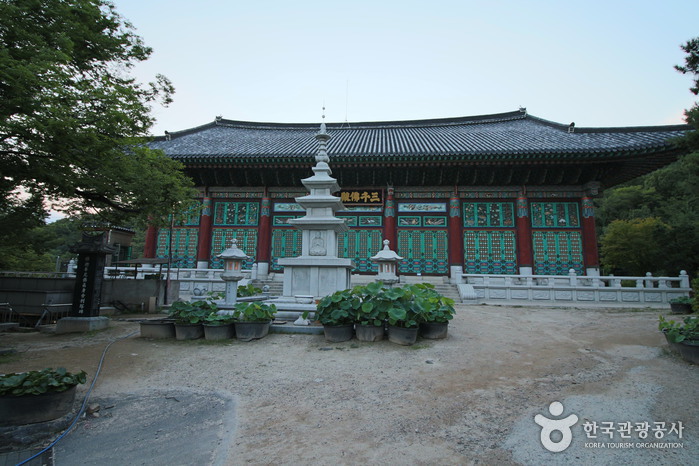
Located on the outskirts of Ansan Mountain in Bongwon-dong, Seodaemun-gu, Seoul, Bongwonsa Temple, as the center of Korean Buddhism Taego, is a thousand-year-old temple with a long history and tradition. In 889 (3rd year of Shilla Queen Jinseong’s reign), Monk Doseon founded it at the ground of Yeonhui Palace (now Yonsei Univ.) and named it Banyasa temple. It was destroyed during the Imjin War in 1592, and later in 1748 (the 24th year of Joseon King Yeongjo’s reign), it was rebuilt and renamed “Bongwonsa” by two Buddhist monks, Chanjeup and Jeungam.
“Yeongsanjae,” one of the Buddhist rituals and also a National Intangible Cultural Property, takes place at Bongwonsa on June 6 every year wishing for world peace and the reunification of North and South Korea. It was designated as one of the Intangible Cultural Heritage of Humanity by UNESCO in 2009. During Yeongsanjae, visitors can enjoy the Buddhist arts such as Beompae (Buddhist temple music for rituals) and dancing. Also, during summertime, Seoul Lotus Flower Culture Festival takes place, where visitors can enjoy the beautiful lotus flowers which are a symbol of Buddhism.
Supsok Hanbang Land (숲속한방랜드)
3.9Km 2024-03-18
75-7 Bongwonsa-gil, Seodaemun-gu, Seoul
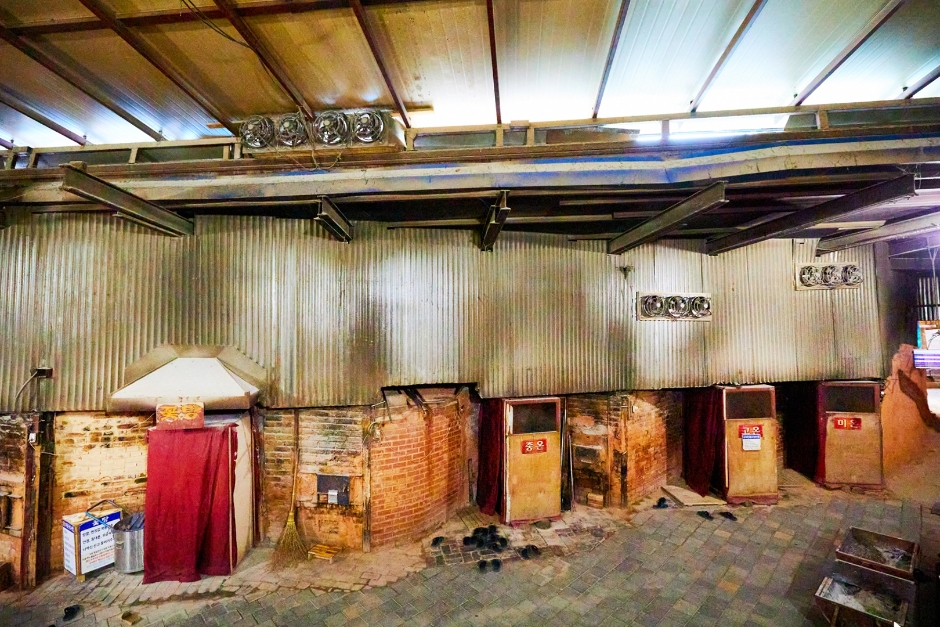
Jjimjjilbang, a Korean-style sauna that combines a traditional bathhouse with a hot steam room, is often ranked high among the unique experiences in Korea chosen by foreigners. Taking a steam bath in a charcoal kiln discharges waste products from the skin through sweat and eliminates accumulated fatigue. Supsok Hanbang Land has several charcoal kilns for different temperatures. Using them in order from low to high-temperature rooms is good, but the highest-temperature room, “Kkottang,” has a risk of causing skinburn, so visitors are advised to wear socks and cotton gloves to enter the room. Another unique experience is to grill sweet potatoes or rice cakes on the brazier in front of the charcoal kiln.
Mok In Museum Mok Seok Won (목인박물관 목석원)
4.0Km 2021-09-01
46-1, Changuimun-ro 5-gil, Jongno-gu, Seoul
+82-2-722-5066
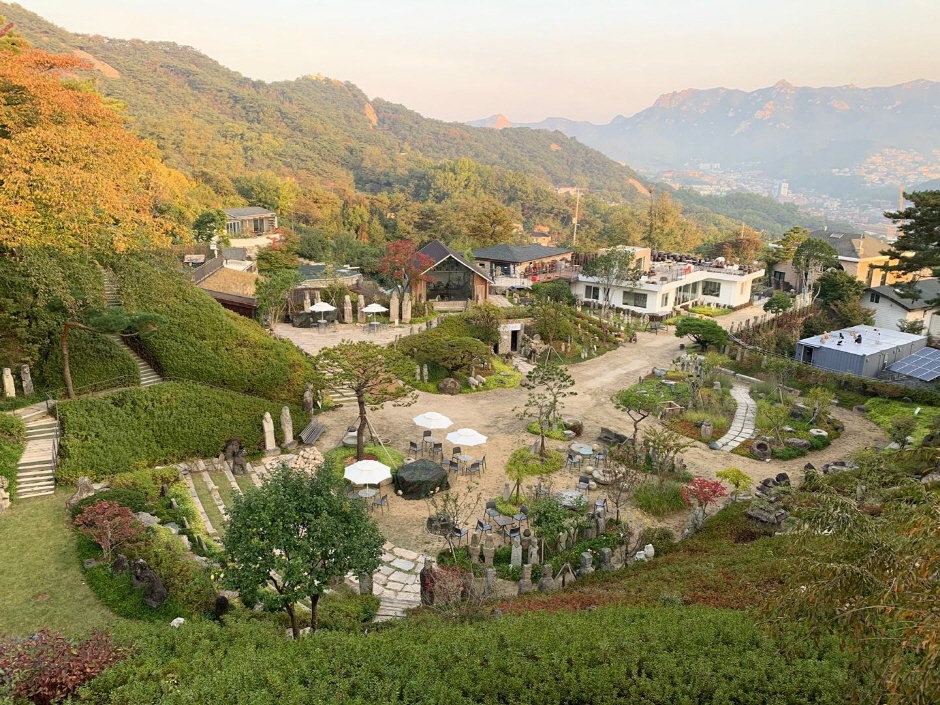
Mok In Museum Mok Seok Won relocated in 2019 from Insa-dong to Buam-dong. Six exhibition halls offer visitors a look at wooden figures from around the world. Mokin refers to traditional wooden sculptures carved in shapes of human figures or various animals. The museum holds around 12,000 wooden folk sculptures including those used to decorate funeral carriages and temples mostly from the Joseon dynasty up to modern times. The museum also has an outdoor exhibition hall that harmonizes the sculptures with nature.

Cheongun Literature Library (청운문학도서관)
4.0Km 2023-08-16
40 , Jahamun-ro 36-gil, Jongno-gu, Seoul
Cheongun Literature Library is located at the foot of Inwangsan Mountain and can be reached by following the mountain's walking trail starting from Changuimun Gate along the fortress wall. This public hanok library is designed in consideration of the sloped topography and the natural scenery of Inwangsan Mountain. The library consists of two floors: an underground floor and a ground floor. While the ground floor is designed as a traditional hanok, the underground floor is made of concrete to support the hanok building and the spacious outdoor yard. By implementing the natural slope in the library's design, the underground southern entrance is exposed, allowing sunlight to enter. The underground floor features a wide collection of books while the ground floor serves as a place for reading. The natural environment surrounding the library adds to the hanok building's traditional and peaceful charms.
Choi Sunu House (최순우 옛집)
4.0Km 2021-12-21
9, Seongbuk-ro 15-gil, Seongbuk-gu, Seoul
+82-2-3675-3401
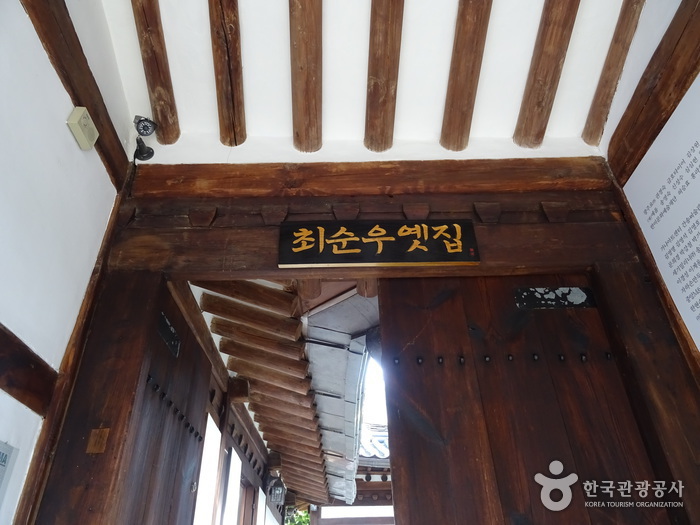
The Choi Sunu House is the old residence of Hyegok Choi Sunu (1916-1984), who lived in this house from 1976 until the day he passed away. The house is designated as Korea’s Registered Cultural Property. Choi Sunu was a leading art historian who served as the director of the National Museum of Korea. He devoted his life to rediscovering the beauty of Korean art and made many academic accomplishments in the areas of Korean ceramics, traditional woodcraft, and the history of painting.
The house has been open to the public as the Hyegok Choi Sunu Memorial Hall since 2004. The memorial hall displays Choi Sunu’s relics as a permanent exhibition and holds special exhibitions in the fall as well as cultural programs every spring and fall.
Kansong Art Museum (간송미술관(서울 보화각))
4.0Km 2025-06-30
102-11 Seongbuk-ro, Seongbuk-gu, Seoul
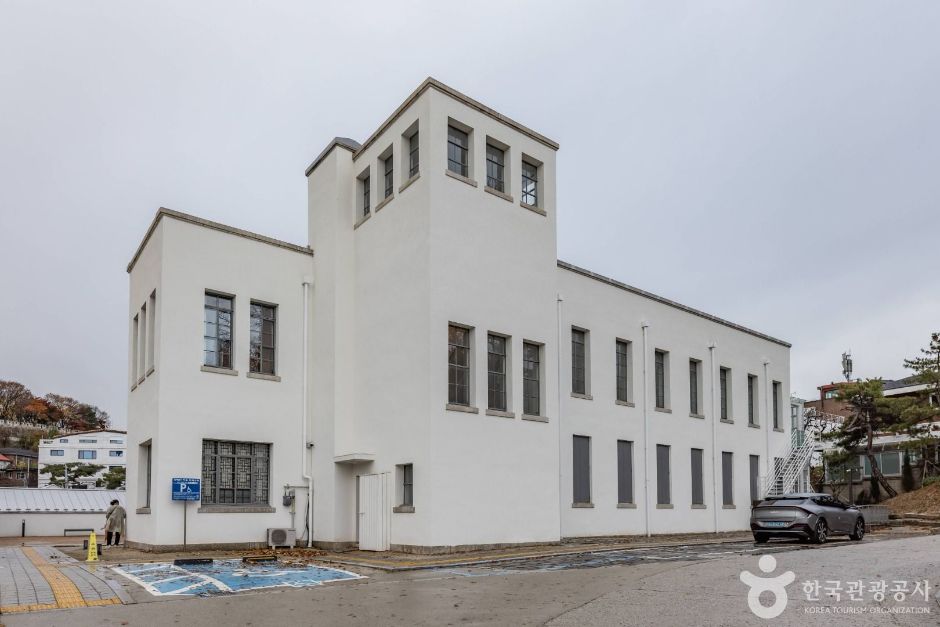
Kansong Art Museum was the first private art museum in Korea, opened as Bohwagak in 1938 by Kansong Jeon Hyeong-pil. The name was changed to the current Kansong Art Museum in 1966. Bohwagak was designated as National Registered Cultural Heritage No. 768 on December 30, 2019. Jeon Hyeong-pil dedicated his life to preserving and researching Korea’s representative relics that were devaluated and purposefully obliterated during the Japanese colonial era, as well as to acknowledging their cultural excellence and beauty. The museum houses 11 national treasures and 24 treasures.
Sogang University (서강대학교)
4.1Km 2023-07-07
35, Baekbeom-ro, Mapo-gu, Seoul
+82-2-705-8114
Sogang University is a private, coeducational, Jesuit university located in central Seoul. Campus life at Sogang University is enhanced by student clubs as well as technological advancement. Furthermore, the proximity to other leading universities (Yonsei University and Ewha Woman's University) contributes to the intellectual and social vitality of student life at Sogang University.
Sooyeon Sanbang (수연산방)
4.2Km 2025-10-23
8 Seongbuk-ro 26-gil, Seongbuk-gu, Seoul
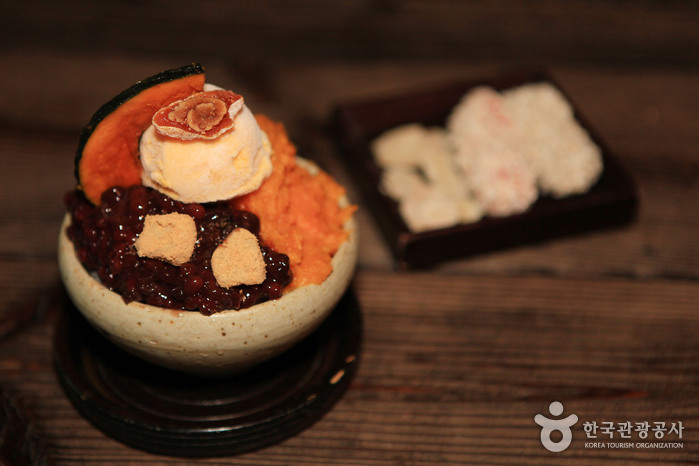
Sooyeon Sanbang is a traditional tea house located in Seongbuk-dong. It was originally built during the Japanese colonial period and was the hanok of the literary figure Lee Taejun. Today, it is operated as a tea house by the writer's granddaughter. The name Sooyeon Sanbang means "a house where literati gather in the mountains." Visitors can enjoy traditional teas such as daechucha (jujube tea) and ssanghwacha (medicinal herb tea), along with snacks like injeolmi (bean-powder-coated rice cake).
National Hangeul Museum (국립한글박물관)
4.2Km 2022-12-15
139, Seobinggo-ro, Yongsan-gu, Seoul
+82-2-2124-6200
The National Hangeul Museum was established to preserve, spread, and develop the Korean alphabet, Hangeul. The museum showcases the history and value of Korean orthography, Korean’s most-valued cultural asset, through exhibitions, activities, and education. Occupying over 11,322 ㎡, the museum has one basement level and three ground levels, along with an outdoor grass field and rest area perfect for cultural events, exhibits, and education.
The museum is comprised of the Hangeul library on the first floor, a permanent exhibition hall, ㅎ Café, and cultural product shop on the second floor, and a planned exhibition hall and Hangeul playground for children and foreigners on the third floor.
Jeong’s Family (정스패밀리)
4.2Km 2025-03-15
16 , Hyochangwon-ro 8-gil, Yongsan-gu, Seoul
+82-10-6332-2043
Jeong's Family is a foreigner-only guesthouse in Hanseong Han River Apartments in Yongsan-gu, Seoul. The apartment building is in a quiet residential area and has a fine view over the Han River and the riverside Hangang Park - which is a great place for walking or cycling. The two rooms are furnished with laptop PCs. Guests will recieve a welcome drink when they check-in, and a simple breakfast and dinner are provided upon prior reservation. The guesthouse is close to the airport bus stop, and convenient for public transport to tourist hotspots such as Gangnam, Hongdae, and Myeong-dong. There’s a key deposit system in operation.
 English
 한국어
한국어 日本語
日本語 中文(简体)
 Deutsch
 Français
 Español
 Русский


