
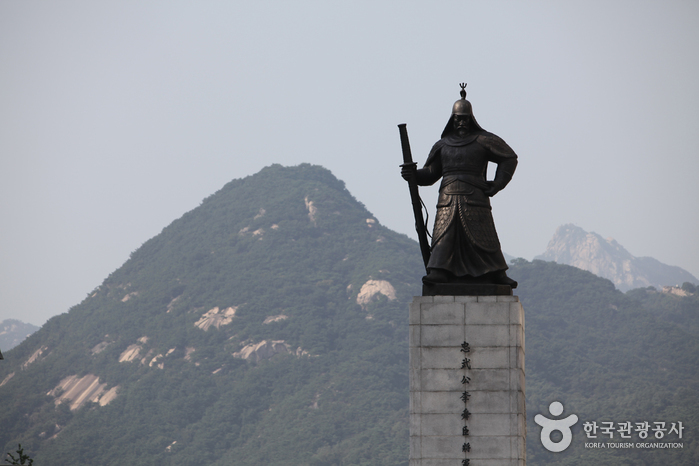
Statue of Admiral Yi Sun-Shin (충무공 이순신 동상)
1.3Km 2024-03-04
175, Sejong-daero, Jongno-gu, Seoul
The Statue of Admiral Yi Sun-Shin can be found at Gwanghwamun Square in Seoul. Admiral Yi Sun-shin (1545-1598) was a naval commander who served during the Japanese invasion of Korea (also known as Imjin War: 1592-1598). The undefeated admiral achieved 23 victories against the Japanese navy using innovative tactics, and he is thus considered as one of the greatest generals in the history of Korea. Admiral Yi’s likeness can be found on the 100 won coin.
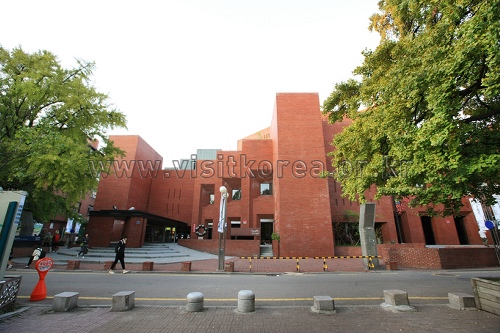
Arko Arts Theater (아르코예술극장)
1.3Km 2021-04-16
7, Daehak-ro 8-gil, Jongno-gu, Seoul
+82-2-3668-0007
Opened on April 1, 1981, Arko Arts Theater’s mission statement is to “boost performance art, obtain performance space to promote its popularity among the public, and support stages to pure art organizations facing financial difficulties." As the center of performance art, the theater also began to attract a slew of small theaters and has played a pivotal role in promoting performance art and populating Dongsung-dong with artists. The theater offers a large hall, small hall, multipurpose studio space, and practice room.
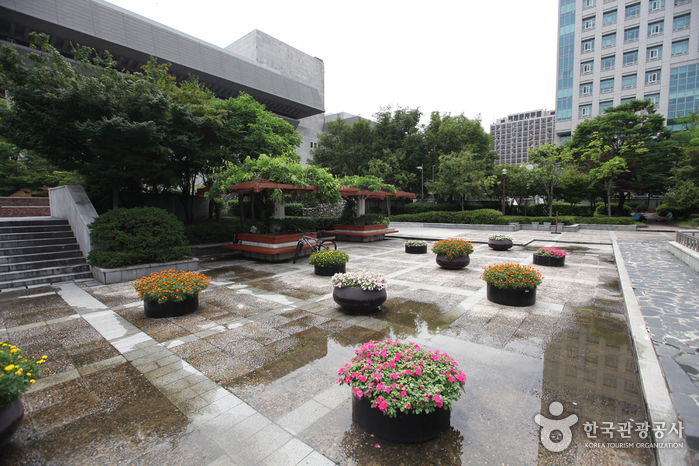
Sejong-ro Park (세종로공원)
1.3Km 2022-08-31
jiha 189, Sejong-daero, Jongno-gu, Seoul
+82-2-722-9598
Sejong-ro Park is located next to Sejong Center for the Performing Arts in central Seoul. Inside the park, there are wooden benches and shaded areas where people can sit and relax. Also available are water fountains, a round outdoor stage, and various sculptures. The lunch crowd from the nearby office buildings often come to the park during weekdays. On the weekends, the park is also used as a venue for outdoor weddings.
Seoul's anthem and the poem "Bulnori" by Ju Yo-han are written on a memorial stone that can be found inside the park.
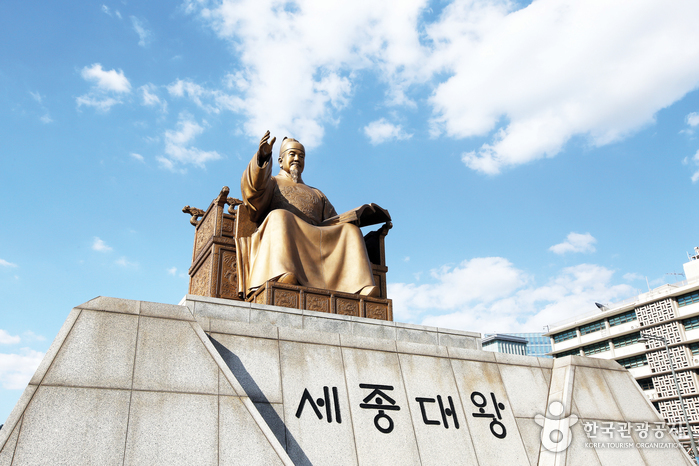
King Sejong Statue (세종대왕 동상)
1.3Km 2024-03-04
175, Sejong-daero, Jongno-gu, Seoul
+82-2-2133-7713
King Sejong Statue can be found at Seoul’s Gwanghawmun Square. The statue commemorates King Sejong the Great (1397-1450, reign 1418-1450), the fourth king of Joseon (1392-1897). He is thought to be the greatest king in Korean history, for he is credited with great developments in science and technology, expansion of Joseon’s territory, and the creation of the Korean script, [Hangeul]. King Sejong’s likeness can be found on the 10,000 won bill as well.
Daehakro Arts Theater (대학로예술극장)
1.3Km 2021-07-05
17, Daehak-ro 10-gil, Jongno-gu, Seoul
+82-2-3668-0007
Daehakro Arts Theater is a venue for performing arts that is comprised of a main hall and small hall. The main hall fills the first and second floors and has a proscenium stage with seating arranged in fan-shape. In an effort to present a more contemporary theater experience, the seats here are placed closer to the stage than those of a standard theater, allowing the audience to experience performances more vividly.
 English
 한국어
한국어 日本語
日本語 中文(简体)
 Deutsch
 Français
 Español
 Русский


