
National Theater of Korea (국립극장)
2.0Km 2024-03-06
59, Jangchungdan-ro, Jung-gu, Seoul
The National Theater of Korea opened in 1950 as the first national theater in Asia. It is the only production theater that takes traditional arts to recreate them as contemporary art. It offers various types of theaters, such as Haeoreum Grand Theater, Daloreum Theater (middle-size), Immersive Studio ByeolByeol (small-size), and Haneul Round Theater with a circular stage structure. In addition, the Museum of Performing Arts, Cultural Plaza, and other convenience stores and coffe shops offer pleasure and relax to its visitors.
Seoul Wave Art Center (서울웨이브아트센터)
2.0Km 2025-10-27
145-35 Jamwon-ro, Seocho-gu, Seoul
Seoul Wave Art Center is located within Jamwon Hangang Park, and focuses on promoting the relationship between the sky and earth, people and nature, and people and people. The art center opened in 2020 and has continued to host a range of new exhibitions.
Jamwon Hangang Park Outdoor Swimming Pool (한강시민공원 잠원수영장(실외))
2.1Km 2022-09-06
221-124, Jamwon-ro, Seocho-gu, Seoul
Six of the city's Hangang Parks have outdoor swimming pools, including Jamwon Hangang Park. Supported by meticulous water quality management, they are not only safe, but also an inexpensive alternative to private facilities. Excellent amenities include swimming equipment rentals, food, and beverages.
National Hangeul Museum (국립한글박물관)
2.1Km 2022-12-15
139, Seobinggo-ro, Yongsan-gu, Seoul
The National Hangeul Museum was established to preserve, spread, and develop the Korean alphabet, Hangeul. The museum showcases the history and value of Korean orthography, Korean’s most-valued cultural asset, through exhibitions, activities, and education. Occupying over 11,322 ㎡, the museum has one basement level and three ground levels, along with an outdoor grass field and rest area perfect for cultural events, exhibits, and education.
The museum is comprised of the Hangeul library on the first floor, a permanent exhibition hall, ㅎ Café, and cultural product shop on the second floor, and a planned exhibition hall and Hangeul playground for children and foreigners on the third floor.
Jamwon Hangang Park (잠원한강공원)
2.1Km 2024-10-23
221-124 Jamwon-ro, Seocho-gu, Seoul
Jamwon Hangang Park is a public recreation area on the Hangang River. Nearby attractions include athletic facilities (running tracks, soccer fields, basketball courts, etc.), various water sports facilities, and an 8.2-kilometer inline skating path. A bicycle path along the Hanfgang River, an outdoor swimming pool in summer, and a snow sledding center in winter are the most frequently used ones by may citizens. Jamwon was once a mulberry field, so there is also a thematic nature learning center that depicts the life of the silkworm.
Seoul Namsan Park (남산공원(서울))
2.4Km 2024-03-18
231 Samil-daero, Jung-gu, Seoul
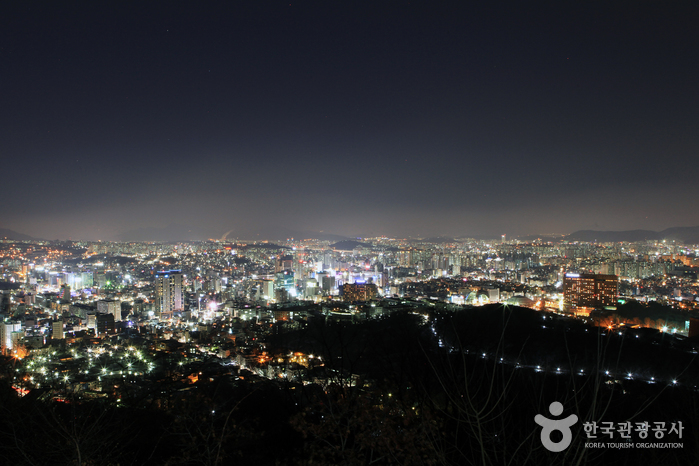
Namsan Mountain rises in the heart of Seoul at an altitude of 265 meters and has been a significant landmark since the Joseon dynasty (1392-1897), leaving behind several ruins. It was heavily damaged in the early 20th century, but was partially restored in 1968 with the creation of the park. Highlights include Namsan Tower and love locks left by numerous couples. Visitors can also easily reach the top by a cable car or bus.
Golden Blue Marina (골든블루마리나)
2.5Km 2025-10-27
2085-14 Olympic-daero, Seocho-gu, Seoul
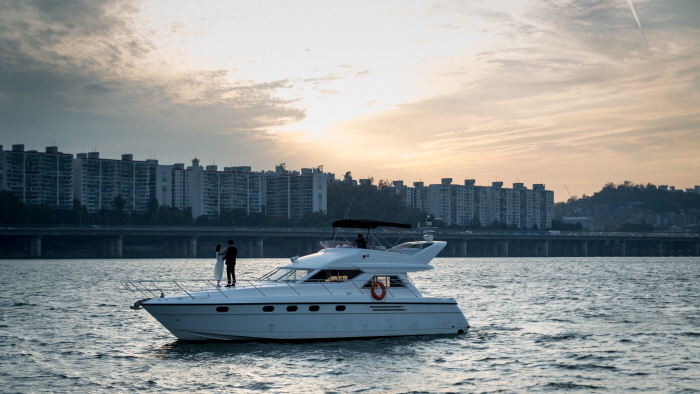
Golden Blue Marina, located on Some Sevit, is a cultural destination on the water, offering a unique way to enjoy views of Seoul along the Hangang River. This popular spot for parties and proposals helps you cruise through the city on a luxury yacht, creating a private retreat. In the evening, you can see the N Seoul Tower and the Rainbow Fountain illuminated by 200 lights, making it feel like you’re floating through the Milky Way.
◎ Travel information to meet Hallyu’s charm - variety show "Entertainment Weekly"
This is where the members of TWICE enjoyed a fall sports day at Banpo Hangang Park during their appearance on "Entertainment Weekly." The losing team rode a pedal boat, while the winners celebrated with a yacht ride, creating fun and memorable moments.
Ahn Junggeun Memorial Museum (안중근의사기념관)
2.5Km 2024-03-06
91, Sowol-ro, Jung-gu, Seoul
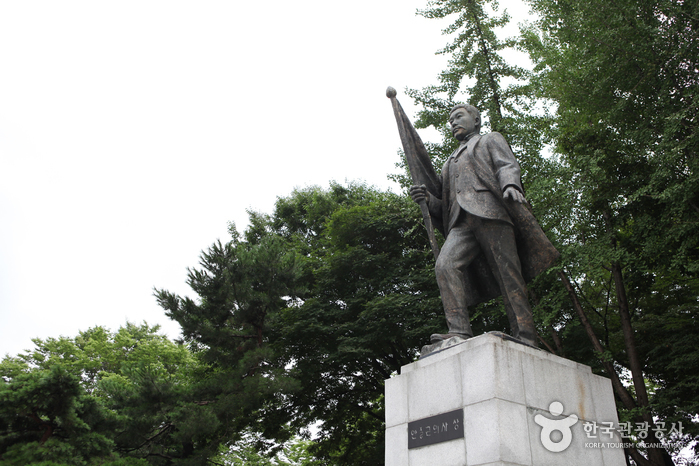
The Ahn Junggeun Memorial Museum honors the memory of Ahn Junggeun (1879-1910), an independence activist and soldier who advocated for Korean independence and peace in Asia. He fought against the Japanese to defend the Korean Empire (1897-1910). He was executed in 1910 for assassinating Hirobumi Ito, the Japanese who led the invasion of Korea in 1909, in Harbin, China.
Amorepacific Museum of Art (아모레퍼시픽미술관)
2.6Km 2024-12-31
100 Hangang-daero, Yongsan-gu, Seoul
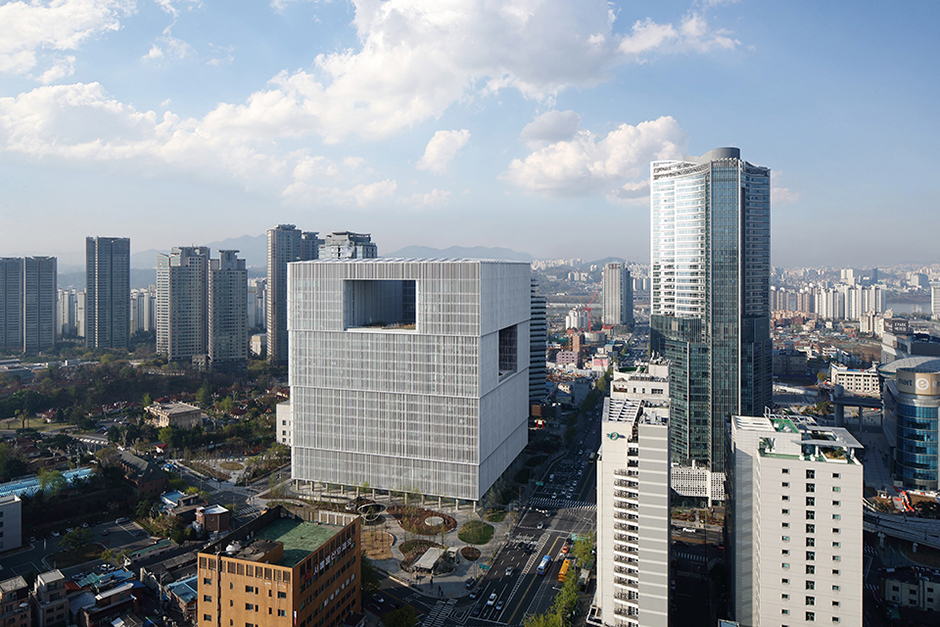
Amorepacific Museum of Art, located in Yongsan-gu, Seoul, was originally a museum exhibiting artworks collected by the late Seo Seong-hwan, the founder of Amorepacific, but later changed its name to Amorepacific Museum of Art, or APMA, in 2009 and has since been operating as an art exhibition hall. The mission upon its foundation was seeking to be "a space where beauty in the midst of daily lives is discovered" and communicating with the public. In accordance with this objective, the museum collects, researches, and exhibits Korean ancient art and both Korean and international contemporary art while, also, aiding researchers, scholars, and young artists. The underground exhibition hall hosts diverse exhibits encompassing ancient art, contemporary art, and Korean art. The 1st floor of the "Atrium," an enormous space that continues from the 1st to 3rd floors, features the museum lobby, a museum shop, an exhibition space called "APMA Cabinet" and apLAP, which is a library of art exhibition brochures from around the world. The art museum is located on the 1st floor of the new Amorepacific headquarters building, a famous work of architectural beauty of Yongsan designed after white porcelain.
Hanshin Medipia Health Care ((사) 정해복지부설 한신메디피아의원)
2.6Km 2025-10-23
(3rd Floor), 94 Jamwon-ro, Seocho-gu, Seoul
Hanshin Medipia Health Care was established in the 1980s and boasts over 40 years of experience and tradition in health screening. With its extensive experience and expertise, we promise you to become a trusted healthcare partner.
-More specialized and segmented with 3 Zones and 7 Centers.
3 Zones: Premium Zone, Comprehensive Health Checkup Zone, and General Health Checkup Zone, capable of examining approximately 1,000 persons per day.
7 Centers: Ultrasound Center, Radiology Center, Diagnostic Medicine Center, Endoscopy Center, Women's Health Checkup Center, Cancer Diagnostics Imaging Center, and CRM/IT/AI Center
 English
 한국어
한국어 日本語
日本語 中文(简体)
 Deutsch
 Français
 Español
 Русский


