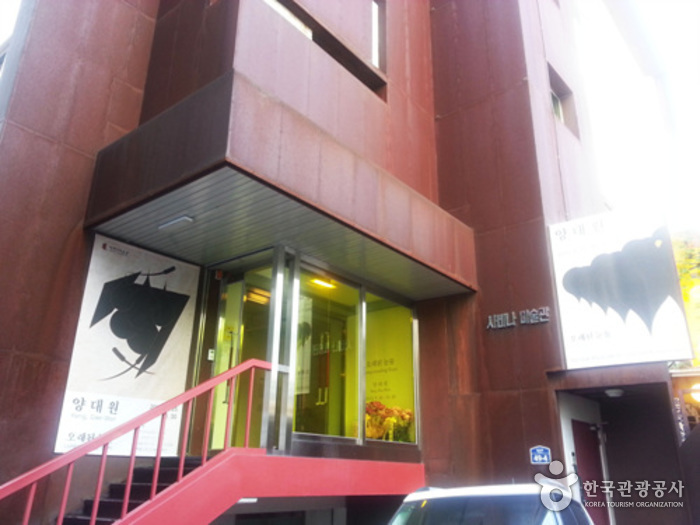
Savina Museum of Contemporary Art (사비나 미술관)
15.9Km 2022-10-20
93 , Jingwan 1-ro, Eunpyeong-gu, Seoul
+82-2-736-4371
The Savina Museum provides visitors with fresh and exciting pieces that reflect the diverse and dynamic aspects of Korean modern art. Museum organizers actively focus on developing the museum’s exhibitions, educational programs, publications, and art collections, continually working to transform the museum into a living, breathing center of arts. The museum not only supports the development of artists from a more traditional list of fields like painting, sculpture, photography and media arts, but also introduces exhibits highlighting new trends in the art world.
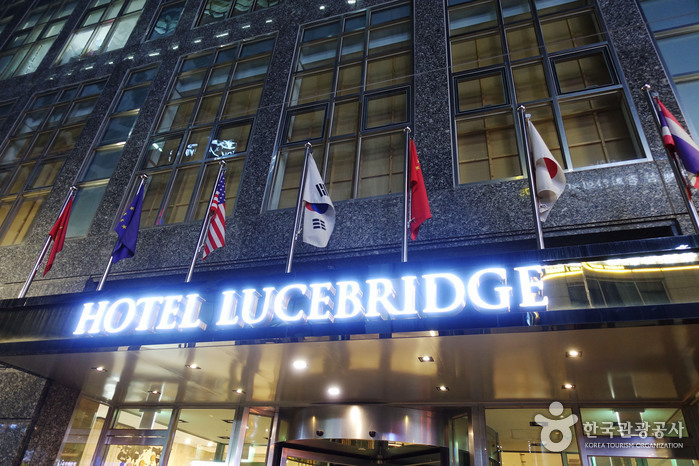
THE FIRST STAY (더퍼스트스테이 호텔)
15.9Km 2024-12-23
23 , Magokdong-ro 4-gil, Gangseo-gu, Seoul
+82-2-2600-8300
The First Stay Hotel, located in Magok-dong, Gangseo-gu, Seoul, is chosen by many frequent business trippers as well as domestic and foreign travelers because of its modern styling, practical prices, and convenient transport links. Gimpo Airport is 10 minutes and Incheon International Airport just 30 minutes away, while subway and bus stops are within a 5-minute walk. The hotel has ample parking space, and self-catering is possible in some rooms.
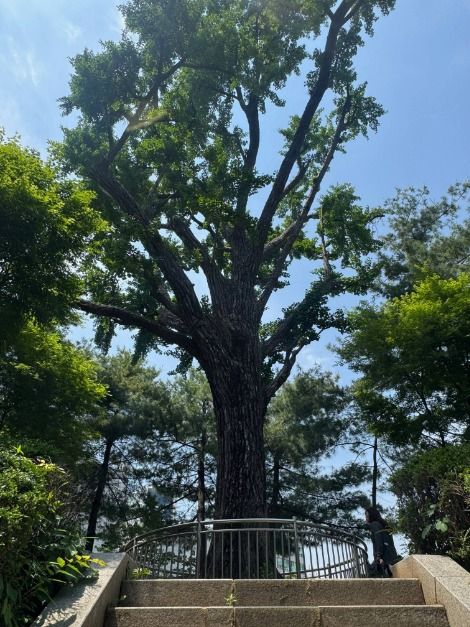
Ginkgo Tree at the Fortress Well Site (성주우물터 은행나무)
15.9Km 2025-09-15
Gayang-dong, Gangseo-gu, Seoul
Ginkgo Tree at the Fortress Well Site refers to the old ginkgo tree, which have been designated as a protected tree in 1988, located in Gayang-dong, Gangseo-gu in Seoul. Until the Gayang apartment complex was built, the area where the ginkgo tree is located was a historic place with a beautiful landscape and many anecdotes and legends. Before the Goryeo dynasty, its location served as an important strategic point along the lower part of the Hangang River, where it had a ferry dock with boats that bypassed Haengju and Paju as a shortcut for commuting between Kaeseong and Pyongyang, and is associated with many legends of historical figures who had used the dock. The ginkgo tree also appears in a painting drawn by Gyeomjae Jeongseon, a historic painter of the Joseon dynasty.

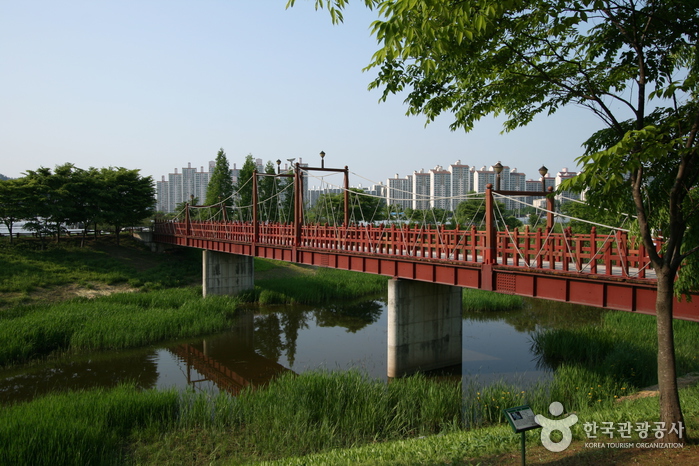
Jangja Lake Park (장자호수공원)
16.1Km 2022-01-01
878, Topyeong-dong, Guri-si, Gyeonggi-do
+82-31-550-2472
Guri City worked to improve the water quality of Jangja Lake in order to form the Jangja Lake Park and in the process an ecological zone was created. A 3.6 km tree-lined walking trail runs through the park and is frequently used by people enjoying an outing or getting some light exercise. Concerts, exhibitions, and other events are held on the outdoor stage on weekends and the park is widely used as a place to relax by local residents.
* Size - Area 107,385 m², average water depth 2.2 m (0.2 m~4.7 m), and walkway 4.6 km
GSam Hospital (지샘병원)
16.1Km 2025-10-23
591 Gunpo-ro, Gunpo-si, Gyeonggi-do
Opened in June 2013 in Gunpo, Gyeonggi-do, G SAM Hospital is a global general hospital with 400 beds, 35 medical departments, and more than 20 specialty centers and clinics providing patient-centered care.
Our medical staff is composed of top-notch specialists with extensive clinical experience across all departments, offering a high-quality medical care. They have outstanding clinical expertise in cancer, and cerebrovascular, circulatory, digestive, joint/spine diseases.
In particular, we provide excellent treatment regarding metastatic cancer through our targeted therapy (LHIPEC, ET, etc.), NK cell therapy, and immunotherapy, which have attracted many international patients to our hospital.
We are certified by the Korean Accreditation Program for Hospitals Serving Foreign Patients (KAFH) and a Leading Institution for Medical Tourism, and operate an international healthcare center for overseas patients. Specialized coordinators fluent in English, Russian, and other languages provide interpretation for appointments and follow-up care.
Bucheon Botanical Garden (부천식물원)
16.1Km 2021-04-08
660, Gilju-ro, Bucheon-si, Gyeonggi-do
+82-32-625-4877
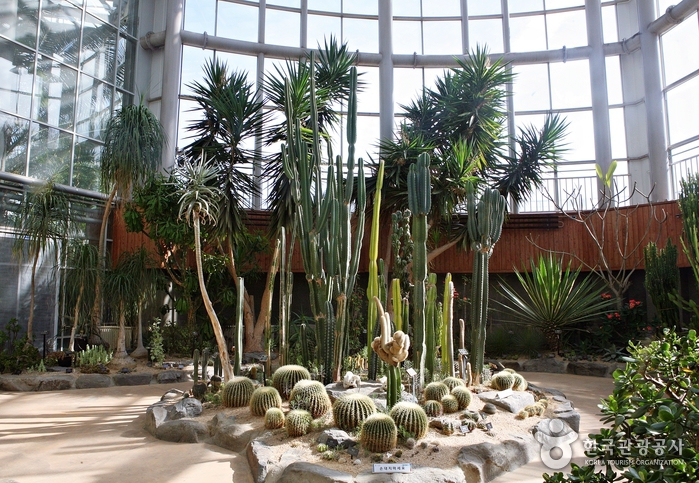
Bucheon Botanical Garden houses many rare plants, spread across two above-ground floors and two underground floors in a 27,124 ㎡ building. The building was designed in the shape of a peach flower, the symbol of Bucheon, and has one central garden and five themed gardens: general plant garden, aquatic plant garden, tropical plant garden, succulent plant garden, and indigenous plant garden.
In the central garden, 9,975 trees representing some 310 species are planted. With a forest nearby, the botanical garden offers a great nature learning experience for visitors. Together with the Natural Ecology Museum and Children Zoo nearby, it is also a great cultural and recreational destination.
100 Years Market 100 Years Night (백년시장 백년나이트)
16.2Km 2025-10-23
16 Hancheon-ro 144-gil, Gangbuk-gu, Seoul
+82-2-903-9110
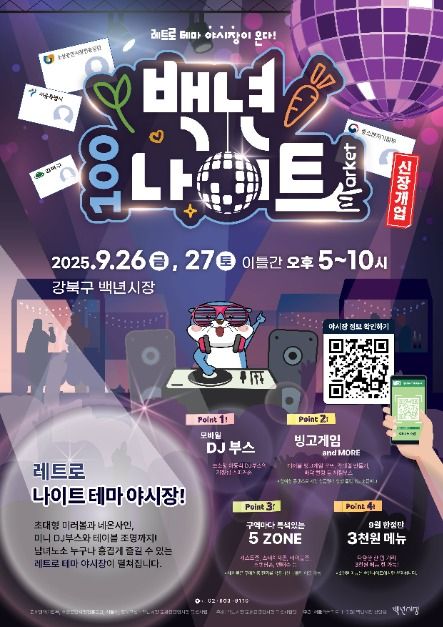
100 Year Market, a traditional market with a long history, transforms into a vibrant night market as evening falls. With a mini mirror ball, neon signs, and a mini DJ booth alongside new dining options each month, this retro-themed market is perfect for visitors of all ages.
![Jingwansa Temple (Seoul) [진관사(서울)]](http://tong.visitkorea.or.kr/cms/resource/33/3429433_image2_1.JPG)
Jingwansa Temple (Seoul) [진관사(서울)]
16.2Km 2025-06-30
73 Jingwan-gil, Eunpyeong-gu, Seoul
Jingwansa Temple is one of the four Buddhist temples that surround Seoul. It was known as the center of Buddhism and academics. Jingwansa Temple is home to a variety of buildings, such as Daeungjeon Hall, Myeongbujeon Hall, and Nahanjeon Hall, all surrounded by the beautiful nature of Bukhansan Mountain. In fact, the temple complex is a popular fall destination for its fall colors. Visitors can also visit the nearby Eunpyeong Hanok Village.
Jingwansaggyegok Valley (진관사 계곡)
16.2Km 2024-02-20
73 Jingwan-gil, Eunpyeong-gu, Seoul
Jingwansaggyegok Valley is a 1km-long stream located within the Bukhansan National Park, with clear water always flowing. Surrounded by deep forests, it offers refreshing shade and clean air. The valley features various shaped rocks and waterfalls, creating a beautiful scenery. In particular, it's a great spot for water activities with the cool shade and refreshing stream during the summer, and the autumn leaves make it stunning in the fall. Its accessibility from downtown Seoul adds to its appeal.
 English
 한국어
한국어 日本語
日本語 中文(简体)
 Deutsch
 Français
 Español
 Русский


