Myeongdong Cathedral (서울 명동성당)
7.3Km 2022-12-27
74, Myeongdong-gil, Jung-gu, Seoul
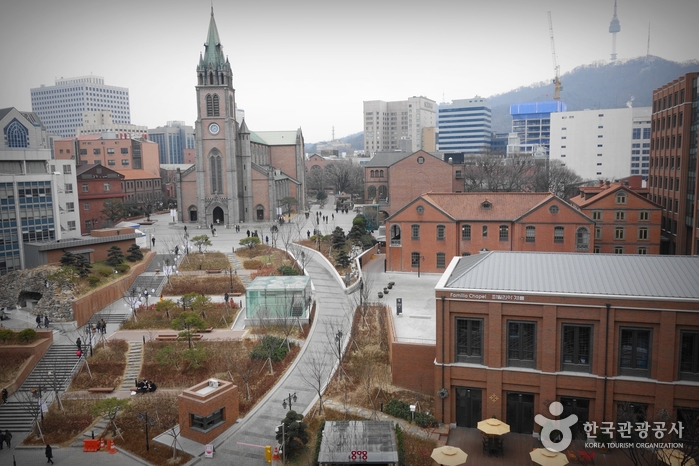
Myeongdong Cathedral is the Church for Archdiocese of Seoul and was also the birthplace for the Roman Catholic Church community in Korea. The church houses the remains of several individuals: Bishop Laurent Joseph Marie Imbert (1796-1839), and priests Peter Simon (1803-1839), James (Jacques Honor Chastan, 1803-1839) and Pourthie Jean Antoine Charles (1830-1866) and four martyrs.
Myeongdong Cathedral is located in downtown Seoul and tourists frequently come and visit the place. Near the cathedral are other tourism spots such as Namsangol Hanok Village preserving Korean traditional houses, N Seoul Tower overlooking Seoul and Namdaemun Market, a traditional market with a wide variety of food and goods.

Ebookers Korea Inc. ((주)이부커스코리아)
7.4Km 2025-10-23
(2nd Floor), 212 Jangchungdan-ro, Jung-gu, Seoul
We strive for a special kind of tourism that combines wellness tourism (healing) and medical tourism (treatment).
We are a Korean wellness and medical tourism company leading the country’s safe and healthy travel culture.
* Products and Services
Wellness medical tourism programs that uniquely combine wellness and medical tourism
Referral and reservation service for selected wellness destinations and Korean hospitals with excellent medical technology
Guidance services provided at local partner companies
Content creation and reservation based on our personalized service system
Convenient tourism programs catering to each patient's health conditions
Medical tourism visa application and referral services on C33VISA site
* A medical tourism product brand
Medi Well Come products: Health checkup / general practice (minor / major / female / preventive / eye problems)

Seongsu Museum (성수미술관)
7.4Km 2025-10-30
39 Seongsuil-ro 8-gil, Seongdong-gu, Seoul
rom drawing to coloring
This is a canvas drawing cafe where Yuna of ITZY visited and experienced art. It is decorated as a cultural living space where you can draw and color. Drawing tools such as sketches, acrylic paints, and brushes are provided. It is also interesting that there is a mobile phone holder so that you can capture your drawing as a time-lapse.
Youngchive Seongsu (영카이브 성수점)
7.4Km 2025-11-06
1F, 32 Seongsui-ro 18-gil, Seongdong-gu, Seoul
◎ Travel information to meet Hallyu’s charm
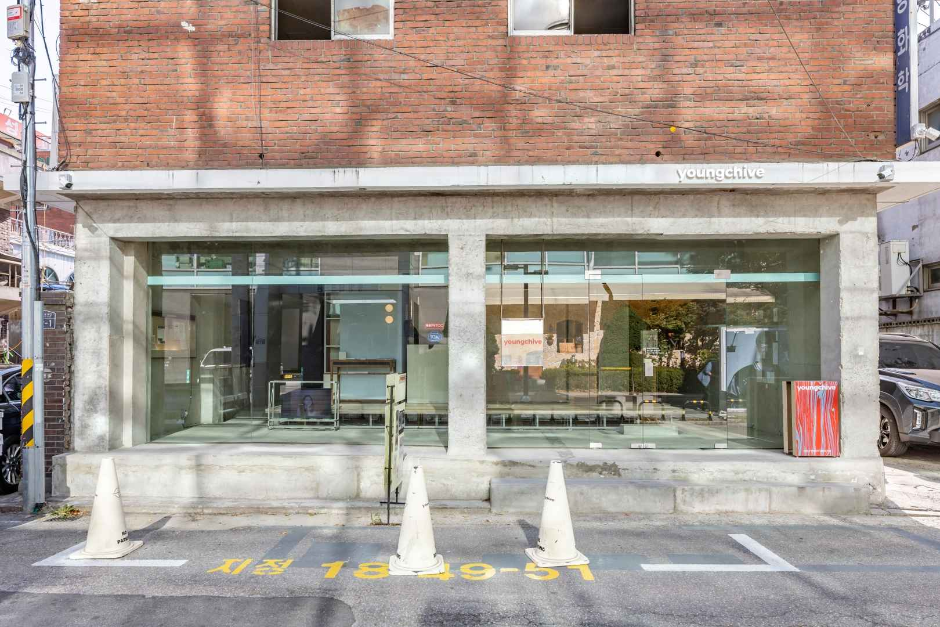
Youngchive Seongsu is the self-photo studio where Red Velvet’s Seulgi took photos with the staff while filming her vlog. It is known for its warm color tones, which set it apart from other self-photo studios. The Seongsu branch offers unique booths, such as the “still room” and “denim room,” which aren’t available at other locations, making it a must-visit spot.
Sindang-dong Tteokbokki Town (신당동떡볶이골목)
7.4Km 2022-10-25
10-18, Dasan-ro 33-gil, Jung-gu, Seoul
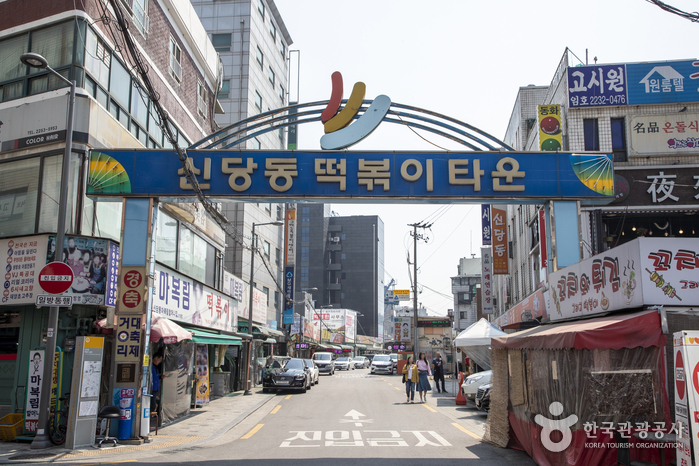
Sindang-dongTteokbokki Town started in the late '70s, although the alley did not become famous until the '80s. At that time, each restaurant had its own DJ booth, with the image of the "cool DJ" who played the music becoming a symbol of Sindang-dong Tteokbokki Town. In addition, this period also marked the prime time of high school baseball where students would crowd the streets on days when Duksoo Commercial High School and Sunrin Commercial High School (now Sunrin Internet High School) played against one another. Although these high school students have aged, they continue to visit the area, reliving their youth and continuing to indulge in the specialty tteokbokki.
However, some claim the history of this alley began in the 1950s. The owner of Mabongnim Halmeoni Tteokbokki restaurant says tteokbokki was being sold as early as 1953 as the area used to be home to Donga Theater and she sold tteokbokki, corn and potatoes to those visiting the theater. At first, tteokbokki was simply made with gochujang (red chili paste) but as time went by, cooks decided the dish could be more than just a snack. By adding ingredients like eggs, cellophane noodles, fish cakes, instant noodles and more recently squid, prawn and cheese, tteokbokki can be made more delicious and turns this beloved snack into a full meal.
Seosomun Historical Park (서소문역사공원)
7.4Km 2023-08-11
5, Chilpae-ro, Jung-gu, Seoul
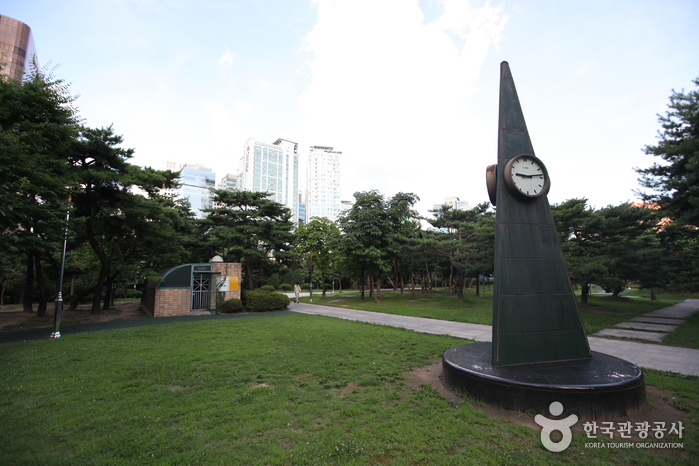
The Seosomun Gate area, which is located outside Seosomun Gate, was used as a persecution site in the 19th century before it turned into the local park of today. Many Catholics were suppressed and martyred here, making the area a holy site for Korean Catholics. Seosomun Gate was a gateway to Chilpae Market located near Namdaemun Gate. It was always busy with passerbys and the persecution site was established outside the gate to set an example of crime punishment to all the witnesses.
On May 15, 1999, a memorial tower was raised at the center of the park in honor of the martyrs. In 2013, Seoul's Jung-gu district also founded Seosumun Holy Shrine History Museum with a memorial exhibition hall in their honor.
Myungbo Art Hall (명보아트홀)
7.4Km 2025-04-15
47 Mareunnae-ro, Jung-gu, Seoul
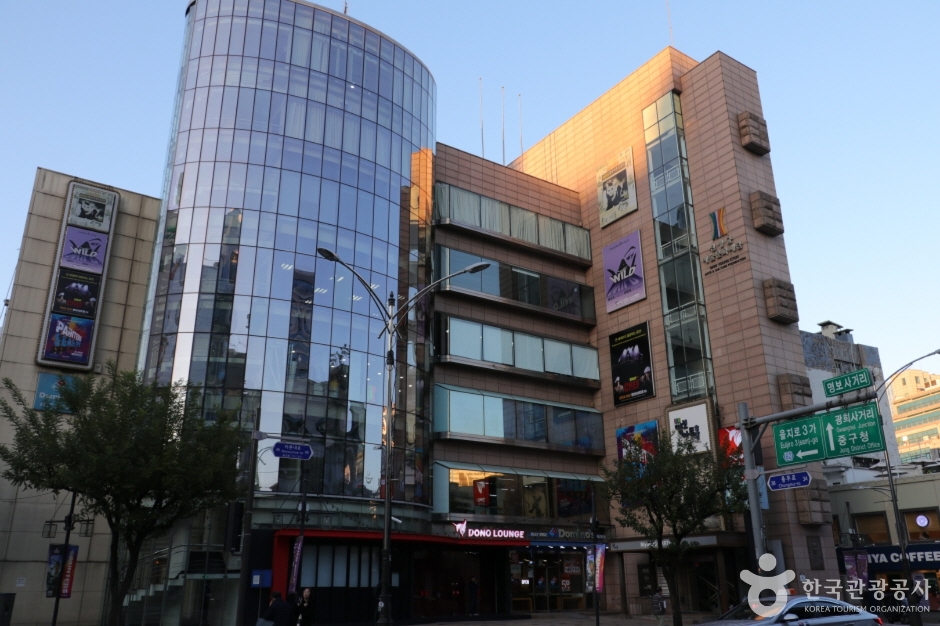
Located in Euljiro 3(sam)-ga, the heart of Seoul, Myungbo Art Hall is a cultural complex that consists of a professional theatre hall. Renovated from Myungbo Theater in 2009, Myungbo Art Hall is equipped with state-of-the-arts lighting and sound equipment that guarantees high-quality theatre experience for the audience. In addition, the hall also has comfortable seats along with other amenities for the audience's convenience. Myungbo Art Hall aims to globalize Korean performance culture by creating a variety of content that incorporate Korean theatre with tourism. This area is also where the house of Admiral Yi Sun-sin was located, which is honored with a memorial plaque listing his accomplishments.
Lime Tree Dental Hospital (라임나무치과병원)
7.5Km 2025-10-23
7F, 43 Myeongdong-gil, Jung-gu, Seoul
Located in Myeong-dong, the heart of Seoul tourism, Lime Tree Dental Hospital is a hospital-grade medical institute. It is led by In-su Kim, the Chief Director with 27 years of experience, and it has a team of specialists covering different departments. This hospital boasts superb accessibility as it is right near Myeong-dong Station (Subway Line 4) and Euljiro 1(il)-ga Station (Subway Line 2).
Skilled medical staff in esthetic prosthodontics are in charge of procedures such as One-day Veneer and All Ceramic Crowns. Additionally, medical staff who have experience placing over 35,000 dental implants directly perform implant procedures.
A leader in K-medicine, Lime Tree Dental Hospital is committed to giving customers the utmost satisfaction.
Beauty Play (뷰티플레이)
7.5Km 2025-11-14
73 Myeongdong-gil, Jung-gu, Seoul
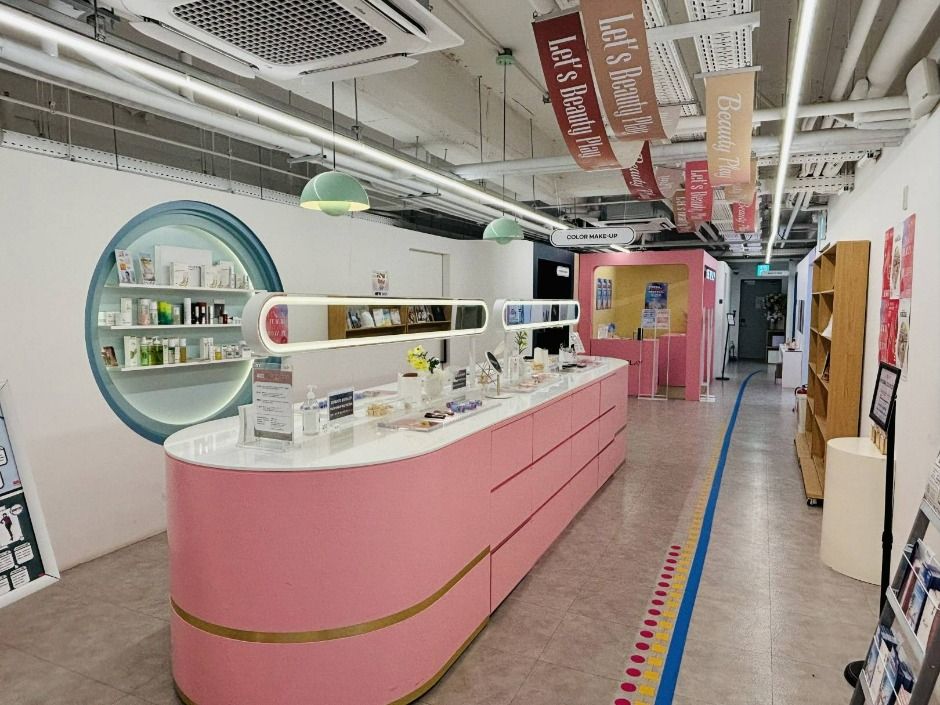
Beauty Play is a K-beauty experience center operated by the Korea Cosmetics Industry Institute and supported by the Ministry of Health and Welfare. It offers a wide variety of sample Korean beauty products for testing as well as diverse beauty experience programs such as makeup touch-up service (choice of base, eyes, or lips), personal color test, and skin evaluation. Visitors can also ask for product recommendation based on their skin type or skincare concerns. Beauty Play also frequently hosts free one-day classes, which are announced online via its official website. It also hosts a variety of sample product giveaway events and the exhibited products get changed every two months, allowing visitors to get familiarized with lesser known quality products as well.
 English
 한국어
한국어 日本語
日本語 中文(简体)
 Deutsch
 Français
 Español
 Русский


